ข้อสอบจำลอง TOEFL 26
ฝึกทำข้อสอบ TOEFL 2026 รูปแบบใหม่
ข้อสอบจำลอง TOEFL 26 เต็มรูปแบบ พร้อม Reading & Listening แบบปรับระดับหลายขั้นตอน ครบทุกรูปแบบข้อสอบใหม่ และระบบ AI ให้คะแนน Speaking และ Writing
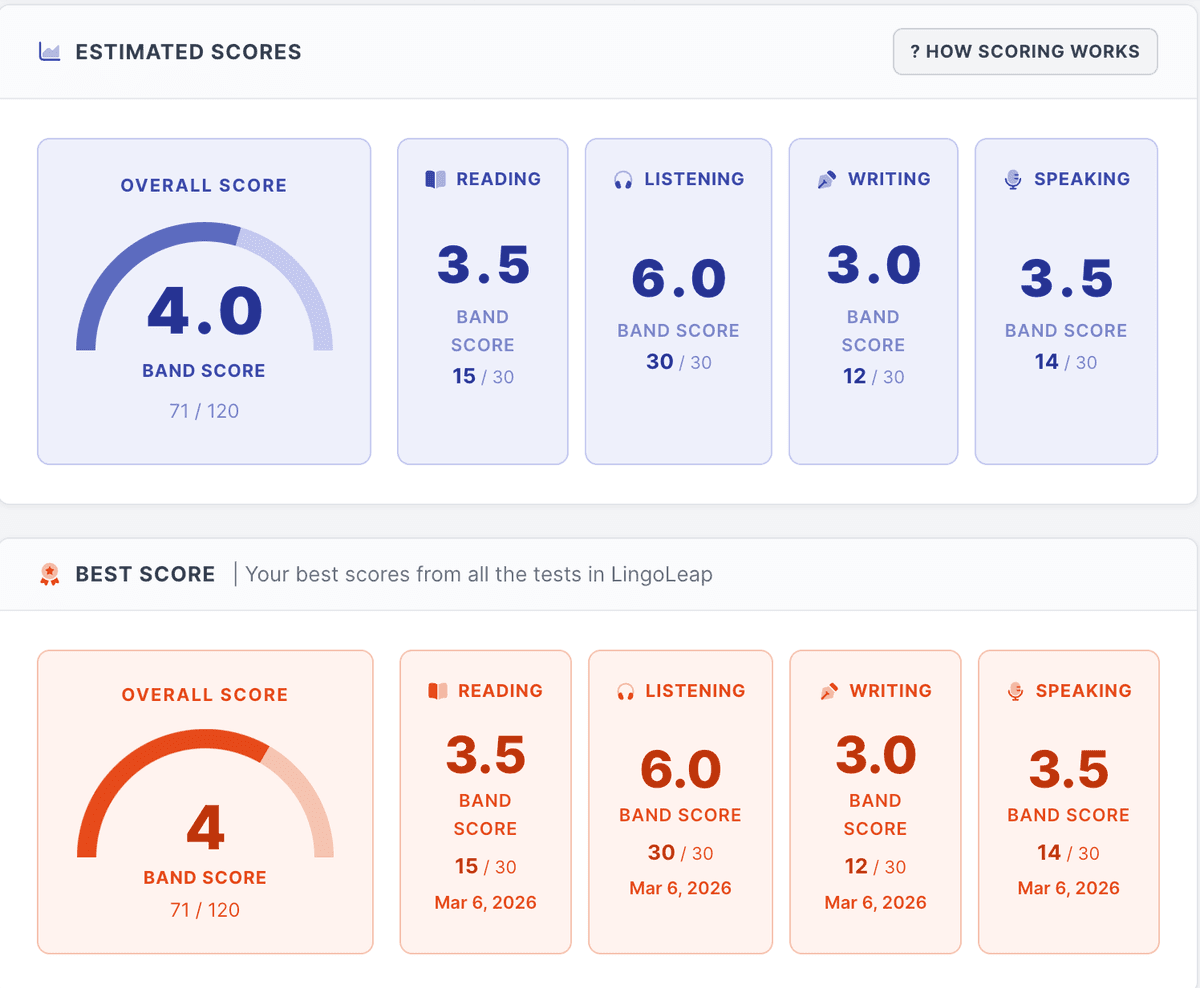 Score Report
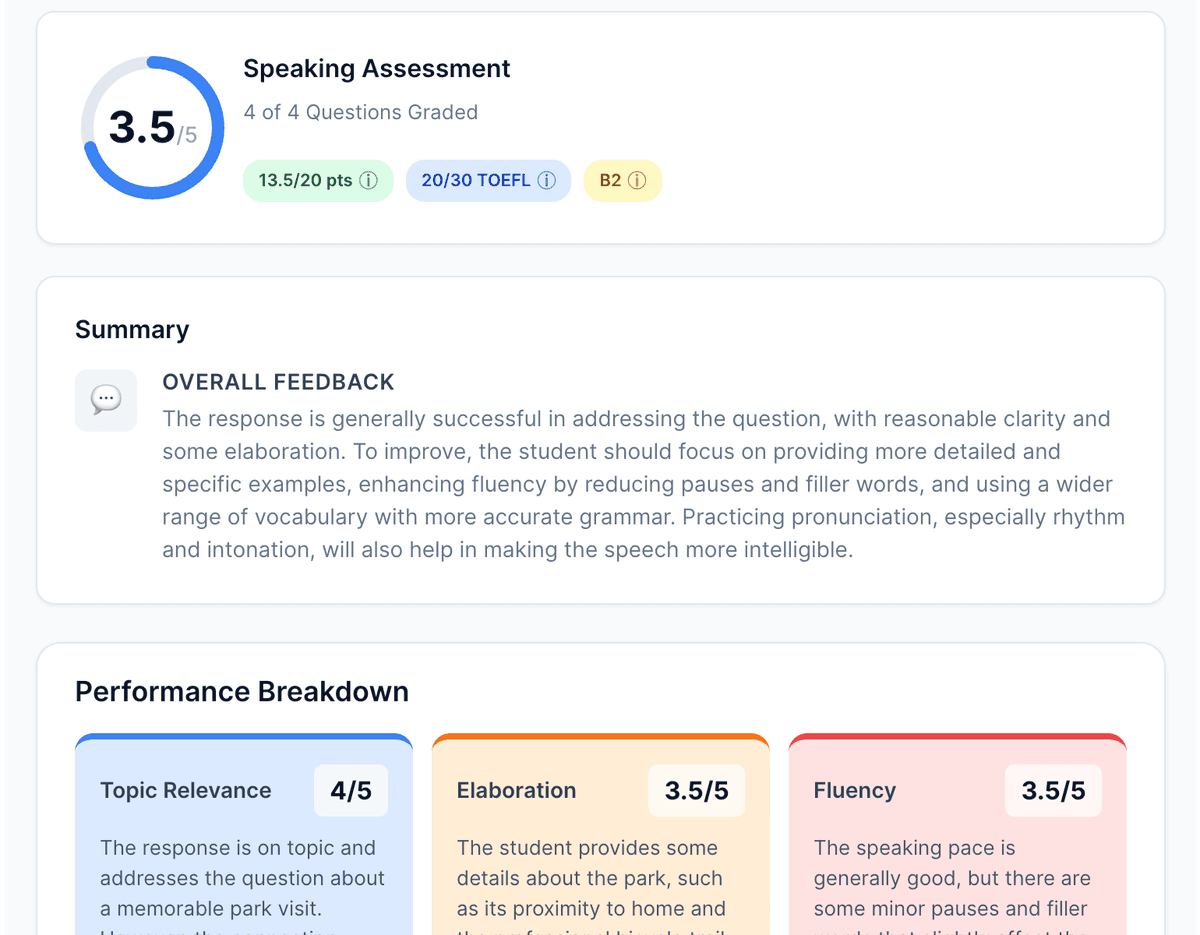 AI Speaking Score
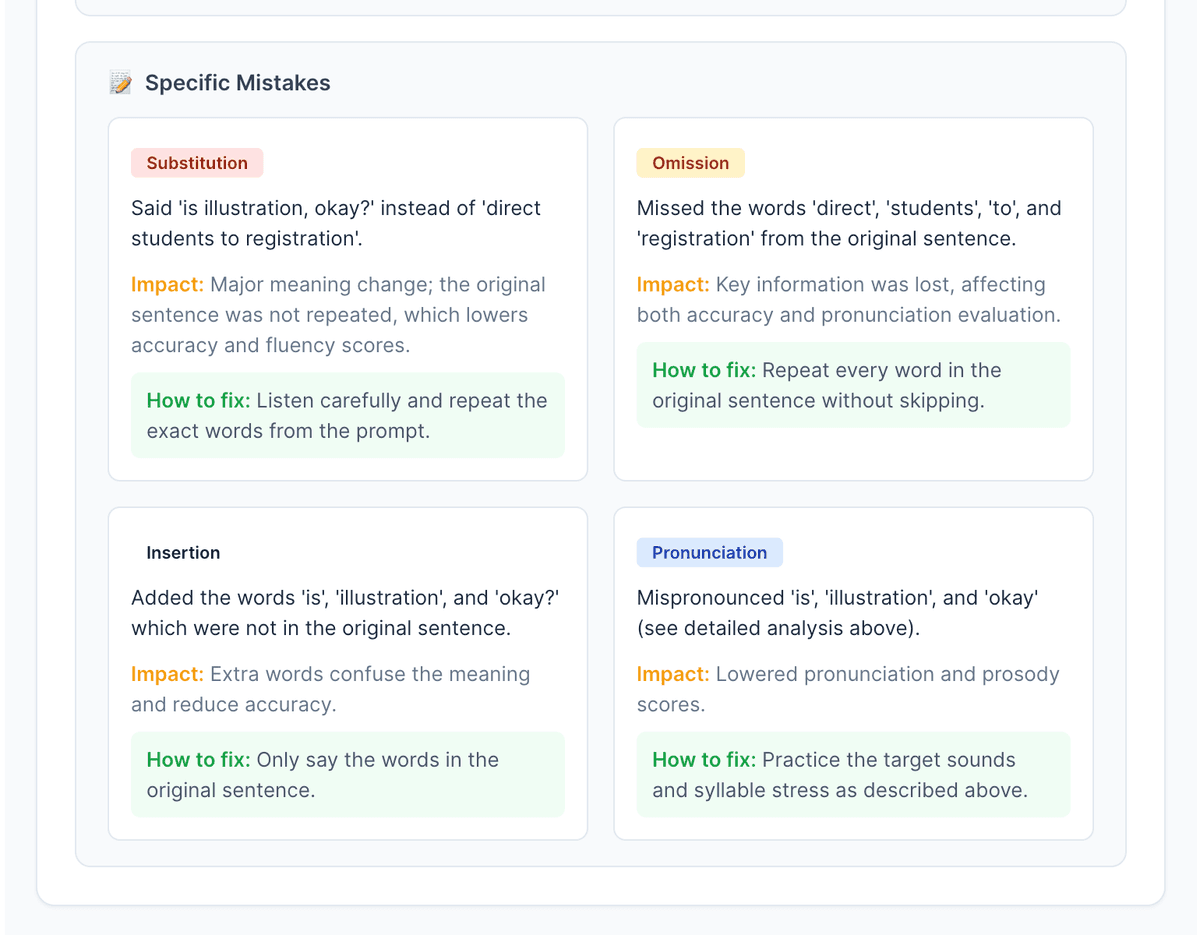 Mistake Analysis
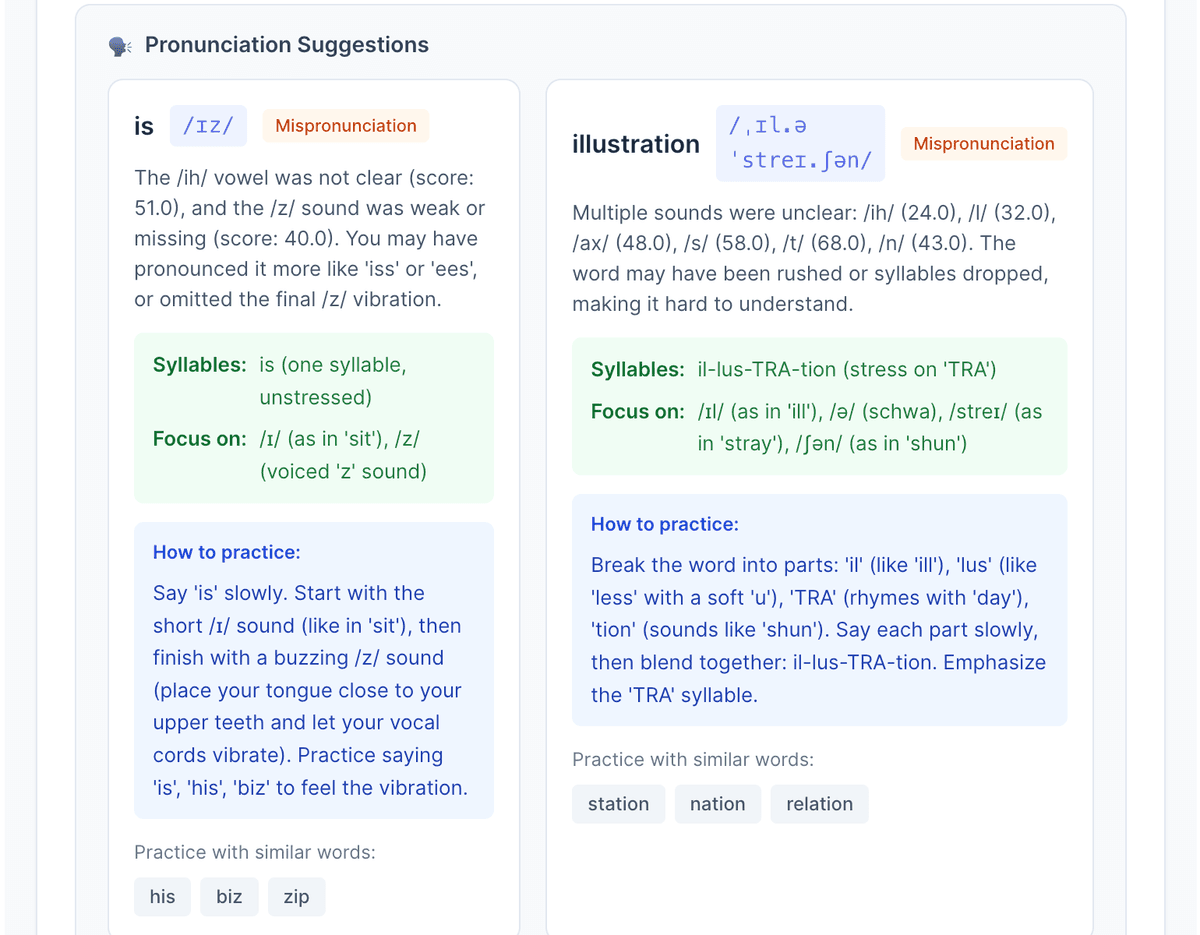 Pronunciation Feedback
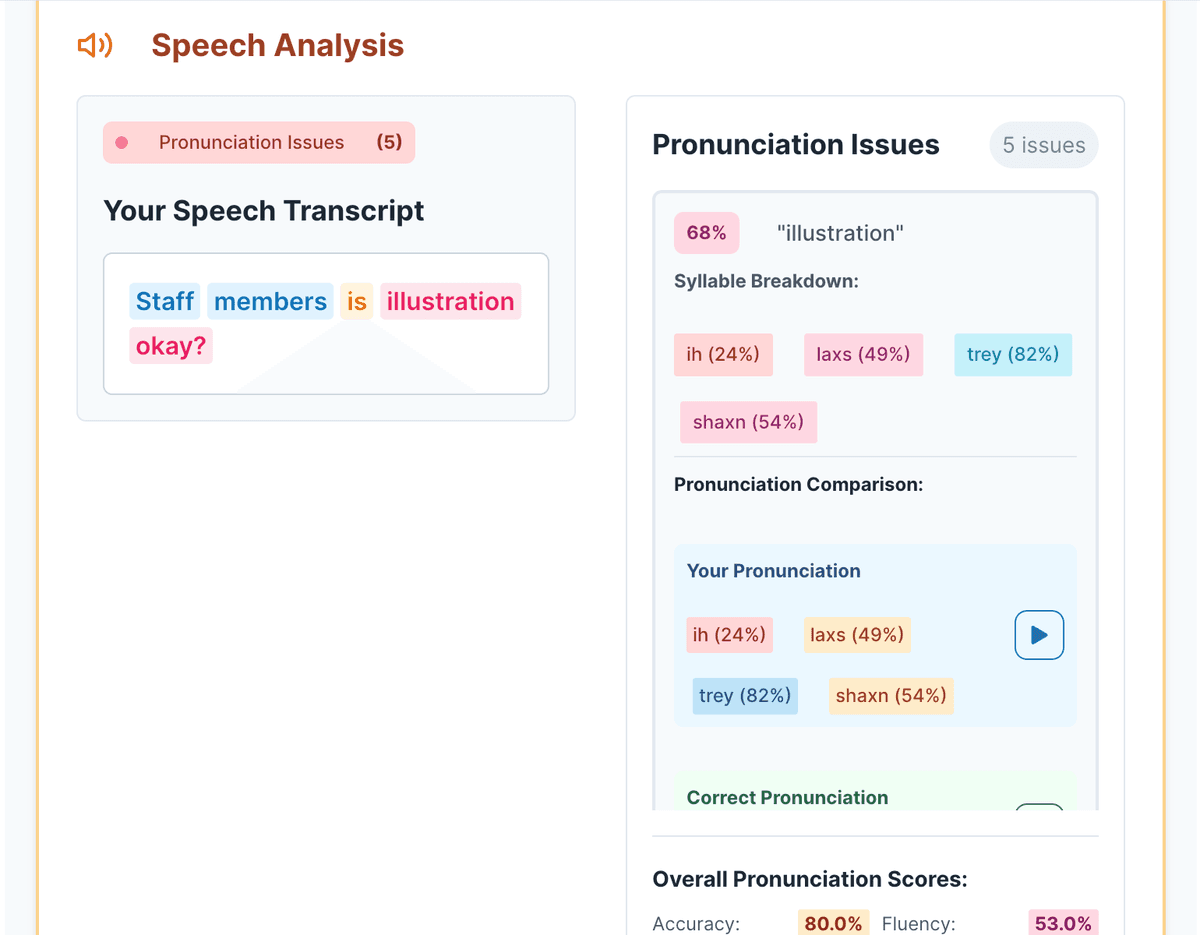 Speech Analysis
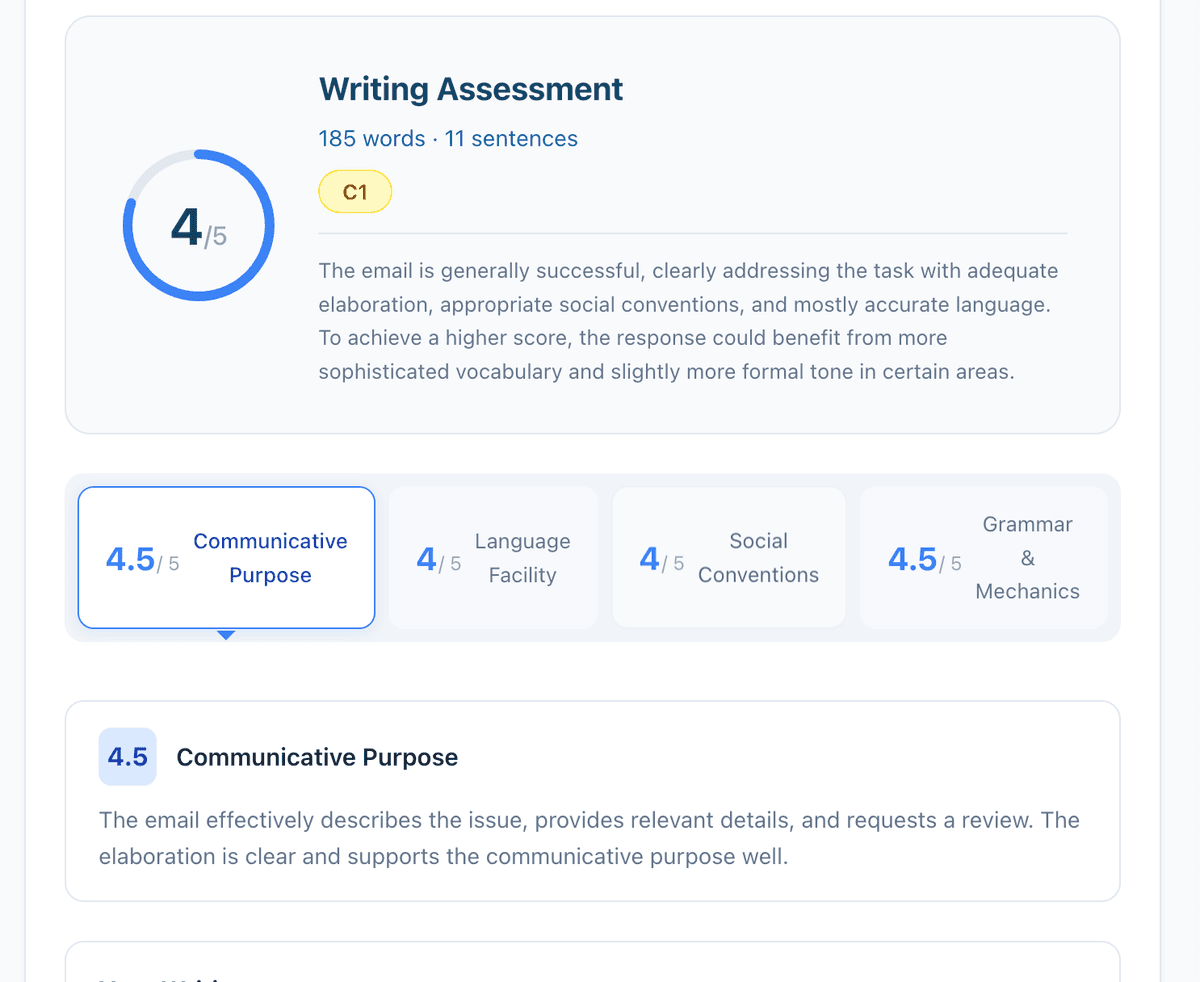 AI Writing Score
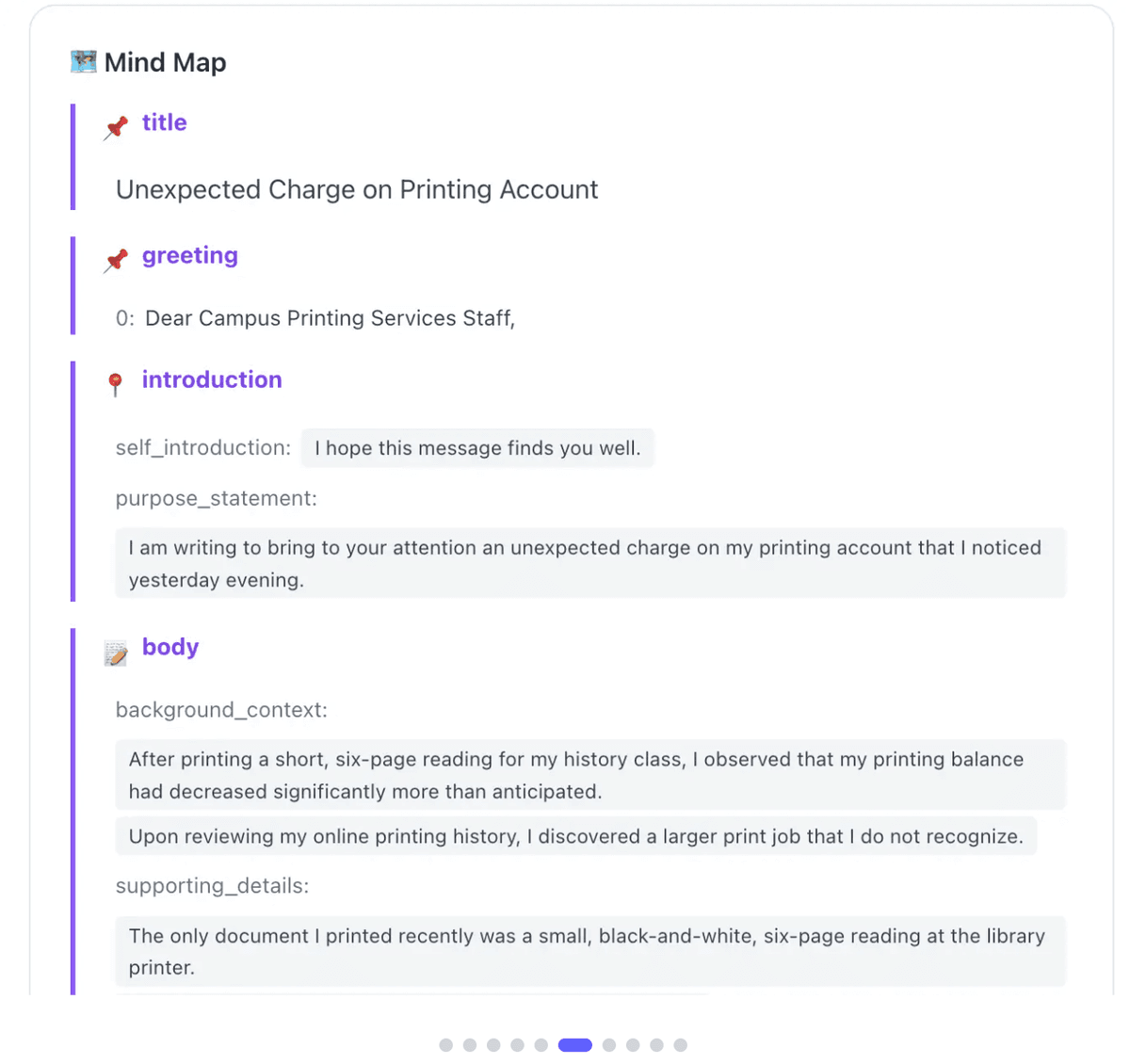 Article Structure Feedback
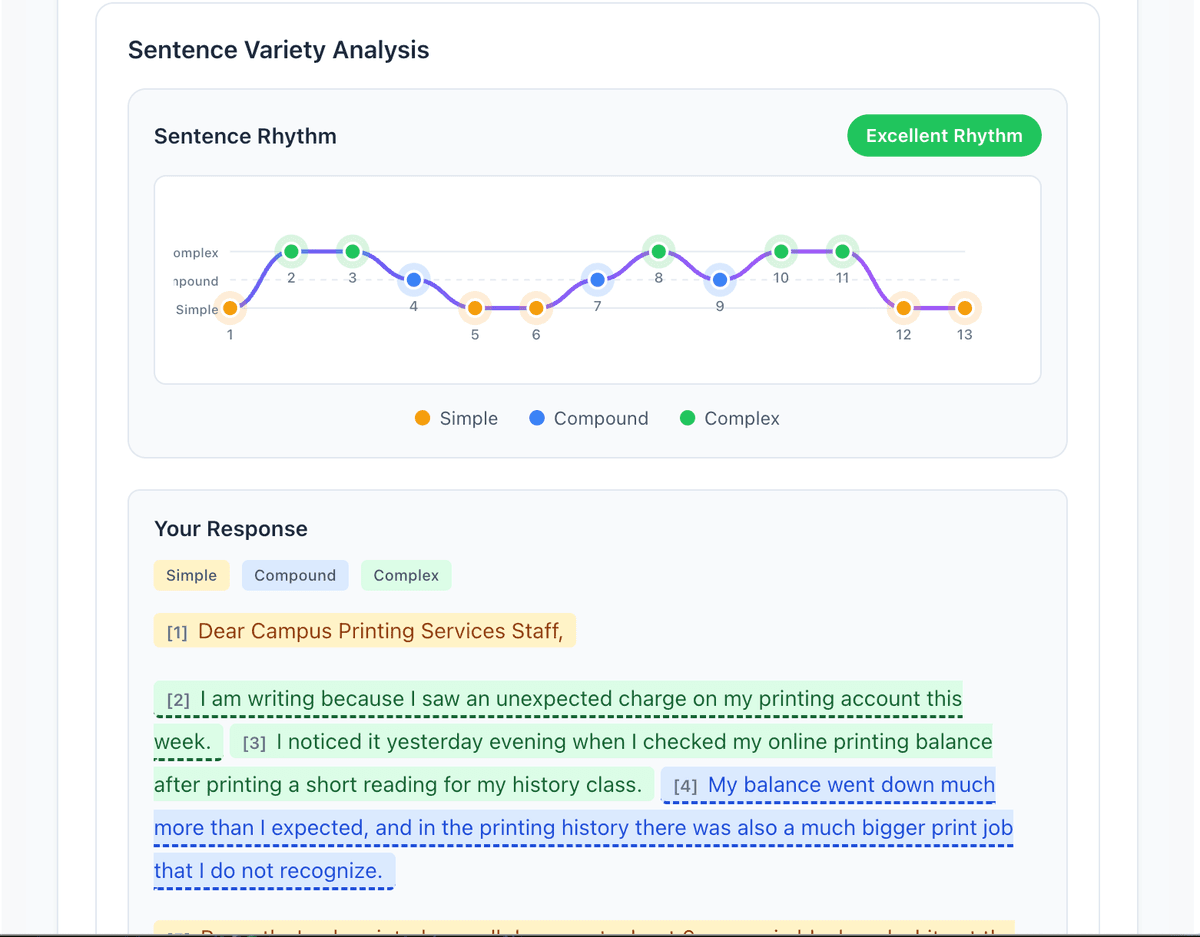 Sentence Variety
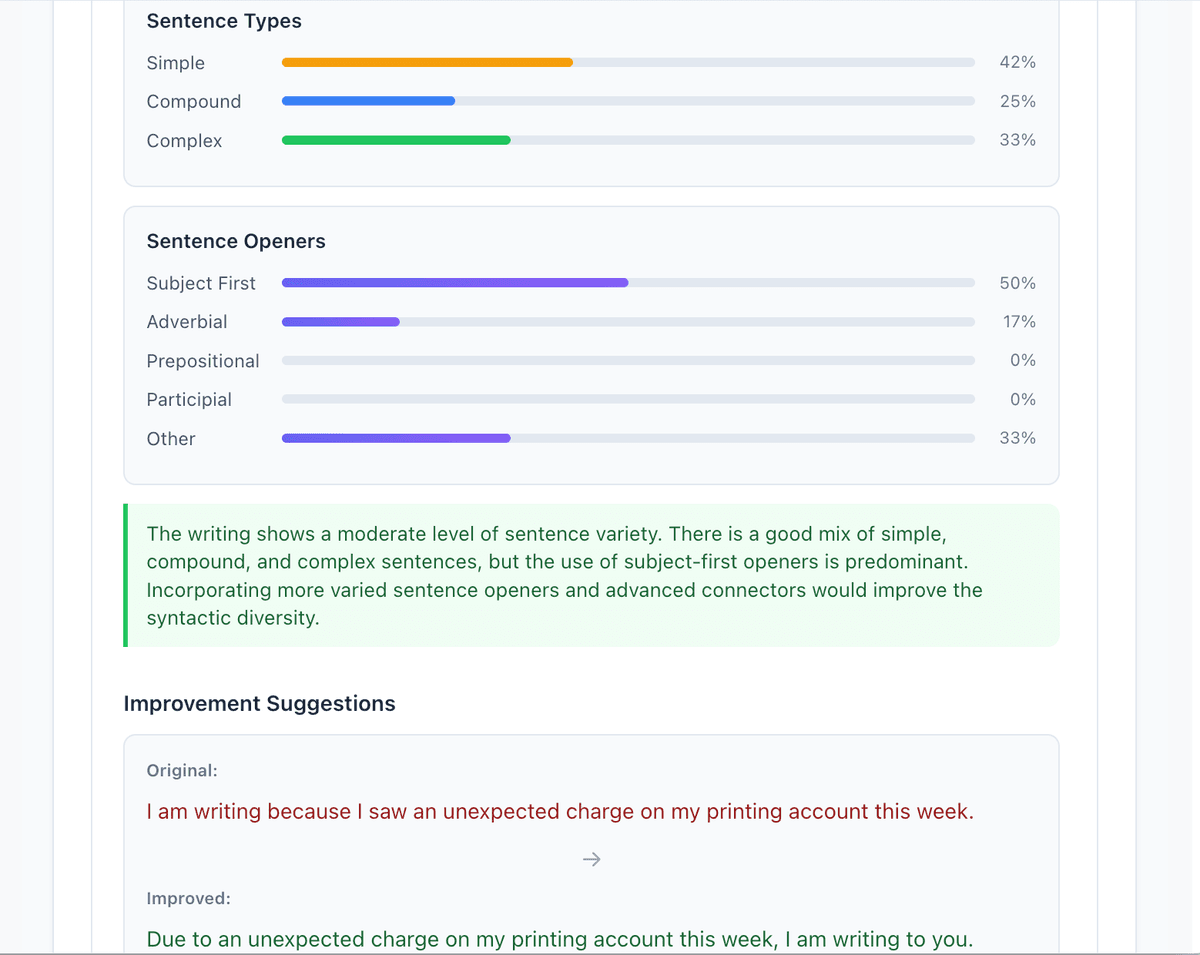 Improvement Suggestions
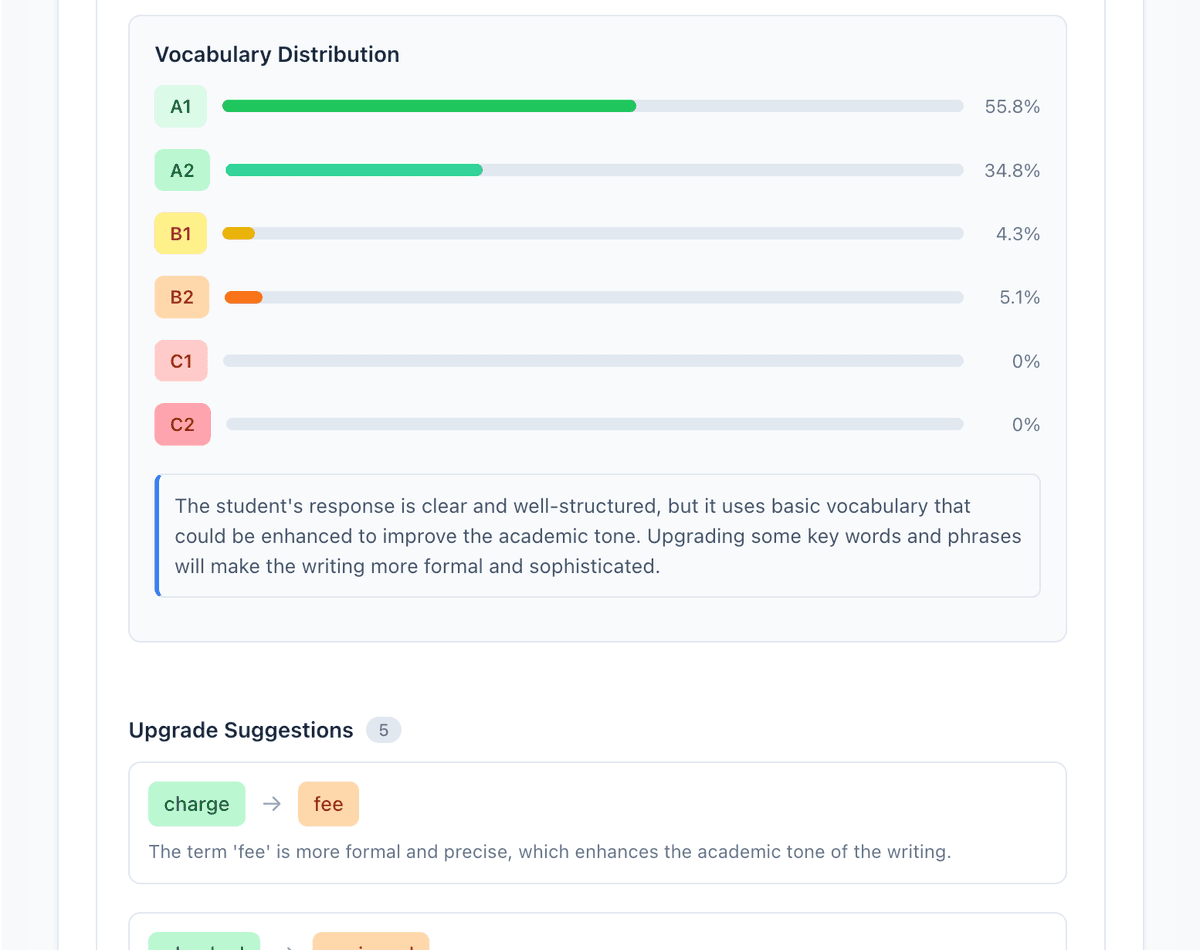 Vocabulary Feedback
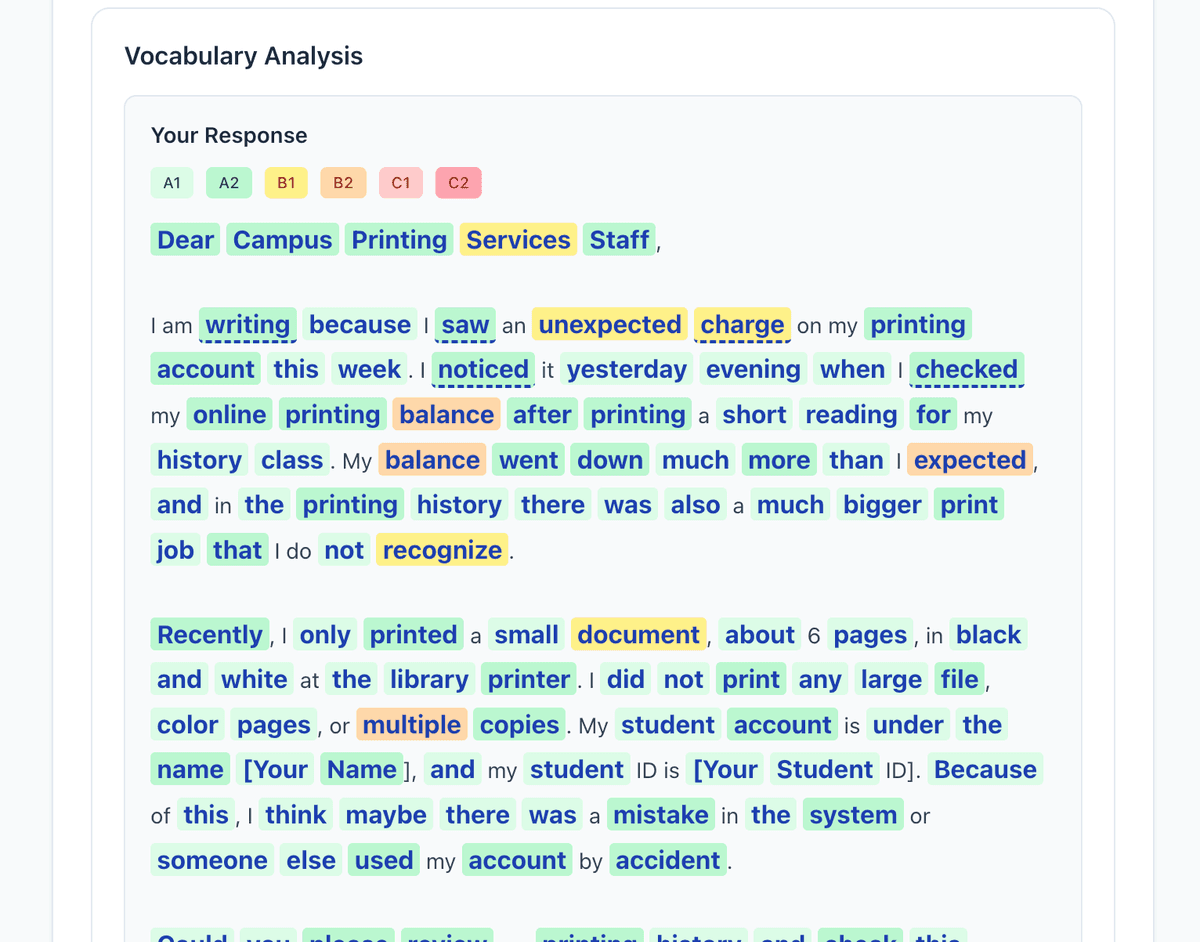 Vocabulary Analysis
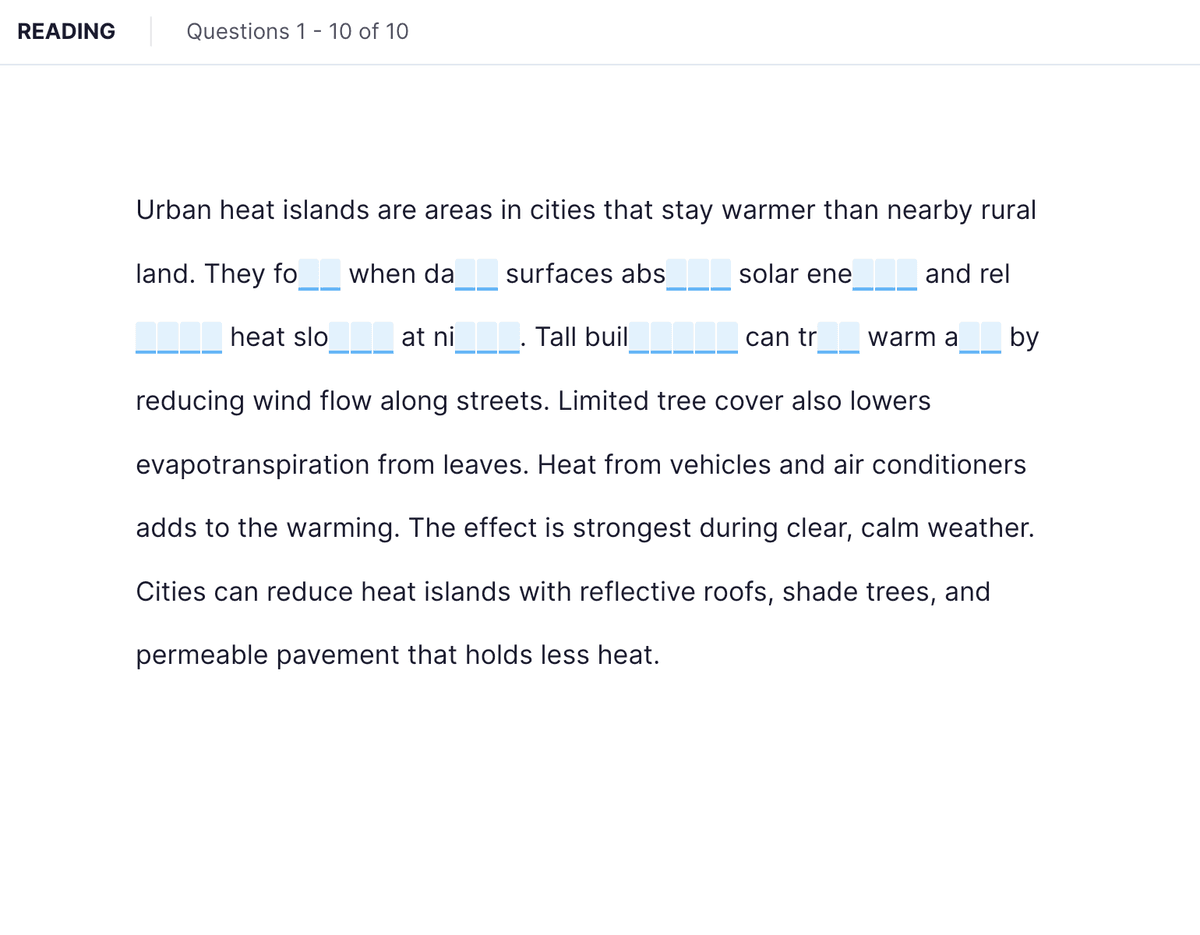 TOEFL 26 New: Reading
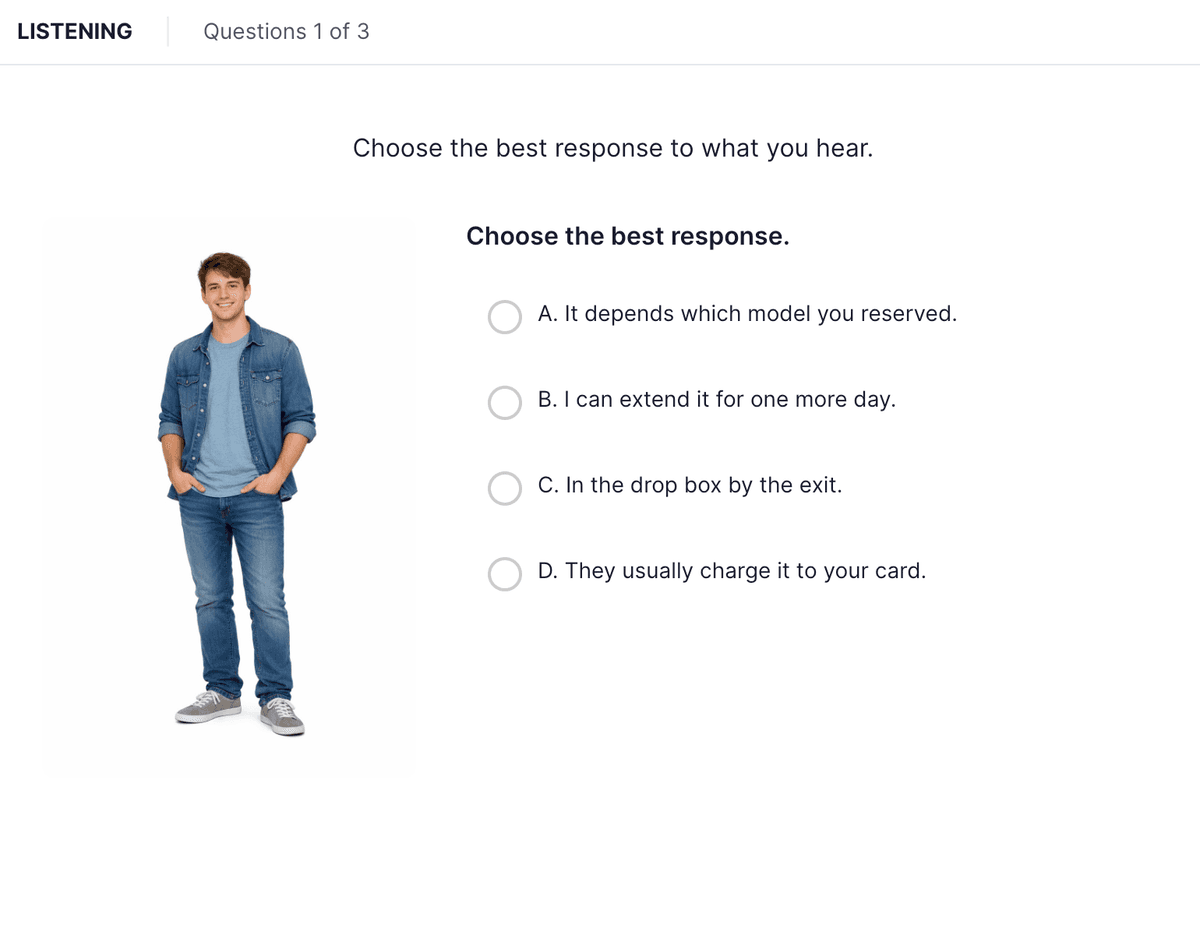 TOEFL 26 New: Listening
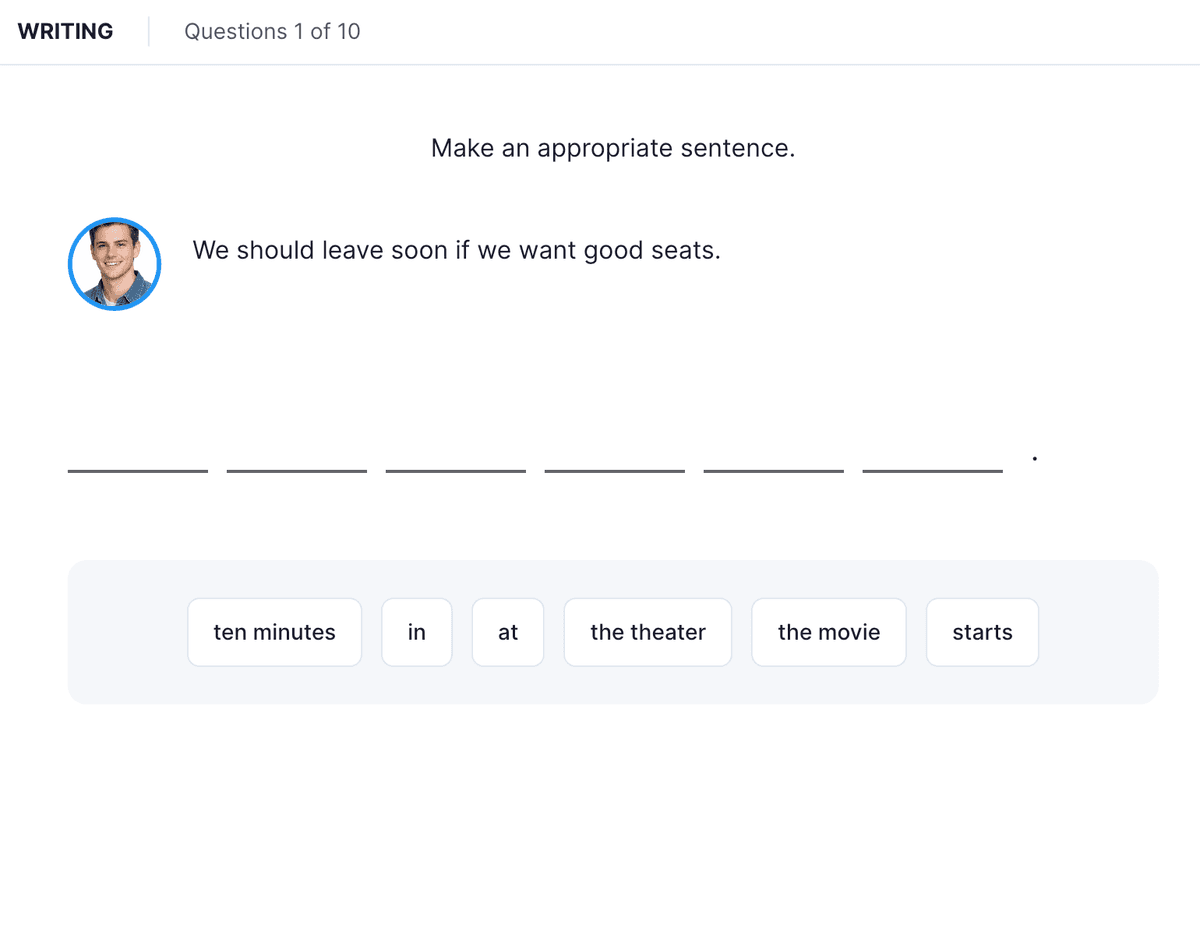 TOEFL 26 New: Writing
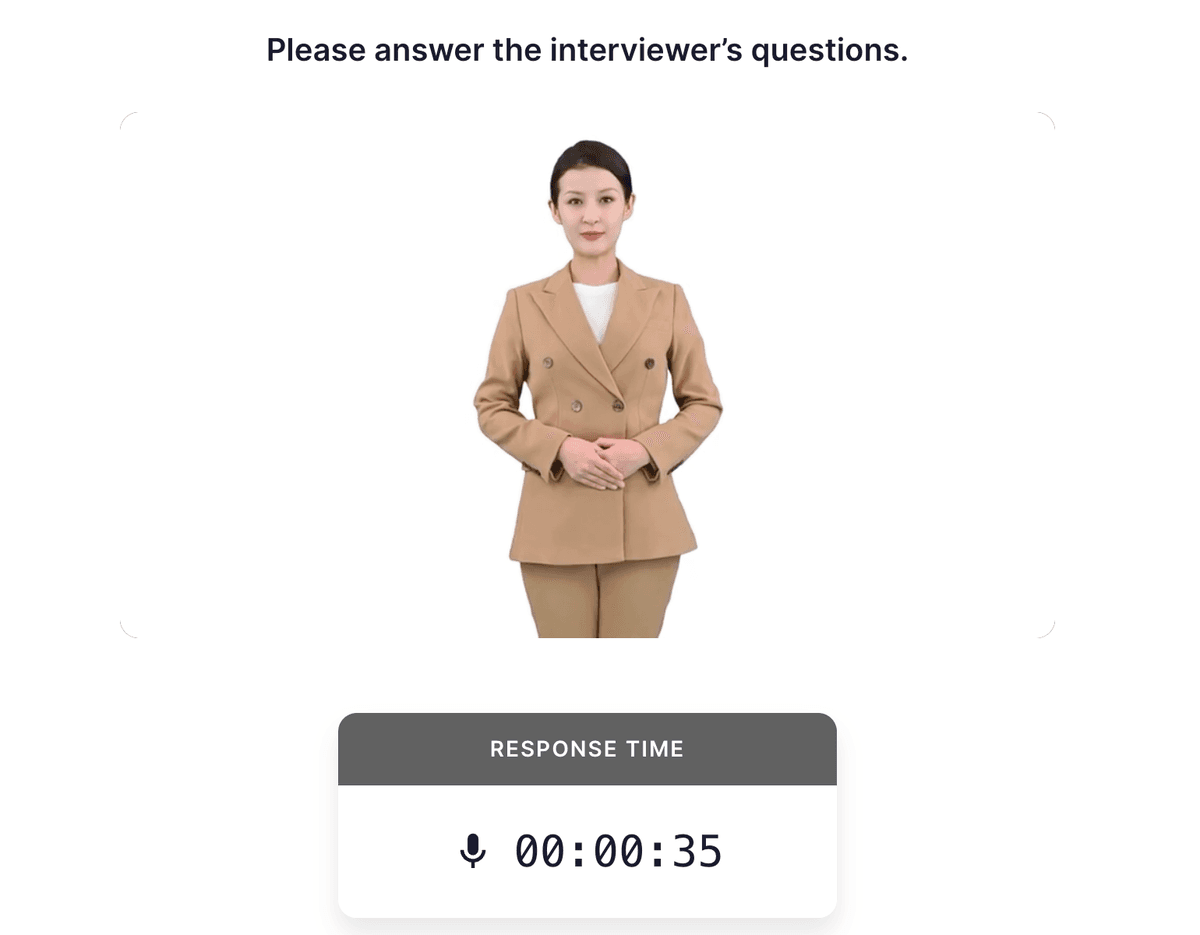 TOEFL 26 New: Speaking
ข้อสอบจำลอง TOEFL 26 คืออะไร?
ข้อสอบจำลอง TOEFL 26 คือข้อสอบฝึกทำที่ออกแบบตามรูปแบบ TOEFL iBT ใหม่ทั้งหมด ซึ่งเริ่มใช้เมื่อวันที่ 21 มกราคม 2026
TOEFL รูปแบบใหม่มี 12 รูปแบบข้อสอบใหม่ทั้งหมดใน 4 ทักษะ ได้แก่ Reading, Listening, Writing และ Speaking มีการสอบแบบปรับระดับหลายขั้นตอนในส่วน Reading และ Listening และใช้มาตราคะแนนใหม่ 1–6 ที่สอดคล้องกับ CEFR
เพื่อเตรียมสอบอย่างมีประสิทธิภาพ ผู้สอบต้องการข้อสอบจำลองที่สะท้อนโครงสร้างใหม่ ครอบคลุมทั้ง 12 รูปแบบข้อสอบ และระบบการให้คะแนนที่อัปเดตแล้ว
Lingoleap มีข้อสอบจำลอง TOEFL 26 ที่สร้างขึ้นเพื่อจำลองประสบการณ์การสอบจริงอย่างใกล้เคียงที่สุด
รูปแบบ TOEFL 2026 ใหม่
ข้อสอบ TOEFL 2026 ประกอบด้วย 4 ส่วน: Reading, Listening, Writing และ Speaking เวลาโดยประมาณในการทำข้อสอบคือไม่เกิน 2 ชั่วโมง เวลาสอบไม่รวมคำอธิบาย เนื่องจากข้อสอบปรับระดับ เวลาสอบและจำนวนข้อสอบอาจแตกต่างกัน
Reading
~30 นาที
~50 ข้อ
ปรับระดับหลายขั้นตอนผ่านสองโมดูล
Listening
~29 นาที
~47 ข้อ
ปรับระดับหลายขั้นตอนผ่านสองโมดูล
Writing
~23 นาที
12 ข้อ
รูปแบบเชิงเส้น — ข้อสอบเหมือนกันสำหรับผู้สอบทุกคน
Speaking
~8 นาที
11 ข้อ
รูปแบบเชิงเส้น — ข้อสอบเหมือนกันสำหรับผู้สอบทุกคน
รูปแบบข้อสอบ TOEFL 2026 ทั้งหมด
Reading
- Complete the Words
- Read in Daily Life
- Read an Academic Passage
8 ประเภทคำถาม: Factual & Negative Factual, Vocabulary, Select the Sentence, Sentence Simplification, Reference, Inference, Rhetorical Purpose, Insert Text
Listening
- Listen and Choose a Response
- Listen to a Conversation
- Listen to an Announcement
- Listen to an Academic Talk
6 ประเภทคำถาม: Main Idea, Factual, Inference, Purpose, Method, Attitude
Writing
- Build a Sentence
- Write an Email
- Write for an Academic Discussion
รูปแบบเชิงเส้น — ให้คะแนนตามจุดมุ่งหมายในการสื่อสาร โครงสร้างประโยค การเลือกใช้คำ มารยาททางสังคม และความถูกต้อง
Speaking
- Listen and Repeat
- Take an Interview
รูปแบบเชิงเส้น — ให้คะแนนตามการนำเสนอ (ความชัดเจน ความคล่องแคล่ว) การใช้ภาษา (ไวยากรณ์ คำศัพท์) และการอธิบายขยายความ
ส่วน Reading และ Listening ใช้การสอบแบบปรับระดับหลายขั้นตอน — ผลการทำข้อสอบของคุณในโมดูล 1 จะกำหนดระดับความยากของโมดูล 2 ทำให้ประสบการณ์การสอบเป็นแบบเฉพาะบุคคลมากขึ้น และวัดความสามารถของคุณได้อย่างมีประสิทธิภาพและแม่นยำยิ่งขึ้น
ทำไมต้องเลือกข้อสอบจำลอง TOEFL 26 ของ Lingoleap
สื่อการเตรียมสอบ TOEFL ส่วนใหญ่ยังคงเน้นรูปแบบข้อสอบเก่า Lingoleap สร้างขึ้นมาโดยเฉพาะสำหรับรูปแบบ TOEFL 2026
 ข้อสอบจำลองเต็มรูปแบบครอบคลุมทั้ง 12 รูปแบบข้อสอบอย่างเป็นทางการของ TOEFL 2026
- Reading และ Listening แบบปรับระดับหลายขั้นตอนเหมือนข้อสอบจริง
- AI ให้คะแนน Speaking และ Writing ตามเกณฑ์การให้คะแนนอย่างเป็นทางการของ ETS
- หนึ่งในคลังข้อสอบจำลอง TOEFL 26 ที่ใหญ่ที่สุดที่มีให้บริการ
สื่อส่วนใหญ่เตรียมคุณสำหรับ TOEFL เก่า Lingoleap เตรียมคุณสำหรับ TOEFL ใหม่
ครอบคลุมรูปแบบข้อสอบ TOEFL 2026 ครบถ้วน
ข้อสอบจำลอง TOEFL 26 ของ Lingoleap ทุกชุดครอบคลุม 12 รูปแบบข้อสอบอย่างเป็นทางการครบทั้ง 4 ส่วน — เหมือนกับข้อสอบจริงทุกประการ
Reading
- Complete the Words
เติมส่วนที่ขาดหายของคำในย่อหน้าวิชาการสั้น ๆ
- Read in Daily Life
อ่านข้อความในชีวิตประจำวัน เช่น อีเมล ประกาศ หรือโพสต์บนโซเชียลมีเดีย
- Read an Academic Passage
อ่านบทความวิชาการสั้น (~200 คำ) และตอบคำถาม 5 ข้อ
Listening
- Listen and Choose a Response
ฟังคำถามหรือข้อความสั้น แล้วเลือกคำตอบที่เหมาะสมที่สุดจาก 4 ตัวเลือก
- Listen to a Conversation
ตอบคำถามเกี่ยวกับบทสนทนาสั้น ๆ ในมหาวิทยาลัยระหว่างผู้พูด 2 คน
- Listen to an Announcement
ตอบคำถามเกี่ยวกับประกาศในห้องเรียนหรือกิจกรรมในมหาวิทยาลัย
- Listen to an Academic Talk
ตอบคำถามเกี่ยวกับบทบรรยายวิชาการสั้น ๆ ในหัวข้อต่าง ๆ
Writing
- Build a Sentence
จัดเรียงคำและวลีใหม่เพื่อสร้างประโยคที่สมบูรณ์ในบทสนทนาสั้น
- Write an Email
เขียนอีเมลเพื่อจุดประสงค์เฉพาะ เช่น แนะนำ เชิญ หรือเสนอทางออก
- Write for an Academic Discussion
อ่านโพสต์ของอาจารย์และคำตอบของนักศึกษา 2 คน แล้วเขียนความคิดเห็นของคุณ (100+ คำ)
Speaking
- Listen and Repeat
พูดตาม 7 ประโยคที่มีความยาวและความซับซ้อนเพิ่มขึ้น
- Take an Interview
ตอบคำถามสัมภาษณ์ 4 ข้อในบทสนทนาวิชาการจำลอง (45 วินาทีต่อข้อ)
การสอบแบบปรับระดับหลายขั้นตอน — เหมือน TOEFL 2026 จริงทุกประการ
ข้อสอบจำลองของ Lingoleap จำลองโครงสร้างการสอบแบบปรับระดับหลายขั้นตอนของ TOEFL จริง ผลการทำข้อสอบของคุณในโมดูล 1 จะกำหนดระดับความยากของโมดูล 2 เหมือนกับข้อสอบจริง
ลำดับการสอบสมจริง
สัมผัสประสบการณ์การสอบแบบปรับระดับเดียวกับ TOEFL 2026 จริง — ผลโมดูล 1 กำหนดระดับความยากของโมดูล 2
ฝึกฝนหลายระดับ
ฝึกทำข้อสอบทั้งโมดูลง่ายและยากเพื่อสร้างความมั่นใจและความแม่นยำในทุกระดับ
วิเคราะห์ผลการสอบที่แท้จริง
เข้าใจศักยภาพคะแนนจริงของคุณจากระบบคะแนนแบบปรับระดับและการแปลงคะแนนดิบเป็นคะแนนมาตรฐาน
AI ให้คะแนน Speaking & Writing
รับผลวิเคราะห์โดยละเอียดทันทีสำหรับทุกคำตอบ Speaking และ Writing — ตามเกณฑ์การให้คะแนนอย่างเป็นทางการของ ETS แต่ละคำตอบจะได้รับคะแนนรวมในระดับ 0–5
การประเมิน Speaking
Listen and Repeat
- ความถูกต้องในการพูดตาม
- ความชัดเจน
- การออกเสียง
Take an Interview
- การนำเสนอ (ความชัดเจน ความคล่องแคล่ว การออกเสียง น้ำเสียง)
- การใช้ภาษา (ขอบเขตและความถูกต้องของไวยากรณ์และคำศัพท์)
- การอธิบายขยายความ (ตรงประเด็น มีเหตุผลสนับสนุน)
การประเมิน Writing
Write an Email
- การอธิบายที่สนับสนุนจุดมุ่งหมายในการสื่อสาร
- ความหลากหลายของโครงสร้างประโยคและการเลือกใช้คำที่แม่นยำ เป็นธรรมชาติ
- มารยาททางสังคมที่เหมาะสม (ความสุภาพ ระดับภาษา ความเป็นทางการ)
- ความถูกต้องของคำศัพท์และไวยากรณ์
Write for an Academic Discussion
- การอธิบายและตัวอย่างที่เกี่ยวข้องและมีรายละเอียด
- ความหลากหลายของโครงสร้างประโยคและการเลือกใช้คำที่แม่นยำ เป็นธรรมชาติ
- ความถูกต้องของคำศัพท์และไวยากรณ์
Accuracy and transparency
How Accurate Is This TOEFL Practice Test Score?
Every practice-test site says its scores are accurate. Almost none says how the number is produced or what has actually been checked. Here is the full answer for Lingoleap — including what we have not verified yet.
What we know
- Reading and Listening are scored against a fixed answer key, so those bands are as reliable as the question set is representative of the real test.
- Writing and Speaking responses are scored 0–5 by a language model against the dimensions of the published ETS scoring guides — the same criteria the Speaking and Writing evaluation section above lists.
- Every band on your report comes from one fixed rule set — the tables and formulas printed further down this page — so the same answers always produce the same band.
What we have not verified
- We have not yet published a comparison of Lingoleap bands against learners' official ETS score reports. Until that verified sample exists and is large enough, we do not quote a correlation, an accuracy percentage or a margin of error — any such number would be invented.
- ETS has not released a raw-to-band conversion for the 2026 test. Our Reading and Listening table is a Lingoleap estimate and is labelled as one below.
- The real test equates scores across forms and adaptive paths with Item Response Theory; our engine uses a simpler lookup table. The two can disagree, most likely at band boundaries.
What to do with the estimate
- Treat one mock band as a range, not a point. Read the section bands and the task-type accuracy under them — those move first and are what you can practise.
- Track direction across three to five mocks spaced two to three weeks apart, rather than certifying a single sitting.
- For admissions, only an ETS score counts. Check your target school's published minimum with the Score Calculator, and treat the last mock as a dress rehearsal, not a prediction.
The method we will use to publish calibration figures — who counts, which mock counts, what gets excluded — is already written down on the how-it-works page. The figures will appear there, with their sample size, once the verified sample exists.
See the calibration method →Wondering whose AI to trust on the 2026 test in general? The AI tutor guide explains how ETS's own SpeechRater and e-rater engines grade Speaking and Writing first, and how to rehearse against an AI scorer.
How the 2026 TOEFL is graded by AI →How Our Adaptive Practice Works
Reading and Listening in a Lingoleap mock run as a two-stage test, the structure ETS describes for the real exam. Here is exactly what our engine does — and, separately, what ETS has and has not said.
In a Lingoleap mock test
- 1
Router module
Every test-taker starts with the same router module in each section.
- 2
Routing
Your router performance sends you to a lower or an upper Stage 2 module. The two modules are built differently, which is why the number of items you see varies from mock to mock. The routing threshold is an engine setting we do not publish on this page.
- 3
One band table, defined for the upper module
Correct answers across both stages are counted, normalised to a 35-point basis, and looked up in the section's band table. The table is defined for the upper module.
- 4
Lower-module adjustment
A sitting routed to the lower module is placed one step down that table for the same normalised count. So in our engine the lower path cannot reach the top band — that is a Lingoleap simplification, not an ETS rule, and it is the one place our scoring is deliberately more conservative than the real test.
Adaptive routing: what ETS has published vs what prep sites assert
| Question | What ETS has published | What prep sites assert |
|---|---|---|
| Structure | Reading and Listening are “designed as two-stage adaptive tests”; Writing and Speaking are linear, with every test-taker on a form getting the same tasks (2026 Test Blueprint, note 5). | The same. This part is not in dispute. |
| Routing | “Based on their performance on the first module, test takers will get a second module where the difficulty of the test tasks matches their ability level.” No routing threshold is published (Teacher FAQ, Q9). | Specific thresholds — “get the first ten questions wrong and you are routed down” — none of which cites an ETS source. |
| How the score is produced | The section score “takes into consideration the total number of questions answered correctly across the two stages or modules as well as the difficulty level of questions”, converted by IRT equating so that a reported score “reflects the same level of language ability, regardless of which second stage was taken” (Teacher FAQ). | A fixed raw-to-band table applied to both paths, or a flat penalty for the easier path. |
| The “ceiling” | ETS states no maximum band for the lower module. It says “the final score is based on both stages” and that item difficulty is accounted for — which means an easier item is worth less, not that a particular band is forbidden. Whether the easier module can reach 6.0 in practice is not something ETS has published either way. | “A perfect score on the easier Stage 2 caps you at 4.0”, or “below 5.0” — the figure differs from site to site and none cites ETS. |
| Unscored items | Reading and Listening item counts “include non-scored items” used to gather data for future forms (Blueprint, note 1). | Rarely mentioned; item counts are usually quoted as if every item scored. |
ETS sources: TOEFL iBT 2026 Test Blueprint and Specifications (PDF) · Teacher FAQ for TOEFL iBT Enhancements (PDF)
Quotations are from those two ETS documents as read on 16 September 2026. Where this page says ETS has not published something, we mean we could not find it in either document or on ets.org — not that no such rule exists internally.
How the Band Is Produced, Section by Section
The whole path from your answers to the 1–6 band, with nothing hidden. These are the rules our score report runs on.
Reading
Scored by: Answer key- 1Every item is compared with the reference answer: right or wrong, no partial credit.
- 2Correct answers across the router and your Stage 2 module are summed and scaled to a 35-point basis: points = round(correct ÷ items × 35).
- 3The points are looked up in the Reading band table below. Lower-module sittings drop one step.
Listening
Scored by: Answer key- 1The same answer-key grading and 35-point scaling as Reading.
- 2The Listening table has its own boundaries: 80% accuracy is a 5.0 in Reading, but 71% is a 4.5 in Listening. That is why two sections at similar accuracy can show different bands.
Writing
Scored by: Answer key + AI- 1Build a Sentence: each item is scored right or wrong against the accepted word orderings. No model is involved.
- 2Write an Email and Write for an Academic Discussion: each response is scored 0–5 by a language model against the dimensions of the ETS scoring guide for that task.
- 3Section band = (points earned ÷ points available) × 5 + 1, rounded to the nearest 0.5.
Speaking
Scored by: AI- 1Listen and Repeat (7 items) and Take an Interview (4 items): your recording is transcribed and measured for pronunciation and fluency, then a model scores each response 0–5 against the rubric dimensions.
- 2Section band = (points earned ÷ points available) × 5 + 1, rounded to the nearest 0.5.
Overall band = the plain average of the four section bands, rounded to the nearest 0.5. The 0–120 “traditional” figure on the report is each section's accuracy scaled to 0–30 and summed; it exists only for comparing against university pages that still quote the old scale.
Raw Correct to Band: Reading and Listening
Lingoleap estimate — not an ETS tableBasis: these are the exact lookup tables our score report uses, defined on a 35-point normalised scale (points = round(correct ÷ items × 35)). ETS has published no raw-to-band conversion for the 2026 test, and real scores are IRT-equated for form and module difficulty, so treat every band here as a practice estimate. The approximate-accuracy column is the points range divided by 35.
Reading
| Band | Points (of 35) | Approx. accuracy |
|---|---|---|
| 6.0 | 34–35 | ≈ 97–100% |
| 5.5 | 32–33 | ≈ 91–94% |
| 5.0 | 28–31 | ≈ 80–89% |
| 4.5 | 25–27 | ≈ 71–77% |
| 4.0 | 18–24 | ≈ 51–69% |
| 3.5 | 12–17 | ≈ 34–49% |
| 3.0 | 8–11 | ≈ 23–31% |
| 2.5 | 7 | ≈ 20% |
| 2.0 | 6 | ≈ 17% |
| 1.0 | 0–5 | ≈ 0–14% |
Listening
| Band | Points (of 35) | Approx. accuracy |
|---|---|---|
| 6.0 | 34–35 | ≈ 97–100% |
| 5.5 | 32–33 | ≈ 91–94% |
| 5.0 | 29–31 | ≈ 83–89% |
| 4.5 | 25–28 | ≈ 71–80% |
| 4.0 | 23–24 | ≈ 66–69% |
| 3.5 | 18–22 | ≈ 51–63% |
| 3.0 | 13–17 | ≈ 37–49% |
| 2.5 | 11–12 | ≈ 31–34% |
| 2.0 | 8–10 | ≈ 23–29% |
| 1.5 | 6–7 | ≈ 17–20% |
| 1.0 | 0–5 | ≈ 0–14% |
Worked example from our sample report: 28 of 35 Reading items correct → 28 points → Band 5.0. 32 of 45 Listening items correct → 24.9, rounded to 25 points → Band 4.5.
Lower-module sittings: one step down the table for the same points.
Try TOEFL Practice Test Questions Now
Warm up with these free sample questions modeled on the 2026 TOEFL iBT — one from each section. Reveal the answer and explanation, then start a full-length practice test when you are ready.
Read the short academic passage, then answer the question.
Bioluminescence — the production of light by living organisms — is common in the deep ocean, where sunlight never reaches. Many creatures use it to attract prey, confuse predators, or signal to potential mates. The light is produced by a chemical reaction between a molecule called luciferin and the enzyme luciferase. Because the reaction gives off almost no heat, scientists describe the light as "cold light."
According to the passage, why is bioluminescent light described as "cold light"?
- AIt is only found in cold, deep water.
- BThe chemical reaction releases very little heat.
- CIt appears blue rather than red or orange.
- DIt is produced only at night.
▸Show answer & explanation
Answer: B — The chemical reaction releases very little heat.
The final sentence states the reaction "gives off almost no heat," which is why it is called cold light. Option A confuses where the organisms live with why the light is cold; C and D add details the passage never mentions. Factual questions like this reward locating the exact supporting sentence rather than relying on outside knowledge.
Type the missing letters to complete the word so the sentence makes sense.
Regular exercise can signi______ reduce the risk of heart disease.
▸Show answer & explanation
Answer: significantly
"Complete the Words" gives you the first letters and the length of a word and asks you to finish it from context. Here the sentence needs an adverb describing how much exercise reduces risk — "significantly." Read the whole sentence first, decide the part of speech, then fit a word that starts with the letters shown.
On the real test you would hear this talk once. Read the transcript excerpt, then answer.
Professor: "So when we talk about the 'urban heat island' effect, we mean that cities tend to be several degrees warmer than the countryside around them. The main reason is surface material. Asphalt and concrete absorb heat during the day and release it slowly at night — unlike soil and vegetation, which cool down much faster. That's why a city can still feel warm hours after sunset."
What is the main cause of the urban heat island effect, according to the professor?
- ACities are located in naturally warmer regions.
- BBuildings block cooling wind from reaching streets.
- CPaved surfaces absorb and slowly release heat.
- DThere are more people generating body heat.
▸Show answer & explanation
Answer: C — Paved surfaces absorb and slowly release heat.
The professor names surface material — asphalt and concrete absorbing heat and releasing it slowly — as "the main reason." The other options are plausible-sounding distractors the talk never states. In the Listening section, note the speaker's signal phrases ("the main reason is…") to catch the point being tested.
Put the words and phrases in the correct order to form a grammatical sentence.
[ the deadline / because / the library / she / was approaching / stayed late at ]
▸Show answer & explanation
Answer: She stayed late at the library because the deadline was approaching.
"Build a Sentence" tests control of English word order and clause structure. Start with the subject ("She"), add the main verb phrase ("stayed late at the library"), then attach the reason clause introduced by "because." Checking that subject, verb, and connector line up is usually enough to place every chunk.
You have 45 seconds to answer. There is no single correct response — a strong answer is clear, on-topic, and supported with a reason or example.
Some students prefer to study in the morning, while others prefer the evening. Which do you prefer, and why?
▸Show answer & explanation
Answer: Sample strong response (outline)
Take a clear position, give one reason, and support it with a specific example: "I prefer studying in the morning because my mind is freshest right after I wake up. For instance, I can read a difficult chapter in thirty minutes in the morning, but the same chapter takes me an hour at night when I'm tired." Scoring rewards delivery (clear, fluent speech), language use (accurate grammar and vocabulary), and elaboration (a developed, on-topic idea) — so commit to one answer and develop it rather than listing both options.
These are original Lingoleap practice items built to mirror the 2026 TOEFL iBT task types. They are for practice only and are not real ETS test questions; Lingoleap is independent of and not endorsed by ETS.
Practice TOEFL by Section
A full-length mock test measures readiness, but targeted section practice is how you fix specific weaknesses. Drill any of the four sections and all 12 task types below.
Reading
Adaptive passages and the three 2026 reading task types.
Listening
Conversations, announcements, and academic talks with adaptive difficulty.
Speaking
Listen and Repeat plus the academic interview, with AI delivery feedback.
Writing
Build a Sentence, Write an Email, and Write for an Academic Discussion.
ข้อสอบจำลอง TOEFL 26 เต็มรูปแบบ 100+ ชุด — อัปเดตทุกเดือน
เข้าถึงหนึ่งในคลังข้อสอบจำลอง TOEFL 2026 ที่ใหญ่ที่สุดที่มีให้บริการ มีข้อสอบใหม่เพิ่มทุกเดือน ช่วยให้คุณฝึกฝนอย่างต่อเนื่องด้วยเนื้อหาใหม่ล่าสุด
- ข้อสอบจำลอง TOEFL 26 เต็มรูปแบบ 100+ ชุด
- ข้อสอบทุกชุดสอดคล้องกับรูปแบบและประเภทข้อสอบ TOEFL 2026 ล่าสุด
- มีข้อสอบใหม่เพิ่มทุกเดือน
- ครอบคลุมทั้ง 4 ส่วนและ 12 รูปแบบข้อสอบ
- Covers all 4 sections and 12 task types
วิธีเริ่มทำข้อสอบจำลอง TOEFL 26
สร้างบัญชีผู้ใช้
สมัครใช้งานฟรีบน Lingoleap
เลือกข้อสอบจำลอง
เลือกจากข้อสอบจำลอง TOEFL 26 เต็มรูปแบบกว่า 100 ชุด
เริ่มฝึกทำข้อสอบ
ทำข้อสอบภายใต้สภาพแวดล้อมเหมือนการสอบจริง
รับคะแนนและผลวิเคราะห์
รับคะแนนจาก AI และการวิเคราะห์ผลการสอบอย่างละเอียด
เริ่มทำข้อสอบจำลอง TOEFL 26
ฝึกทำข้อสอบ TOEFL 2026 รูปแบบใหม่ พร้อมการสอบแบบปรับระดับหลายขั้นตอน ครบ 12 รูปแบบข้อสอบ และ AI ให้คะแนน
คำถามที่พบบ่อย
ทุกสิ่งที่คุณต้องรู้เกี่ยวกับข้อสอบจำลอง TOEFL 26
รูปแบบ TOEFL 2026 แตกต่างจากเดิมอย่างไร?
TOEFL 2026 เปิดตัวเมื่อวันที่ 21 มกราคม 2026 เป็นข้อสอบที่ออกแบบใหม่ทั้งหมด มีการสอบแบบปรับระดับหลายขั้นตอนในส่วน Reading และ Listening โดยผลการทำข้อสอบในโมดูล 1 จะกำหนดระดับความยากของโมดูล 2 ส่วน Writing และ Speaking ใช้รูปแบบเชิงเส้น (ข้อสอบเหมือนกันสำหรับผู้สอบทุกคน) ข้อสอบมี 12 รูปแบบข้อสอบใหม่ทั้งหมดและมาตราคะแนนใหม่ 1–6 ที่สอดคล้องกับ CEFR เวลาสอบไม่เกิน 2 ชั่วโมง
TOEFL 2026 ใหม่มีรูปแบบข้อสอบกี่แบบ?
TOEFL 2026 ใหม่มี 12 รูปแบบข้อสอบใน 4 ส่วน: 3 แบบใน Reading (Complete the Words, Read in Daily Life, Read an Academic Passage), 4 แบบใน Listening (Listen and Choose a Response, Listen to a Conversation, Listen to an Announcement, Listen to an Academic Talk), 3 แบบใน Writing (Build a Sentence, Write an Email, Write for an Academic Discussion) และ 2 แบบใน Speaking (Listen and Repeat, Take an Interview)
Lingoleap มีข้อสอบจำลอง TOEFL 26 กี่ชุด?
Lingoleap มีข้อสอบจำลอง TOEFL 26 เต็มรูปแบบมากกว่า 100 ชุด โดยมีข้อสอบใหม่เพิ่มทุกเดือน แต่ละชุดครอบคลุมทั้ง 4 ส่วนและรูปแบบข้อสอบอย่างเป็นทางการทุกรูปแบบของ TOEFL 2026
Lingoleap จำลองการสอบแบบปรับระดับหลายขั้นตอนหรือไม่?
ใช่ Lingoleap เป็นหนึ่งในไม่กี่แพลตฟอร์มที่จำลองโครงสร้างการสอบแบบปรับระดับหลายขั้นตอนที่ใช้ในส่วน Reading และ Listening ของ TOEFL 2026 ผลการทำข้อสอบของคุณในโมดูล 1 จะส่งผลต่อระดับความยากของโมดูล 2 เหมือนกับข้อสอบจริง
AI ให้คะแนน Speaking และ Writing ทำงานอย่างไร?
AI ของ Lingoleap ประเมินคำตอบของคุณตามเกณฑ์ที่สอดคล้องกับเกณฑ์การให้คะแนนอย่างเป็นทางการของ ETS (ให้คะแนนรวม 0–5 ต่อข้อ) สำหรับ Speaking ข้อสอบ Listen and Repeat ให้คะแนนตามความถูกต้องในการพูดตาม ความชัดเจน และการออกเสียง ข้อสอบ Take an Interview ให้คะแนนตามการนำเสนอ (ความชัดเจน ความคล่องแคล่ว จังหวะ) การใช้ภาษา (ไวยากรณ์ คำศัพท์) และการอธิบายขยายความ (ตรงประเด็น มีเหตุผลสนับสนุน) สำหรับ Writing ข้อสอบ Write an Email ให้คะแนนตามจุดมุ่งหมายในการสื่อสาร ความหลากหลายของโครงสร้างประโยคและการเลือกใช้คำที่เป็นธรรมชาติ มารยาททางสังคม (ความสุภาพ ระดับภาษา) และความถูกต้องของคำศัพท์/ไวยากรณ์ ข้อสอบ Write for an Academic Discussion ให้คะแนนตามความเกี่ยวข้องและรายละเอียด โครงสร้างประโยคและการเลือกใช้คำ และความถูกต้องของคำศัพท์/ไวยากรณ์
ข้อสอบจำลองของ Lingoleap เหมือนกับ TOEFL จริงหรือไม่?
ข้อสอบจำลองของ Lingoleap ถูกออกแบบมาเพื่อจำลองประสบการณ์การสอบ TOEFL 2026 จริงอย่างใกล้เคียงที่สุด รวมถึงรูปแบบข้อสอบใหม่ การสอบแบบปรับระดับหลายขั้นตอน และเวลาสอบ แม้ว่าจะไม่มีข้อสอบจำลองใดที่เหมือนกับข้อสอบจริงทุกประการ แต่ Lingoleap ให้ประสบการณ์ฝึกทำข้อสอบ TOEFL 2026 ที่สมจริงที่สุดแห่งหนึ่ง
ฝึกทำข้อสอบเฉพาะบางส่วนแทนที่จะทำทั้งชุดได้หรือไม่?
ได้ นอกจากข้อสอบจำลองเต็มรูปแบบแล้ว Lingoleap ยังให้คุณฝึกทำข้อสอบแยกเป็นส่วน ๆ ได้ ทั้ง Reading, Listening, Speaking หรือ Writing เพื่อให้คุณสามารถเน้นฝึกในทักษะที่ต้องการปรับปรุงมากที่สุด
How accurate are Lingoleap's mock test score estimates?
Reading and Listening are scored against an answer key, so their bands depend on how representative the question set is. Writing and Speaking bands come from a language model scoring each response 0–5 against the dimensions of the published ETS scoring guides. We have not yet published a comparison of Lingoleap bands with learners' official ETS score reports, so we do not quote an accuracy figure — the section “How accurate is this score?” on this page shows exactly how each band is produced and what has and has not been verified. These are practice estimates only: official TOEFL scores are issued exclusively by ETS, and Lingoleap is independent of and not endorsed by ETS.
If I am routed to the easier module, is my band capped?
In a Lingoleap mock, yes, slightly: the band table is defined for the upper module and a lower-module sitting is placed one step down it, so the lower path cannot reach the top band. That is our simplification. On the real test, ETS says the score is based on both stages and accounts for item difficulty through IRT equating; it has published no maximum band for the lower module. The specific caps quoted on prep sites (“4.0”, “below 5.0”) do not come from ETS.
How many correct answers do I need for a Band 5 in Reading or Listening?
On Lingoleap's practice table, Reading Band 5.0 needs 28–31 of 35 normalised points (roughly 80–89% correct) and Listening Band 5.0 needs 29–31 (roughly 83–89%). Points are your correct answers scaled to a 35-point basis. This is Lingoleap's estimate: ETS has published no raw-to-band table for the 2026 test and equates real scores for difficulty, so the official conversion can differ.
How much does a full mock test cost?
A full mock test costs 800 credits and includes AI scoring for Reading, Listening, Speaking, and Writing with a complete score report. New accounts start with 200 free AI-feedback credits, and Reading and Listening practice never costs credits.