TOEFL 26 모의고사
2026 신토플 시험 형식 완벽 대비
적응형 독해 & 듣기, 모든 새로운 문제 유형, 말하기 & 쓰기 AI 채점이 포함된 TOEFL 26 풀 모의고사.
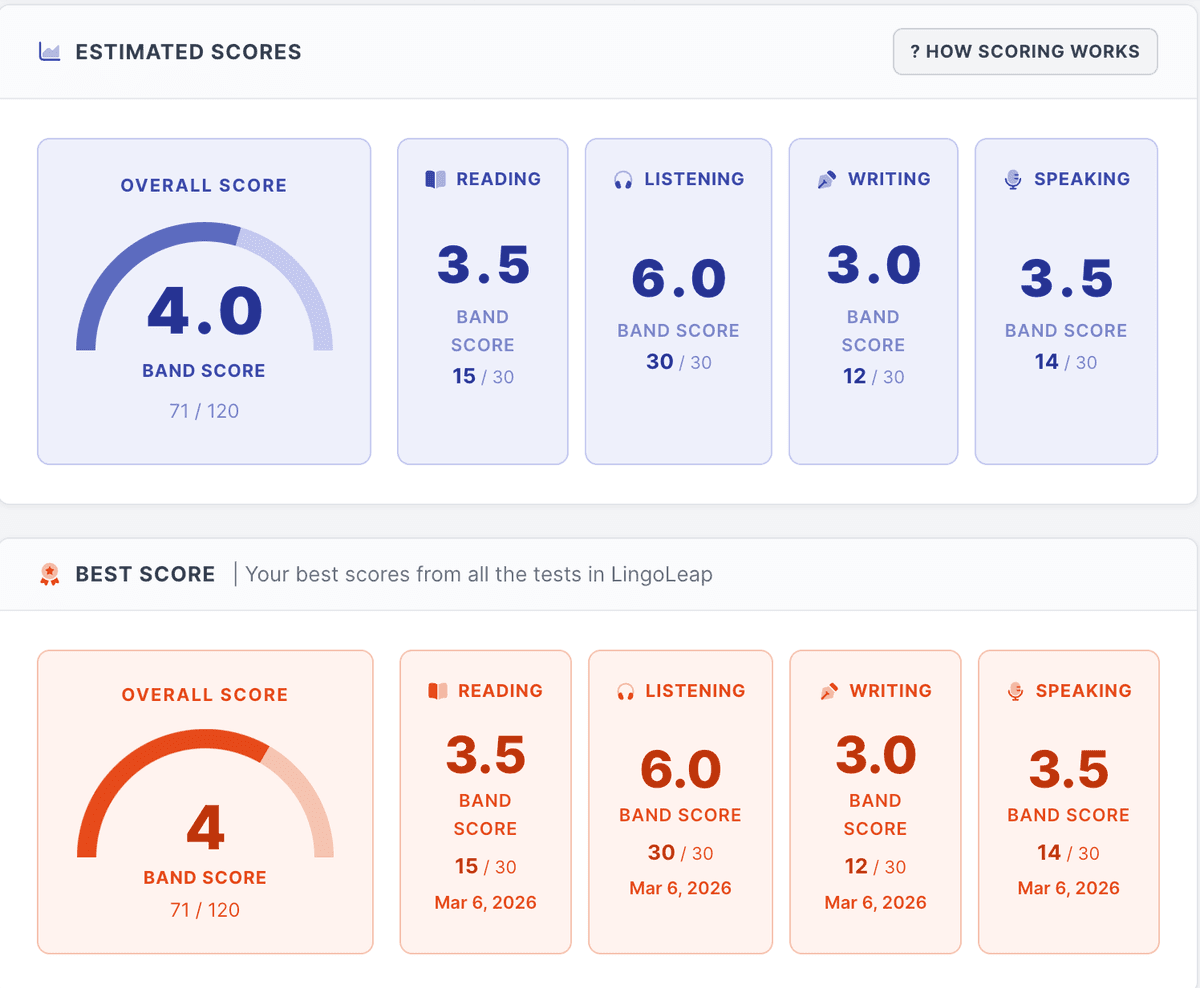 Score Report
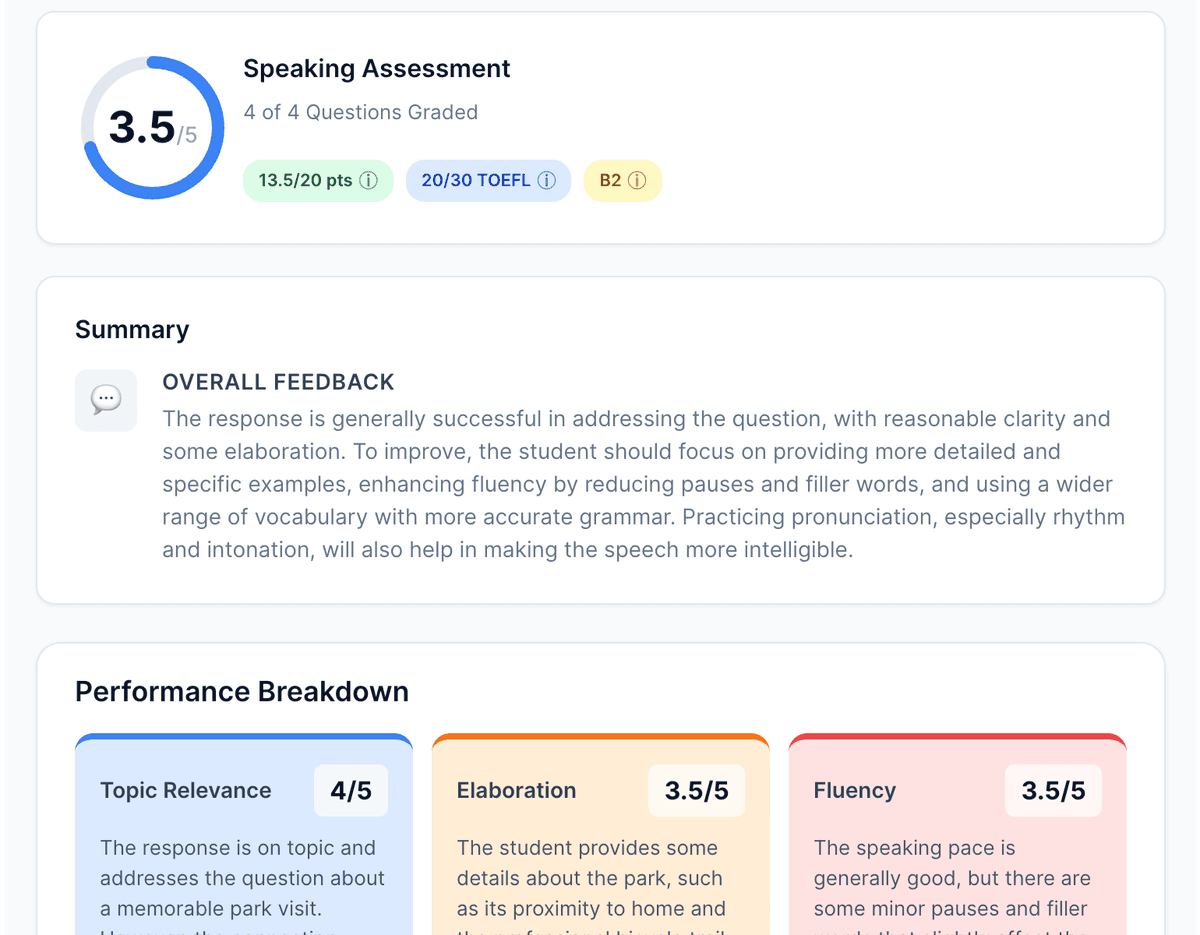 AI Speaking Score
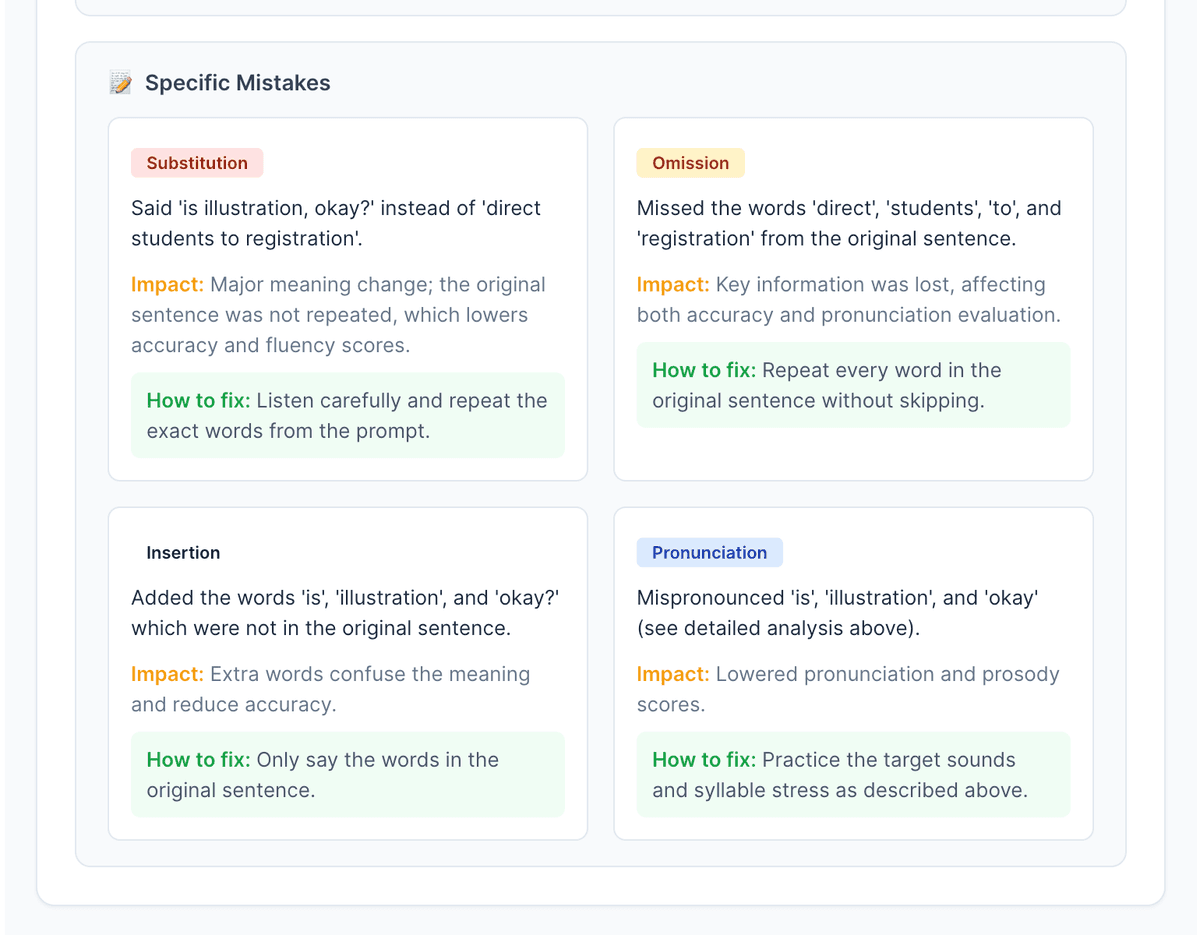 Mistake Analysis
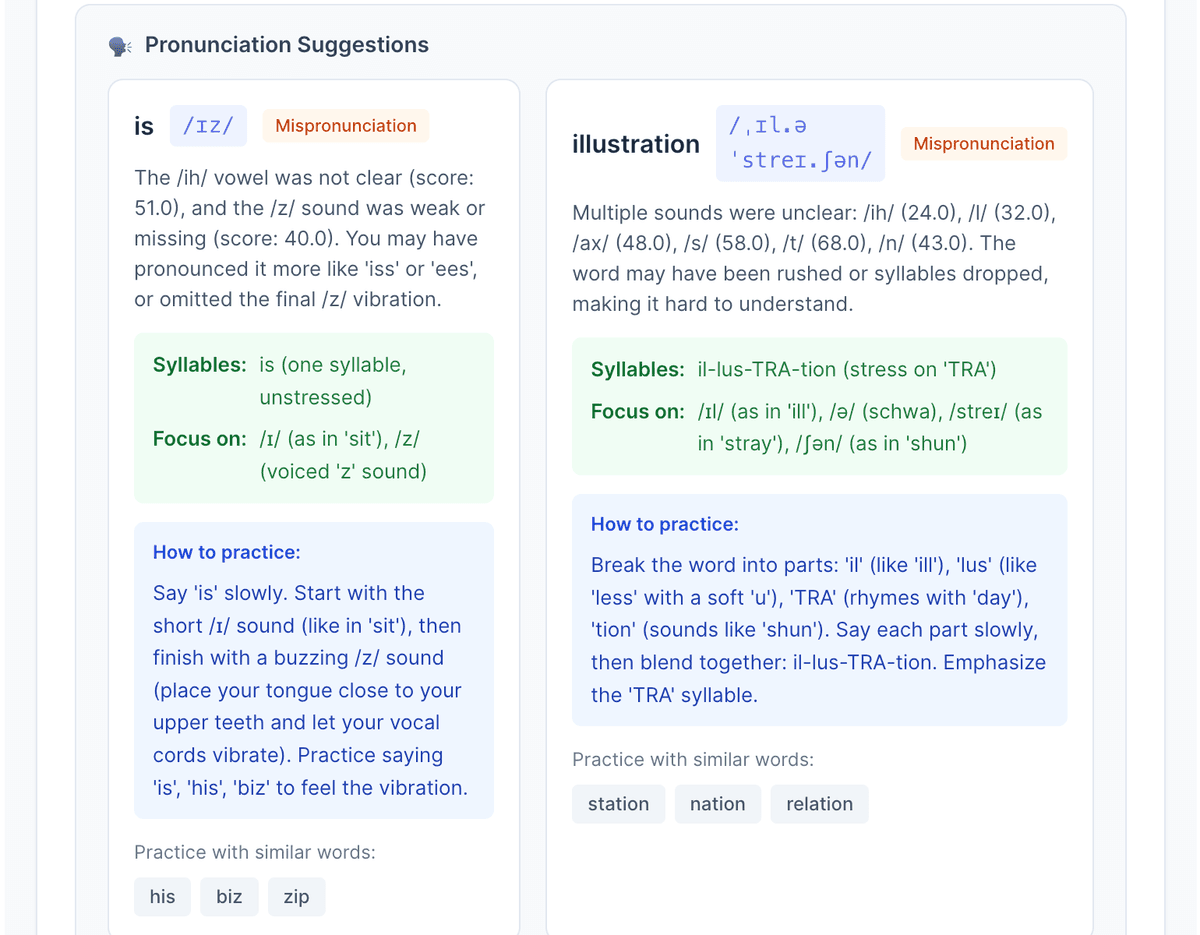 Pronunciation Feedback
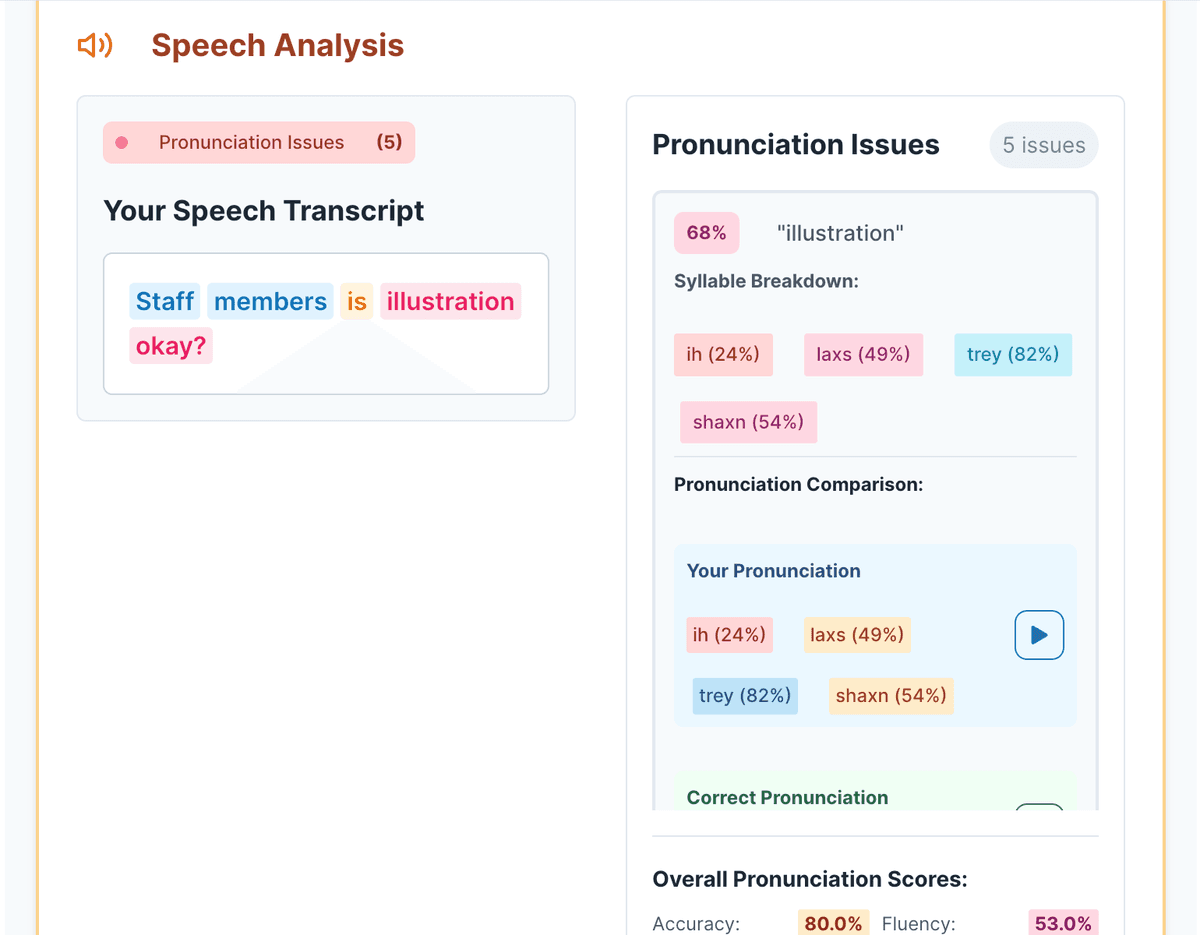 Speech Analysis
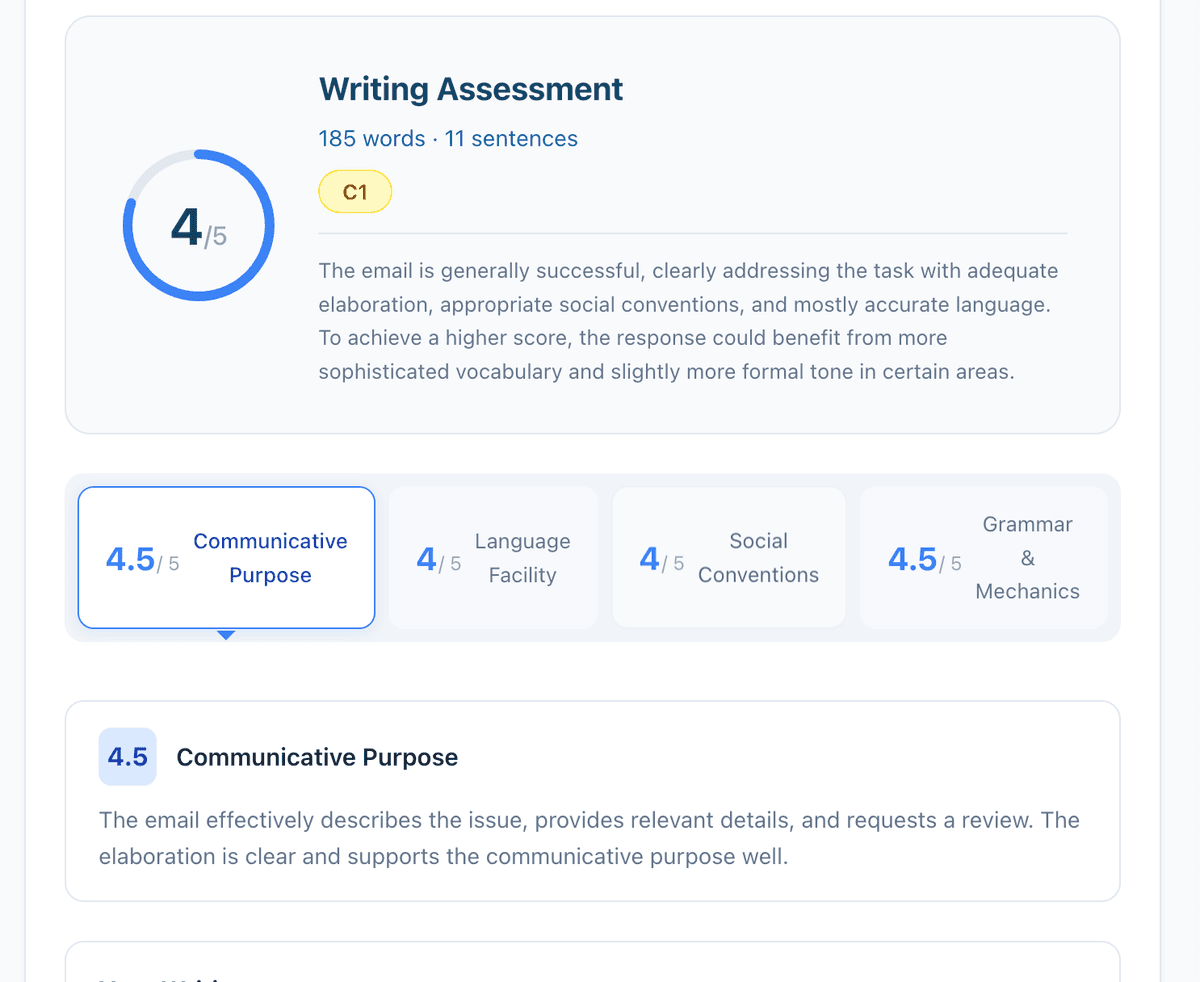 AI Writing Score
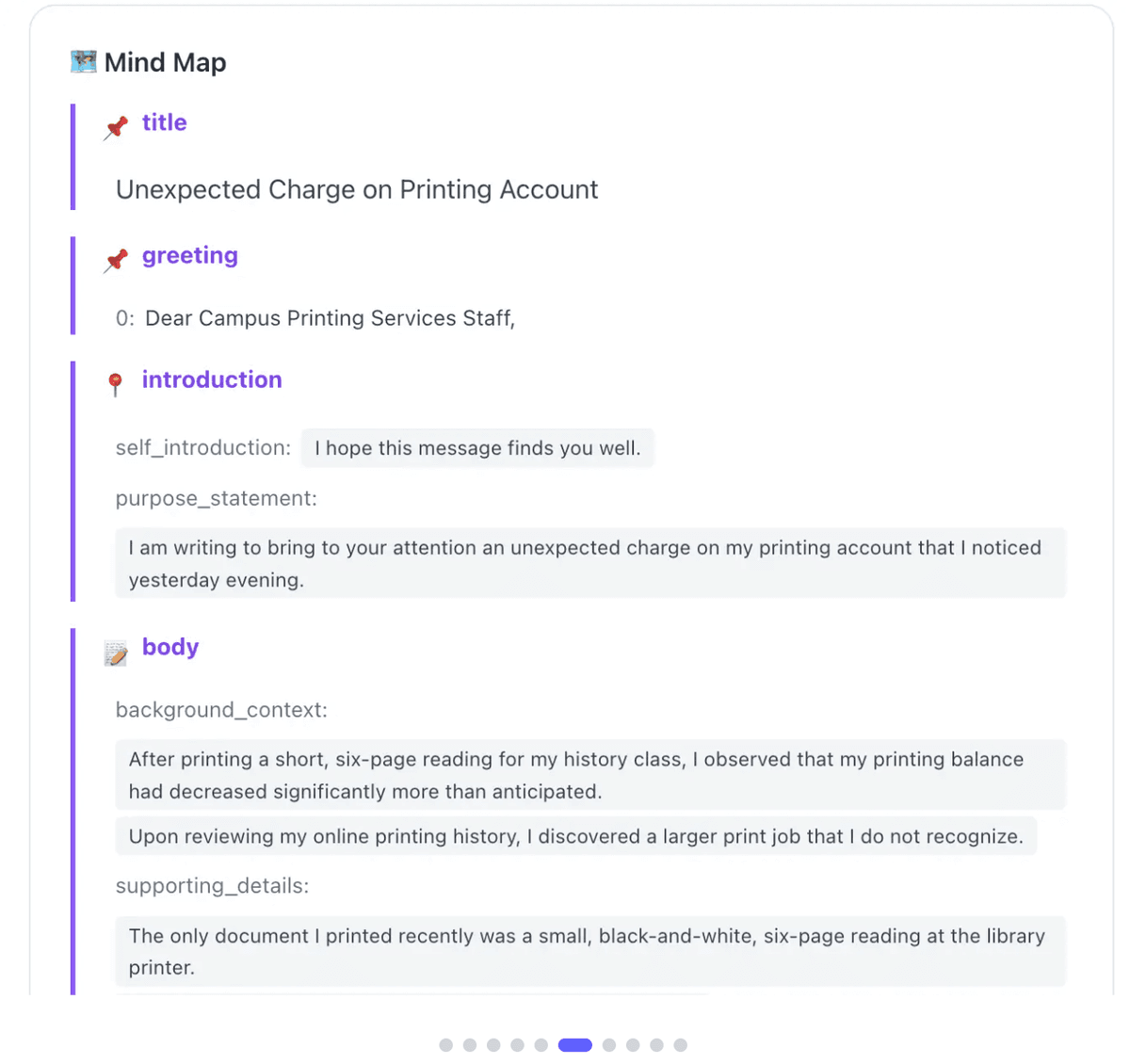 Article Structure Feedback
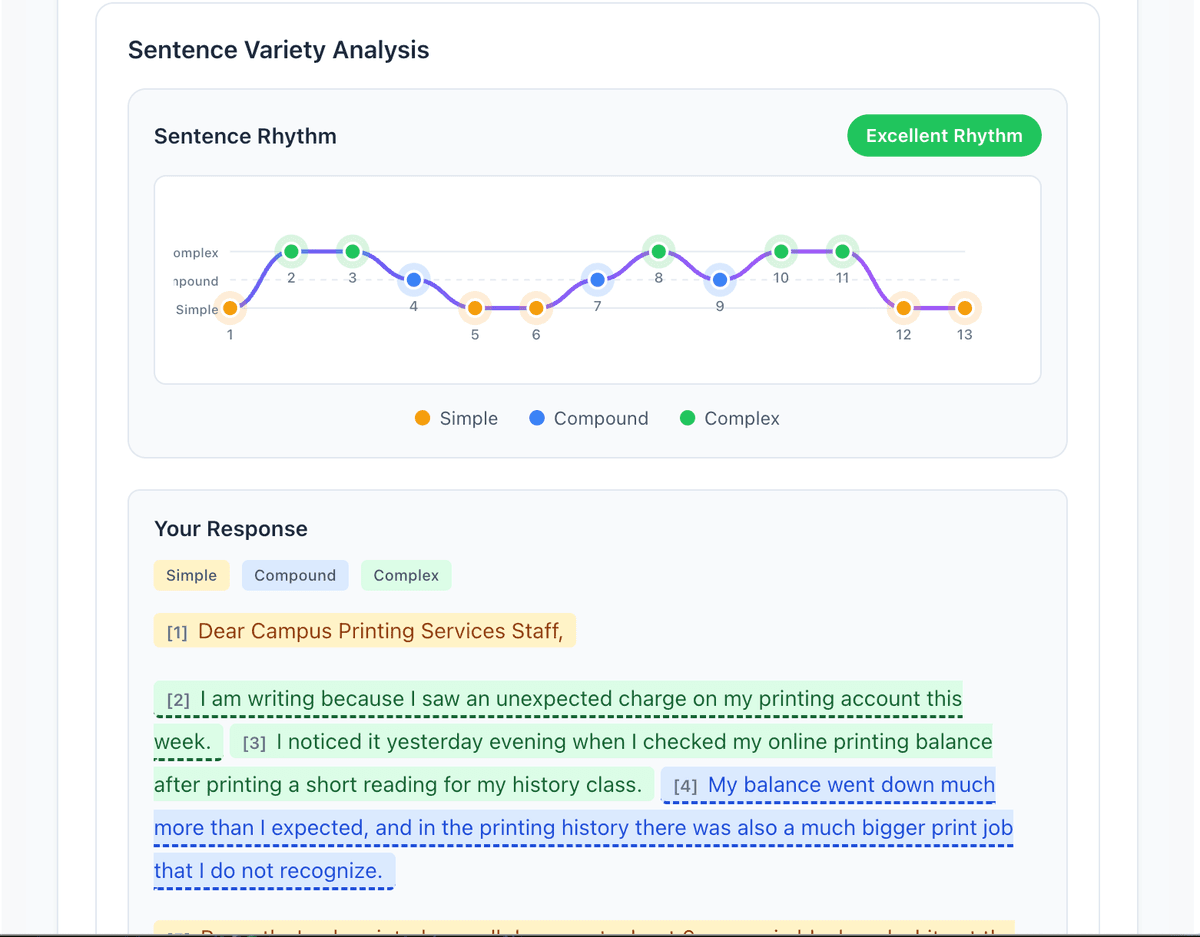 Sentence Variety
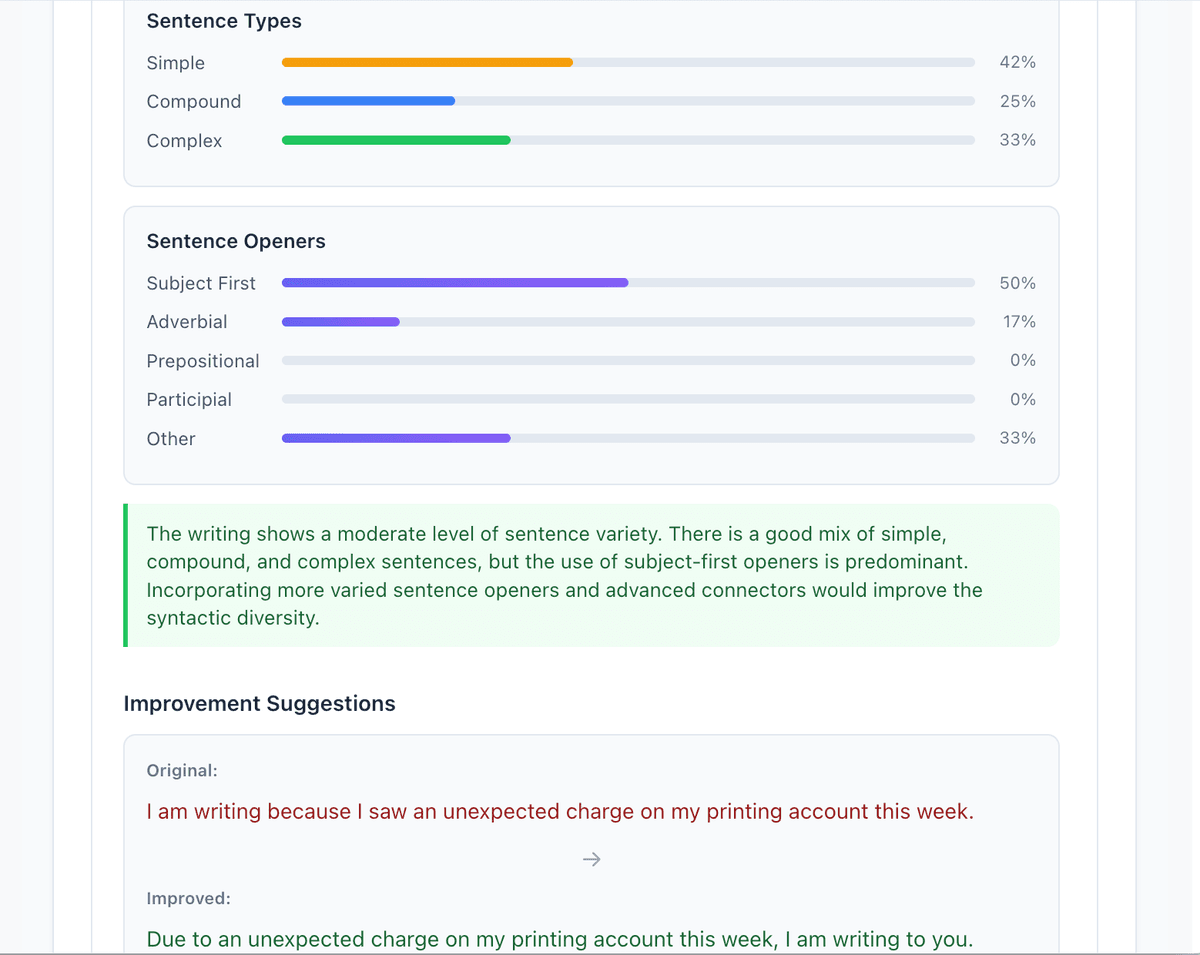 Improvement Suggestions
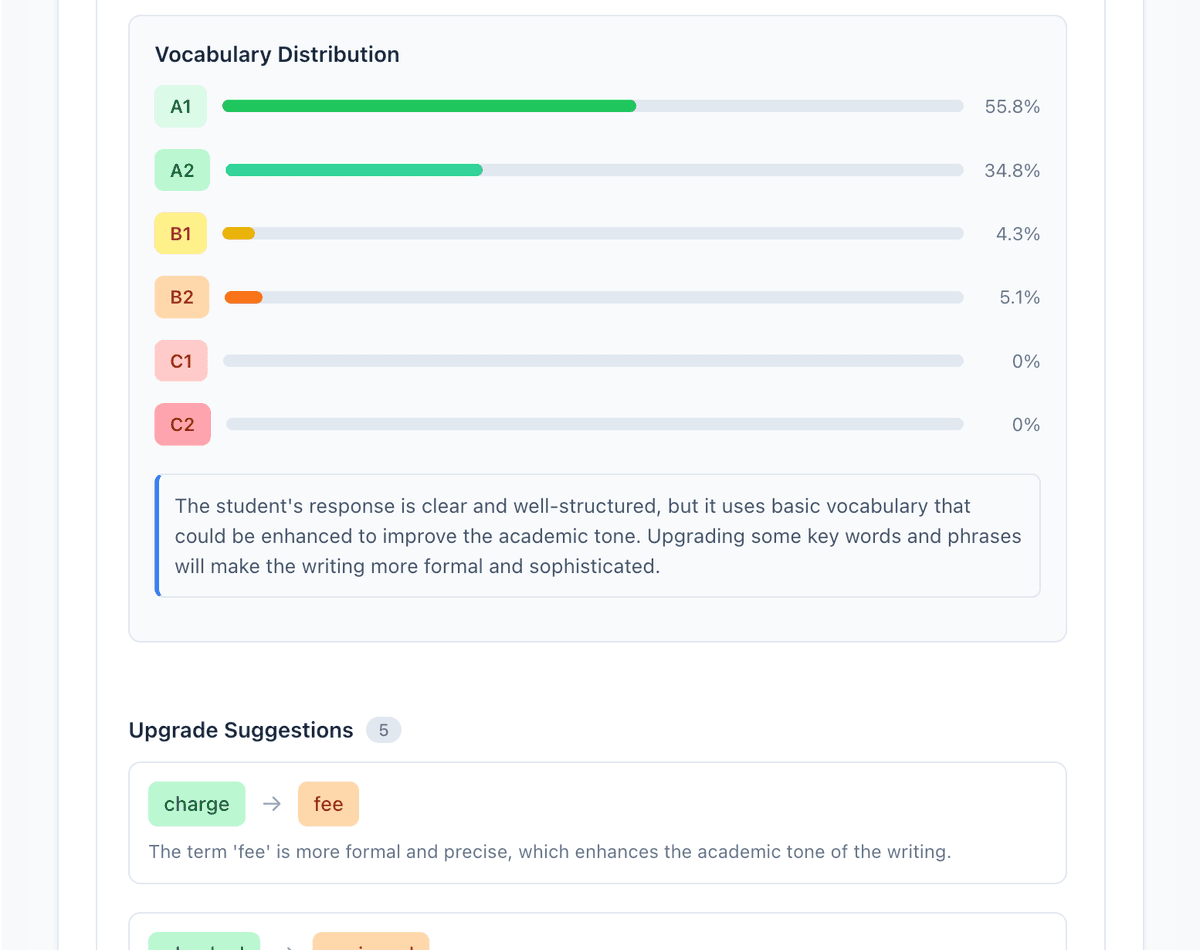 Vocabulary Feedback
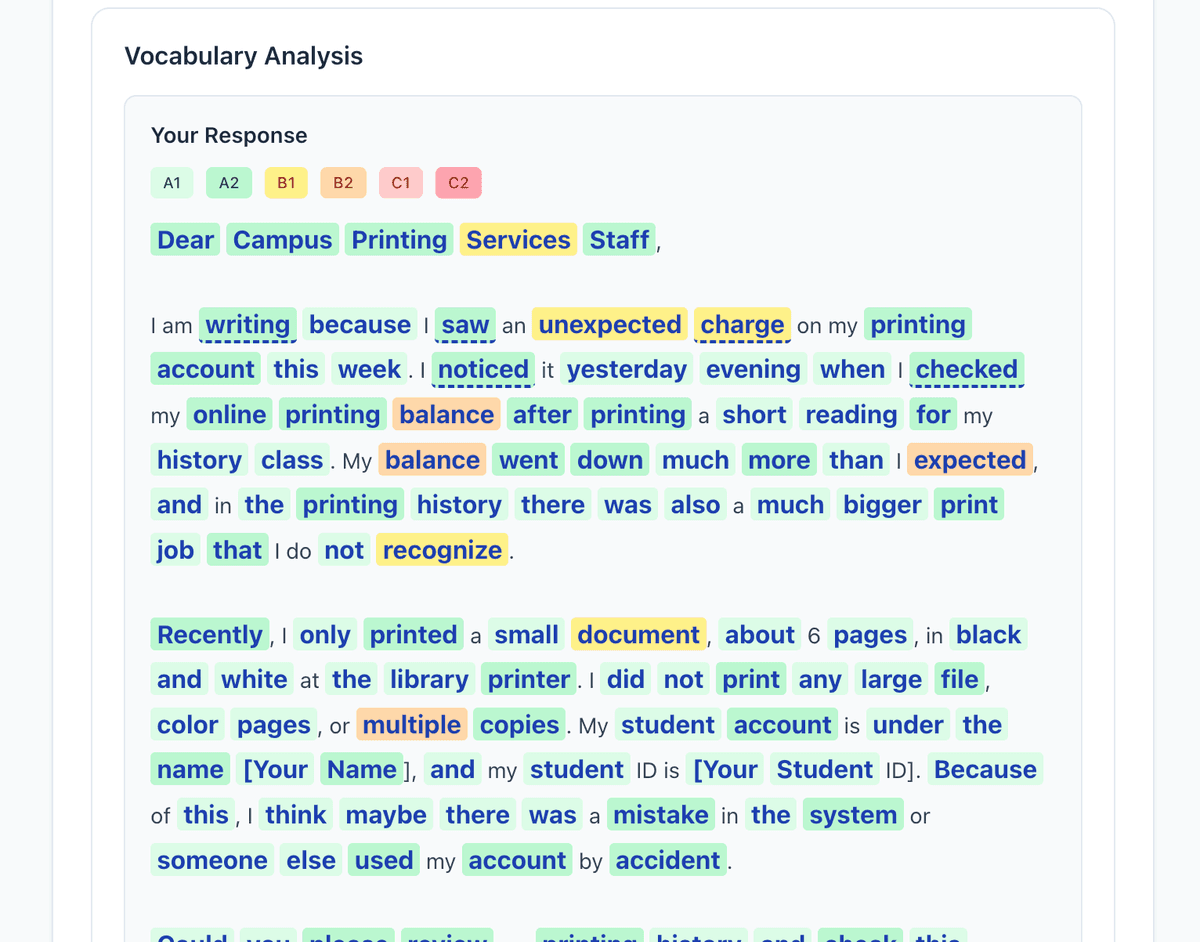 Vocabulary Analysis
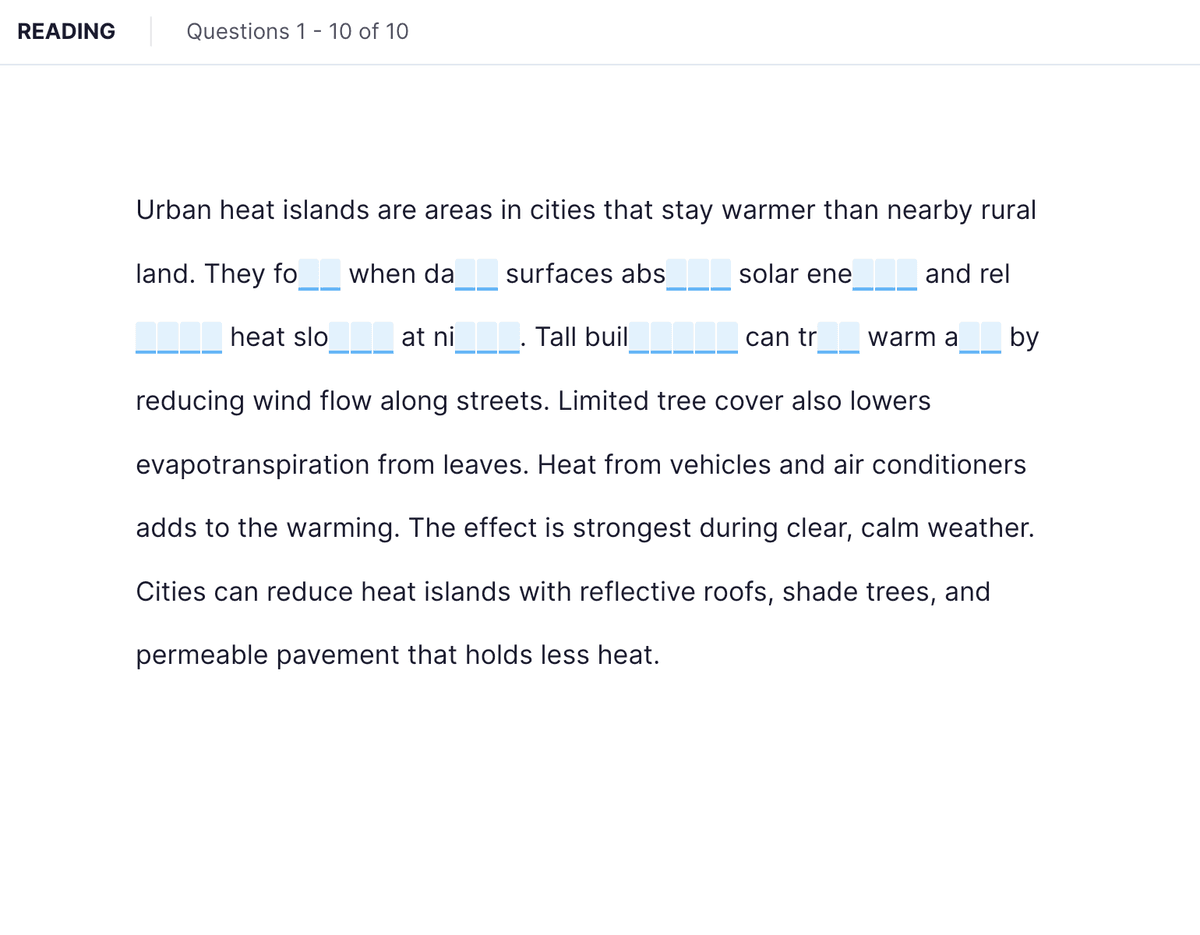 TOEFL 26 New: Reading
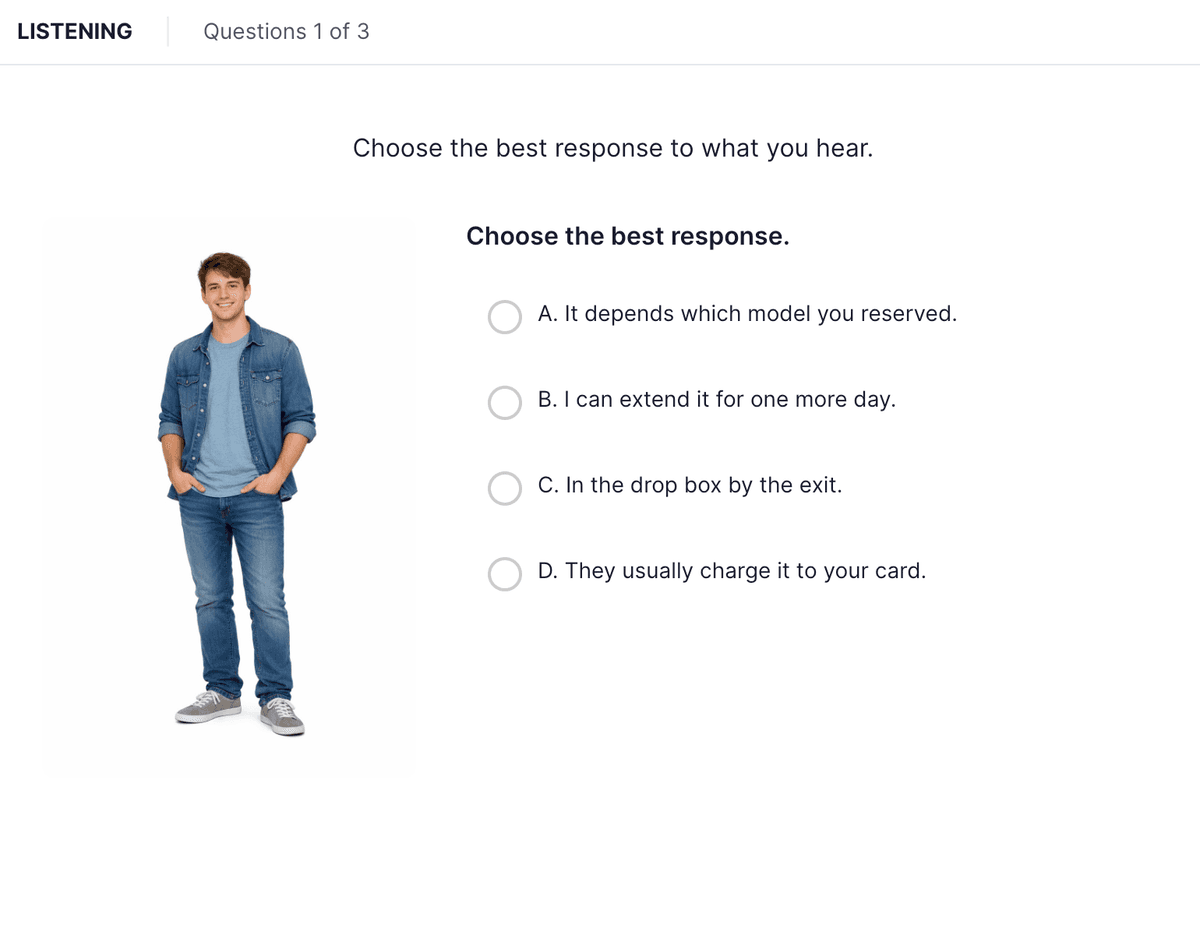 TOEFL 26 New: Listening
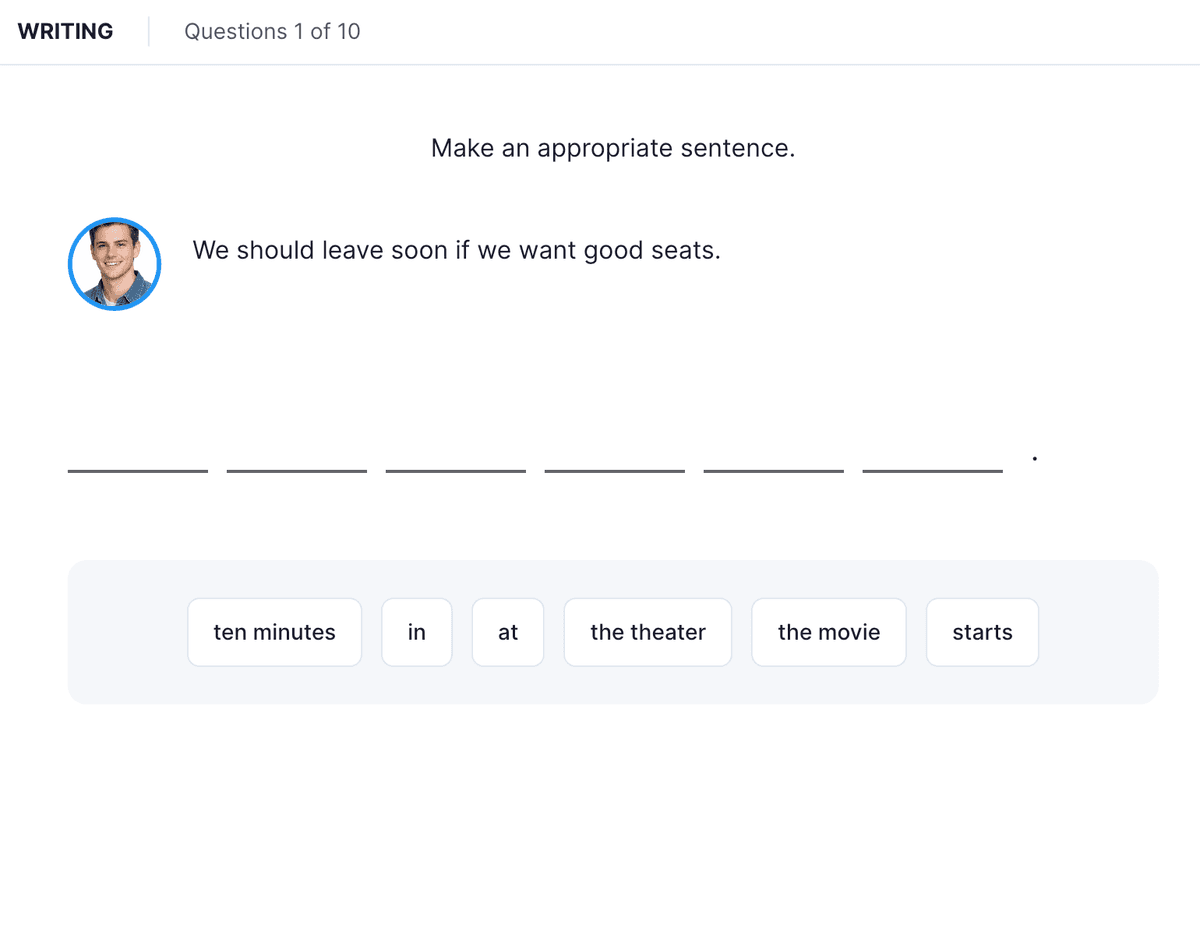 TOEFL 26 New: Writing
 TOEFL 26 New: Speaking
TOEFL 26 모의고사란?
TOEFL 26 모의고사는 2026년 1월 21일에 시행된 완전히 새로워진 TOEFL iBT 형식에 맞춰 설계된 연습 시험입니다.
신토플은 리딩, 리스닝, 라이팅, 스피킹 전 4개 섹션에 걸쳐 10가지 완전히 새로운 문제 유형을 도입하고, 리딩과 리스닝에 다단계 적응형 시험을 채택했으며, CEFR에 맞춘 새로운 1~6점 채점 체계를 사용합니다.
효과적인 신토플 연습을 위해서는 새로운 시험 구조, 10가지 문제 유형, 변경된 채점 시스템을 정확하게 반영한 모의고사가 필수적입니다.
LingoLeap은 실제 TOEFL 26 시험 경험을 충실히 재현한 모의고사를 제공합니다.
신토플 2026 시험 형식
TOEFL 2026 시험은 리딩, 리스닝, 라이팅, 스피킹 4개 섹션으로 구성됩니다. 예상 시험 시간은 2시간 이내이며, 시험 시간에는 지시문 안내 시간이 포함되지 않습니다. 시험이 적응형으로 진행되므로 시험 시간과 문항 수는 달라질 수 있습니다.
Reading
약 30분
약 50문항
2개 모듈에 걸친 다단계 적응형 방식
Listening
약 29분
약 47문항
2개 모듈에 걸친 다단계 적응형 방식
Writing
약 23분
12문항
선형 형식 — 모든 응시자가 동일한 과제 수행
Speaking
약 8분
11문항
선형 형식 — 모든 응시자가 동일한 과제 수행
TOEFL 2026 전체 문제 유형
Reading
- Complete the Words
- Read in Daily Life
- Read an Academic Passage
8가지 문제 유형: 사실 & 부정 사실 문제, 어휘 문제, 문장 선택 문제, 문장 간소화 문제, 참조 문제, 추론 문제, 수사적 목적 문제, 텍스트 삽입 문제
Listening
- Listen and Choose a Response
- Listen to a Conversation
- Listen to an Announcement
- Listen to an Academic Talk
6가지 문제 유형: 주제 파악, 사실 문제, 추론 문제, 목적 문제, 방법 문제, 태도 문제
Writing
- Build a Sentence
- Write an Email
- Write for an Academic Discussion
선형 형식 — 의사소통 목적, 구문, 어휘 선택, 사회적 관습, 정확성을 기준으로 채점
Speaking
- Listen and Repeat
- Take an Interview
선형 형식 — 전달력(명확성, 유창성), 언어 사용(문법, 어휘), 내용 전개를 기준으로 채점
리딩과 리스닝 섹션은 다단계 적응형 시험 방식을 사용합니다. 모듈 1에서의 성적이 모듈 2의 난이도를 결정합니다. 이를 통해 응시자 개인에게 최적화된 시험 경험이 제공되며, 영어 능력을 더 효율적이고 정확하게 측정할 수 있습니다.
LingoLeap TOEFL 26 모의고사를 선택해야 하는 이유
대부분의 TOEFL 대비 교재는 아직 구형식에 기반하고 있습니다. LingoLeap은 TOEFL 2026 신형식에 특화되어 제작되었습니다.
 TOEFL 2026 공식 문제 유형 10가지를 모두 포함한 풀 모의고사
- 실제 시험과 동일한 다단계 적응형 리딩 & 리스닝
- ETS 공식 채점 기준에 맞춘 AI 스피킹 & 라이팅 채점
- 최대 규모의 TOEFL 26 모의고사 라이브러리
대부분의 교재는 구토플 대비용입니다. LingoLeap은 신토플에 완벽히 대응합니다.
TOEFL 2026 전체 문제 유형 완벽 커버
LingoLeap의 TOEFL 26 모의고사는 4개 섹션, 10가지 공식 문제 유형을 실제 시험과 동일한 형태로 완벽하게 다룹니다.
Reading
- Complete the Words
짧은 학술 단락에서 빠진 단어의 일부를 재구성하기
- Read in Daily Life
이메일, 공지, SNS 게시물 등 실생활 텍스트를 읽고 이해하기
- Read an Academic Passage
짧은 학술 지문(약 200단어)을 읽고 5개 문항에 답하기
Listening
- Listen and Choose a Response
짧은 질문이나 발화를 듣고 4개 선택지에서 가장 적절한 응답을 고르기
- Listen to a Conversation
2명의 화자가 나누는 캠퍼스 생활 관련 짧은 대화를 듣고 문항에 답하기
- Listen to an Announcement
수업 또는 캠퍼스 행사 안내 방송을 듣고 문항에 답하기
- Listen to an Academic Talk
다양한 학술 주제에 대한 짧은 강의를 듣고 문항에 답하기
Writing
- Build a Sentence
짧은 대화 속에서 단어와 구를 재배열하여 문장을 완성하기
- Write an Email
추천, 초대, 해결 방안 제시 등 특정 목적에 맞는 이메일을 작성하기
- Write for an Academic Discussion
교수의 게시글과 2명의 학생 응답을 읽고 자신의 의견을 100단어 이상으로 작성하기
Speaking
- Listen and Repeat
길이와 복잡성이 점차 증가하는 7개의 문장을 듣고 정확히 따라 말하기
- Take an Interview
학술 대화를 시뮬레이션한 인터뷰에서 4개의 질문에 답하기 (각 45초)
다단계 적응형 시험 — 실제 TOEFL 2026과 동일한 방식
LingoLeap 모의고사는 실제 TOEFL의 다단계 적응형 구조를 재현합니다. 모듈 1에서의 성적이 모듈 2의 난이도를 결정하며, 실제 시험과 동일한 경험을 제공합니다.
실전과 동일한 시험 진행
실제 TOEFL 2026과 동일한 적응형 흐름 — 모듈 1의 성적이 모듈 2의 난이도를 결정
다양한 난이도 연습
쉬운 모듈과 어려운 모듈 모두 연습하여 모든 수준에서 자신감과 정확도를 향상
실제 실력 진단
적응형 채점 로직과 원점수-환산점수 변환을 기반으로 실제 점수 가능성을 파악
스피킹 & 라이팅 AI 채점
ETS 공식 채점 기준에 맞춰 모든 스피킹 및 라이팅 응답에 대해 즉각적이고 상세한 피드백을 제공합니다. 각 응답은 0~5점의 총합 점수로 채점됩니다.
스피킹 평가
Listen and Repeat
- 반복 정확도
- 명료도(인텔리저빌리티)
- 발음
Take an Interview
- 전달력 (명확성, 유창성, 발음, 억양)
- 언어 사용 (문법 & 어휘의 범위와 정확성)
- 내용 전개 (주제 관련성, 근거 있는 의견)
라이팅 평가
Write an Email
- 의사소통 목적에 부합하는 내용 전개
- 구문의 다양성과 정확하고 관용적인 어휘 선택
- 적절한 사회적 관습 (공손함, 격식, 레지스터)
- 어휘 및 문법의 정확성
Write for an Academic Discussion
- 관련성 있고 충분히 전개된 설명과 예시
- 다양한 구문 구조와 정확하고 관용적인 어휘 선택
- 어휘 및 문법의 정확성
Try TOEFL Practice Test Questions Now
Warm up with these free sample questions modeled on the 2026 TOEFL iBT — one from each section. Reveal the answer and explanation, then start a full-length practice test when you are ready.
Read the short academic passage, then answer the question.
Bioluminescence — the production of light by living organisms — is common in the deep ocean, where sunlight never reaches. Many creatures use it to attract prey, confuse predators, or signal to potential mates. The light is produced by a chemical reaction between a molecule called luciferin and the enzyme luciferase. Because the reaction gives off almost no heat, scientists describe the light as "cold light."
According to the passage, why is bioluminescent light described as "cold light"?
- AIt is only found in cold, deep water.
- BThe chemical reaction releases very little heat.
- CIt appears blue rather than red or orange.
- DIt is produced only at night.
▸Show answer & explanation
Answer: B — The chemical reaction releases very little heat.
The final sentence states the reaction "gives off almost no heat," which is why it is called cold light. Option A confuses where the organisms live with why the light is cold; C and D add details the passage never mentions. Factual questions like this reward locating the exact supporting sentence rather than relying on outside knowledge.
Type the missing letters to complete the word so the sentence makes sense.
Regular exercise can signi______ reduce the risk of heart disease.
▸Show answer & explanation
Answer: significantly
"Complete the Words" gives you the first letters and the length of a word and asks you to finish it from context. Here the sentence needs an adverb describing how much exercise reduces risk — "significantly." Read the whole sentence first, decide the part of speech, then fit a word that starts with the letters shown.
On the real test you would hear this talk once. Read the transcript excerpt, then answer.
Professor: "So when we talk about the 'urban heat island' effect, we mean that cities tend to be several degrees warmer than the countryside around them. The main reason is surface material. Asphalt and concrete absorb heat during the day and release it slowly at night — unlike soil and vegetation, which cool down much faster. That's why a city can still feel warm hours after sunset."
What is the main cause of the urban heat island effect, according to the professor?
- ACities are located in naturally warmer regions.
- BBuildings block cooling wind from reaching streets.
- CPaved surfaces absorb and slowly release heat.
- DThere are more people generating body heat.
▸Show answer & explanation
Answer: C — Paved surfaces absorb and slowly release heat.
The professor names surface material — asphalt and concrete absorbing heat and releasing it slowly — as "the main reason." The other options are plausible-sounding distractors the talk never states. In the Listening section, note the speaker's signal phrases ("the main reason is…") to catch the point being tested.
Put the words and phrases in the correct order to form a grammatical sentence.
[ the deadline / because / the library / she / was approaching / stayed late at ]
▸Show answer & explanation
Answer: She stayed late at the library because the deadline was approaching.
"Build a Sentence" tests control of English word order and clause structure. Start with the subject ("She"), add the main verb phrase ("stayed late at the library"), then attach the reason clause introduced by "because." Checking that subject, verb, and connector line up is usually enough to place every chunk.
You have 45 seconds to answer. There is no single correct response — a strong answer is clear, on-topic, and supported with a reason or example.
Some students prefer to study in the morning, while others prefer the evening. Which do you prefer, and why?
▸Show answer & explanation
Answer: Sample strong response (outline)
Take a clear position, give one reason, and support it with a specific example: "I prefer studying in the morning because my mind is freshest right after I wake up. For instance, I can read a difficult chapter in thirty minutes in the morning, but the same chapter takes me an hour at night when I'm tired." Scoring rewards delivery (clear, fluent speech), language use (accurate grammar and vocabulary), and elaboration (a developed, on-topic idea) — so commit to one answer and develop it rather than listing both options.
These are original Lingoleap practice items built to mirror the 2026 TOEFL iBT task types. They are for practice only and are not real ETS test questions; Lingoleap is independent of and not endorsed by ETS.
Practice TOEFL by Section
A full-length mock test measures readiness, but targeted section practice is how you fix specific weaknesses. Drill any of the four sections and all 10 task types below.
Reading
Adaptive passages and the three 2026 reading task types.
Listening
Conversations, announcements, and academic talks with adaptive difficulty.
Speaking
Listen and Repeat plus the academic interview, with AI delivery feedback.
Writing
Build a Sentence, Write an Email, and Write for an Academic Discussion.
100+개 풀 TOEFL 26 모의고사 — 매월 업데이트
최대 규모의 TOEFL 2026 모의고사 라이브러리를 이용하세요. 매월 새로운 시험이 추가되어 항상 최신 교재로 꾸준히 연습할 수 있습니다.
- 100+개의 풀 TOEFL 26 모의고사
- 모든 시험이 최신 TOEFL 2026 형식 및 문제 유형에 완벽 대응
- 매월 새로운 시험 추가
- 4개 섹션 및 10가지 문제 유형 전체 커버
- Covers all 4 sections and 10 task types
TOEFL 26 모의고사 시작하는 방법
계정 만들기
LingoLeap에 무료 가입
모의고사 선택
100+개의 풀 TOEFL 26 모의고사 중 선택
연습 시작
실제 시험과 동일한 조건에서 시험 응시
점수와 피드백 확인
AI 채점을 통한 즉각적인 점수와 상세한 성과 분석 확인
자주 묻는 질문
TOEFL 26 모의고사에 대해 알아야 할 모든 것
TOEFL 2026 형식은 기존과 무엇이 다른가요?
TOEFL 2026은 2026년 1월 21일에 시행된 완전히 새로운 시험입니다. 리딩과 리스닝에 모듈 1의 성적이 모듈 2의 난이도를 결정하는 다단계 적응형 시험이 도입되었습니다. 라이팅과 스피킹은 선형 형식(모든 응시자가 동일한 과제 수행)입니다. 10가지 완전히 새로운 문제 유형이 채택되었으며, CEFR에 맞춘 새로운 1~6점 채점 체계가 도입되었습니다. 시험 시간은 2시간 이내입니다.
신토플 2026에는 몇 가지 문제 유형이 있나요?
신토플 2026에는 4개 섹션에 걸쳐 10가지 문제 유형이 있습니다. 리딩 3가지(Complete the Words, Read in Daily Life, Read an Academic Passage), 리스닝 4가지(Listen and Choose a Response, Listen to a Conversation, Listen to an Announcement, Listen to an Academic Talk), 라이팅 3가지(Build a Sentence, Write an Email, Write for an Academic Discussion), 스피킹 2가지(Listen and Repeat, Take an Interview)입니다.
LingoLeap의 TOEFL 26 모의고사는 몇 개인가요?
LingoLeap은 현재 100+개의 풀 TOEFL 26 모의고사를 제공하며, 매월 새로운 시험이 추가됩니다. 각 시험은 4개 섹션을 모두 포함하고 TOEFL 2026 형식의 모든 공식 문제 유형을 다룹니다.
LingoLeap은 다단계 적응형 시험을 지원하나요?
네. LingoLeap은 TOEFL 2026 리딩 및 리스닝 섹션에서 사용되는 다단계 적응형 시험 구조를 재현하는 몇 안 되는 플랫폼 중 하나입니다. 모듈 1에서의 성적이 모듈 2의 난이도에 반영되어 실제 시험과 동일한 경험으로 연습할 수 있습니다.
스피킹과 라이팅의 AI 채점은 어떻게 작동하나요?
LingoLeap의 AI는 ETS 공식 채점 기준에 맞춘 평가 기준으로 응답을 채점합니다(각 문항 0~5점 총합 점수). 스피킹에서 Listen and Repeat은 반복 정확도, 명료도, 발음으로 평가됩니다. Take an Interview는 전달력(명확성, 유창성, 속도), 언어 사용(문법, 어휘), 내용 전개(주제 관련성, 뒷받침 근거)로 평가됩니다. 라이팅에서 Write an Email은 의사소통 목적, 구문의 다양성과 관용적 어휘 선택, 사회적 관습(공손함, 격식), 어휘/문법의 정확성으로 평가됩니다. Write for an Academic Discussion은 관련성과 내용 전개, 구문 구조와 어휘 선택, 어휘/문법의 정확성으로 평가됩니다.
LingoLeap 모의고사는 실제 TOEFL과 동일한가요?
LingoLeap 모의고사는 새로운 문제 유형, 다단계 적응형 시험, 시험 시간을 포함하여 실제 TOEFL 2026 경험을 충실히 재현하도록 설계되었습니다. 공식 시험과 완전히 동일하지는 않지만, LingoLeap은 현재 이용 가능한 TOEFL 2026 연습 경험 중 가장 실전에 가까운 것 중 하나입니다.
풀 시험 대신 개별 섹션만 연습할 수 있나요?
네. 풀 모의고사 외에도 LingoLeap에서는 리딩, 리스닝, 스피킹, 라이팅 개별 섹션을 따로 연습할 수 있습니다. 가장 보완이 필요한 영역에 집중적으로 학습할 수 있습니다.
How accurate are Lingoleap's mock test score estimates?
Across 5,000+ paired records comparing a Lingoleap mock-test score estimate with the same learner's official TOEFL score, the mean absolute score difference is within 0.5 points on the TOEFL 1–6 scale. Score estimates are typically available within 1–2 minutes after submission. These are practice score estimates only — official TOEFL scores are issued exclusively by ETS, and Lingoleap is independent of and not endorsed by ETS. See verified student score-improvement stories at lingoleap.ai/toefl/success-stories.
How much does a full mock test cost?
A full mock test costs 800 credits and includes AI scoring for Reading, Listening, Speaking, and Writing with a complete score report. New accounts start with 200 free AI-feedback credits, and Reading and Listening practice never costs credits.