Simulados TOEFL 26
Pratique o Novo Formato do TOEFL 2026
Simulados completos do TOEFL 26 com Reading e Listening adaptativo, todos os tipos de questão e correção por IA para Speaking e Writing.
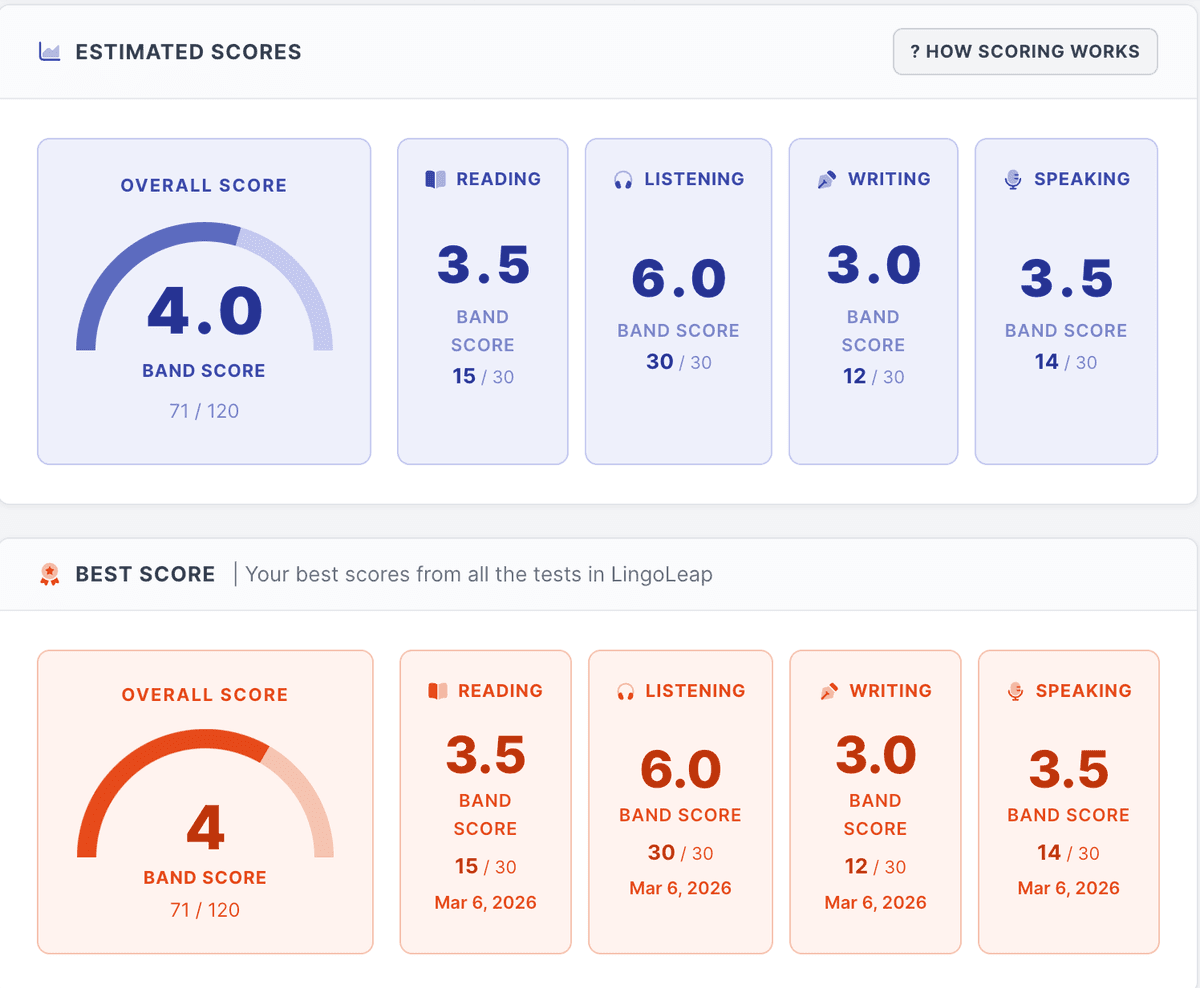 Score Report
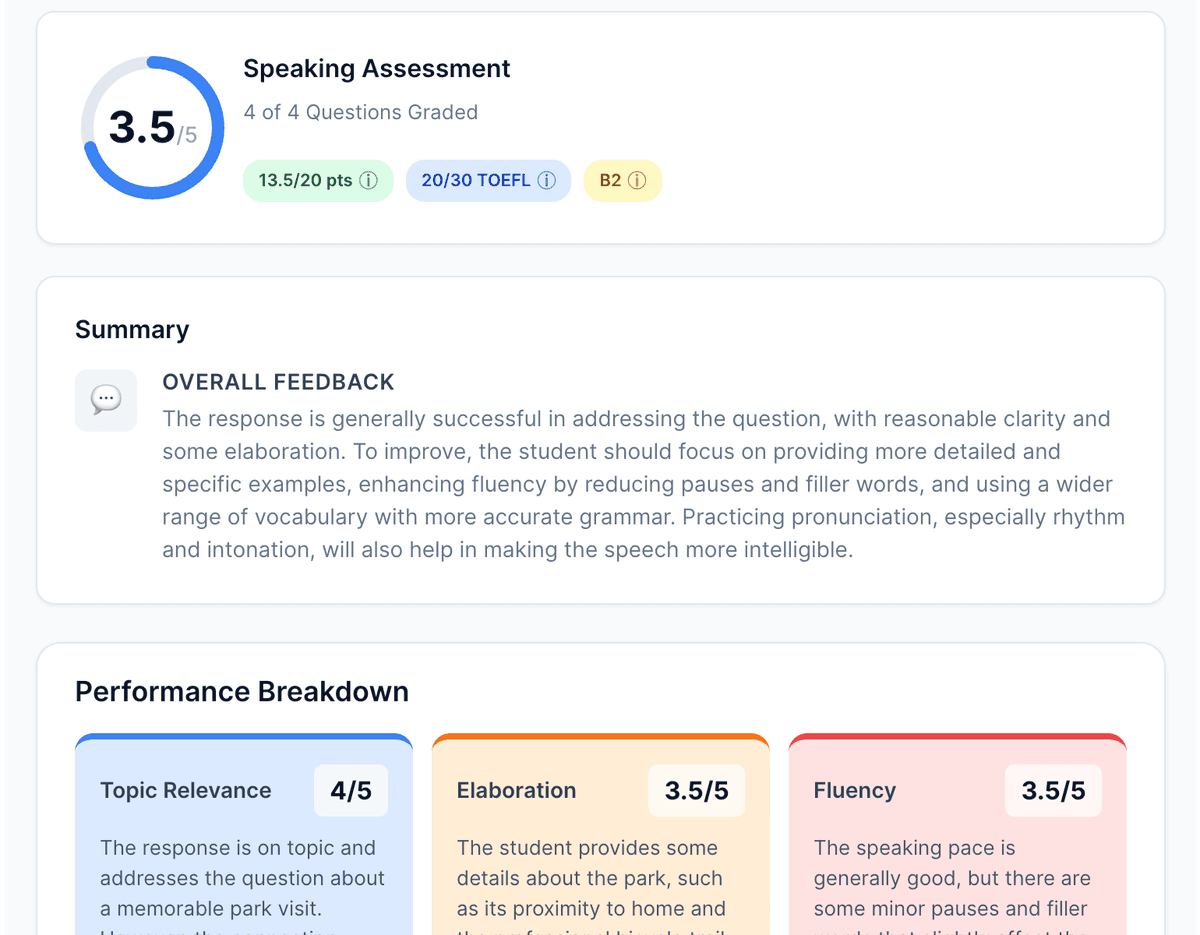 AI Speaking Score
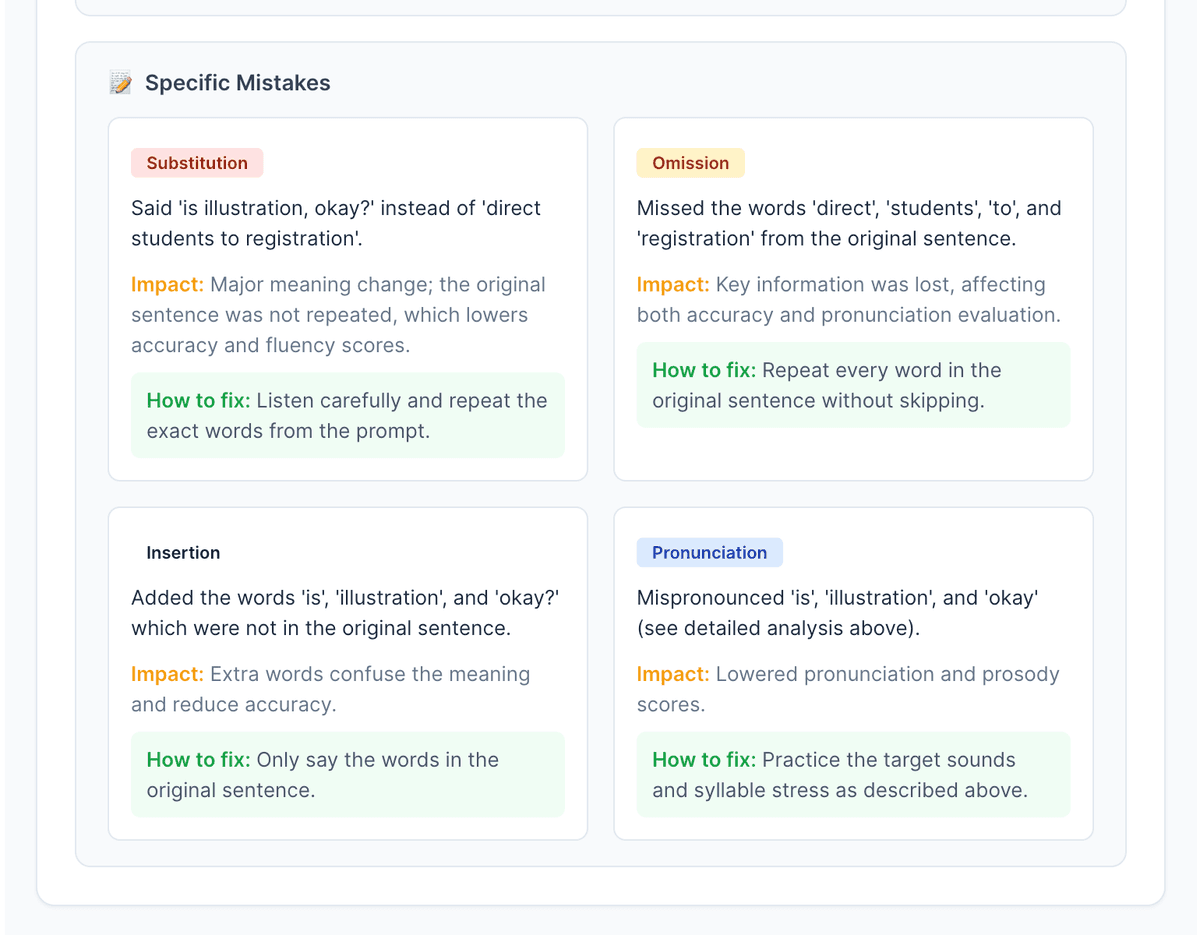 Mistake Analysis
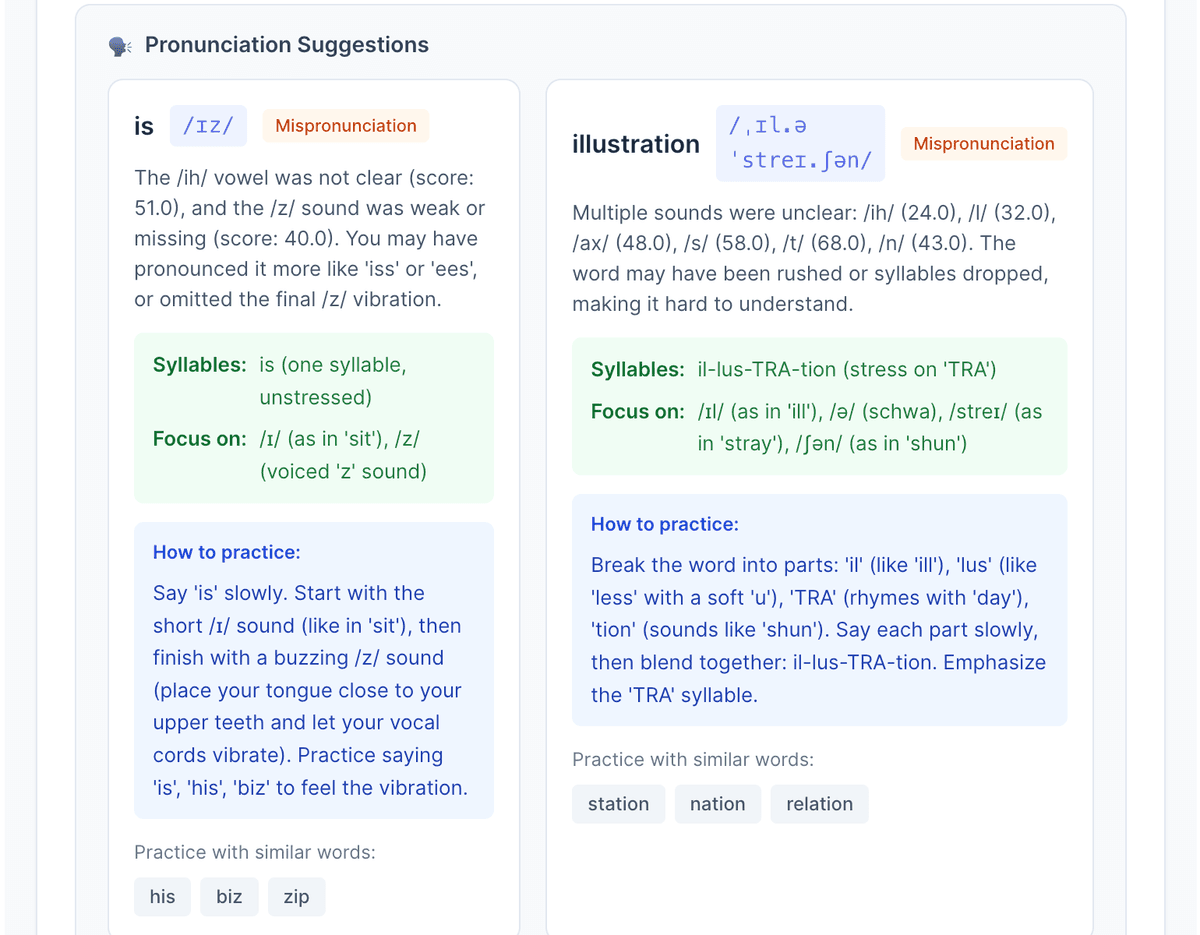 Pronunciation Feedback
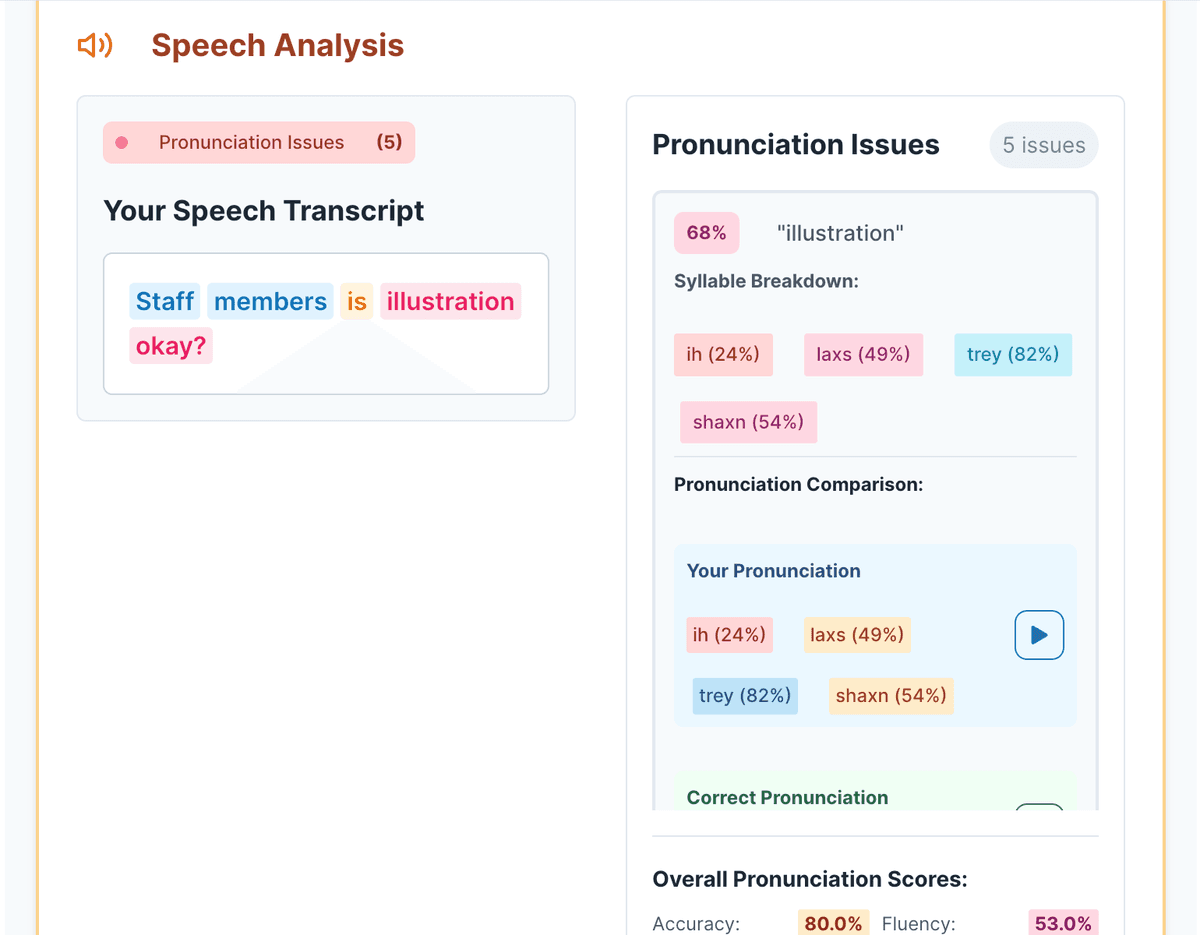 Speech Analysis
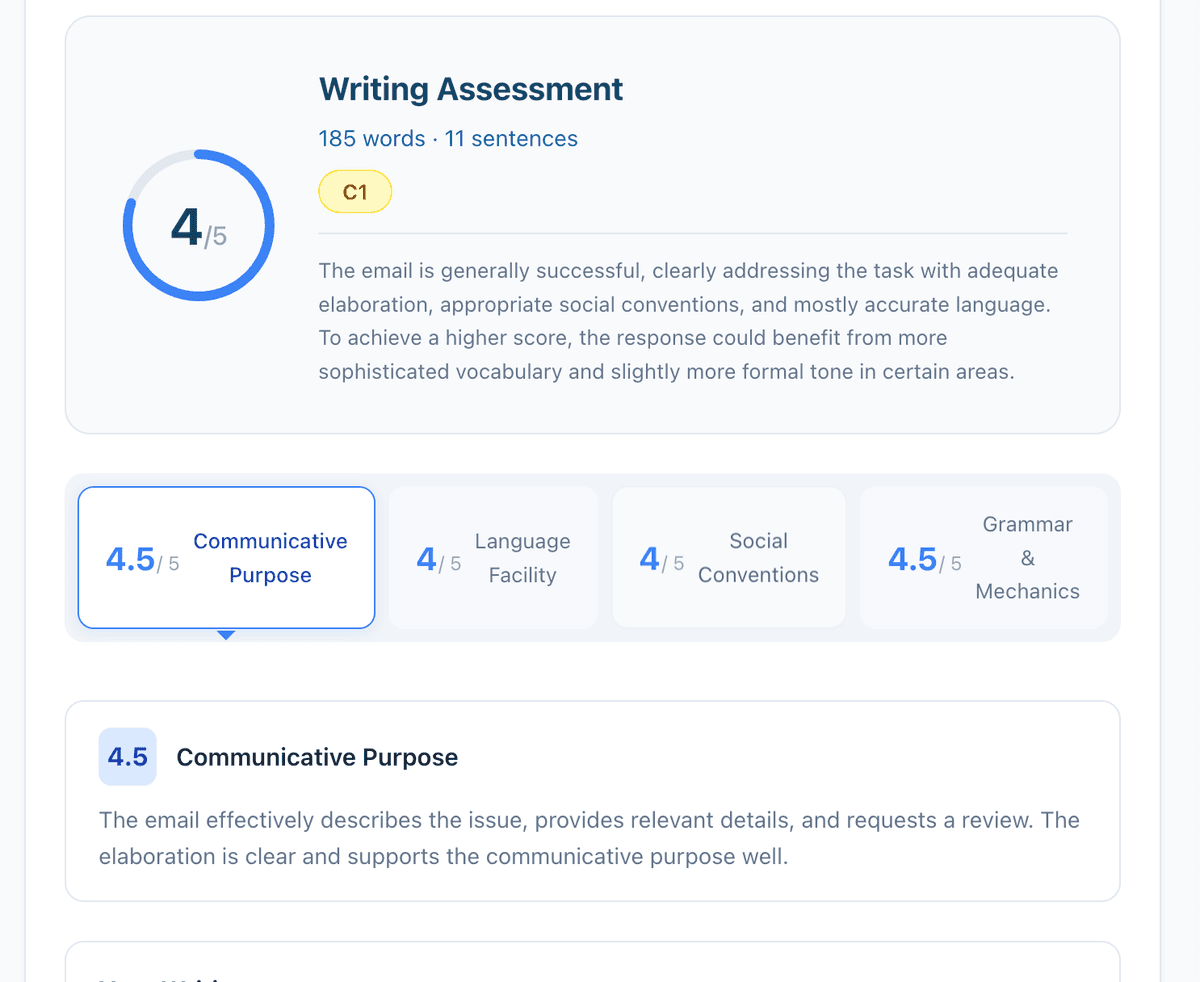 AI Writing Score
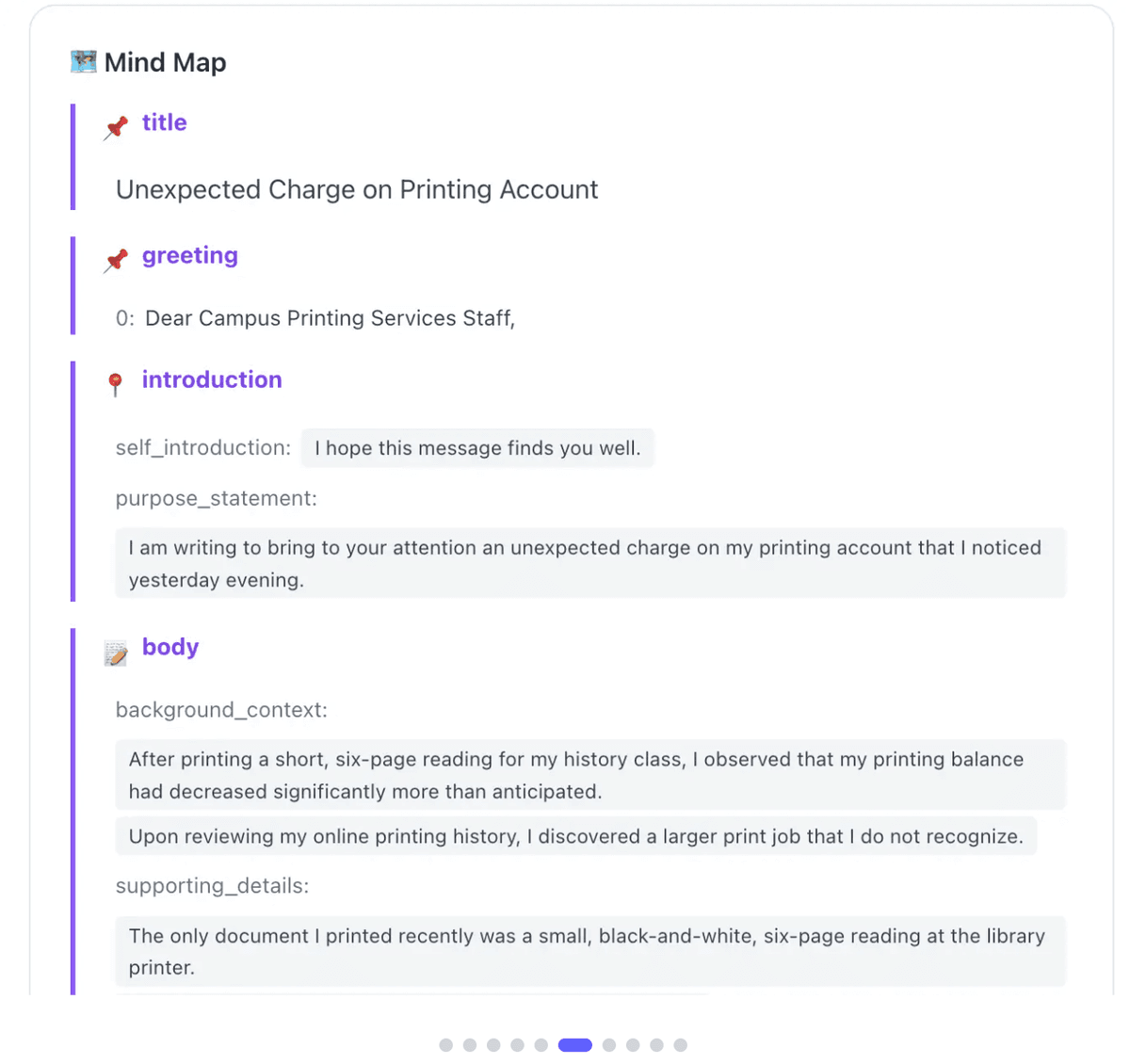 Article Structure Feedback
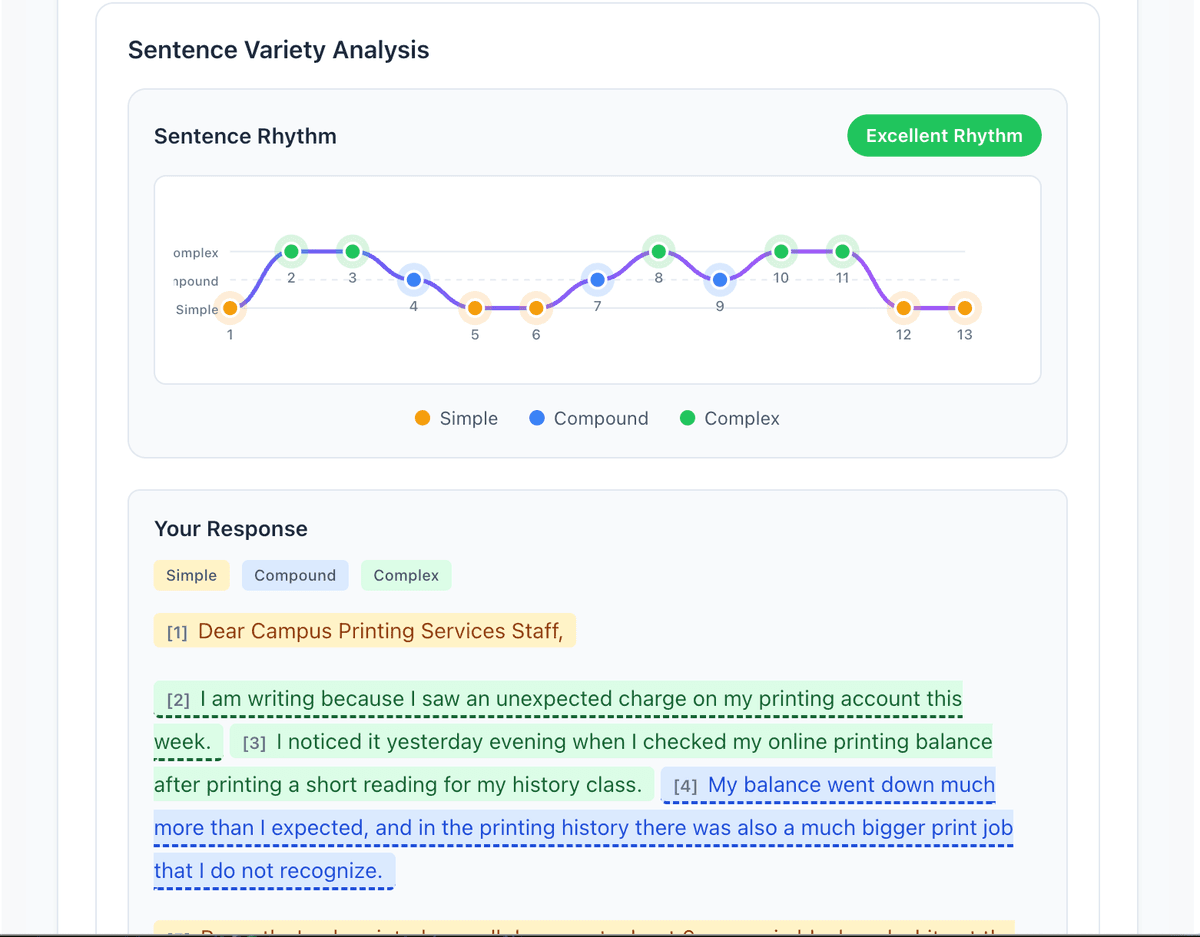 Sentence Variety
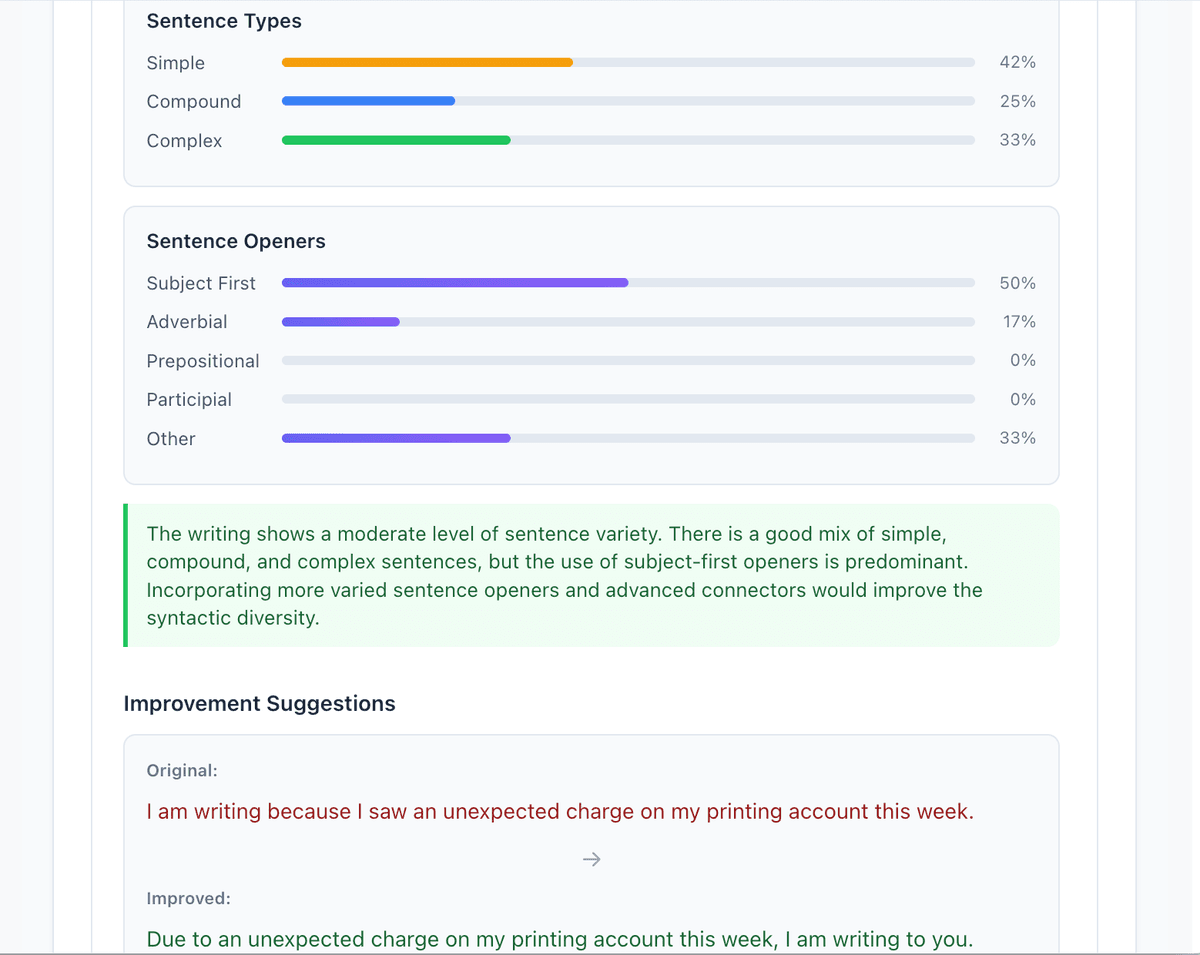 Improvement Suggestions
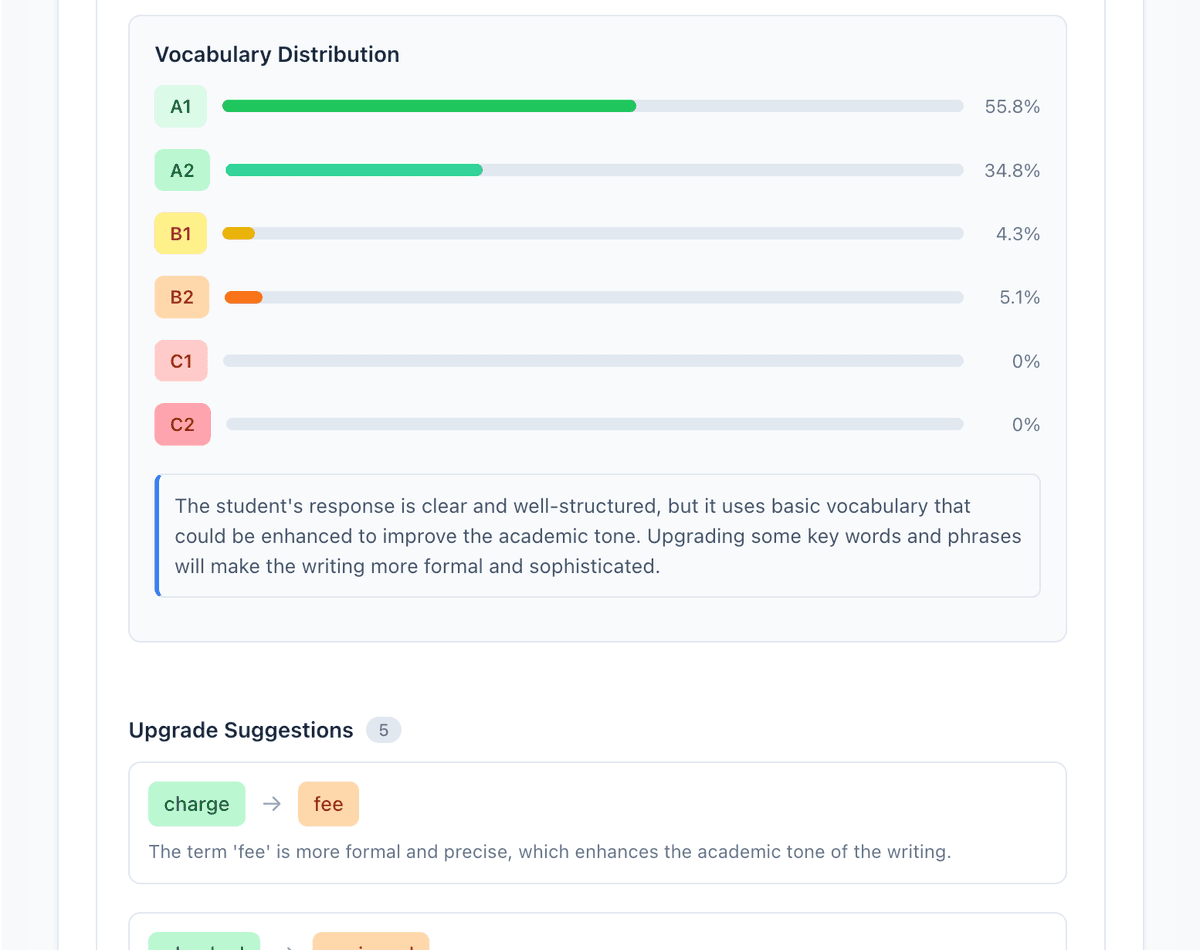 Vocabulary Feedback
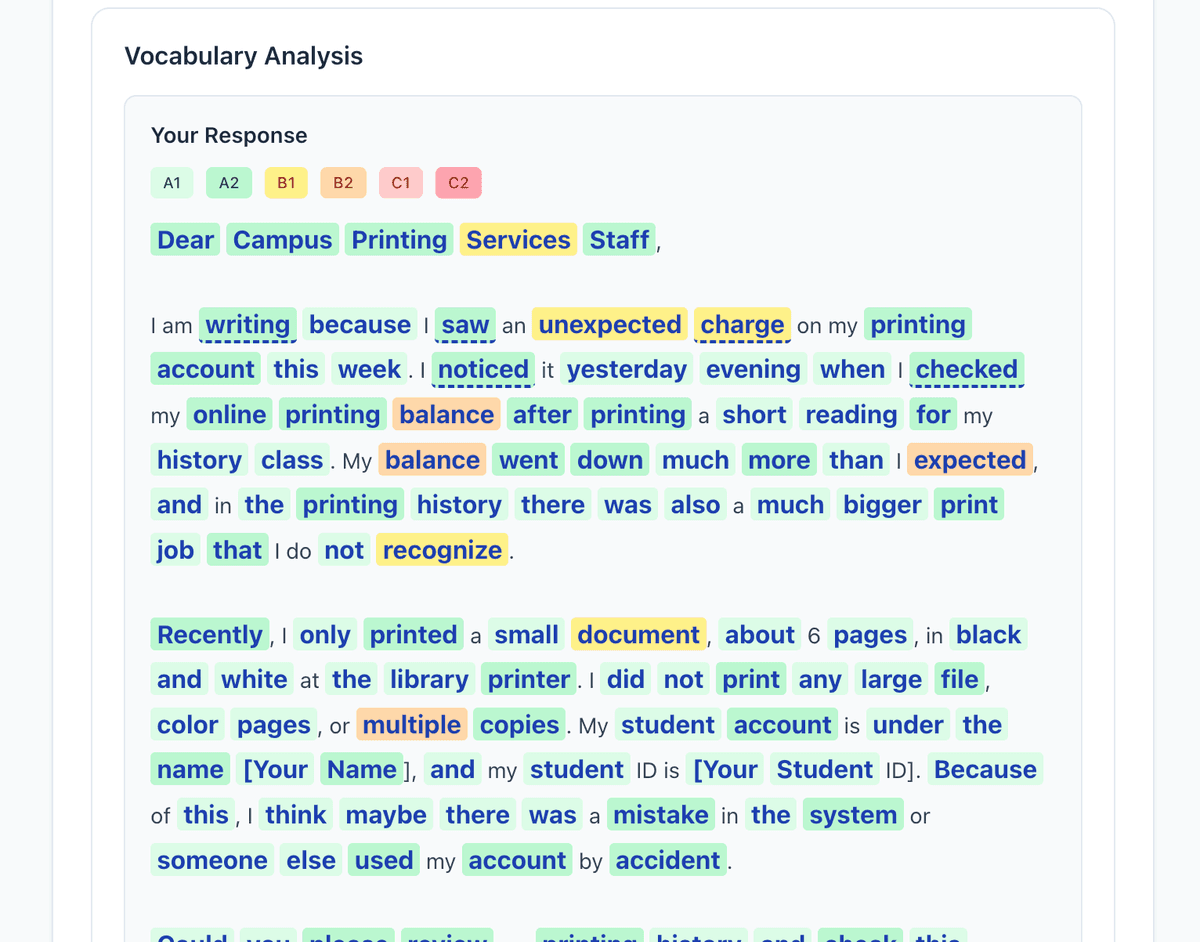 Vocabulary Analysis
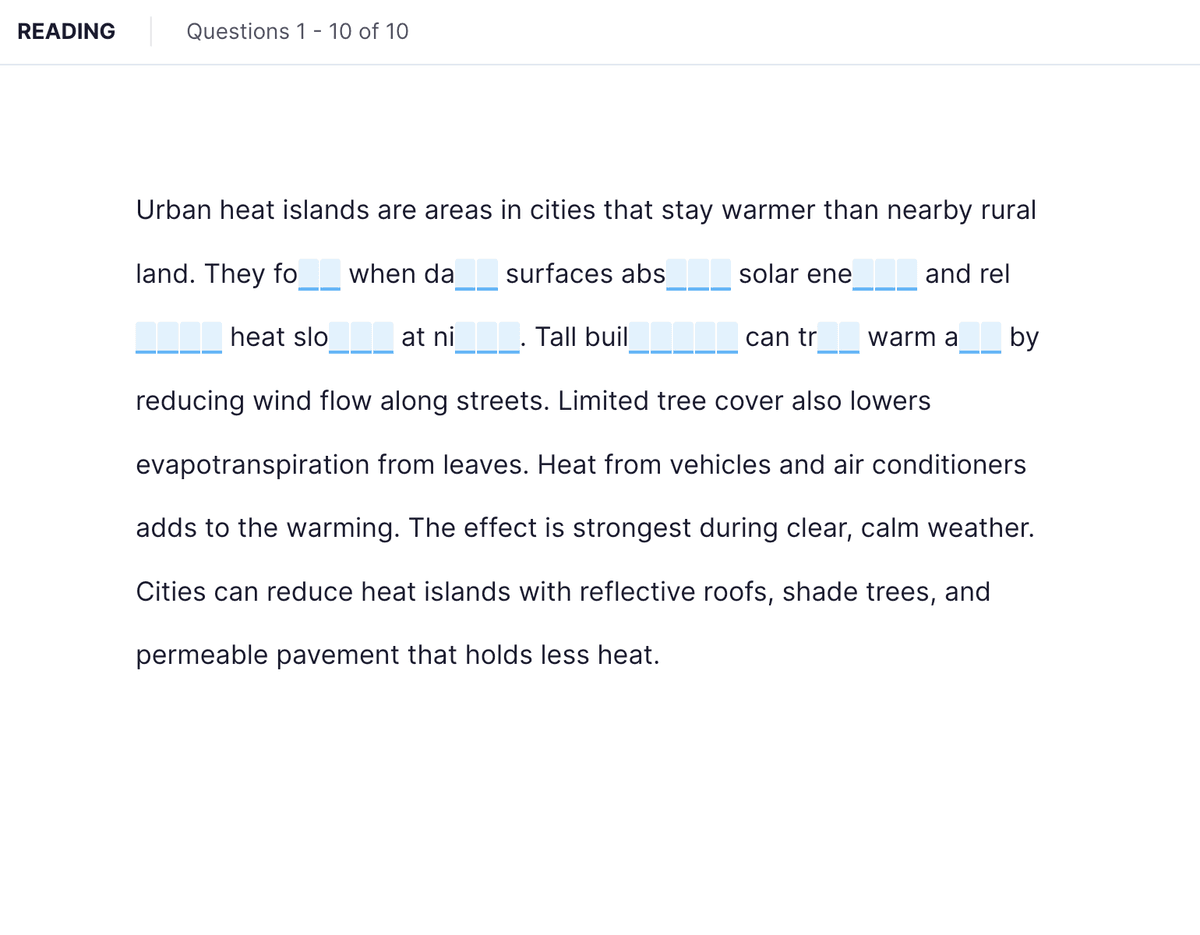 TOEFL 26 New: Reading
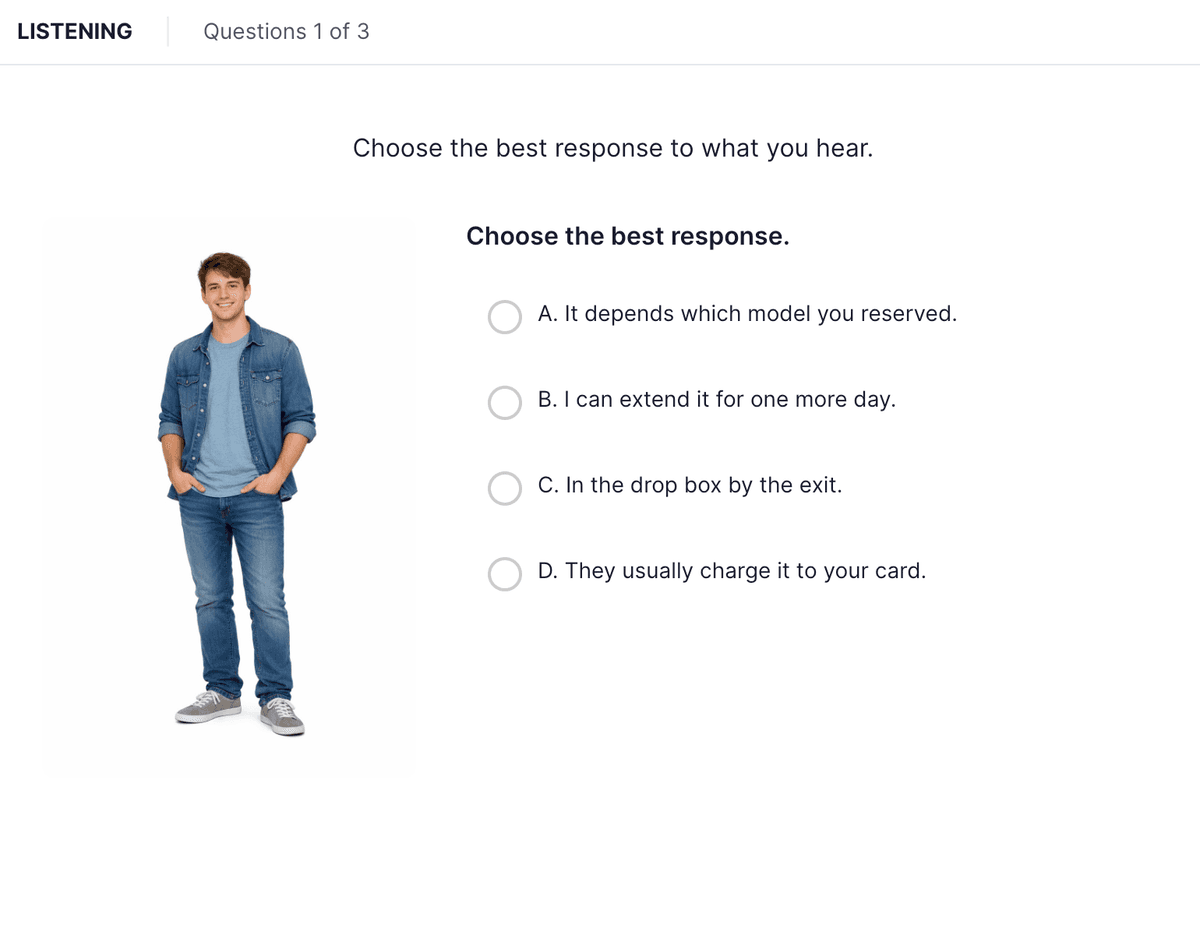 TOEFL 26 New: Listening
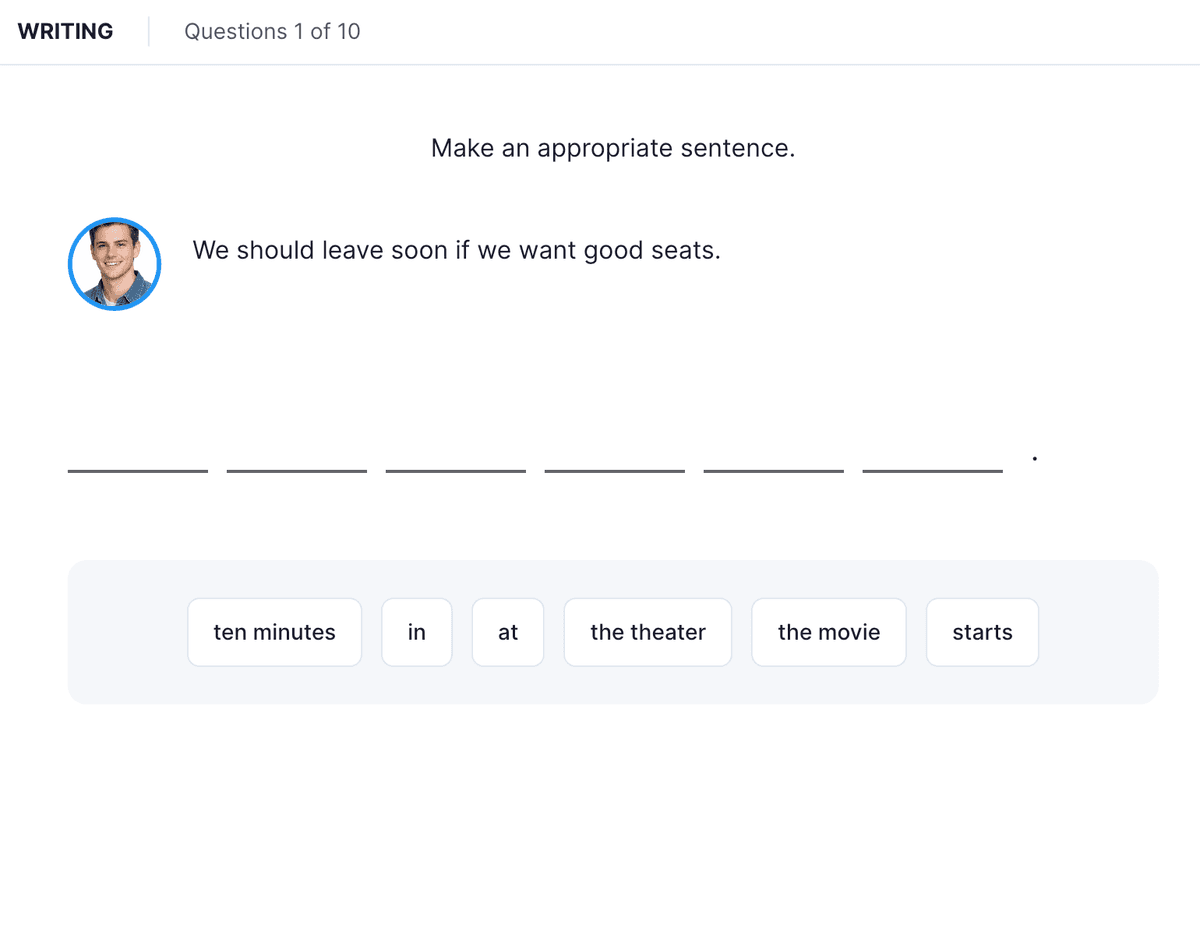 TOEFL 26 New: Writing
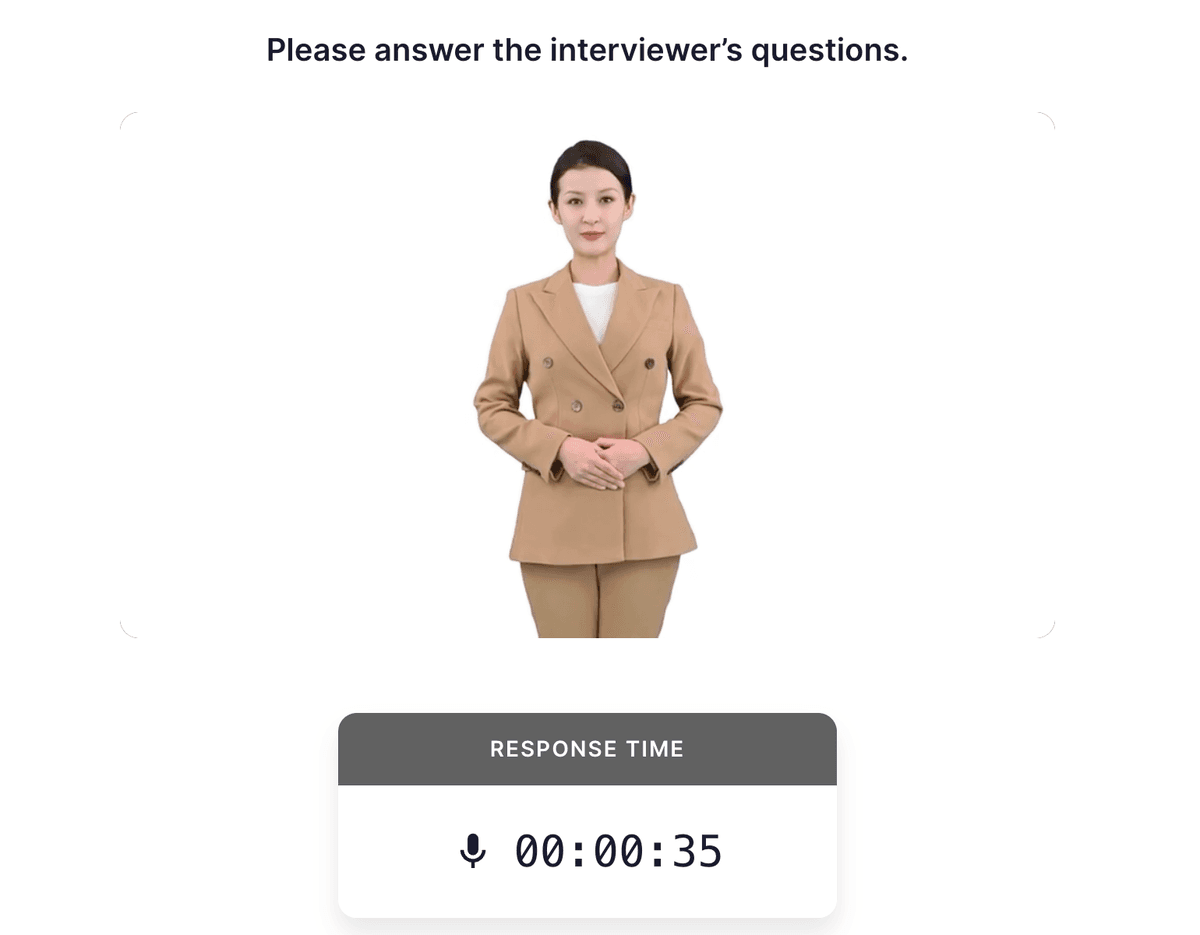 TOEFL 26 New: Speaking
O Que É um Simulado TOEFL 26?
Um simulado TOEFL 26 é uma prova prática desenvolvida para o formato completamente redesenhado do TOEFL iBT, lançado em 21 de janeiro de 2026.
O novo TOEFL introduz 10 tipos de questão totalmente novos em Reading, Listening, Writing e Speaking, teste adaptativo multiestágio em Reading e Listening, e uma nova escala de pontuação de 1 a 6 alinhada ao CEFR.
Para se preparar de forma eficaz, os candidatos precisam de simulados que reflitam a nova estrutura, todos os 10 tipos de questão e o sistema de pontuação atualizado.
O Lingoleap oferece simulados TOEFL 26 desenvolvidos para reproduzir fielmente a experiência real do exame.
Novo Formato do TOEFL 2026
O TOEFL 2026 é composto por 4 seções: Reading, Listening, Writing e Speaking. O tempo estimado para completar a prova é inferior a 2 horas. O tempo de prova não inclui as instruções. Como a prova é adaptativa, o tempo e o número de questões podem variar.
Reading
~30 min
~50 questões
Adaptativo multiestágio em dois módulos
Listening
~29 min
~47 questões
Adaptativo multiestágio em dois módulos
Writing
~23 min
12 questões
Formato linear — mesmas questões para todos os candidatos
Speaking
~8 min
11 questões
Formato linear — mesmas questões para todos os candidatos
Todos os Tipos de Questão do TOEFL 2026
Reading
- Complete the Words
- Read in Daily Life
- Read an Academic Passage
8 tipos de questão: Factual & Negative Factual, Vocabulary, Select the Sentence, Sentence Simplification, Reference, Inference, Rhetorical Purpose, Insert Text
Listening
- Listen and Choose a Response
- Listen to a Conversation
- Listen to an Announcement
- Listen to an Academic Talk
6 tipos de questão: Main Idea, Factual, Inference, Purpose, Method, Attitude
Writing
- Build a Sentence
- Write an Email
- Write for an Academic Discussion
Formato linear — avaliado com base em propósito comunicativo, sintaxe, escolha de palavras, convenções sociais e precisão
Speaking
- Listen and Repeat
- Take an Interview
Formato linear — avaliado com base em apresentação (clareza, fluência), uso da língua (gramática, vocabulário) e elaboração
As seções de Reading e Listening utilizam teste adaptativo multiestágio — seu desempenho no Módulo 1 determina o nível de dificuldade do Módulo 2. Isso cria uma experiência mais personalizada e mede sua capacidade de forma mais eficiente e precisa.
Por Que Escolher os Simulados TOEFL 26 do Lingoleap
A maioria dos materiais de estudo para o TOEFL ainda se baseia no formato antigo da prova. O Lingoleap foi desenvolvido especificamente para o formato do TOEFL 2026.
 Simulados completos cobrindo todos os 10 tipos de questão oficiais do TOEFL 2026
- Reading e Listening adaptativo multiestágio que reproduz a prova real
- Correção por IA de Speaking e Writing alinhada às rubricas oficiais do ETS
- Um dos maiores bancos de simulados TOEFL 26 disponíveis
A maioria dos recursos prepara você para o TOEFL antigo. O Lingoleap prepara você para o novo.
Cobertura Completa dos Tipos de Questão do TOEFL 2026
Cada simulado TOEFL 26 do Lingoleap cobre todos os 10 tipos de questão oficiais nas quatro seções da prova — exatamente como aparecem no exame real.
Reading
- Complete the Words
Reconstrua partes faltantes de palavras em um parágrafo acadêmico curto
- Read in Daily Life
Leia textos práticos como e-mails, avisos ou postagens em redes sociais
- Read an Academic Passage
Leia um texto acadêmico curto (~200 palavras) e responda 5 questões
Listening
- Listen and Choose a Response
Ouça uma pergunta ou afirmação breve e escolha a melhor resposta entre 4 opções
- Listen to a Conversation
Responda perguntas sobre conversas curtas da vida universitária entre 2 interlocutores
- Listen to an Announcement
Responda perguntas sobre comunicados de aula ou eventos do campus
- Listen to an Academic Talk
Responda perguntas sobre palestras acadêmicas curtas sobre diversos temas
Writing
- Build a Sentence
Reorganize palavras e expressões para completar uma frase em um diálogo curto
- Write an Email
Escreva um e-mail com um objetivo específico, como recomendar, convidar ou propor uma solução
- Write for an Academic Discussion
Leia a postagem de um professor e 2 respostas de alunos, depois escreva sua própria contribuição (mais de 100 palavras)
Speaking
- Listen and Repeat
Repita 7 frases faladas que aumentam em extensão e complexidade
- Take an Interview
Responda 4 perguntas de entrevista em uma conversa acadêmica simulada (45 segundos cada)
Teste Adaptativo Multiestágio — Igual ao TOEFL 2026 Real
Os simulados do Lingoleap reproduzem a estrutura adaptativa multiestágio do TOEFL real. Seu desempenho no Módulo 1 determina a dificuldade do Módulo 2, assim como no exame oficial.
Progressão Realista da Prova
Experimente o mesmo fluxo adaptativo do TOEFL 2026 real — o desempenho no Módulo 1 define a dificuldade do Módulo 2
Prática em Múltiplos Níveis
Pratique módulos mais fáceis e mais difíceis para desenvolver confiança e precisão em todos os níveis
Visão Real do Seu Desempenho
Entenda seu potencial de pontuação real com base na lógica de pontuação adaptativa e na conversão de pontuação bruta para escalonada
Correção por IA de Speaking e Writing
Receba feedback instantâneo e detalhado em cada resposta de Speaking e Writing — alinhado com as rubricas oficiais de pontuação do ETS. Cada resposta é avaliada holisticamente em uma escala de 0 a 5.
Avaliação de Speaking
Listen and Repeat
- Precisão da Repetição
- Inteligibilidade
- Pronúncia
Take an Interview
- Apresentação (clareza, fluência, pronúncia, entonação)
- Uso da Língua (variedade e precisão de gramática e vocabulário)
- Elaboração (ideias relevantes e bem fundamentadas)
Avaliação de Writing
Write an Email
- Elaboração que sustenta o propósito comunicativo
- Variedade sintática e escolha de palavras precisa e idiomática
- Convenções sociais adequadas (polidez, registro, formalidade)
- Precisão lexical e gramatical
Write for an Academic Discussion
- Explicações e exemplos relevantes e bem elaborados
- Variedade de estruturas sintáticas e escolha de palavras precisa e idiomática
- Precisão lexical e gramatical
Try TOEFL Practice Test Questions Now
Warm up with these free sample questions modeled on the 2026 TOEFL iBT — one from each section. Reveal the answer and explanation, then start a full-length practice test when you are ready.
Read the short academic passage, then answer the question.
Bioluminescence — the production of light by living organisms — is common in the deep ocean, where sunlight never reaches. Many creatures use it to attract prey, confuse predators, or signal to potential mates. The light is produced by a chemical reaction between a molecule called luciferin and the enzyme luciferase. Because the reaction gives off almost no heat, scientists describe the light as "cold light."
According to the passage, why is bioluminescent light described as "cold light"?
- AIt is only found in cold, deep water.
- BThe chemical reaction releases very little heat.
- CIt appears blue rather than red or orange.
- DIt is produced only at night.
▸Show answer & explanation
Answer: B — The chemical reaction releases very little heat.
The final sentence states the reaction "gives off almost no heat," which is why it is called cold light. Option A confuses where the organisms live with why the light is cold; C and D add details the passage never mentions. Factual questions like this reward locating the exact supporting sentence rather than relying on outside knowledge.
Type the missing letters to complete the word so the sentence makes sense.
Regular exercise can signi______ reduce the risk of heart disease.
▸Show answer & explanation
Answer: significantly
"Complete the Words" gives you the first letters and the length of a word and asks you to finish it from context. Here the sentence needs an adverb describing how much exercise reduces risk — "significantly." Read the whole sentence first, decide the part of speech, then fit a word that starts with the letters shown.
On the real test you would hear this talk once. Read the transcript excerpt, then answer.
Professor: "So when we talk about the 'urban heat island' effect, we mean that cities tend to be several degrees warmer than the countryside around them. The main reason is surface material. Asphalt and concrete absorb heat during the day and release it slowly at night — unlike soil and vegetation, which cool down much faster. That's why a city can still feel warm hours after sunset."
What is the main cause of the urban heat island effect, according to the professor?
- ACities are located in naturally warmer regions.
- BBuildings block cooling wind from reaching streets.
- CPaved surfaces absorb and slowly release heat.
- DThere are more people generating body heat.
▸Show answer & explanation
Answer: C — Paved surfaces absorb and slowly release heat.
The professor names surface material — asphalt and concrete absorbing heat and releasing it slowly — as "the main reason." The other options are plausible-sounding distractors the talk never states. In the Listening section, note the speaker's signal phrases ("the main reason is…") to catch the point being tested.
Put the words and phrases in the correct order to form a grammatical sentence.
[ the deadline / because / the library / she / was approaching / stayed late at ]
▸Show answer & explanation
Answer: She stayed late at the library because the deadline was approaching.
"Build a Sentence" tests control of English word order and clause structure. Start with the subject ("She"), add the main verb phrase ("stayed late at the library"), then attach the reason clause introduced by "because." Checking that subject, verb, and connector line up is usually enough to place every chunk.
You have 45 seconds to answer. There is no single correct response — a strong answer is clear, on-topic, and supported with a reason or example.
Some students prefer to study in the morning, while others prefer the evening. Which do you prefer, and why?
▸Show answer & explanation
Answer: Sample strong response (outline)
Take a clear position, give one reason, and support it with a specific example: "I prefer studying in the morning because my mind is freshest right after I wake up. For instance, I can read a difficult chapter in thirty minutes in the morning, but the same chapter takes me an hour at night when I'm tired." Scoring rewards delivery (clear, fluent speech), language use (accurate grammar and vocabulary), and elaboration (a developed, on-topic idea) — so commit to one answer and develop it rather than listing both options.
These are original Lingoleap practice items built to mirror the 2026 TOEFL iBT task types. They are for practice only and are not real ETS test questions; Lingoleap is independent of and not endorsed by ETS.
Practice TOEFL by Section
A full-length mock test measures readiness, but targeted section practice is how you fix specific weaknesses. Drill any of the four sections and all 10 task types below.
Reading
Adaptive passages and the three 2026 reading task types.
Listening
Conversations, announcements, and academic talks with adaptive difficulty.
Speaking
Listen and Repeat plus the academic interview, with AI delivery feedback.
Writing
Build a Sentence, Write an Email, and Write for an Academic Discussion.
100+ Simulados Completos do TOEFL 26 — Atualizados Mensalmente
Acesse um dos maiores bancos de simulados TOEFL 2026 disponíveis. Novos simulados são adicionados todo mês, ajudando você a praticar continuamente com materiais atualizados.
- 100+ simulados completos do TOEFL 26
- Todos os simulados alinhados com o formato e os tipos de questão mais recentes do TOEFL 2026
- Novos simulados adicionados todo mês
- Cobre todas as 4 seções e 10 tipos de questão
- Covers all 4 sections and 10 task types
Como Começar Seu Simulado TOEFL 26
Crie Sua Conta
Cadastre-se gratuitamente no Lingoleap
Escolha um Simulado
Escolha entre mais de 100 simulados completos do TOEFL 26
Comece a Praticar
Faça a prova em condições reais de exame
Receba Sua Nota e Feedback
Receba correção por IA e análise detalhada de desempenho
Comece Seu Simulado TOEFL 26
Pratique o novo formato do TOEFL 2026 com teste adaptativo multiestágio, todos os 10 tipos de questão e correção por IA.
Perguntas Frequentes
Tudo o que você precisa saber sobre os simulados TOEFL 26
O que há de diferente no formato do TOEFL 2026?
O TOEFL 2026, lançado em 21 de janeiro de 2026, é uma prova completamente redesenhada. Ele introduz teste adaptativo multiestágio em Reading e Listening, onde o desempenho no Módulo 1 determina a dificuldade do Módulo 2. Writing e Speaking usam formato linear (mesmas questões para todos). Apresenta 10 tipos de questão totalmente novos e uma nova escala de pontuação de 1 a 6 alinhada ao CEFR. A prova leva menos de 2 horas.
Quantos tipos de questão existem no novo TOEFL 2026?
O novo TOEFL 2026 tem 10 tipos de questão em 4 seções: 3 em Reading (Complete the Words, Read in Daily Life, Read an Academic Passage), 4 em Listening (Listen and Choose a Response, Listen to a Conversation, Listen to an Announcement, Listen to an Academic Talk), 3 em Writing (Build a Sentence, Write an Email, Write for an Academic Discussion) e 2 em Speaking (Listen and Repeat, Take an Interview).
Quantos simulados TOEFL 26 o Lingoleap oferece?
O Lingoleap oferece atualmente mais de 100 simulados completos do TOEFL 26, com novos simulados adicionados todo mês. Cada simulado cobre todas as quatro seções e inclui todos os tipos de questão oficiais do formato TOEFL 2026.
O Lingoleap simula o teste adaptativo multiestágio?
Sim. O Lingoleap é uma das poucas plataformas que simula a estrutura de teste adaptativo multiestágio usada nas seções de Reading e Listening do TOEFL 2026. Seu desempenho no Módulo 1 afeta a dificuldade do Módulo 2, assim como no exame real.
Como funciona a correção por IA de Speaking e Writing?
A IA do Lingoleap avalia suas respostas usando critérios alinhados às rubricas oficiais de pontuação do ETS (avaliação holística de 0 a 5 por questão). Para Speaking, Listen and Repeat é avaliado em precisão da repetição, inteligibilidade e pronúncia. Take an Interview é avaliado em apresentação (clareza, fluência, ritmo), uso da língua (gramática, vocabulário) e elaboração (relevância do tema, ideias de suporte). Para Writing, Write an Email é avaliado em propósito comunicativo, variedade sintática e escolha idiomática de palavras, convenções sociais (polidez, registro) e precisão lexical/gramatical. Write for an Academic Discussion é avaliado em relevância e elaboração, estruturas sintáticas e escolha de palavras, e precisão lexical/gramatical.
Os simulados do Lingoleap são iguais ao TOEFL real?
Os simulados do Lingoleap são projetados para reproduzir fielmente a experiência do TOEFL 2026 real, incluindo os novos tipos de questão, o teste adaptativo multiestágio e o tempo de prova. Embora nenhum simulado seja idêntico ao exame oficial, o Lingoleap oferece uma das experiências de prática mais realistas do TOEFL 2026 disponíveis.
Posso praticar seções individuais em vez da prova completa?
Sim. Além dos simulados completos, o Lingoleap permite que você pratique seções individuais — Reading, Listening, Speaking ou Writing — para que possa focar nas áreas em que mais precisa melhorar.
How accurate are Lingoleap's mock test score estimates?
Across 5,000+ paired records comparing a Lingoleap mock-test score estimate with the same learner's official TOEFL score, the mean absolute score difference is within 0.5 points on the TOEFL 1–6 scale. Score estimates are typically available within 1–2 minutes after submission. These are practice score estimates only — official TOEFL scores are issued exclusively by ETS, and Lingoleap is independent of and not endorsed by ETS. See verified student score-improvement stories at lingoleap.ai/toefl/success-stories.
How much does a full mock test cost?
A full mock test costs 800 credits and includes AI scoring for Reading, Listening, Speaking, and Writing with a complete score report. New accounts start with 200 free AI-feedback credits, and Reading and Listening practice never costs credits.