TOEFL 26 Probetests
Üben Sie das neue TOEFL 2026 Format
Vollständige TOEFL 26 Probetests mit adaptivem Reading & Listening, allen offiziellen Aufgabentypen und KI-Bewertung für Speaking und Writing.
Starte mit einer Speaking- oder Writing-Aufgabe im Format 2026, bewertet von KI. Kostenlos mit einem LingoLeap-Konto, keine Kreditkarte.
Alle veröffentlichten Tests ansehen (104) ↓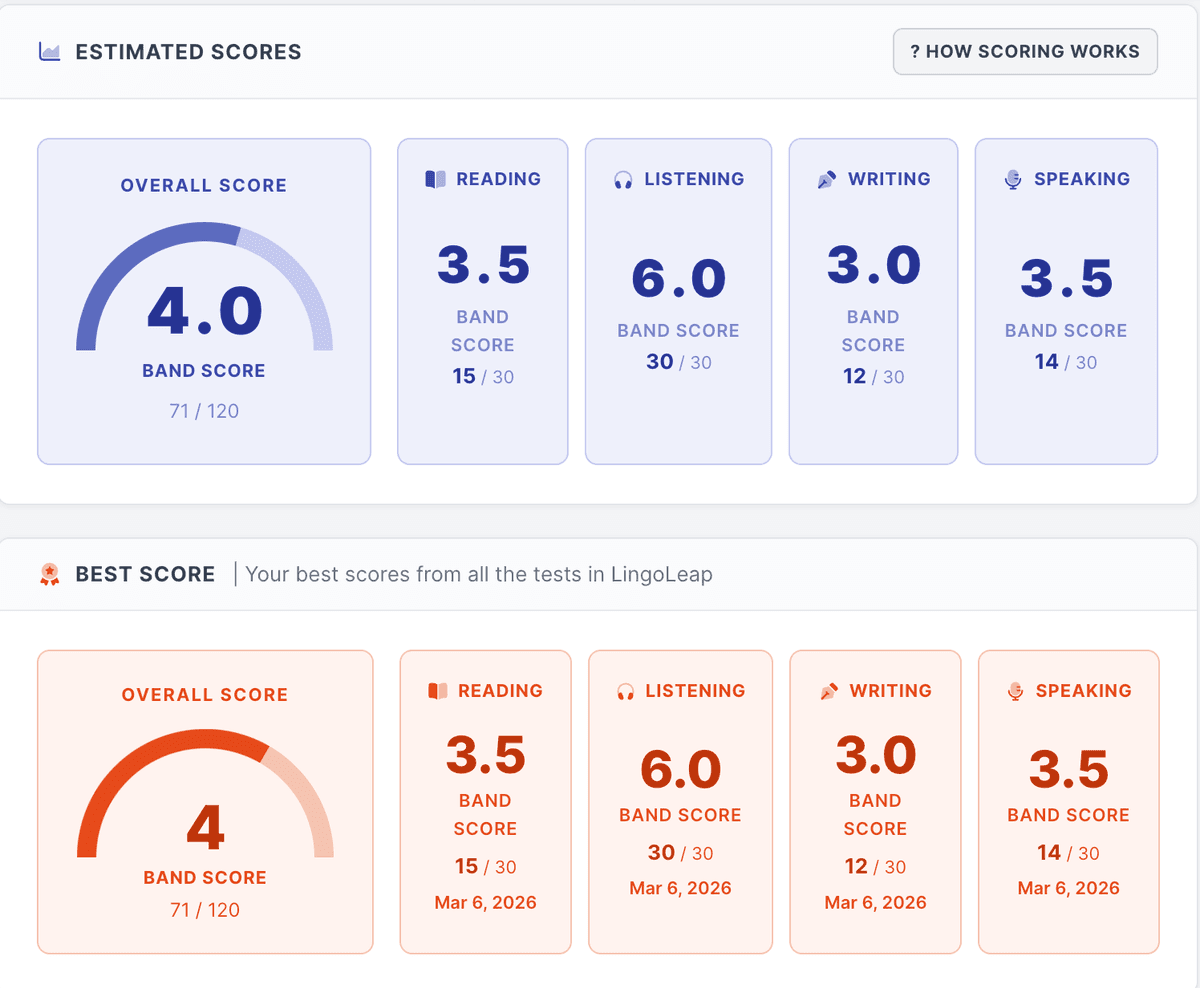 Score Report
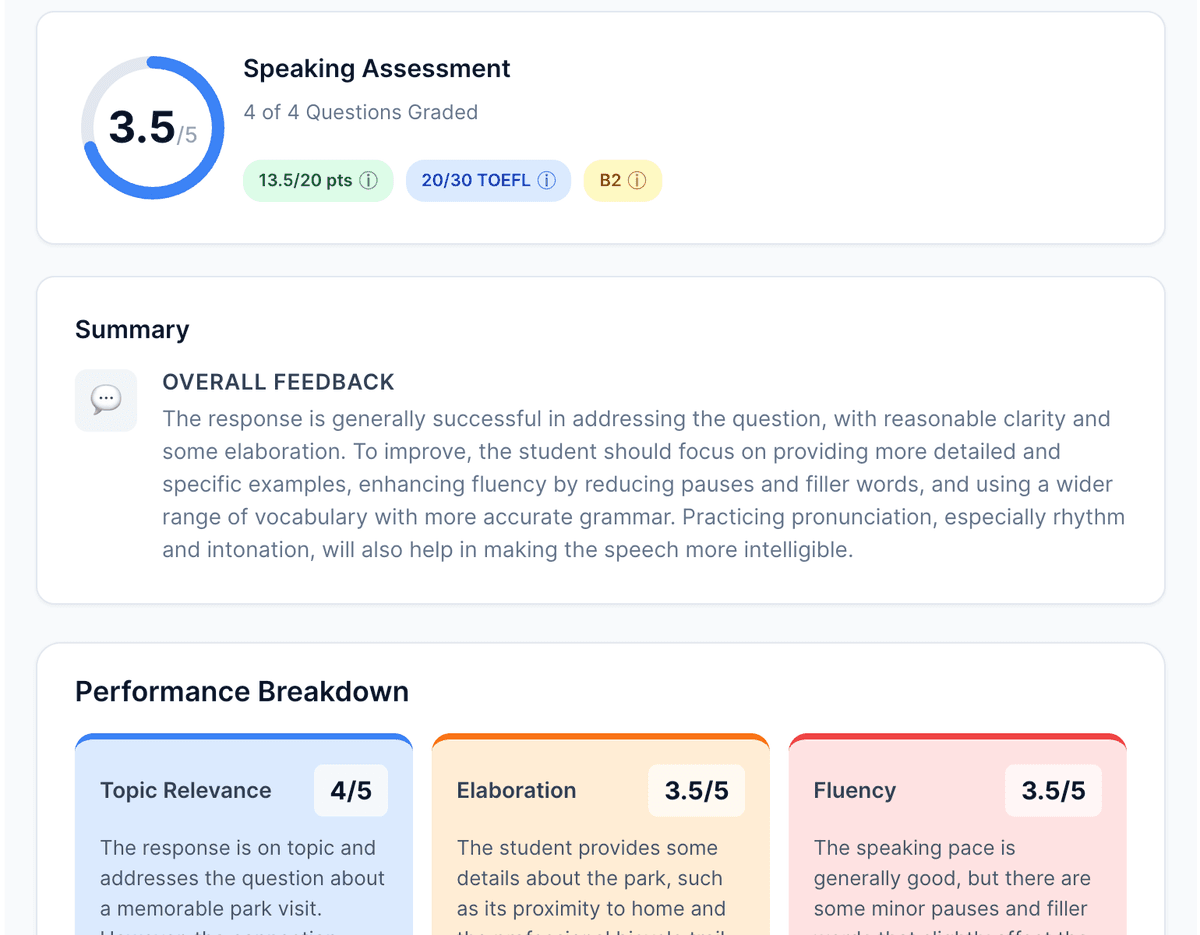 AI Speaking Score
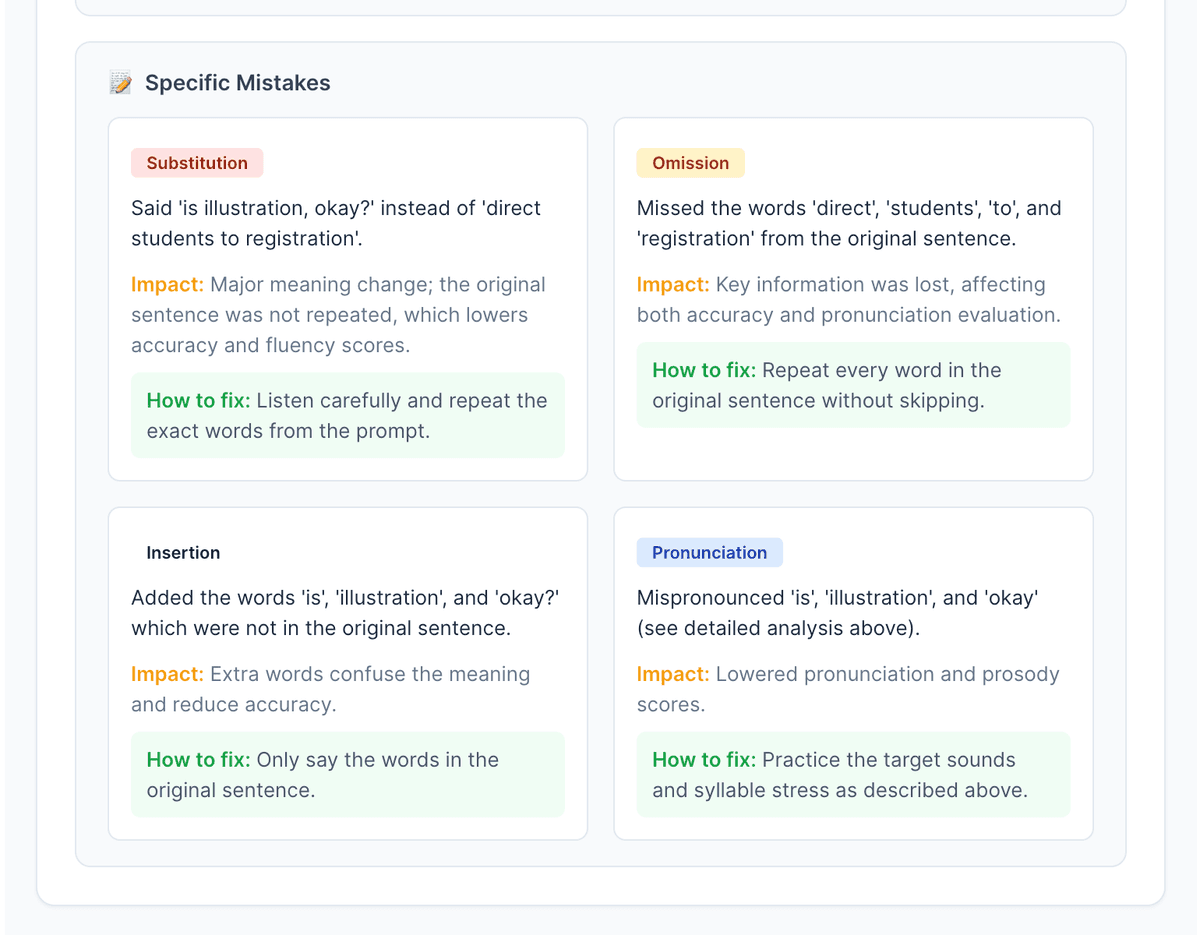 Mistake Analysis
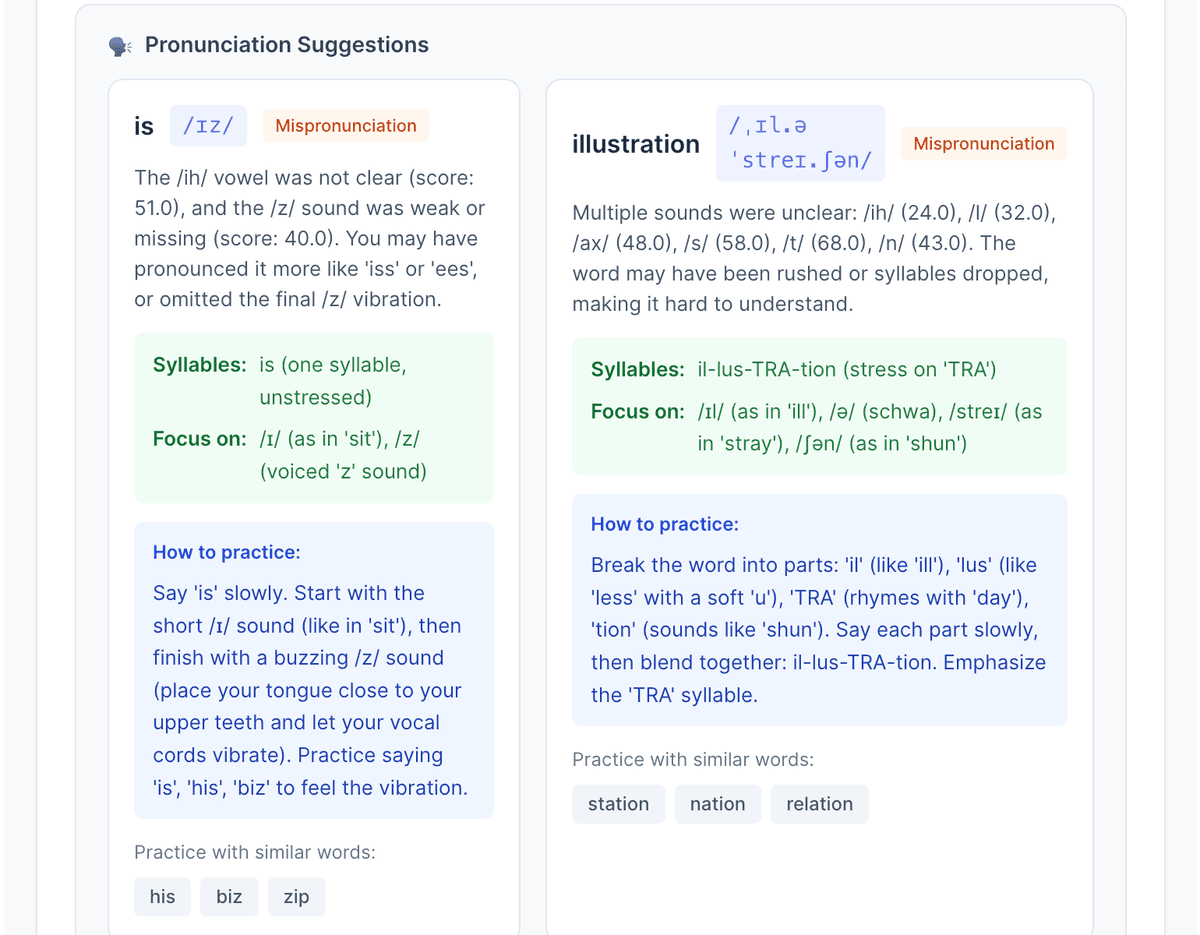 Pronunciation Feedback
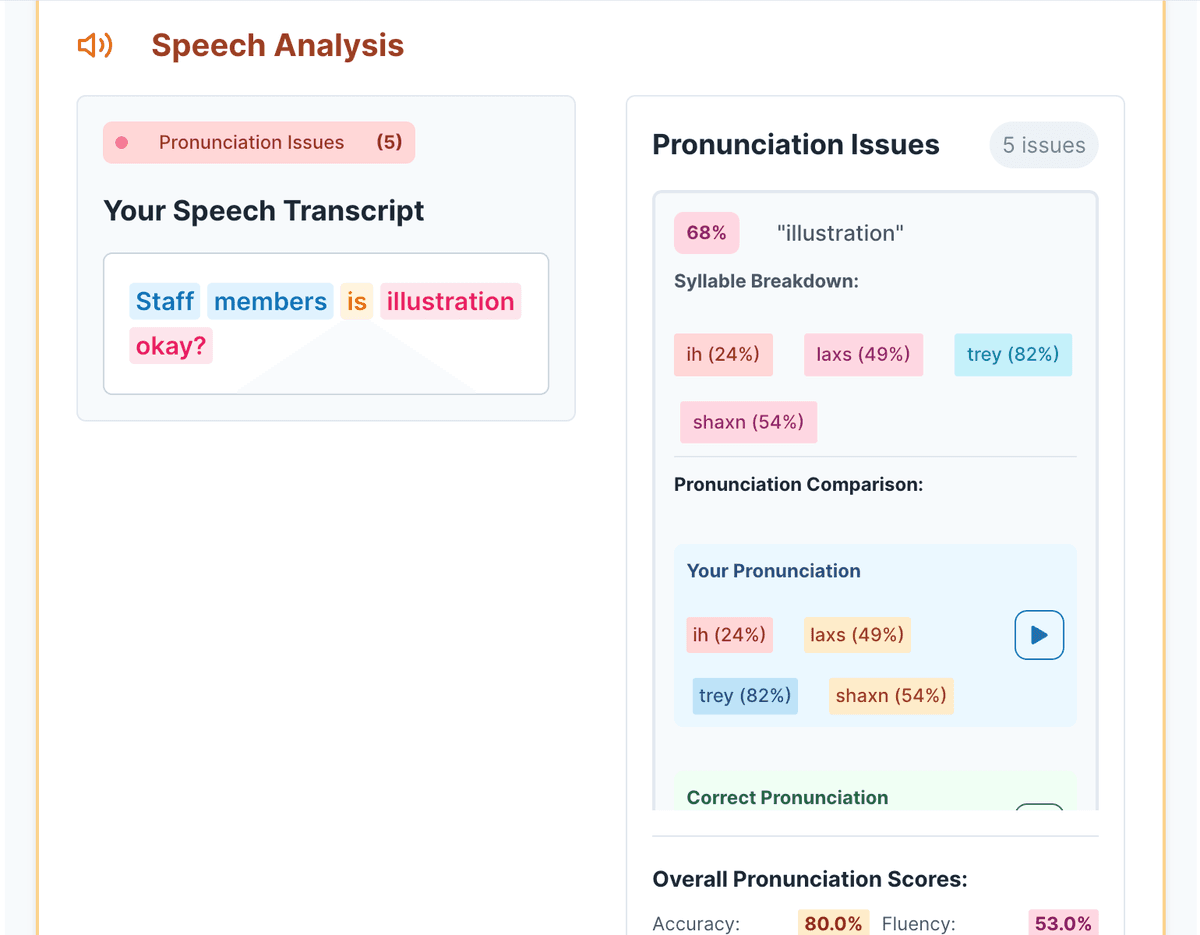 Speech Analysis
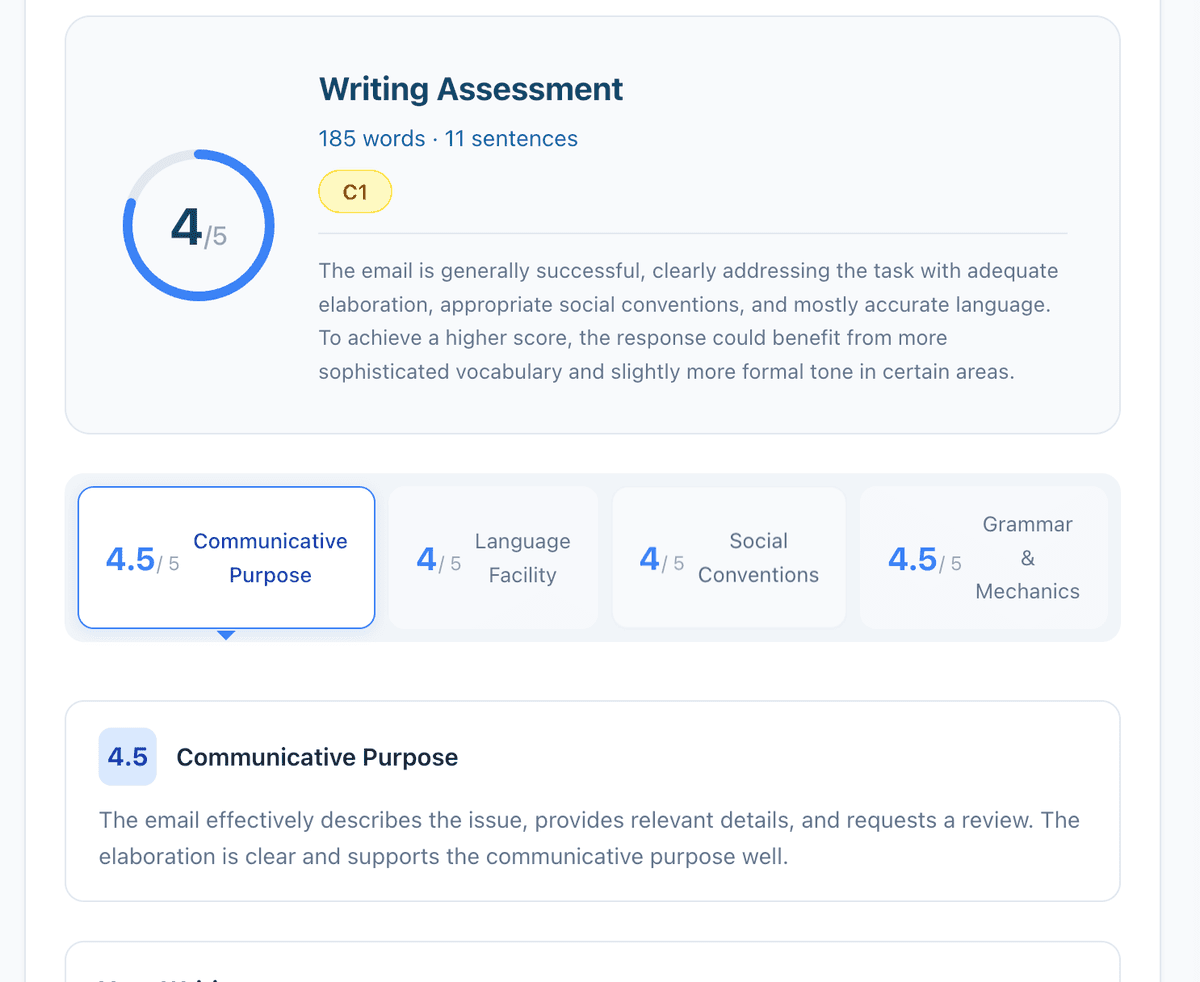 AI Writing Score
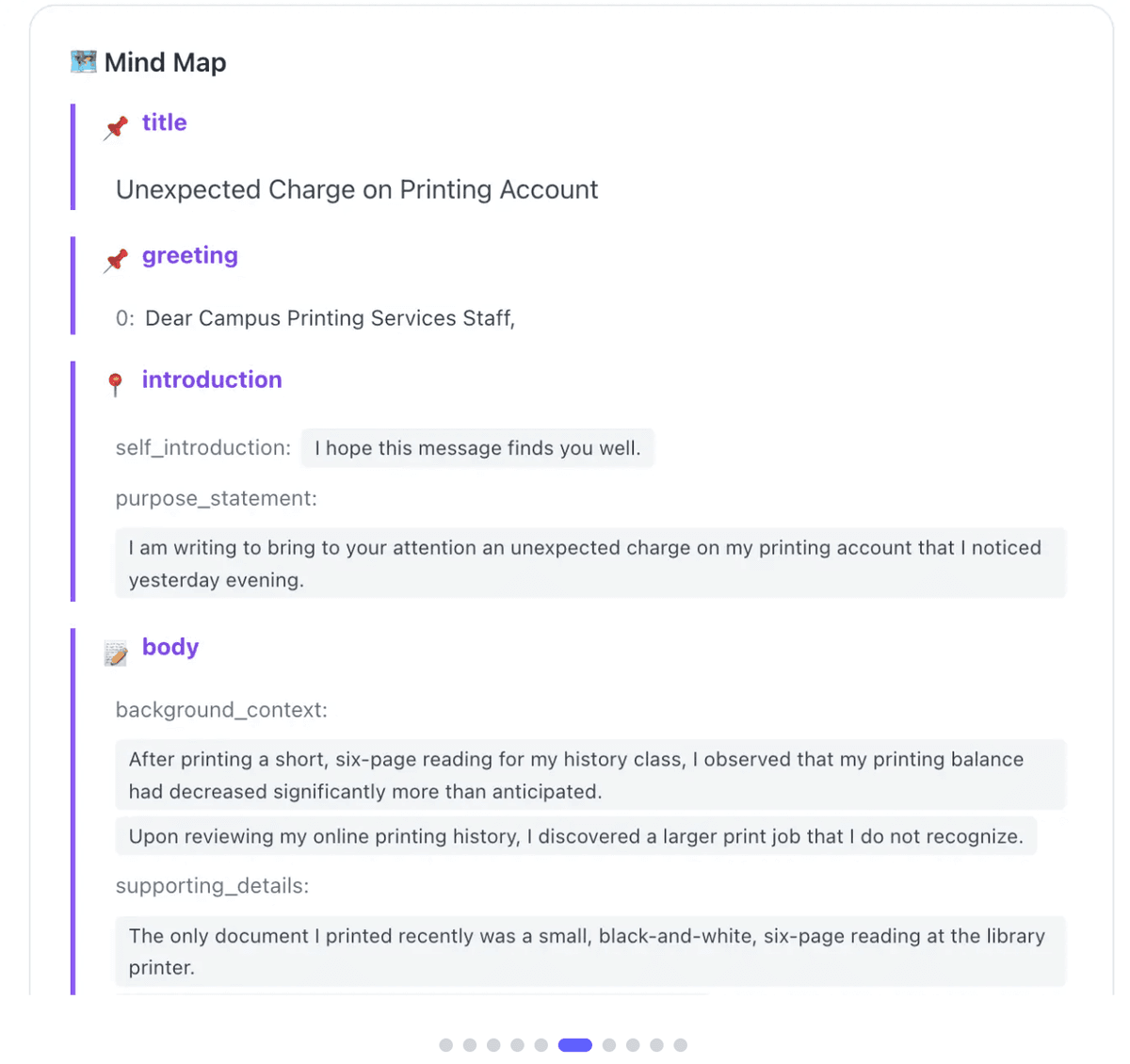 Article Structure Feedback
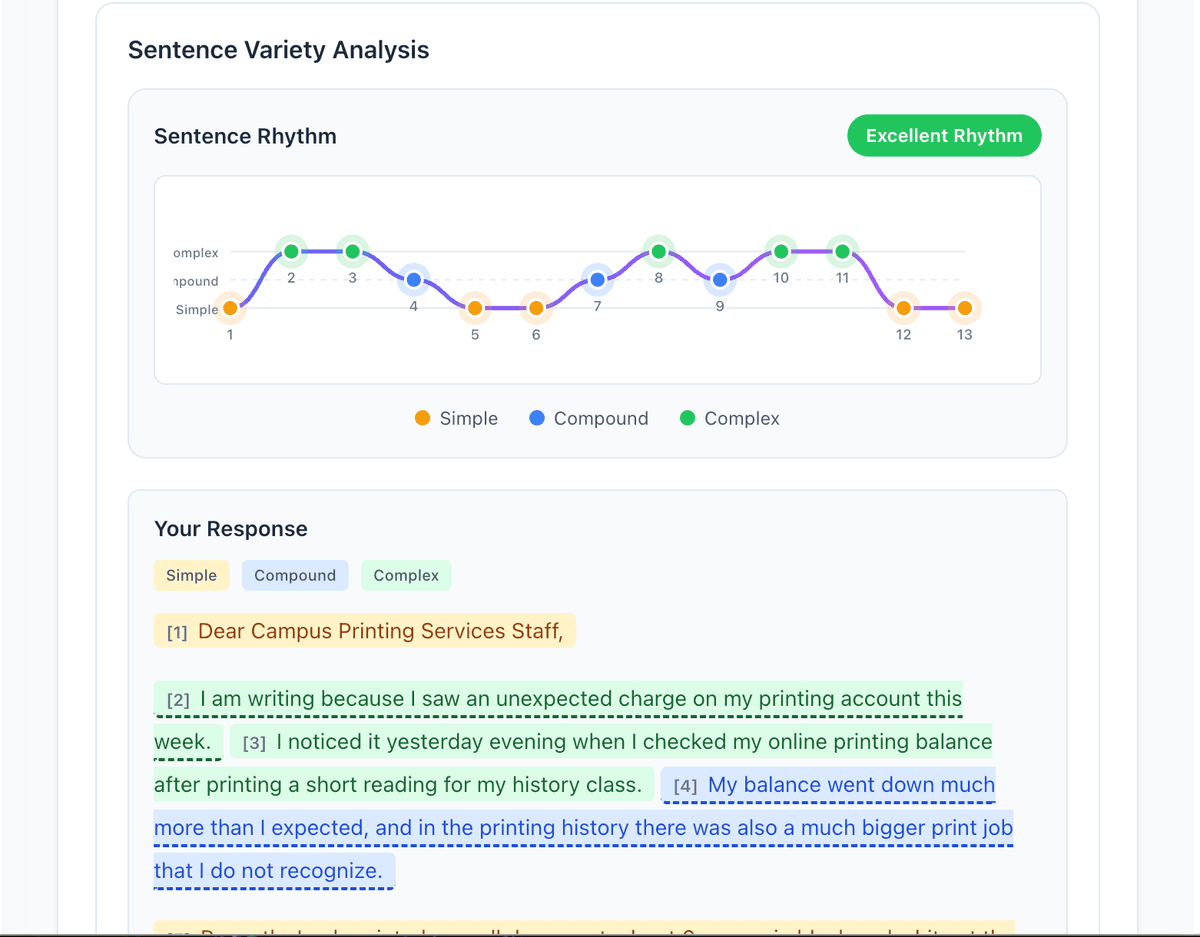 Sentence Variety
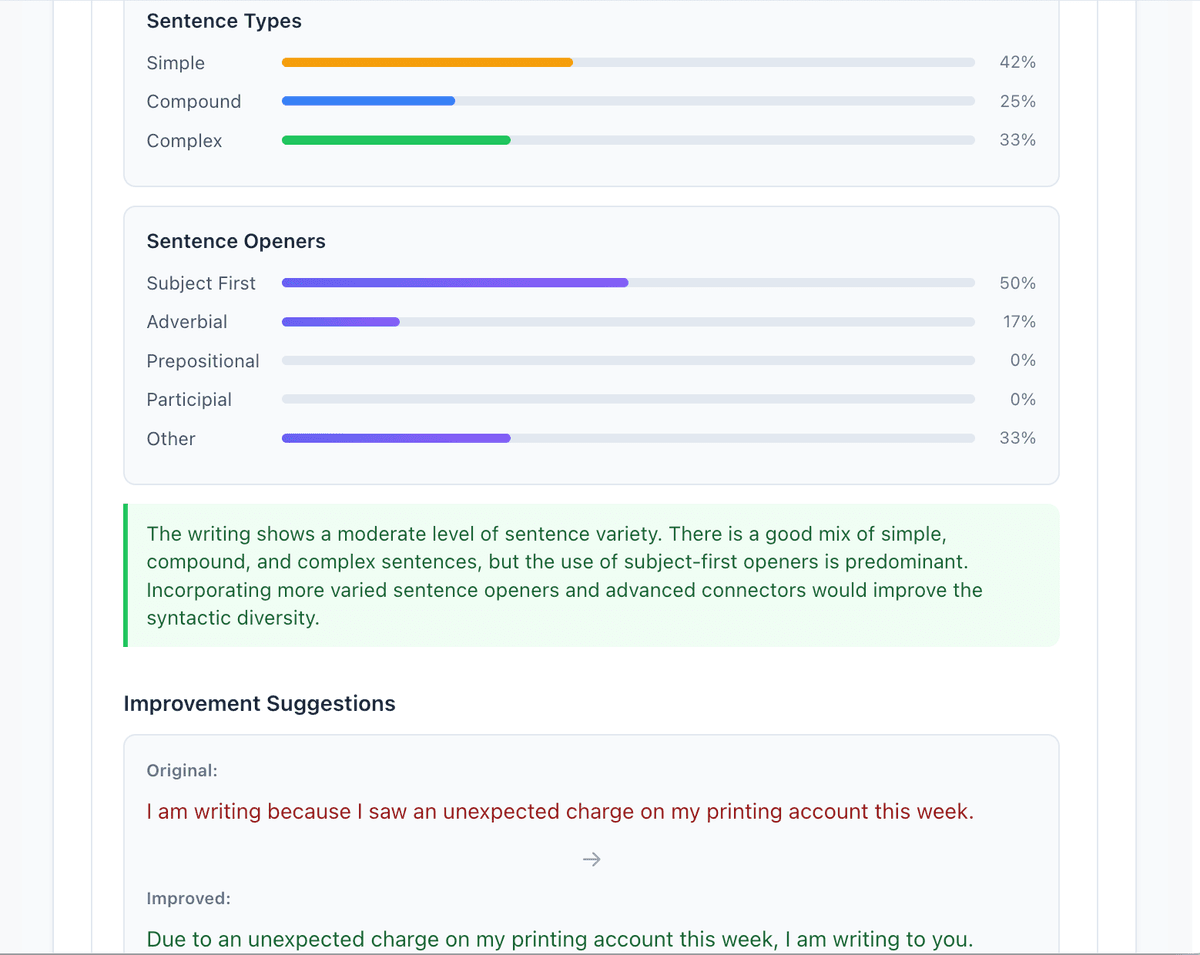 Improvement Suggestions
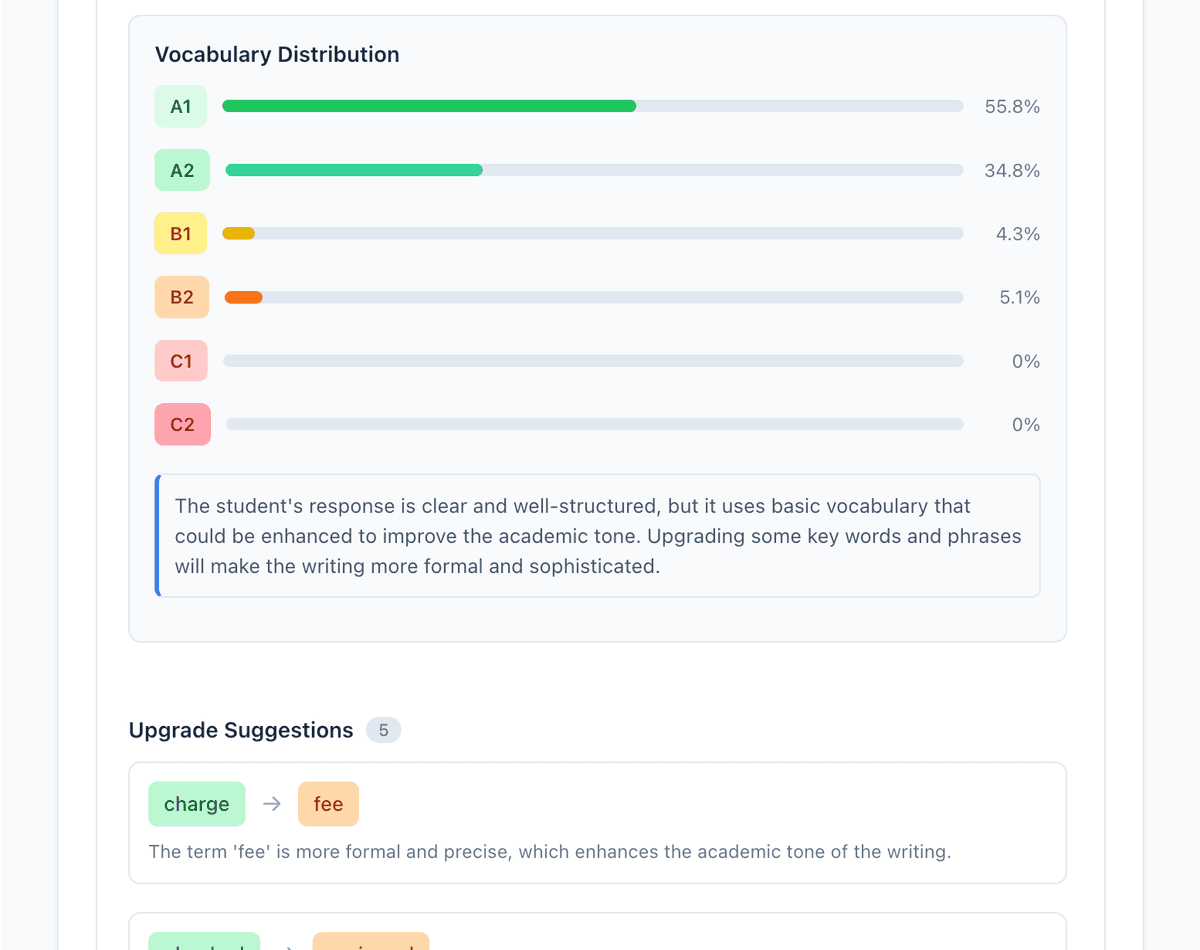 Vocabulary Feedback
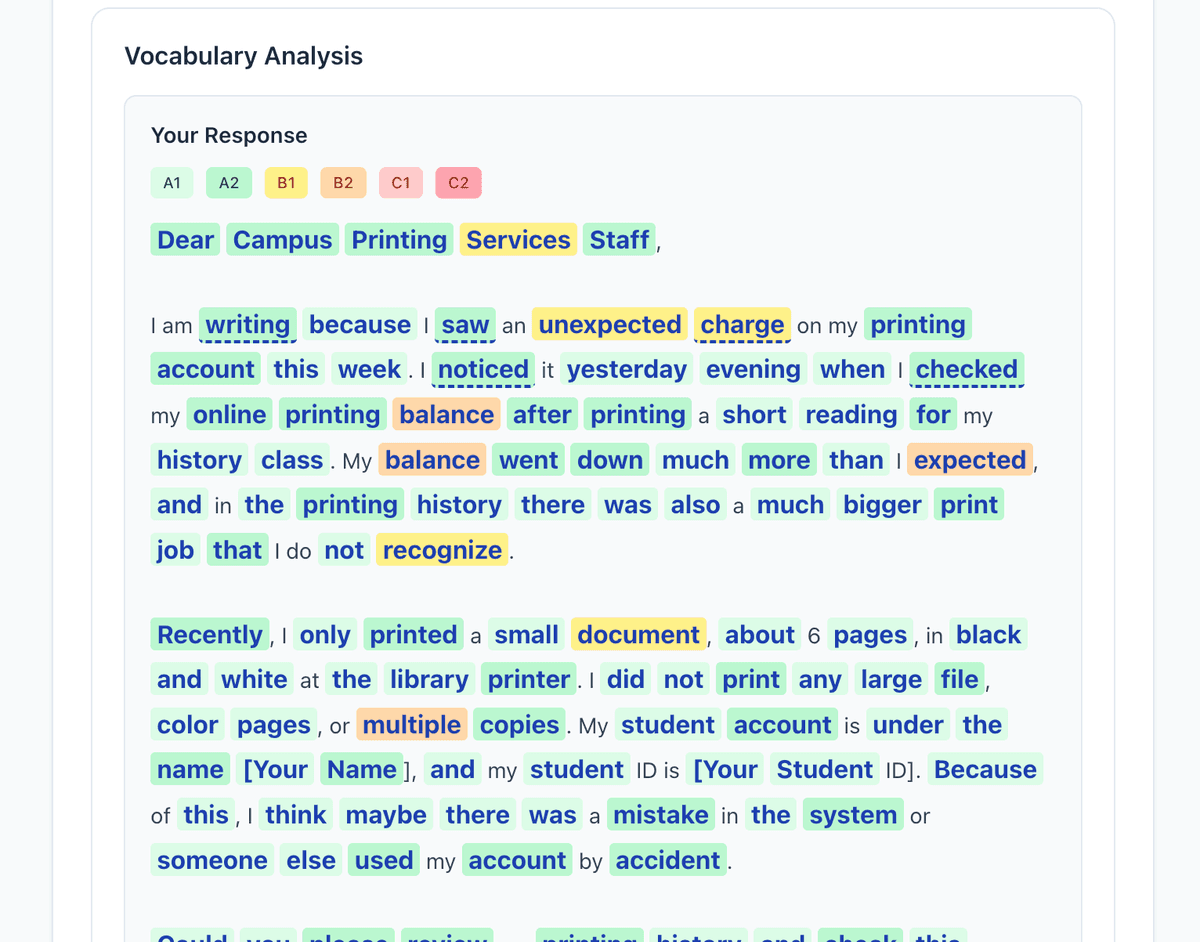 Vocabulary Analysis
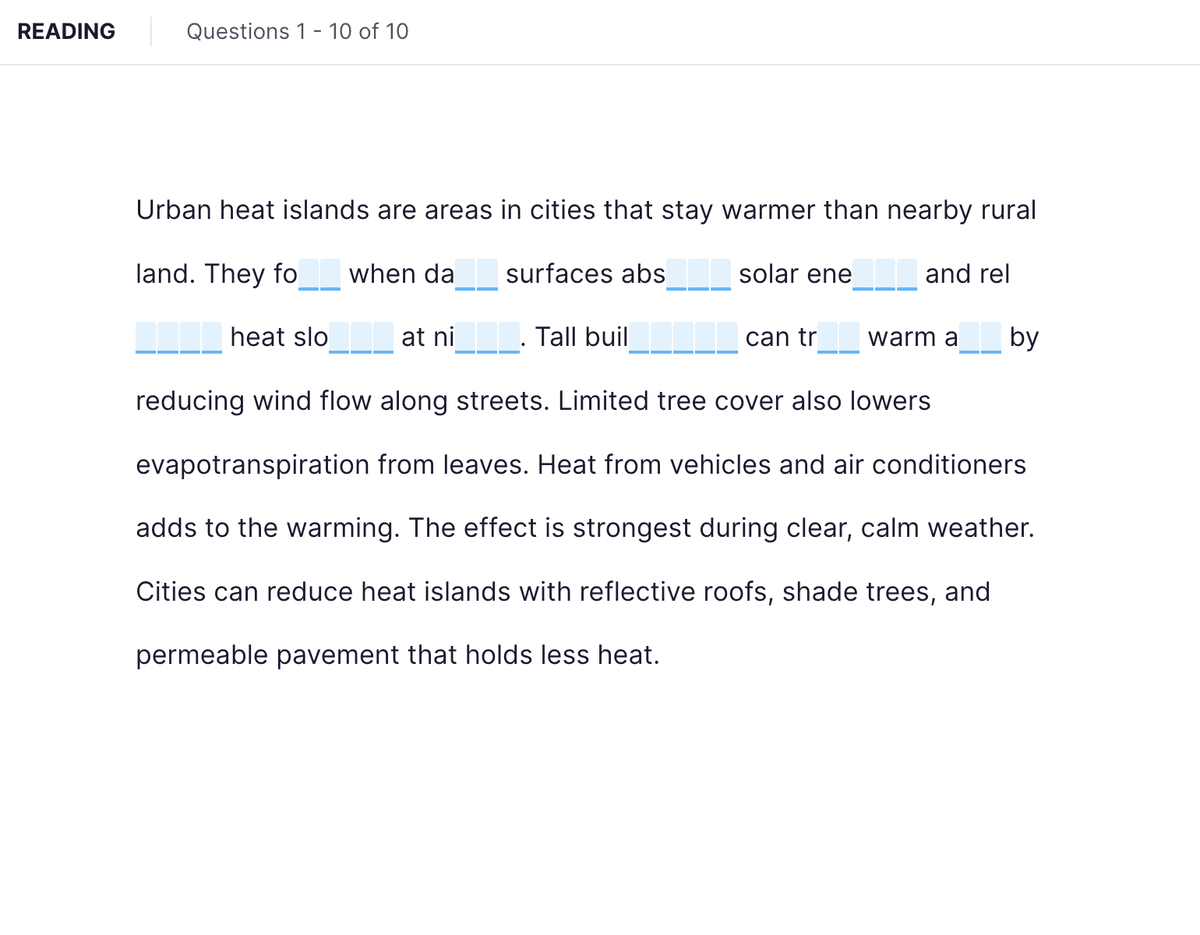 TOEFL 26 New: Reading
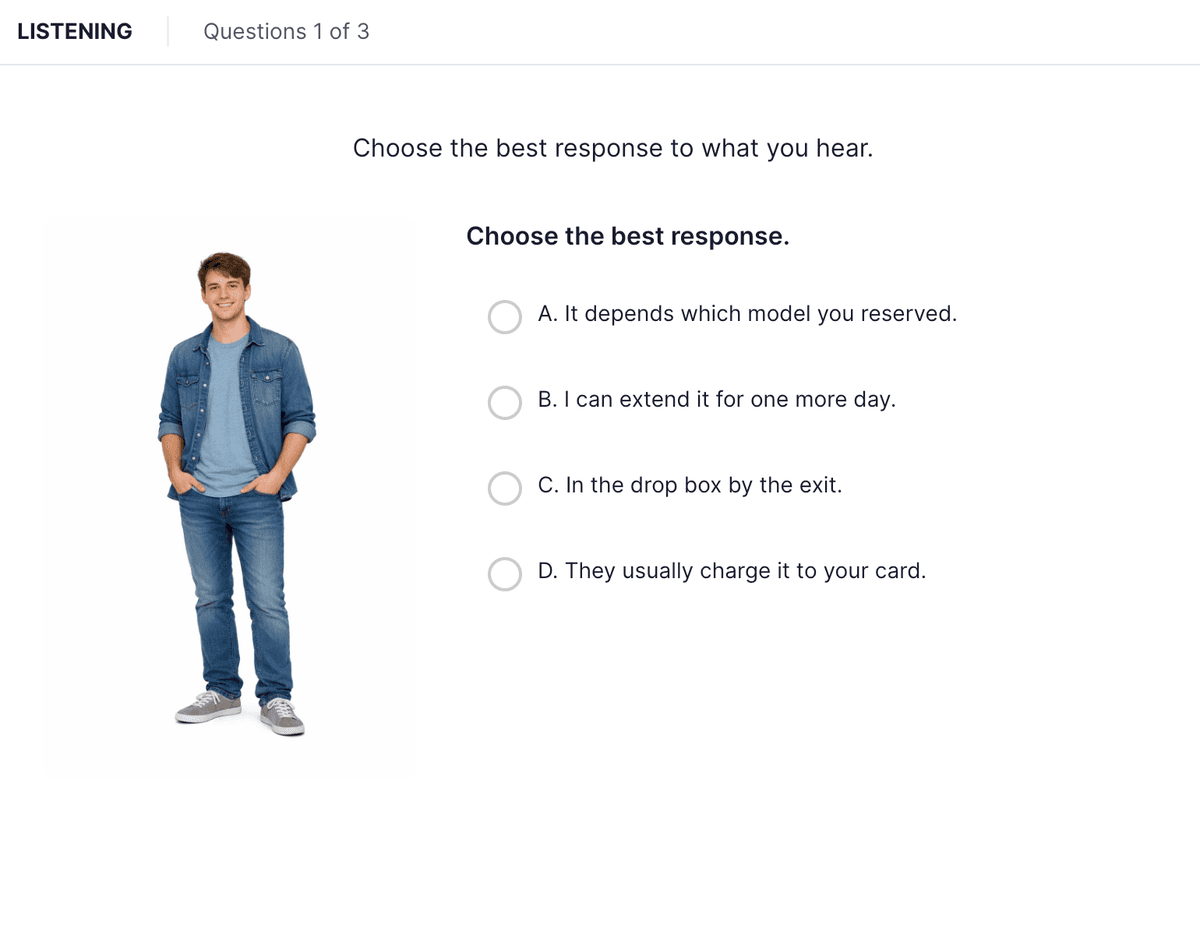 TOEFL 26 New: Listening
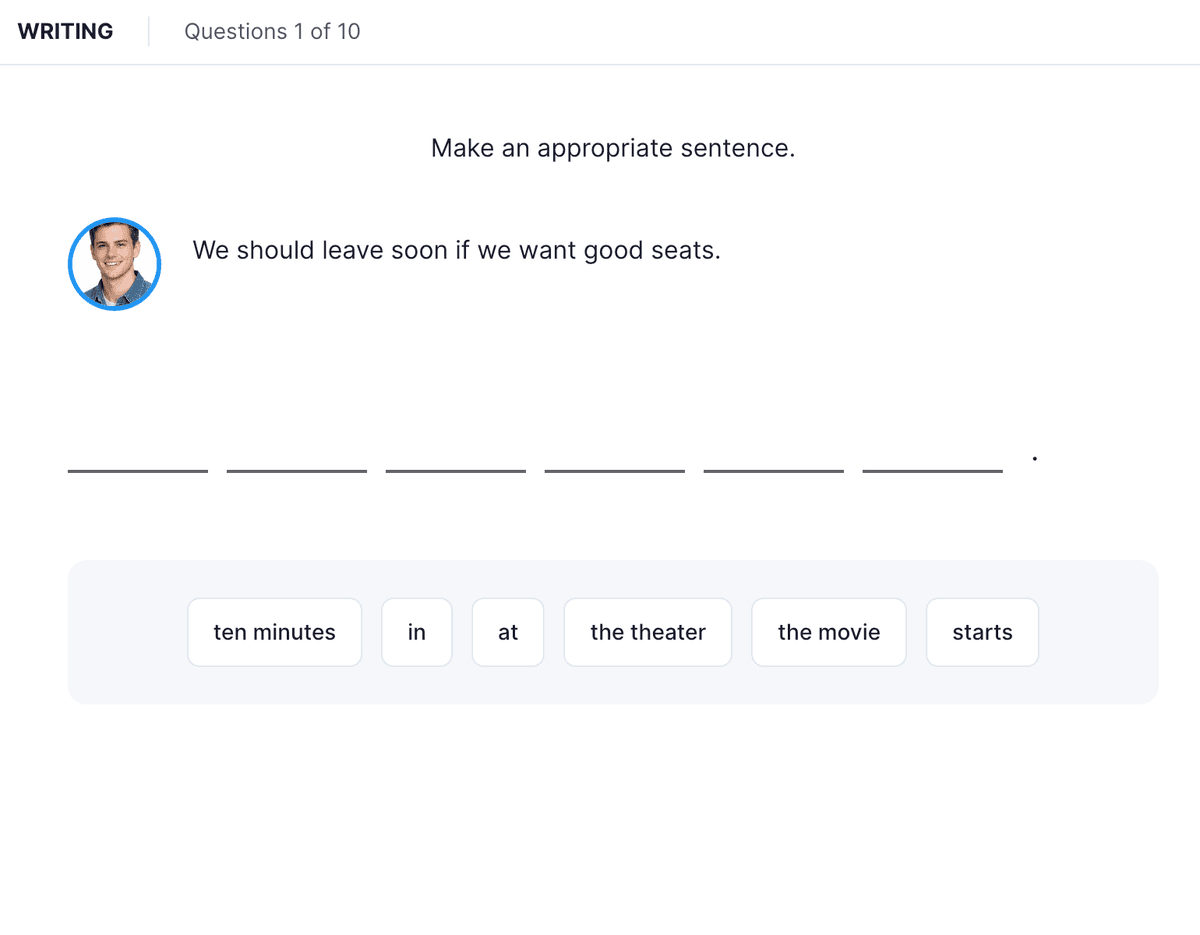 TOEFL 26 New: Writing
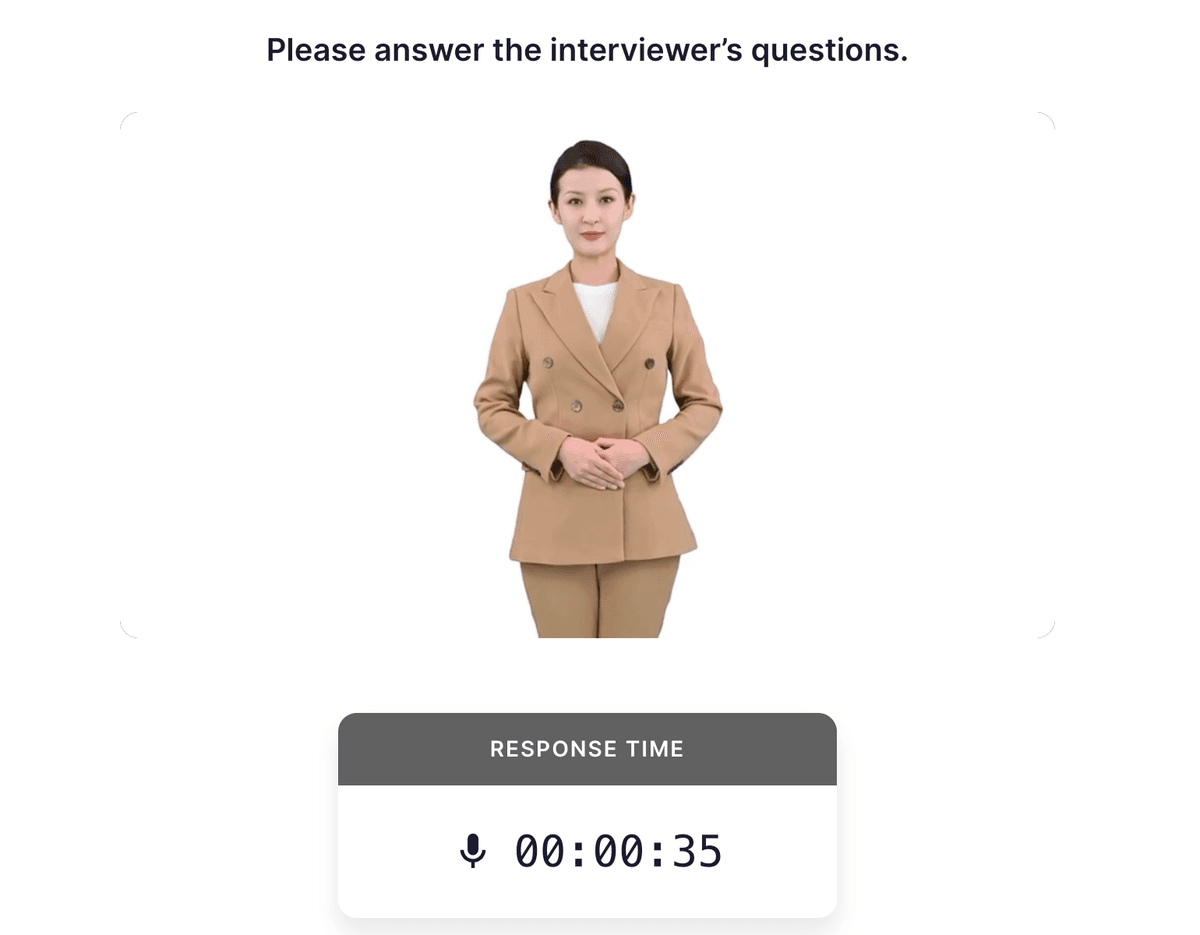 TOEFL 26 New: Speaking
Every TOEFL 2026 mock test in Lingoleap
These are the full-length mock tests the Lingoleap practice app publishes today, listed exactly as they appear inside it. Each one runs all four TOEFL 2026 sections in a single timed sitting, and each name below opens that test in the app.
104 published full-length mock tests · three sets
- Free with account16 tests
- Plus or Premium15 tests
- Premium73 tests
Access states are the app's own. It marks New TPO and Latest Questions Premium, and describes PQ26-16 to PQ26-30 as included with Plus and Premium; the rest of Practice Questions opens once you create a free account.
Practice Questions (PQ26)
Mixed access31 full-length tests
PQ26-1 to PQ26-15 and PQ26-75 open with a free account. PQ26-16 to PQ26-30 are the range the app sells as part of Plus and Premium.
- PQ26-1Take test →Gratis-TestFree with account
- PQ26-2Take test →Free with account
- PQ26-3Take test →Free with account
- PQ26-4Take test →Free with account
- PQ26-5Take test →Free with account
- PQ26-6Take test →Free with account
- PQ26-7Take test →Free with account
- PQ26-8Take test →Free with account
- PQ26-9Take test →Free with account
- PQ26-10Take test →Free with account
- PQ26-11Take test →Free with account
- PQ26-12Take test →Free with account
- PQ26-13Take test →Free with account
- PQ26-14Take test →Free with account
- PQ26-15Take test →Free with account
- PQ26-16Take test →Plus or Premium
- PQ26-17Take test →Plus or Premium
- PQ26-18Take test →Plus or Premium
- PQ26-19Take test →Plus or Premium
- PQ26-20Take test →Plus or Premium
- PQ26-21Take test →Plus or Premium
- PQ26-22Take test →Plus or Premium
- PQ26-23Take test →Plus or Premium
- PQ26-24Take test →Plus or Premium
- PQ26-25Take test →Plus or Premium
- PQ26-26Take test →Plus or Premium
- PQ26-27Take test →Plus or Premium
- PQ26-28Take test →Plus or Premium
- PQ26-29Take test →Plus or Premium
- PQ26-30Take test →Plus or Premium
- PQ26-75Take test →Free with account
New TPO (TPO26)
Premium8 full-length tests
The app describes this set as exam-grade practice built for the 2026 format.
Latest Questions (EQ26)
Premium65 full-length tests
The app describes this set as its newest question sets, updated continuously.
- EQ26-1Take test →Premium
- EQ26-2Take test →Premium
- EQ26-3Take test →Premium
- EQ26-4Take test →Premium
- EQ26-5Take test →Premium
- EQ26-6Take test →Premium
- EQ26-7Take test →Premium
- EQ26-8Take test →Premium
- EQ26-9Take test →Premium
- EQ26-10Take test →Premium
- EQ26-11Take test →Premium
- EQ26-12Take test →Premium
- EQ26-13Take test →Premium
- EQ26-14Take test →Premium
- EQ26-15Take test →Premium
- EQ26-16Take test →Premium
- EQ26-17Take test →Premium
- EQ26-18Take test →Premium
- EQ26-19Take test →Premium
- EQ26-20Take test →Premium
- EQ26-21Take test →Premium
- EQ26-22Take test →Premium
- EQ26-23Take test →Premium
- EQ26-24Take test →Premium
- EQ26-25Take test →Premium
- EQ26-26Take test →Premium
- EQ26-27Take test →Premium
- EQ26-28Take test →Premium
- EQ26-29Take test →Premium
- EQ26-30Take test →Premium
- EQ26-31Take test →Premium
- EQ26-32Take test →Premium
- EQ26-33Take test →Premium
- EQ26-34Take test →Premium
- EQ26-35Take test →Premium
- EQ26-36Take test →Premium
- EQ26-37Take test →Premium
- EQ26-38Take test →Premium
- EQ26-39Take test →Premium
- EQ26-40Take test →Premium
- EQ26-41Take test →Premium
- EQ26-42Take test →Premium
- EQ26-43Take test →Premium
- EQ26-44Take test →Premium
- EQ26-45Take test →Premium
- EQ26-46Take test →Premium
- EQ26-47Take test →Premium
- EQ26-48Take test →Premium
- EQ26-49Take test →Premium
- EQ26-50Take test →Premium
- EQ26-51Take test →Premium
- EQ26-52Take test →Premium
- EQ26-53Take test →Premium
- EQ26-54Take test →Premium
- EQ26-55Take test →Premium
- EQ26-56Take test →Premium
- EQ26-58Take test →Premium
- EQ26-59Take test →Premium
- EQ26-60Take test →Premium
- EQ26-61Take test →Premium
- EQ26-62Take test →Premium
- EQ26-63Take test →Premium
- EQ26-64Take test →Premium
- EQ26-65Take test →Premium
- EQ26-66Take test →Premium
Each link opens that exact test in the practice app. The app asks you to sign in first, and tests marked Plus or Premium need the matching plan.
What one mock test contains
The app records a task-type list for every mock test. All four sections appear in all of them:
Reading
- Complete the Words
- Read in Daily Life
- Read an Academic Passage
Listening
- Listen and Choose a Response
- Conversation
- Announcement
- Academic Talk
Speaking
- Listen and Repeat
- Take an Interview
Writing
- Build a Sentence
- Write an Email
- Write for an Academic Discussion
One exception, listed rather than rounded away: TPO26-6 carries no Build a Sentence task. The other 103 tests carry the full task-type list.
Test names, counts and access states read from the practice app's own question list, route table and gate on 18 September 2026. Nothing on this list is an estimate. Lingoleap reports a practice band, not an official ETS score.
Was ist ein TOEFL Probetest (Übungstest)?
Ein TOEFL Probetest, auch TOEFL Übungstest, Probeprüfung oder Testsimulation genannt, ist ein vollständiger, zeitlich begrenzter Durchlauf des TOEFL iBT im aktuellen Format: dem neu gestalteten Test, der am 21. Januar 2026 eingeführt wurde, mit 12 neuen Aufgabentypen, mehrstufig adaptivem Reading und Listening und einer an den GER (CEFR) angelehnten Punkteskala von 1 bis 6.
Übungsmaterial, das für den Test vor 2026 geschrieben wurde, kann diese Struktur nicht abbilden. Jeder Lingoleap Probetest ist für das Format 2026 aufgebaut: dieselben vier Sektionen, Aufgabentypen und Zeitvorgaben, in einer Sitzung, mit einem Übungs-Score-Bericht am Ende.
Neues TOEFL 2026 Format
Der TOEFL 2026 besteht aus 4 Sektionen: Reading, Listening, Writing und Speaking. Die geschätzte Testdauer beträgt weniger als 2 Stunden. Die Testzeit beinhaltet keine Anweisungen. Da sich der Test anpasst, können Testdauer und Anzahl der Fragen variieren.
Reading
~30 Min.
~50 Fragen
Mehrstufig adaptiv über zwei Module
Listening
~29 Min.
~47 Fragen
Mehrstufig adaptiv über zwei Module
Writing
~23 Min.
12 Fragen
Lineares Format — gleiche Aufgaben für alle Testteilnehmer
Speaking
~8 Min.
11 Fragen
Lineares Format — gleiche Aufgaben für alle Testteilnehmer
Alle Aufgabentypen des TOEFL 2026
Reading
- Complete the Words
- Read in Daily Life
- Read an Academic Passage
8 Fragetypen: Factual & Negative Factual, Vocabulary, Select the Sentence, Sentence Simplification, Reference, Inference, Rhetorical Purpose, Insert Text
Listening
- Listen and Choose a Response
- Listen to a Conversation
- Listen to an Announcement
- Listen to an Academic Talk
6 Fragetypen: Main Idea, Factual, Inference, Purpose, Method, Attitude
Writing
- Build a Sentence
- Write an Email
- Write for an Academic Discussion
Lineares Format — bewertet nach kommunikativem Zweck, Syntax, Wortwahl, sozialen Konventionen und Genauigkeit
Speaking
- Listen and Repeat
- Take an Interview
Lineares Format — bewertet nach Aussprache (Klarheit, Flüssigkeit), Sprachgebrauch (Grammatik, Wortschatz) und Ausführlichkeit
Die Sektionen Reading und Listening verwenden mehrstufiges adaptives Testen — Ihre Leistung in Modul 1 bestimmt den Schwierigkeitsgrad von Modul 2. Dies schafft ein personalisierteres Erlebnis und misst Ihre Fähigkeiten effizienter und genauer.
Warum Lingoleap TOEFL 26 Probetests wählen
Die meisten TOEFL-Vorbereitungsmaterialien basieren noch auf dem alten Testformat. Lingoleap wurde speziell für das TOEFL 2026 Format entwickelt.
 Vollständige Probetests, die alle 12 offiziellen Aufgabentypen des TOEFL 2026 abdecken
- Mehrstufiges adaptives Reading und Listening, das den echten Test widerspiegelt
- KI-Bewertung für Speaking und Writing, ausgerichtet an den offiziellen ETS-Bewertungskriterien
- Eine der umfangreichsten TOEFL 26 Probetest-Bibliotheken, die verfügbar sind
Die meisten Ressourcen bereiten Sie auf den alten TOEFL vor. Lingoleap bereitet Sie auf den neuen vor.
Vollständige Abdeckung aller TOEFL 2026 Aufgabentypen
Jeder Lingoleap TOEFL 26 Probetest deckt alle 12 offiziellen Aufgabentypen in den vier Testsektionen ab — genau so, wie sie in der echten Prüfung vorkommen.
Reading
- Complete the Words
Fehlende Wortteile in einem kurzen akademischen Absatz rekonstruieren
- Read in Daily Life
Praktische Texte wie E-Mails, Hinweise oder Social-Media-Beiträge lesen
- Read an Academic Passage
Einen kurzen akademischen Text (~200 Wörter) lesen und 5 Fragen beantworten
Listening
- Listen and Choose a Response
Eine kurze Frage oder Aussage hören und die beste Antwort aus 4 Optionen wählen
- Listen to a Conversation
Fragen zu kurzen Campus-Gesprächen zwischen 2 Sprechern beantworten
- Listen to an Announcement
Fragen zu Ankündigungen im Unterricht oder bei Campus-Veranstaltungen beantworten
- Listen to an Academic Talk
Fragen zu kurzen akademischen Vorträgen zu verschiedenen Themen beantworten
Writing
- Build a Sentence
Wörter und Ausdrücke neu anordnen, um einen Satz in einem kurzen Dialog zu vervollständigen
- Write an Email
Eine E-Mail für einen bestimmten Zweck verfassen, z. B. empfehlen, einladen oder eine Lösung vorschlagen
- Write for an Academic Discussion
Den Beitrag eines Professors und die Antworten von 2 Studierenden lesen, dann einen eigenen Beitrag verfassen (100+ Wörter)
Speaking
- Listen and Repeat
7 gesprochene Sätze wiederholen, die in Länge und Komplexität zunehmen
- Take an Interview
4 Interviewfragen in einem simulierten akademischen Gespräch beantworten (je 45 Sek.)
Mehrstufiges adaptives Testen — wie beim echten TOEFL 2026
Lingoleap Probetests simulieren die mehrstufige adaptive Struktur des echten TOEFL. Ihre Leistung in Modul 1 bestimmt den Schwierigkeitsgrad von Modul 2, genau wie bei der tatsächlichen Prüfung.
Realistische Testprogression
Erleben Sie denselben adaptiven Ablauf wie beim tatsächlichen TOEFL 2026 — die Leistung in Modul 1 bestimmt den Schwierigkeitsgrad von Modul 2
Training auf mehreren Niveaus
Üben Sie sowohl einfachere als auch schwierigere Module, um Selbstvertrauen und Genauigkeit auf jedem Niveau aufzubauen
Echte Leistungseinschätzung
Verstehen Sie Ihr tatsächliches Scoring-Potenzial basierend auf der adaptiven Bewertungslogik und der Umrechnung von Rohwerten in skalierte Werte
KI-Bewertung für Speaking & Writing
Erhalten Sie sofort detailliertes Feedback zu jeder Speaking- und Writing-Antwort — ausgerichtet an den offiziellen ETS-Bewertungskriterien. Jede Antwort wird holistisch auf einer Skala von 0 bis 5 bewertet.
Speaking-Bewertung
Listen and Repeat
- Wiederholungsgenauigkeit
- Verständlichkeit
- Aussprache
Take an Interview
- Aussprache (Klarheit, Flüssigkeit, Intonation)
- Sprachgebrauch (Bandbreite und Genauigkeit in Grammatik und Wortschatz)
- Ausführlichkeit (themenrelevante, gut belegte Ideen)
Writing-Bewertung
Write an Email
- Ausführlichkeit im Dienst des kommunikativen Zwecks
- Syntaktische Vielfalt und präzise, idiomatische Wortwahl
- Angemessene soziale Konventionen (Höflichkeit, Register, Formalität)
- Lexikalische und grammatische Genauigkeit
Write for an Academic Discussion
- Relevante, gut ausgeführte Erklärungen und Beispiele
- Vielfalt syntaktischer Strukturen und präzise, idiomatische Wortwahl
- Lexikalische und grammatische Genauigkeit
Accuracy and transparency
How Accurate Is This TOEFL Practice Test Score?
Every practice-test site says its scores are accurate. Almost none says how the number is produced or what has actually been checked. Here is the full answer for Lingoleap — including what we have not verified yet.
What we know
- Reading and Listening are scored against a fixed answer key, so those bands are as reliable as the question set is representative of the real test.
- Writing and Speaking responses are scored 0–5 by a language model against the dimensions of the published ETS scoring guides — the same criteria the Speaking and Writing evaluation section above lists.
- Every band on your report comes from one fixed rule set — the tables and formulas printed further down this page — so the same answers always produce the same band.
What we have not verified
- We have not yet published a comparison of Lingoleap bands against learners' official ETS score reports. Until that verified sample exists and is large enough, we do not quote a correlation, an accuracy percentage or a margin of error — any such number would be invented.
- ETS has not released a raw-to-band conversion for the 2026 test. Our Reading and Listening table is a Lingoleap estimate and is labelled as one below.
- The real test equates scores across forms and adaptive paths with Item Response Theory; our engine uses a simpler lookup table. The two can disagree, most likely at band boundaries.
What to do with the estimate
- Treat one mock band as a range, not a point. Read the section bands and the task-type accuracy under them — those move first and are what you can practise.
- Track direction across three to five mocks spaced two to three weeks apart, rather than certifying a single sitting.
- For admissions, only an ETS score counts. Check your target school's published minimum with the Score Calculator, and treat the last mock as a dress rehearsal, not a prediction.
The method we will use to publish calibration figures — who counts, which mock counts, what gets excluded — is already written down on the how-it-works page. The figures will appear there, with their sample size, once the verified sample exists.
See the calibration method →Wondering whose AI to trust on the 2026 test in general? The AI tutor guide explains how ETS's own SpeechRater and e-rater engines grade Speaking and Writing first, and how to rehearse against an AI scorer.
How the 2026 TOEFL is graded by AI →How Our Adaptive Practice Works
Reading and Listening in a Lingoleap mock run as a two-stage test, the structure ETS describes for the real exam. Here is exactly what our engine does — and, separately, what ETS has and has not said.
In a Lingoleap mock test
- 1
Router module
Every test-taker starts with the same router module in each section.
- 2
Routing
Your router performance sends you to a lower or an upper Stage 2 module. The two modules are built differently, which is why the number of items you see varies from mock to mock. The routing threshold is an engine setting we do not publish on this page.
- 3
One band table, defined for the upper module
Correct answers across both stages are counted, normalised to a 35-point basis, and looked up in the section's band table. The table is defined for the upper module.
- 4
Lower-module adjustment
A sitting routed to the lower module is placed one step down that table for the same normalised count. So in our engine the lower path cannot reach the top band — that is a Lingoleap simplification, not an ETS rule, and it is the one place our scoring is deliberately more conservative than the real test.
Adaptive routing: what ETS has published vs what prep sites assert
| Question | What ETS has published | What prep sites assert |
|---|---|---|
| Structure | Reading and Listening are “designed as two-stage adaptive tests”; Writing and Speaking are linear, with every test-taker on a form getting the same tasks (2026 Test Blueprint, note 5). | The same. This part is not in dispute. |
| Routing | “Based on their performance on the first module, test takers will get a second module where the difficulty of the test tasks matches their ability level.” No routing threshold is published (Teacher FAQ, Q9). | Specific thresholds — “get the first ten questions wrong and you are routed down” — none of which cites an ETS source. |
| How the score is produced | The section score “takes into consideration the total number of questions answered correctly across the two stages or modules as well as the difficulty level of questions”, converted by IRT equating so that a reported score “reflects the same level of language ability, regardless of which second stage was taken” (Teacher FAQ). | A fixed raw-to-band table applied to both paths, or a flat penalty for the easier path. |
| The “ceiling” | ETS states no maximum band for the lower module. It says “the final score is based on both stages” and that item difficulty is accounted for — which means an easier item is worth less, not that a particular band is forbidden. Whether the easier module can reach 6.0 in practice is not something ETS has published either way. | “A perfect score on the easier Stage 2 caps you at 4.0”, or “below 5.0” — the figure differs from site to site and none cites ETS. |
| Unscored items | Reading and Listening item counts “include non-scored items” used to gather data for future forms (Blueprint, note 1). | Rarely mentioned; item counts are usually quoted as if every item scored. |
ETS sources: TOEFL iBT 2026 Test Blueprint and Specifications (PDF) · Teacher FAQ for TOEFL iBT Enhancements (PDF)
Quotations are from those two ETS documents as read on 16 September 2026. Where this page says ETS has not published something, we mean we could not find it in either document or on ets.org — not that no such rule exists internally.
How the Band Is Produced, Section by Section
The whole path from your answers to the 1–6 band, with nothing hidden. These are the rules our score report runs on.
Reading
Scored by: Answer key- 1Every item is compared with the reference answer: right or wrong, no partial credit.
- 2Correct answers across the router and your Stage 2 module are summed and scaled to a 35-point basis: points = round(correct ÷ items × 35).
- 3The points are looked up in the Reading band table below. Lower-module sittings drop one step.
Listening
Scored by: Answer key- 1The same answer-key grading and 35-point scaling as Reading.
- 2The Listening table has its own boundaries: 80% accuracy is a 5.0 in Reading, but 71% is a 4.5 in Listening. That is why two sections at similar accuracy can show different bands.
Writing
Scored by: Answer key + AI- 1Build a Sentence: each item is scored right or wrong against the accepted word orderings. No model is involved.
- 2Write an Email and Write for an Academic Discussion: each response is scored 0–5 by a language model against the dimensions of the ETS scoring guide for that task.
- 3Section band = (points earned ÷ points available) × 5 + 1, rounded to the nearest 0.5.
Speaking
Scored by: AI- 1Listen and Repeat (7 items) and Take an Interview (4 items): your recording is transcribed and measured for pronunciation and fluency, then a model scores each response 0–5 against the rubric dimensions.
- 2Section band = (points earned ÷ points available) × 5 + 1, rounded to the nearest 0.5.
Overall band = the plain average of the four section bands, rounded to the nearest 0.5. The 0–120 “traditional” figure on the report is each section's accuracy scaled to 0–30 and summed; it exists only for comparing against university pages that still quote the old scale.
Raw Correct to Band: Reading and Listening
Lingoleap estimate — not an ETS tableBasis: these are the exact lookup tables our score report uses, defined on a 35-point normalised scale (points = round(correct ÷ items × 35)). ETS has published no raw-to-band conversion for the 2026 test, and real scores are IRT-equated for form and module difficulty, so treat every band here as a practice estimate. The approximate-accuracy column is the points range divided by 35.
Reading
| Band | Points (of 35) | Approx. accuracy |
|---|---|---|
| 6.0 | 34–35 | ≈ 97–100% |
| 5.5 | 32–33 | ≈ 91–94% |
| 5.0 | 28–31 | ≈ 80–89% |
| 4.5 | 25–27 | ≈ 71–77% |
| 4.0 | 18–24 | ≈ 51–69% |
| 3.5 | 12–17 | ≈ 34–49% |
| 3.0 | 8–11 | ≈ 23–31% |
| 2.5 | 7 | ≈ 20% |
| 2.0 | 6 | ≈ 17% |
| 1.0 | 0–5 | ≈ 0–14% |
Listening
| Band | Points (of 35) | Approx. accuracy |
|---|---|---|
| 6.0 | 34–35 | ≈ 97–100% |
| 5.5 | 32–33 | ≈ 91–94% |
| 5.0 | 29–31 | ≈ 83–89% |
| 4.5 | 25–28 | ≈ 71–80% |
| 4.0 | 23–24 | ≈ 66–69% |
| 3.5 | 18–22 | ≈ 51–63% |
| 3.0 | 13–17 | ≈ 37–49% |
| 2.5 | 11–12 | ≈ 31–34% |
| 2.0 | 8–10 | ≈ 23–29% |
| 1.5 | 6–7 | ≈ 17–20% |
| 1.0 | 0–5 | ≈ 0–14% |
Worked example from our sample report: 28 of 35 Reading items correct → 28 points → Band 5.0. 32 of 45 Listening items correct → 24.9, rounded to 25 points → Band 4.5.
Lower-module sittings: one step down the table for the same points.
TOEFL iBT Beispielfragen (Format 2026)
Wärmen Sie sich mit diesen kostenlosen Beispielfragen nach dem Vorbild des TOEFL iBT 2026 auf — eine aus jeder Sektion. Blenden Sie Antwort und Erklärung ein und starten Sie dann einen vollständigen Probetest, wenn Sie bereit sind.
Read the short academic passage, then answer the question.
Bioluminescence — the production of light by living organisms — is common in the deep ocean, where sunlight never reaches. Many creatures use it to attract prey, confuse predators, or signal to potential mates. The light is produced by a chemical reaction between a molecule called luciferin and the enzyme luciferase. Because the reaction gives off almost no heat, scientists describe the light as "cold light."
According to the passage, why is bioluminescent light described as "cold light"?
- AIt is only found in cold, deep water.
- BThe chemical reaction releases very little heat.
- CIt appears blue rather than red or orange.
- DIt is produced only at night.
▸Antwort & Erklärung anzeigen
Antwort: B — The chemical reaction releases very little heat.
The final sentence states the reaction "gives off almost no heat," which is why it is called cold light. Option A confuses where the organisms live with why the light is cold; C and D add details the passage never mentions. Factual questions like this reward locating the exact supporting sentence rather than relying on outside knowledge.
Type the missing letters to complete the word so the sentence makes sense.
Regular exercise can signi______ reduce the risk of heart disease.
▸Antwort & Erklärung anzeigen
Antwort: significantly
"Complete the Words" gives you the first letters and the length of a word and asks you to finish it from context. Here the sentence needs an adverb describing how much exercise reduces risk — "significantly." Read the whole sentence first, decide the part of speech, then fit a word that starts with the letters shown.
On the real test you would hear this talk once. Read the transcript excerpt, then answer.
Professor: "So when we talk about the 'urban heat island' effect, we mean that cities tend to be several degrees warmer than the countryside around them. The main reason is surface material. Asphalt and concrete absorb heat during the day and release it slowly at night — unlike soil and vegetation, which cool down much faster. That's why a city can still feel warm hours after sunset."
What is the main cause of the urban heat island effect, according to the professor?
- ACities are located in naturally warmer regions.
- BBuildings block cooling wind from reaching streets.
- CPaved surfaces absorb and slowly release heat.
- DThere are more people generating body heat.
▸Antwort & Erklärung anzeigen
Antwort: C — Paved surfaces absorb and slowly release heat.
The professor names surface material — asphalt and concrete absorbing heat and releasing it slowly — as "the main reason." The other options are plausible-sounding distractors the talk never states. In the Listening section, note the speaker's signal phrases ("the main reason is…") to catch the point being tested.
Put the words and phrases in the correct order to form a grammatical sentence.
[ the deadline / because / the library / she / was approaching / stayed late at ]
▸Antwort & Erklärung anzeigen
Antwort: She stayed late at the library because the deadline was approaching.
"Build a Sentence" tests control of English word order and clause structure. Start with the subject ("She"), add the main verb phrase ("stayed late at the library"), then attach the reason clause introduced by "because." Checking that subject, verb, and connector line up is usually enough to place every chunk.
You have 45 seconds to answer. There is no single correct response — a strong answer is clear, on-topic, and supported with a reason or example.
Some students prefer to study in the morning, while others prefer the evening. Which do you prefer, and why?
▸Antwort & Erklärung anzeigen
Antwort: Sample strong response (outline)
Take a clear position, give one reason, and support it with a specific example: "I prefer studying in the morning because my mind is freshest right after I wake up. For instance, I can read a difficult chapter in thirty minutes in the morning, but the same chapter takes me an hour at night when I'm tired." Scoring rewards delivery (clear, fluent speech), language use (accurate grammar and vocabulary), and elaboration (a developed, on-topic idea) — so commit to one answer and develop it rather than listing both options.
Dies sind eigene Lingoleap-Übungsaufgaben, die den Aufgabentypen des TOEFL iBT 2026 nachgebildet sind. Sie dienen nur der Übung und sind keine echten ETS-Testfragen; Lingoleap ist unabhängig von ETS und wird nicht von ETS unterstützt.
Practice TOEFL by Section
A full-length mock test measures readiness, but targeted section practice is how you fix specific weaknesses. Drill any of the four sections and all 12 task types below.
Reading
Adaptive passages and the three 2026 reading task types.
Listening
Conversations, announcements, and academic talks with adaptive difficulty.
Speaking
Listen and Repeat plus the academic interview, with AI delivery feedback.
Writing
Build a Sentence, Write an Email, and Write for an Academic Discussion.
100+ vollständige TOEFL 26 Probetests — monatlich aktualisiert
Greifen Sie auf eine der umfangreichsten verfügbaren TOEFL 2026 Probetest-Bibliotheken zu. Jeden Monat werden neue Tests hinzugefügt, damit Sie sich kontinuierlich mit aktuellem Material vorbereiten können.
- 100+ vollständige TOEFL 26 Probetests
- Alle Tests sind auf das aktuelle TOEFL 2026 Format und die Aufgabentypen abgestimmt
- Jeden Monat werden neue Tests hinzugefügt
- Deckt alle 4 Sektionen und 12 Aufgabentypen ab
- Covers all 4 sections and 12 task types
So starten Sie Ihren TOEFL 26 Probetest
Erstellen Sie Ihr Konto
Registrieren Sie sich kostenlos bei Lingoleap
Wählen Sie einen Probetest
Wählen Sie aus 100+ vollständigen TOEFL 26 Probetests
Beginnen Sie mit dem Üben
Absolvieren Sie den Test unter realen Prüfungsbedingungen
Erhalten Sie Ihre Bewertung & Ihr Feedback
Erhalten Sie eine KI-gestützte Bewertung und eine detaillierte Leistungsanalyse
Starten Sie Ihren TOEFL 26 Probetest
Üben Sie das neue TOEFL 2026 Format mit mehrstufigem adaptivem Testen, allen 12 Aufgabentypen und KI-Bewertung.
Häufig gestellte Fragen
Alles, was Sie über TOEFL 26 Probetests wissen müssen
Was ist anders am TOEFL 2026 Format?
Der TOEFL 2026, eingeführt am 21. Januar 2026, ist ein komplett neu gestalteter Test. Er führt mehrstufiges adaptives Testen in Reading und Listening ein, bei dem die Leistung in Modul 1 den Schwierigkeitsgrad von Modul 2 bestimmt. Writing und Speaking verwenden ein lineares Format (dieselben Aufgaben für alle). Er umfasst 12 völlig neue Aufgabentypen und eine neue, an den GER (CEFR) angelehnte Punkteskala von 1 bis 6. Der Test dauert weniger als 2 Stunden.
Wie viele Aufgabentypen hat der neue TOEFL 2026?
Der neue TOEFL 2026 hat 12 Aufgabentypen in 4 Sektionen: 3 im Reading (Complete the Words, Read in Daily Life, Read an Academic Passage), 4 im Listening (Listen and Choose a Response, Listen to a Conversation, Listen to an Announcement, Listen to an Academic Talk), 3 im Writing (Build a Sentence, Write an Email, Write for an Academic Discussion) und 2 im Speaking (Listen and Repeat, Take an Interview).
Wie viele vollständige TOEFL Probetests gibt es bei Lingoleap?
Lingoleap veröffentlicht derzeit über 100 vollständige TOEFL 2026 Probetests (insgesamt über 10.000 beantwortbare Fragen), und jeden Monat kommen neue Tests hinzu. Jeder Test deckt alle vier Sektionen und alle offiziellen Aufgabentypen des Formats 2026 ab; der Katalog oben auf dieser Seite listet sie alle auf.
Simuliert Lingoleap mehrstufiges adaptives Testen?
Ja. Lingoleap ist eine der wenigen Plattformen, die die mehrstufige adaptive Teststruktur der Reading- und Listening-Sektionen des TOEFL 2026 simulieren. Ihre Leistung in Modul 1 beeinflusst den Schwierigkeitsgrad von Modul 2, genau wie in der echten Prüfung.
Wie funktioniert die KI-Bewertung für Speaking und Writing?
Die KI von Lingoleap bewertet Ihre Antworten nach Kriterien, die auf den öffentlich verfügbaren ETS-Bewertungsrubriken basieren (ganzheitliche Bewertung von 0 bis 5 pro Frage). Im Speaking wird Listen and Repeat nach Genauigkeit der Wiederholung, Verständlichkeit und Aussprache bewertet. Take an Interview wird nach Vortrag (Klarheit, Flüssigkeit, Tempo), Sprachgebrauch (Grammatik, Wortschatz) und Ausarbeitung (Themenbezug, stützende Gedanken) bewertet. Im Writing wird Write an Email nach kommunikativem Zweck, syntaktischer Vielfalt und idiomatischer Wortwahl, sozialen Konventionen (Höflichkeit, Register) und lexikalischer/grammatikalischer Korrektheit bewertet. Write for an Academic Discussion wird nach Relevanz und Ausarbeitung, Satzstrukturen und Wortwahl sowie lexikalischer/grammatikalischer Korrektheit bewertet.
Funktioniert dieser TOEFL Prüfungssimulator wie der echte Test?
In allem, was Ihre Punktzahl bestimmt, ja: dieselben 12 Aufgabentypen, dieselbe Reihenfolge und Zeitvorgabe der Sektionen und zweistufig adaptives Reading und Listening, in einer einzigen zeitlich begrenzten Sitzung. Zwei Dinge unterscheiden sich. Die Fragen sind eigene Lingoleap-Aufgaben, keine ETS-Fragen, und der echte Test gleicht die Punktzahlen zwischen Testversionen mit der Item-Response-Theorie (IRT) ab, während unser System die Umrechnungstabellen verwendet, die im Abschnitt zur Genauigkeit auf dieser Seite abgedruckt sind. Kein Übungstest ist mit der offiziellen Prüfung identisch.
Kann ich den TOEFL Probetest online machen, oder eine Sektion nach der anderen?
Beides ja. Jeder Test läuft online in Ihrem Browser in der Lingoleap-Übungs-App, nachdem Sie sich angemeldet haben; für die Speaking-Sektion brauchen Sie ein Mikrofon. Neben vollständigen Probetests können Sie Reading, Listening, Speaking oder Writing einzeln üben oder gezielt einen einzelnen Aufgabentyp trainieren, um an der Sektion zu arbeiten, in der Sie sich am meisten verbessern müssen.
Wie genau sind die Punkteschätzungen der Lingoleap Probetests?
Reading und Listening werden anhand eines Lösungsschlüssels bewertet, ihre Bands hängen also davon ab, wie repräsentativ der Fragensatz ist. Die Bands für Writing und Speaking stammen von einem Sprachmodell, das jede Antwort von 0 bis 5 nach den Dimensionen der veröffentlichten ETS-Bewertungsleitfäden bewertet. Wir haben noch keinen Vergleich der Lingoleap-Bands mit den offiziellen ETS-Score-Berichten von Lernenden veröffentlicht und nennen daher keine Genauigkeitszahl — der Abschnitt „Wie genau ist diese Punktzahl?“ auf dieser Seite zeigt genau, wie jedes Band zustande kommt und was überprüft wurde und was nicht. Es handelt sich nur um Übungsschätzungen: Offizielle TOEFL-Ergebnisse werden ausschließlich von ETS ausgestellt, und Lingoleap ist unabhängig von ETS und wird nicht von ETS unterstützt.
Wenn ich in das leichtere Modul geleitet werde, ist mein Band dann gedeckelt?
In einem Lingoleap Probetest ja, leicht: Die Band-Tabelle ist für das obere Modul definiert, und eine Sitzung im unteren Modul wird eine Stufe tiefer eingeordnet, sodass der untere Pfad das höchste Band nicht erreichen kann. Das ist unsere Vereinfachung. Für den echten Test sagt ETS, dass die Punktzahl auf beiden Stufen beruht und die Schwierigkeit der Aufgaben über IRT-Equating berücksichtigt; ETS hat kein maximales Band für das untere Modul veröffentlicht. Die konkreten Obergrenzen, die auf Vorbereitungsseiten genannt werden („4.0“, „unter 5.0“), stammen nicht von ETS.
Wie viele richtige Antworten brauche ich für Band 5 in Reading oder Listening?
Laut der Übungstabelle von Lingoleap erfordert Band 5.0 im Reading 28–31 von 35 normierten Punkten (etwa 80–89 % richtig) und Band 5.0 im Listening 29–31 (etwa 83–89 %). Die Punkte sind Ihre richtigen Antworten, umgerechnet auf eine Basis von 35 Punkten. Dies ist eine Schätzung von Lingoleap: ETS hat für den Test 2026 keine Tabelle zur Umrechnung von Rohpunkten in Bands veröffentlicht und gleicht echte Punktzahlen nach Schwierigkeit ab, daher kann die offizielle Umrechnung abweichen.
Ist dieser TOEFL Probetest kostenlos?
Teilweise. Von den vollständigen Tests auf dieser Seite sind PQ26-1 bis PQ26-15 und PQ26-75 mit einem kostenlosen Konto zugänglich; PQ26-16 bis PQ26-30 sind in Plus und Premium enthalten, und die Sets New TPO und Latest Questions sind Premium. Für jeden Test müssen Sie sich zuerst anmelden. Reading- und Listening-Übungen kosten nie Credits. Ein vollständiger Probetest mit KI-Bewertung aller vier Sektionen kostet 800 Credits, und neue Konten starten mit 200 kostenlosen Credits für KI-Feedback; um Speaking und Writing eines vollständigen Probetests bewerten zu lassen, brauchen Sie also mehr Credits, als ein neues Konto hat.
Wie lange dauert der TOEFL Probetest?
Weniger als 2 Stunden, genau wie der echte TOEFL 2026: etwa 30 Minuten Reading, 29 Listening, 23 Writing und 8 Speaking, Anweisungen nicht mitgerechnet. Da Reading und Listening mehrstufig adaptiv sind, variieren die genaue Dauer und die Anzahl der Fragen von Sitzung zu Sitzung.
Bereitest du dich stattdessen auf IELTS vor? IELTS-Übungstests: Format, Zeiten und was du kostenlos üben kannst →