اختبارات TOEFL 26 التجريبية
تدرّب على نموذج TOEFL 2026 الجديد
اختبارات TOEFL 26 تجريبية كاملة مع Reading و Listening تكيّفي متعدد المراحل، جميع أنماط الأسئلة الجديدة، وتقييم بالذكاء الاصطناعي لقسمي Speaking و Writing.
ابدأ بسؤال واحد في المحادثة أو الكتابة بصيغة 2026، يقيّمه الذكاء الاصطناعي. مجانًا مع حساب LingoLeap، دون بطاقة ائتمان.
أو افتح الاختبار التجريبي الكامل PQ26-1 (تصحيح الاختبار الكامل يتطلب 800 رصيد)
يُقيَّم أول اختبار تجريبي كامل لـ 2026 مجاناً، بما في ذلك Speaking وWriting.
عرض كل الاختبارات المنشورة (104) ↓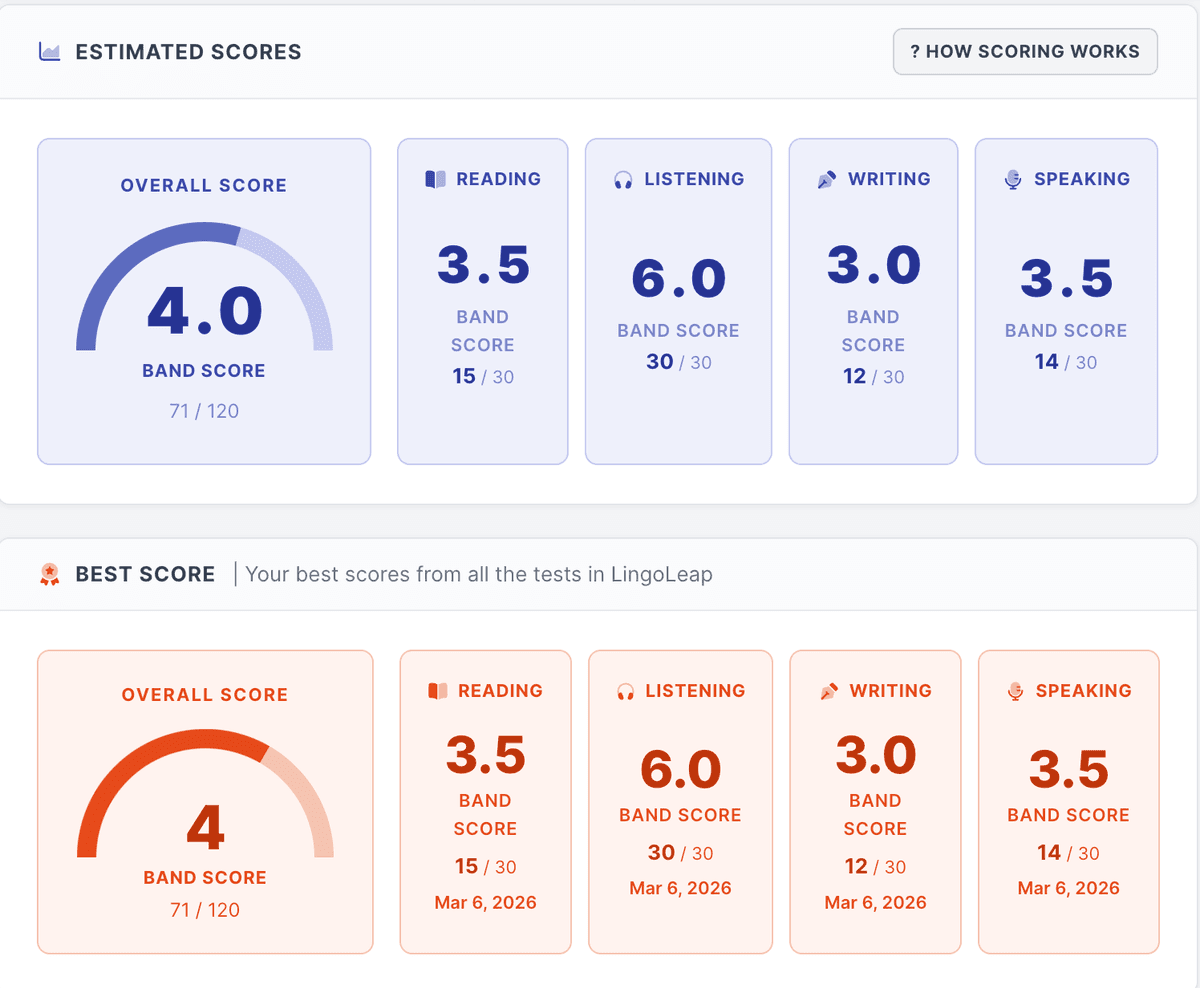 Score Report
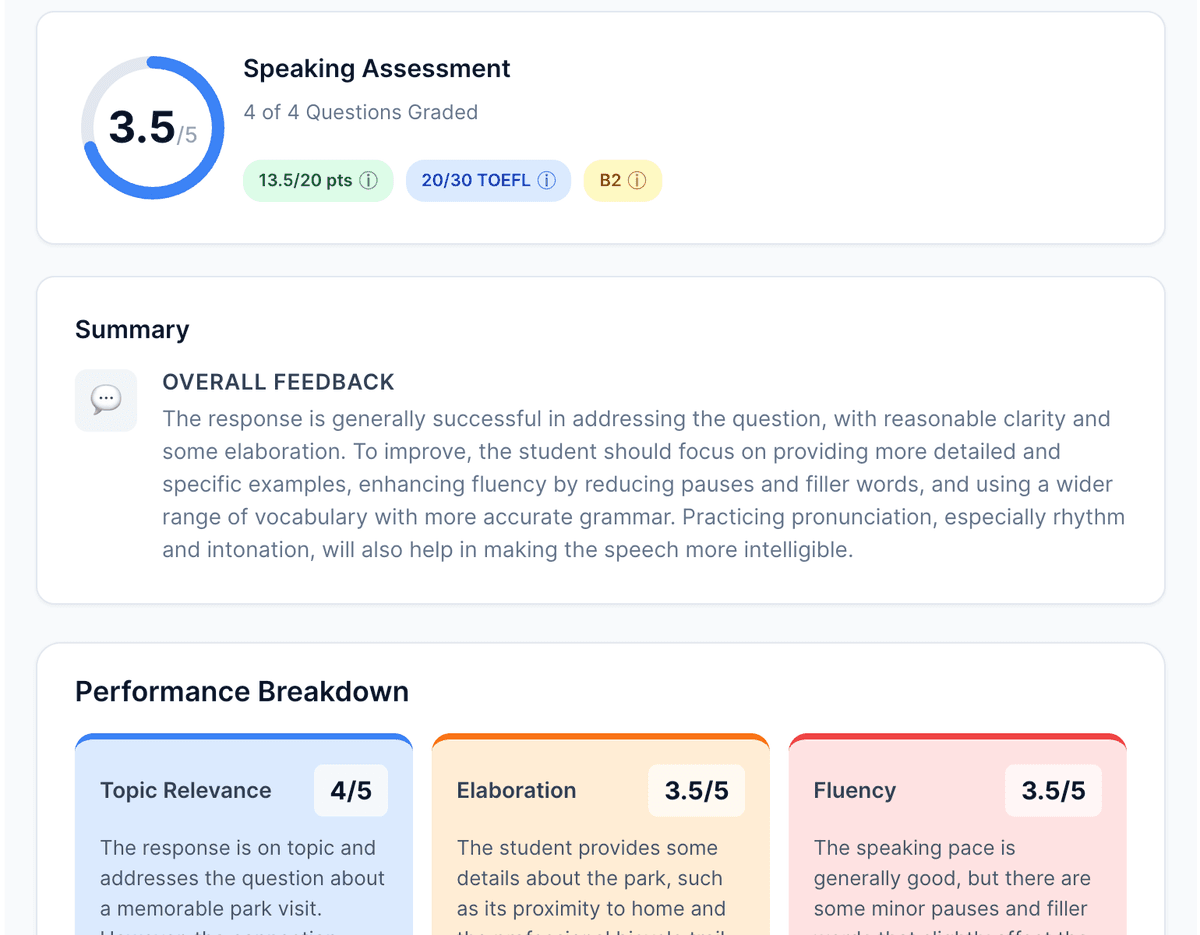 AI Speaking Score
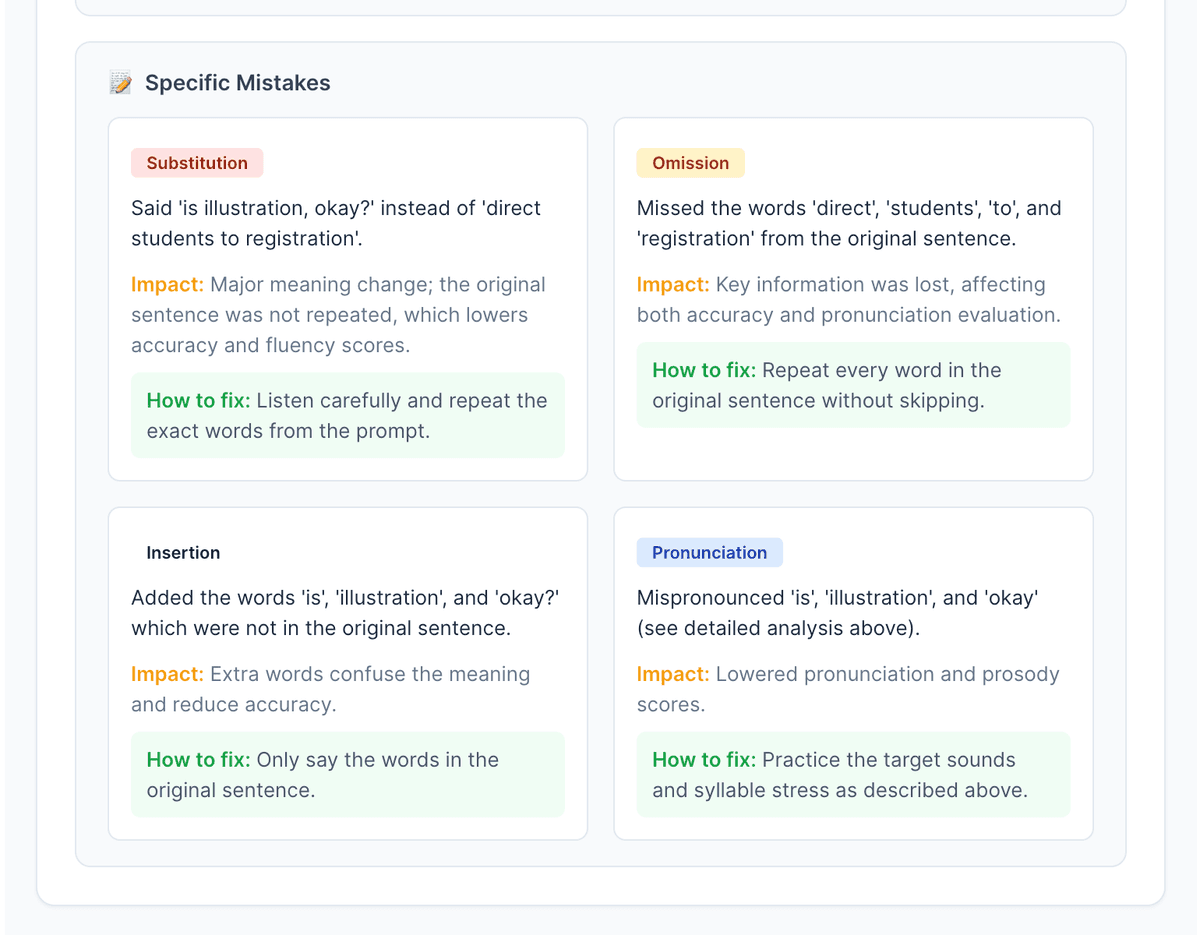 Mistake Analysis
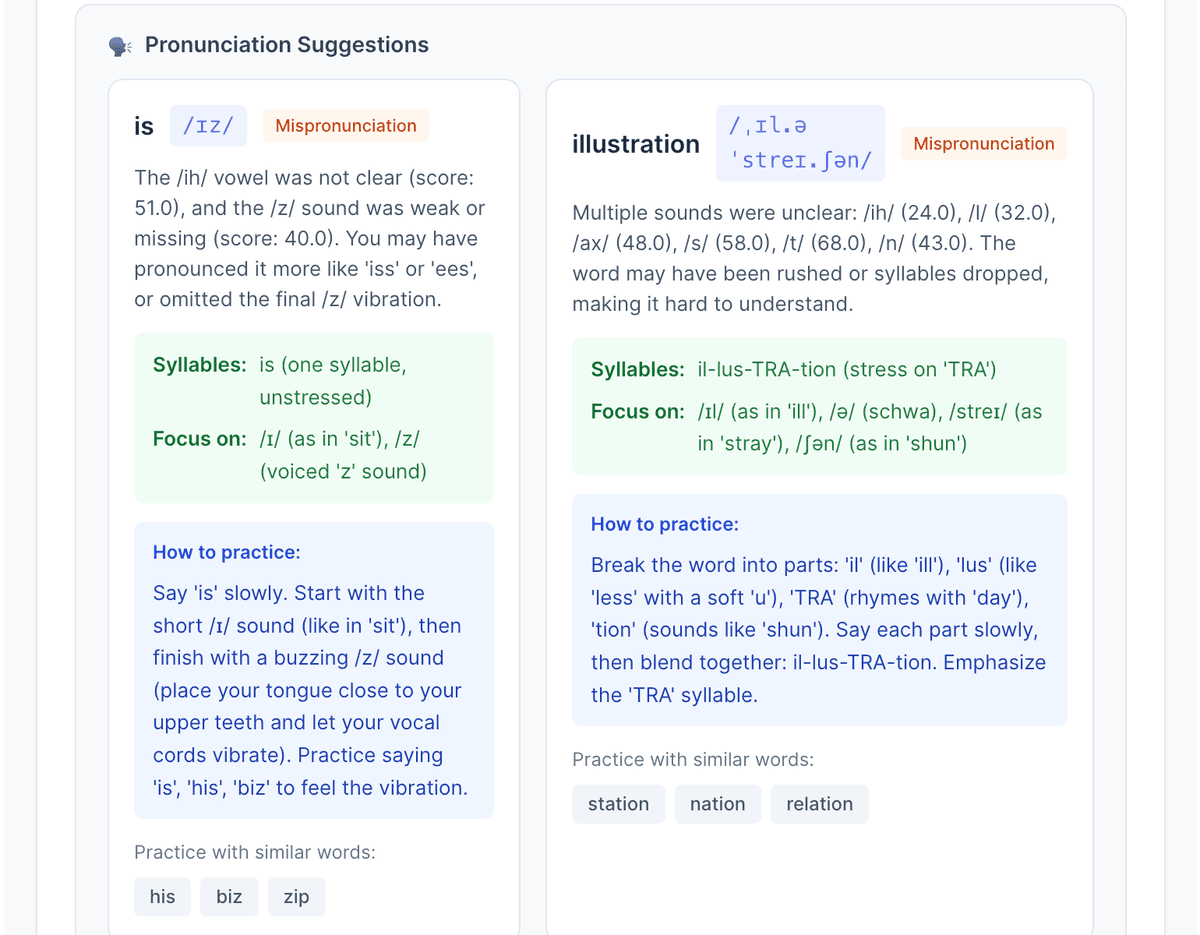 Pronunciation Feedback
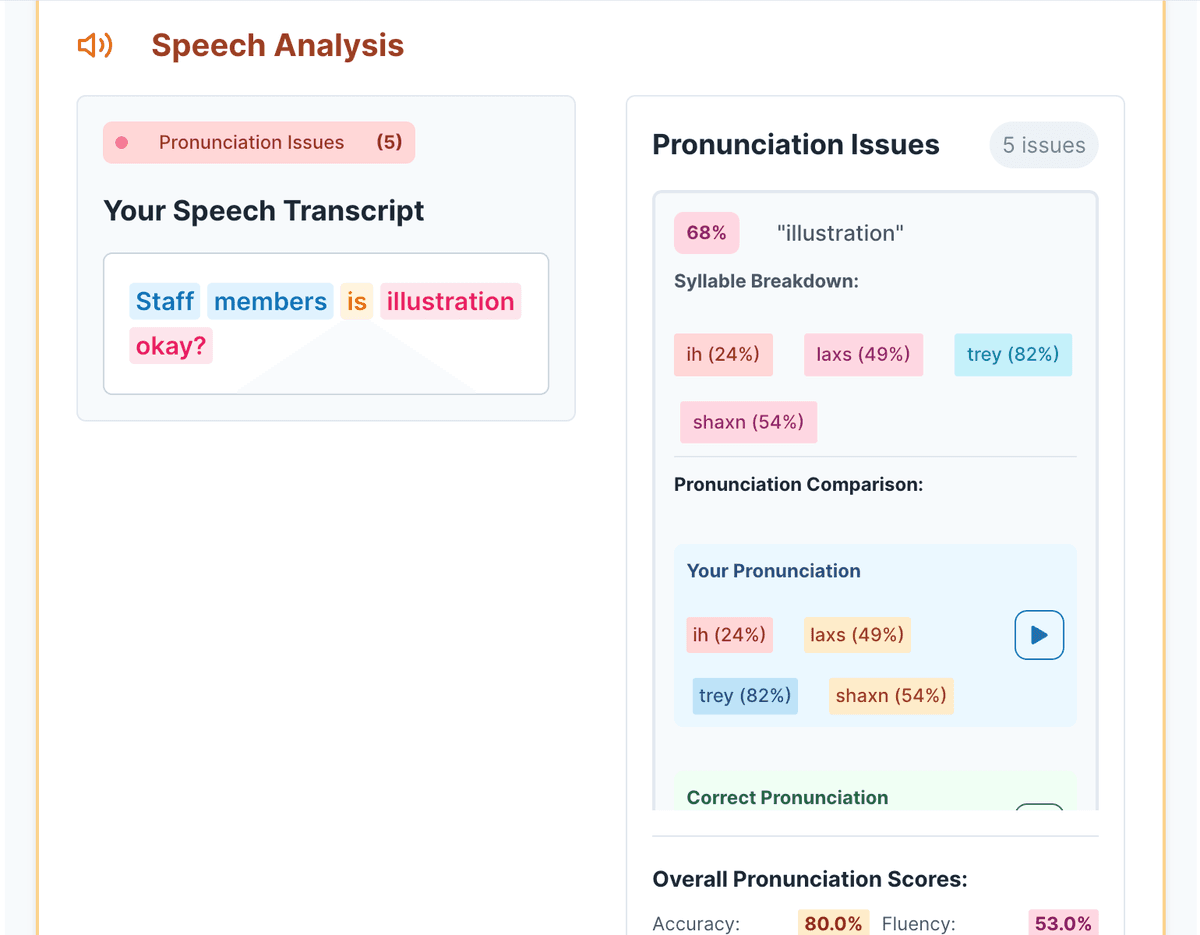 Speech Analysis
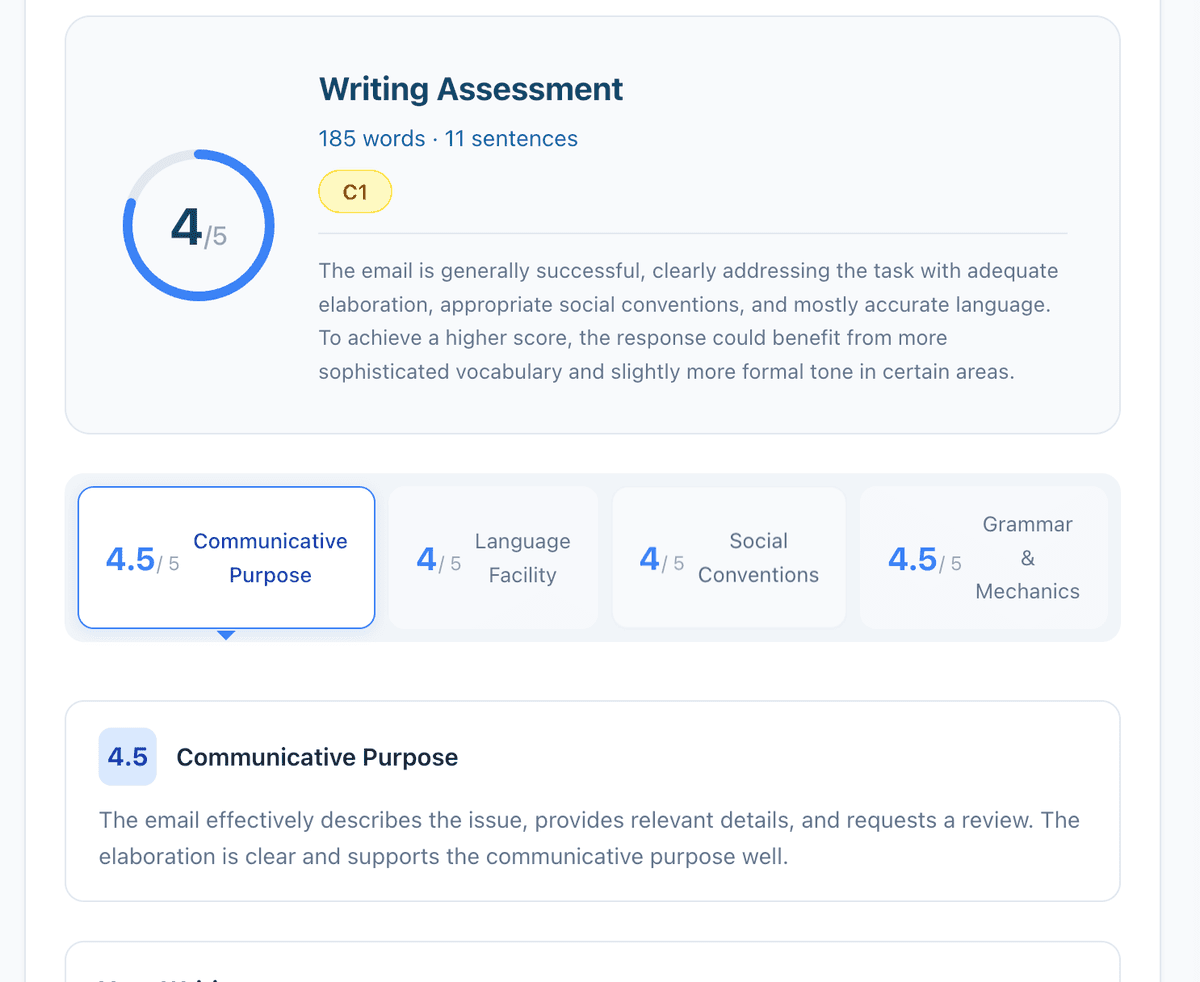 AI Writing Score
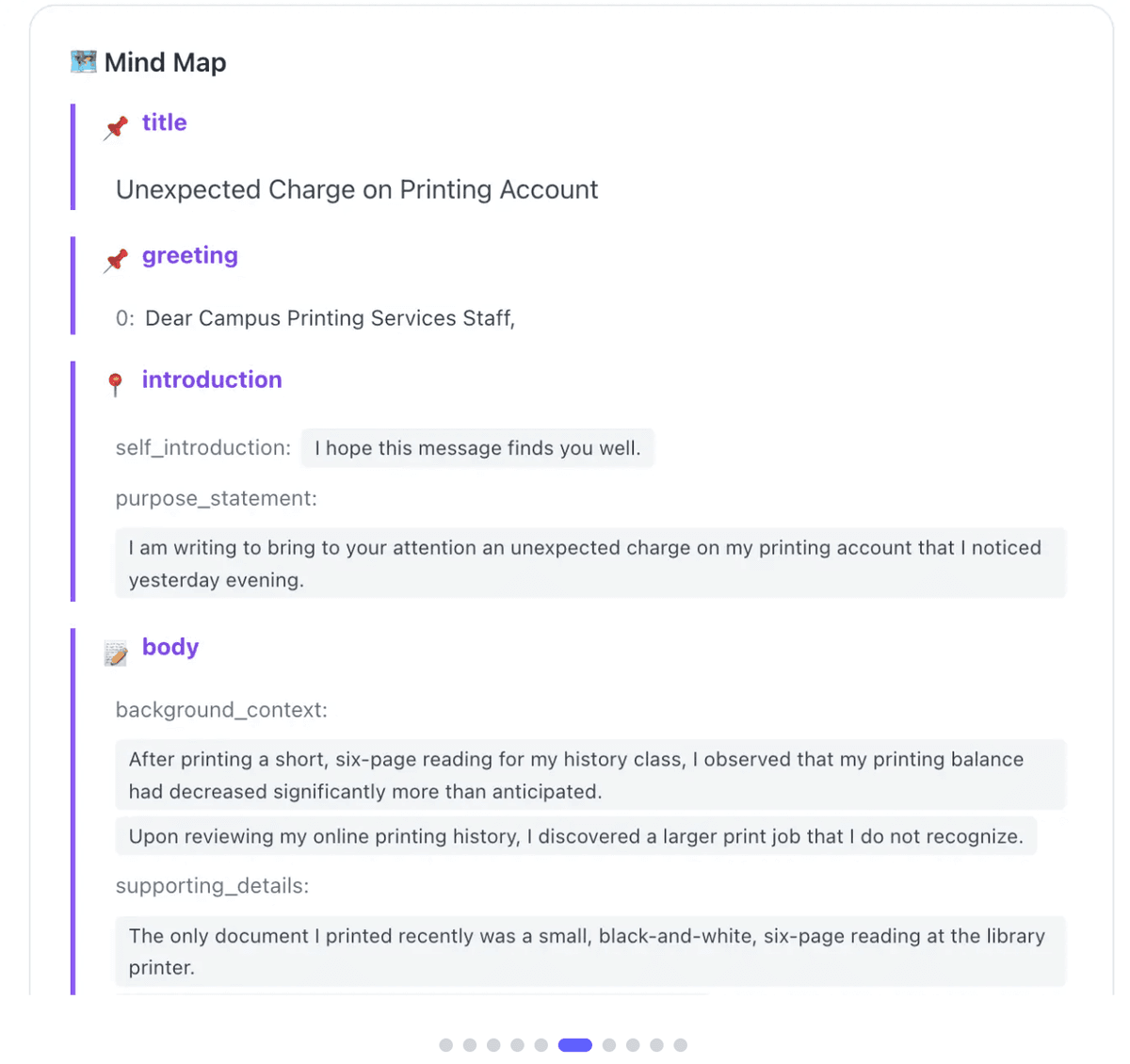 Article Structure Feedback
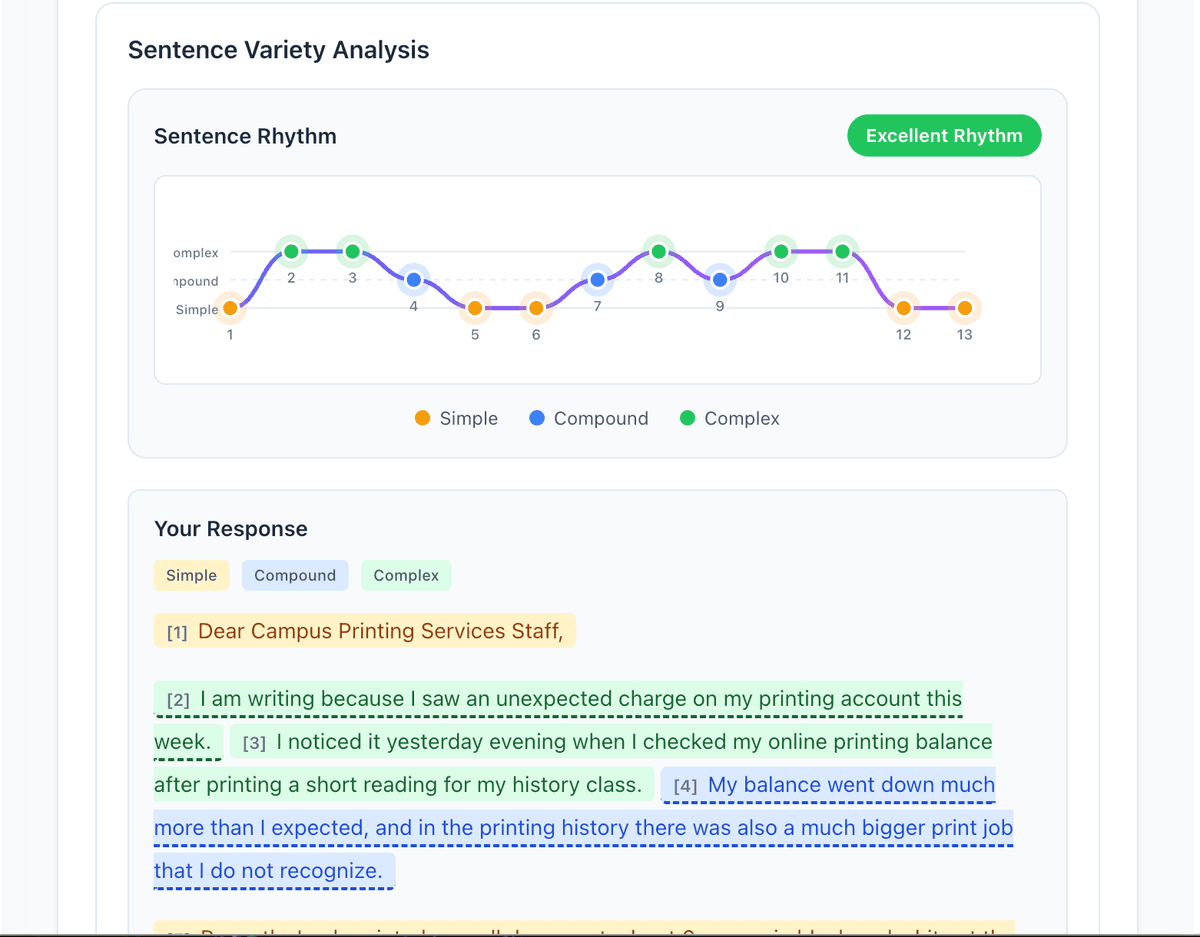 Sentence Variety
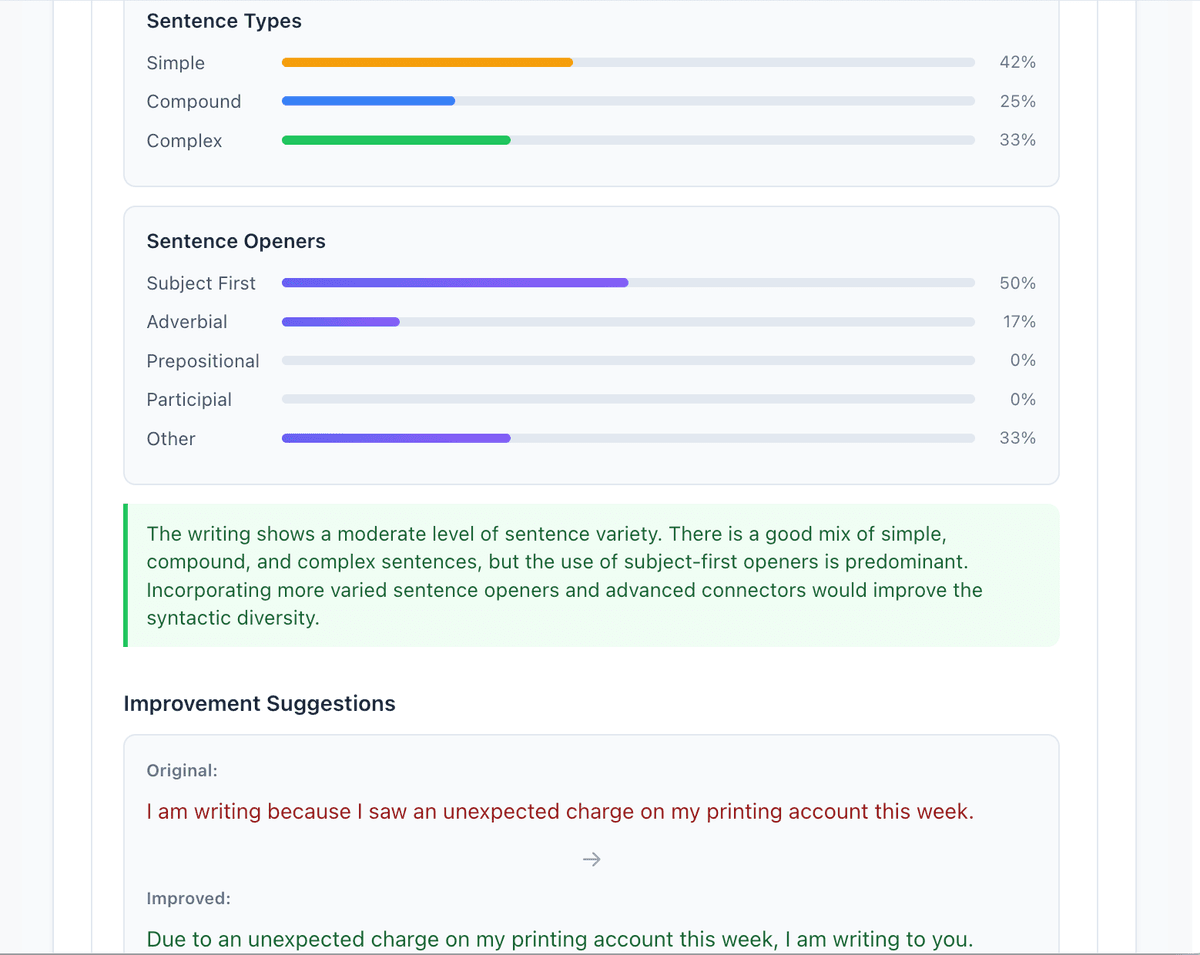 Improvement Suggestions
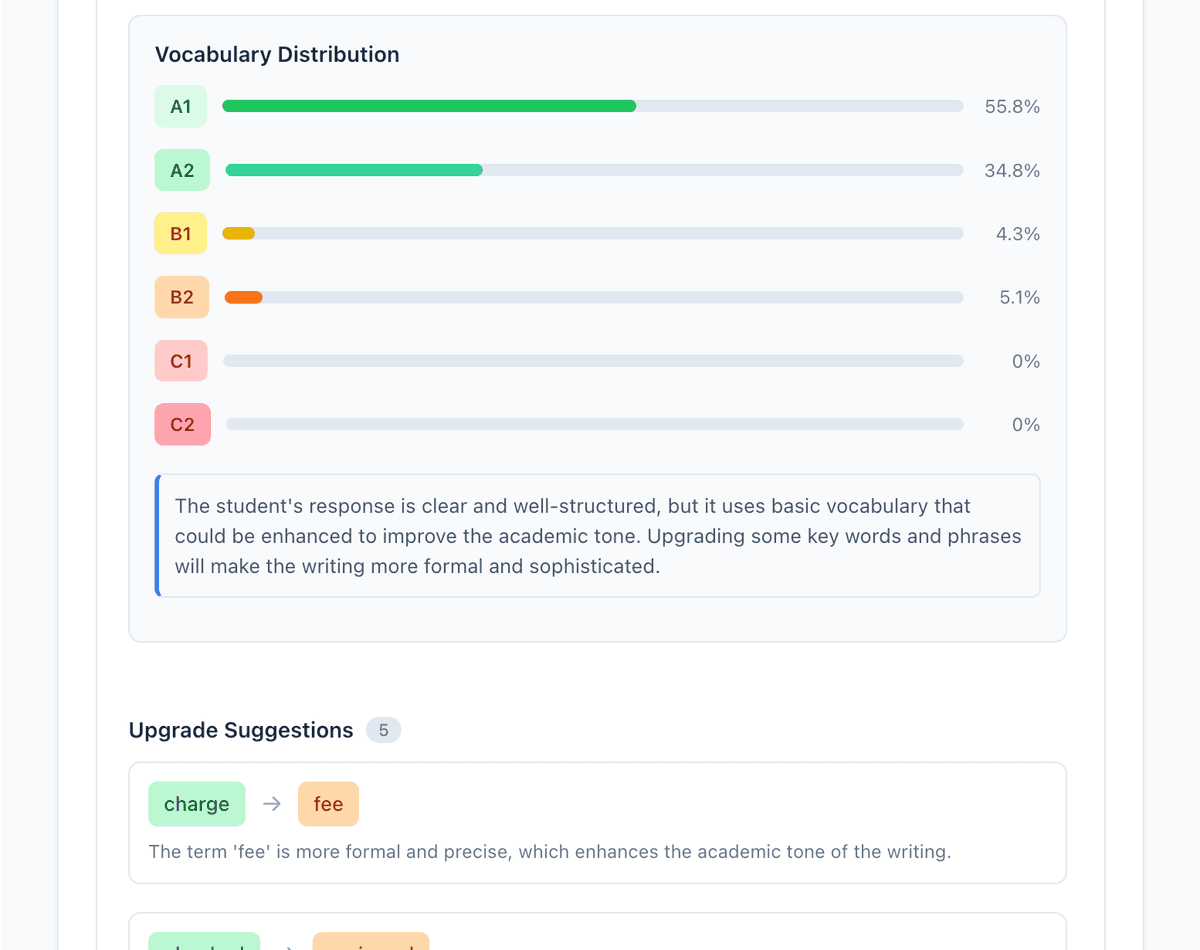 Vocabulary Feedback
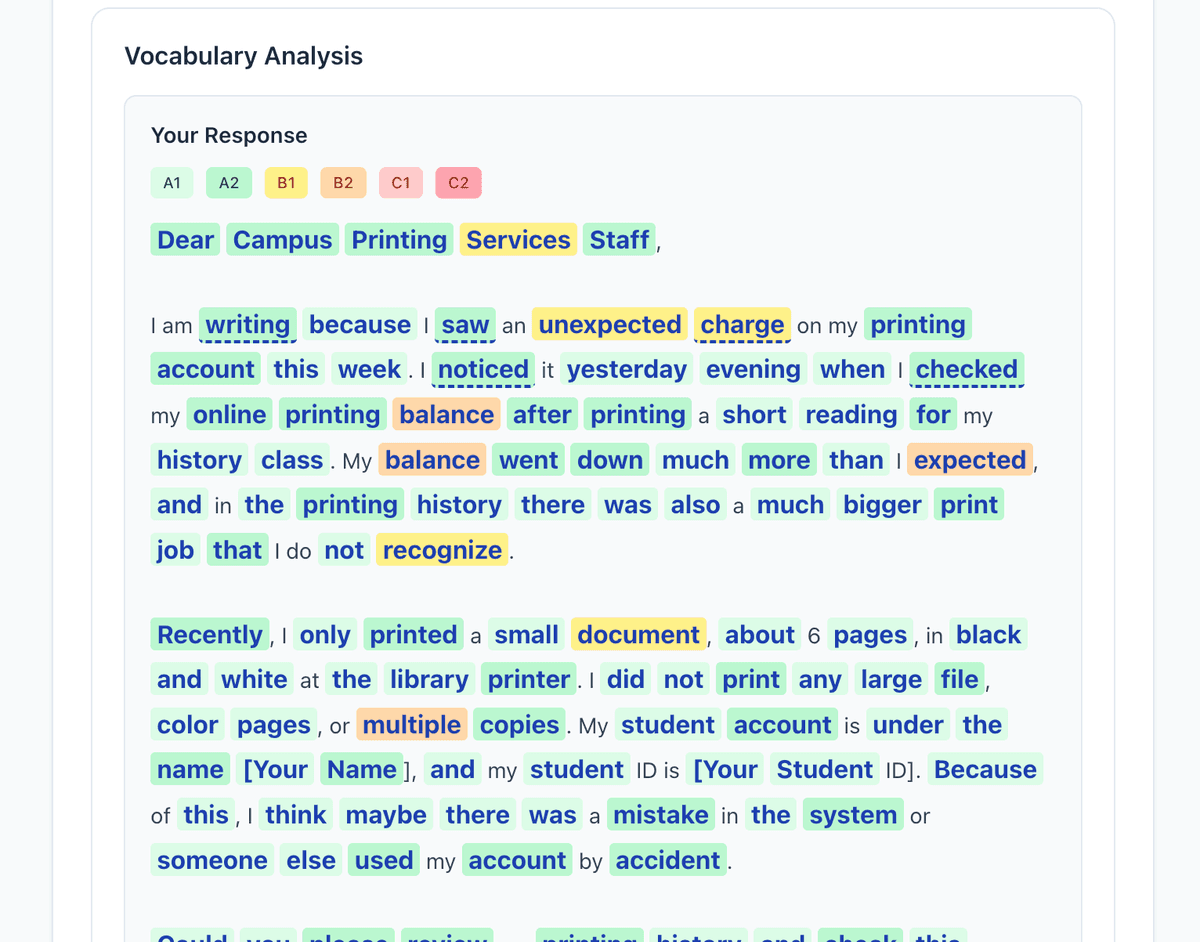 Vocabulary Analysis
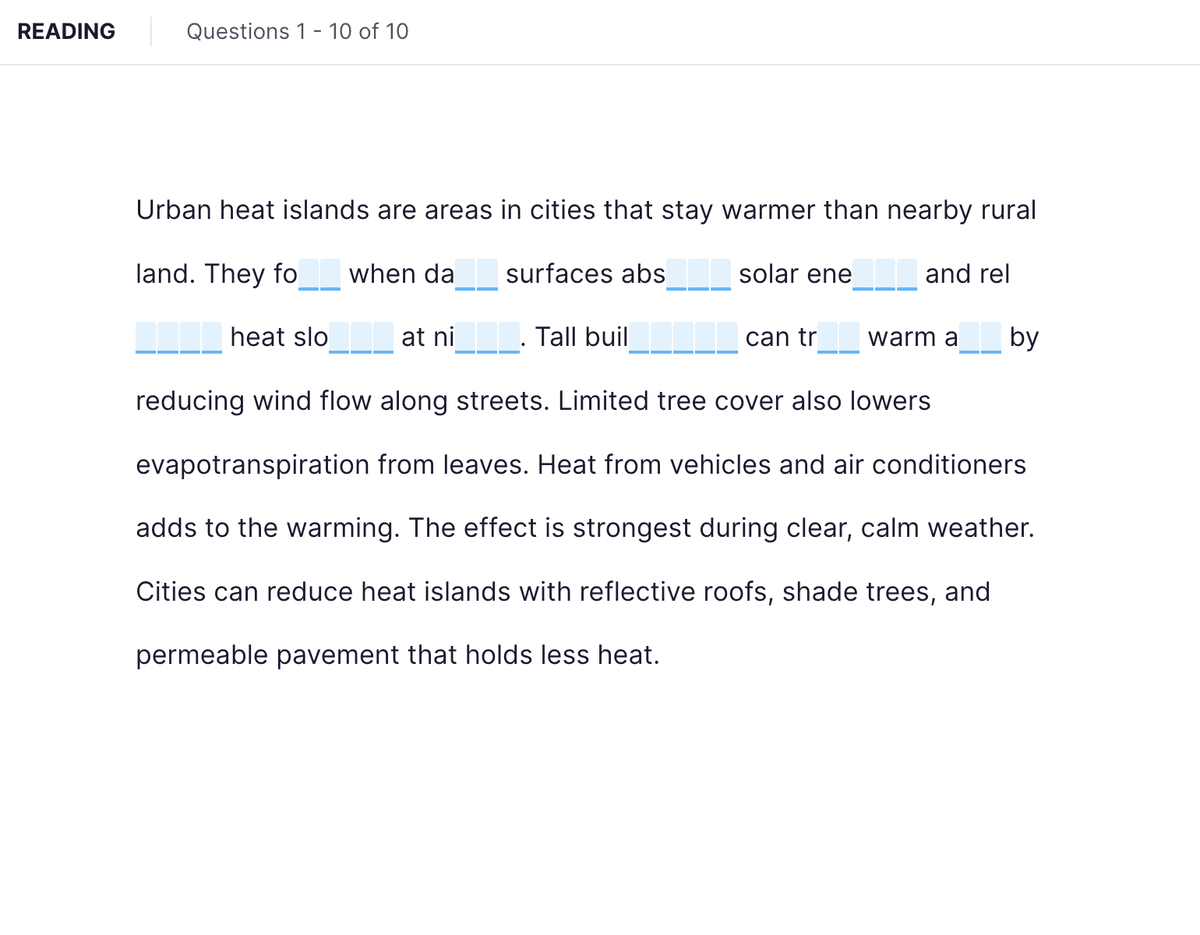 TOEFL 26 New: Reading
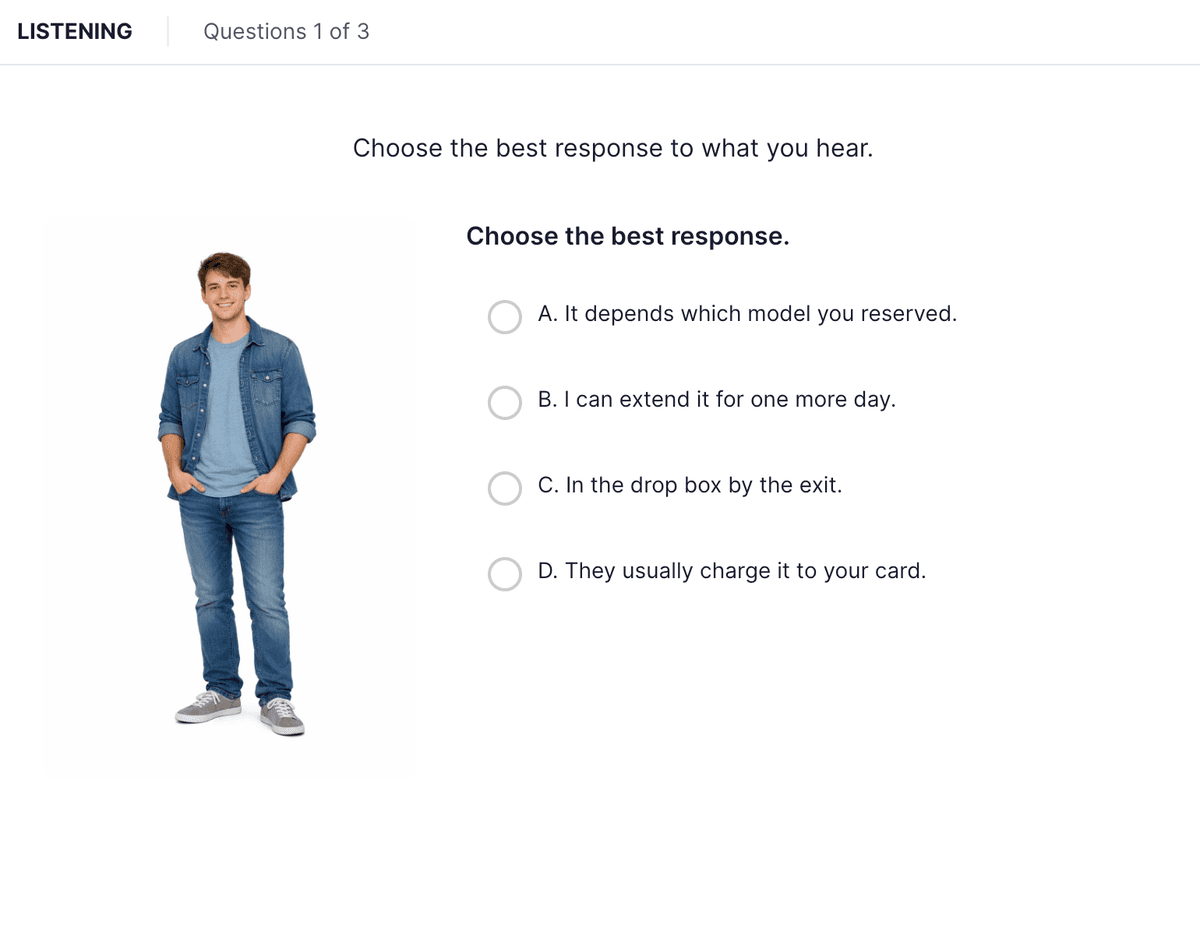 TOEFL 26 New: Listening
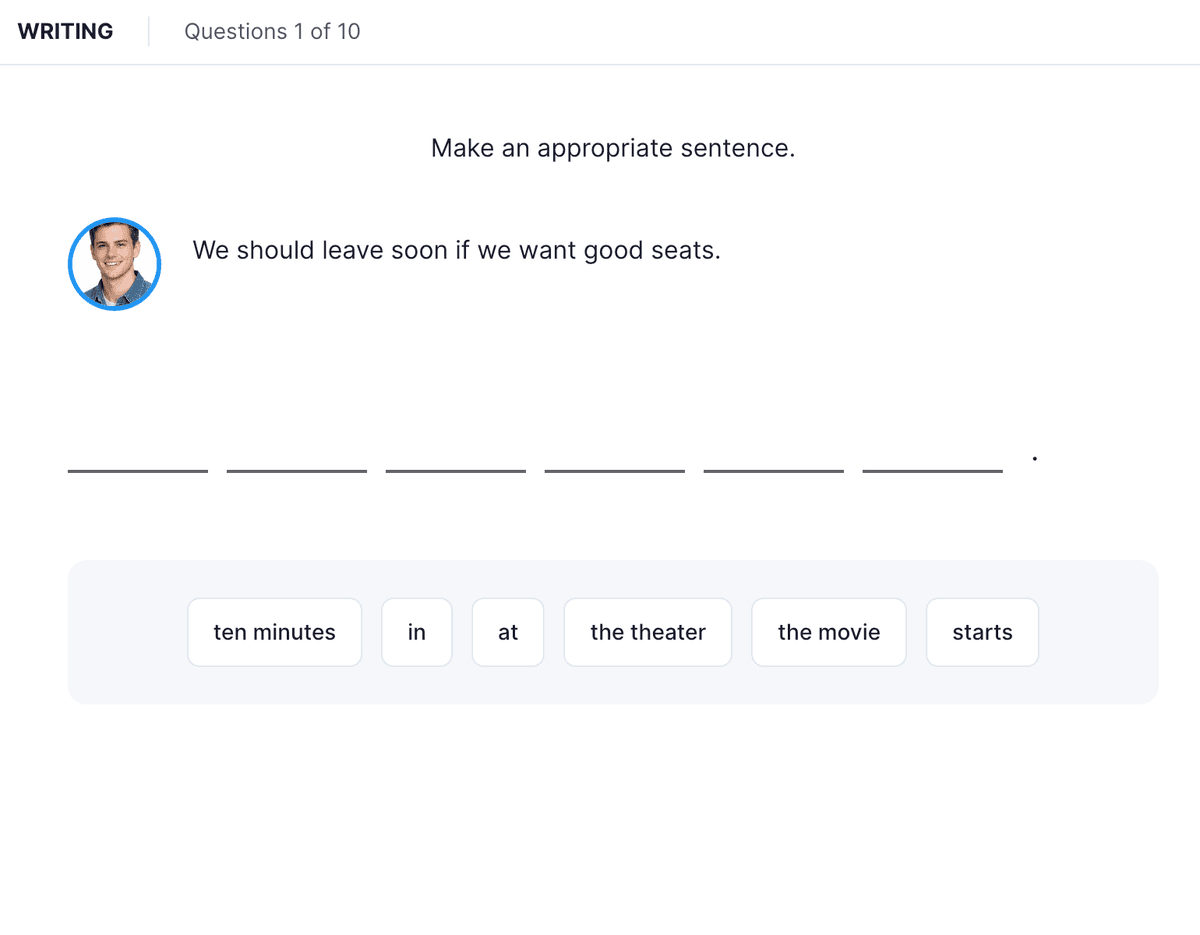 TOEFL 26 New: Writing
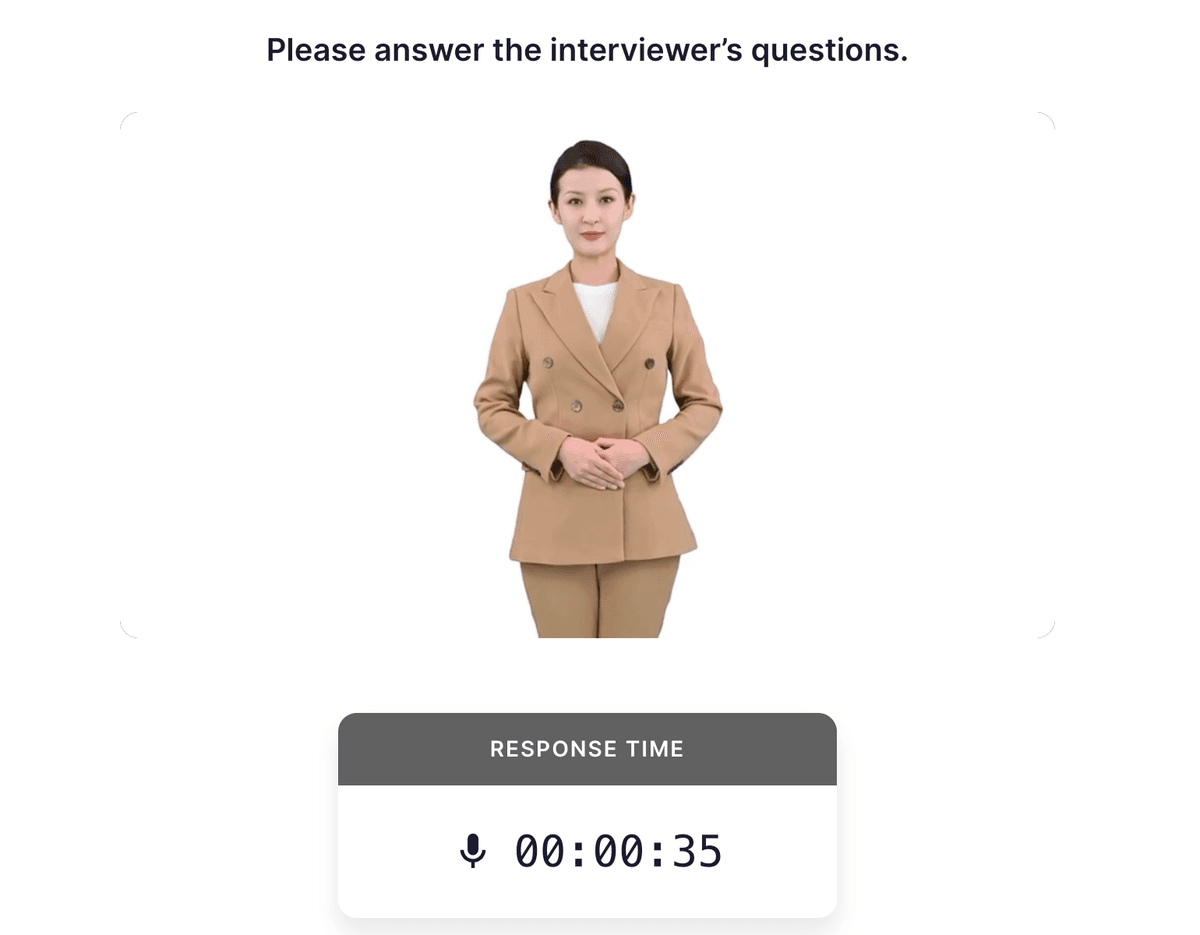 TOEFL 26 New: Speaking
Every TOEFL 2026 mock test in Lingoleap
These are the full-length mock tests the Lingoleap practice app publishes today, listed exactly as they appear inside it. Each one runs all four TOEFL 2026 sections in a single timed sitting, and each name below opens that test in the app.
Start here — free
Start with the free full mock (PQ26-1)
PQ26-1 is the free first test — the quickest way to try the real TOEFL 2026 format before you pick from the full catalogue below.
What to expect: one full, timed sitting across all four TOEFL 2026 sections — the Speaking section records your voice, so you'll need a microphone. PQ26-1 is free to take with a free account. Its scores are free too: every section, including the AI Speaking and Writing feedback, costs no credits.
Not ready for a full test? Try one free AI-graded question instead
104 published full-length mock tests · three sets
- Free with account16 tests
- Plus or Premium15 tests
- Premium73 tests
Access states are the app's own. It marks New TPO and Latest Questions Premium, and describes PQ26-16 to PQ26-30 as included with Plus and Premium; the rest of Practice Questions opens once you create a free account.
Practice Questions (PQ26)
Mixed access31 full-length tests
PQ26-1 to PQ26-15 and PQ26-75 open with a free account. PQ26-16 to PQ26-30 are the range the app sells as part of Plus and Premium.
- PQ26-1Take test →اختبار مجانيFree with account
- PQ26-2Take test →Free with account
- PQ26-3Take test →Free with account
- PQ26-4Take test →Free with account
- PQ26-5Take test →Free with account
- PQ26-6Take test →Free with account
- PQ26-7Take test →Free with account
- PQ26-8Take test →Free with account
- PQ26-9Take test →Free with account
- PQ26-10Take test →Free with account
- PQ26-11Take test →Free with account
- PQ26-12Take test →Free with account
- PQ26-13Take test →Free with account
- PQ26-14Take test →Free with account
- PQ26-15Take test →Free with account
- PQ26-16Take test →Plus or Premium
- PQ26-17Take test →Plus or Premium
- PQ26-18Take test →Plus or Premium
- PQ26-19Take test →Plus or Premium
- PQ26-20Take test →Plus or Premium
- PQ26-21Take test →Plus or Premium
- PQ26-22Take test →Plus or Premium
- PQ26-23Take test →Plus or Premium
- PQ26-24Take test →Plus or Premium
- PQ26-25Take test →Plus or Premium
- PQ26-26Take test →Plus or Premium
- PQ26-27Take test →Plus or Premium
- PQ26-28Take test →Plus or Premium
- PQ26-29Take test →Plus or Premium
- PQ26-30Take test →Plus or Premium
- PQ26-75Take test →Free with account
New TPO (TPO26)
Premium8 full-length tests
The app describes this set as exam-grade practice built for the 2026 format.
Latest Questions (EQ26)
Premium65 full-length tests
The app describes this set as its newest question sets, updated continuously.
- EQ26-1Take test →Premium
- EQ26-2Take test →Premium
- EQ26-3Take test →Premium
- EQ26-4Take test →Premium
- EQ26-5Take test →Premium
- EQ26-6Take test →Premium
- EQ26-7Take test →Premium
- EQ26-8Take test →Premium
- EQ26-9Take test →Premium
- EQ26-10Take test →Premium
- EQ26-11Take test →Premium
- EQ26-12Take test →Premium
- EQ26-13Take test →Premium
- EQ26-14Take test →Premium
- EQ26-15Take test →Premium
- EQ26-16Take test →Premium
- EQ26-17Take test →Premium
- EQ26-18Take test →Premium
- EQ26-19Take test →Premium
- EQ26-20Take test →Premium
- EQ26-21Take test →Premium
- EQ26-22Take test →Premium
- EQ26-23Take test →Premium
- EQ26-24Take test →Premium
- EQ26-25Take test →Premium
- EQ26-26Take test →Premium
- EQ26-27Take test →Premium
- EQ26-28Take test →Premium
- EQ26-29Take test →Premium
- EQ26-30Take test →Premium
- EQ26-31Take test →Premium
- EQ26-32Take test →Premium
- EQ26-33Take test →Premium
- EQ26-34Take test →Premium
- EQ26-35Take test →Premium
- EQ26-36Take test →Premium
- EQ26-37Take test →Premium
- EQ26-38Take test →Premium
- EQ26-39Take test →Premium
- EQ26-40Take test →Premium
- EQ26-41Take test →Premium
- EQ26-42Take test →Premium
- EQ26-43Take test →Premium
- EQ26-44Take test →Premium
- EQ26-45Take test →Premium
- EQ26-46Take test →Premium
- EQ26-47Take test →Premium
- EQ26-48Take test →Premium
- EQ26-49Take test →Premium
- EQ26-50Take test →Premium
- EQ26-51Take test →Premium
- EQ26-52Take test →Premium
- EQ26-53Take test →Premium
- EQ26-54Take test →Premium
- EQ26-55Take test →Premium
- EQ26-56Take test →Premium
- EQ26-58Take test →Premium
- EQ26-59Take test →Premium
- EQ26-60Take test →Premium
- EQ26-61Take test →Premium
- EQ26-62Take test →Premium
- EQ26-63Take test →Premium
- EQ26-64Take test →Premium
- EQ26-65Take test →Premium
- EQ26-66Take test →Premium
Each link opens that exact test in the practice app. The app asks you to sign in first, and tests marked Plus or Premium need the matching plan.
What one mock test contains
The app records a task-type list for every mock test. All four sections appear in all of them:
Reading
- Complete the Words
- Read in Daily Life
- Read an Academic Passage
Listening
- Listen and Choose a Response
- Conversation
- Announcement
- Academic Talk
Speaking
- Listen and Repeat
- Take an Interview
Writing
- Build a Sentence
- Write an Email
- Write for an Academic Discussion
One exception, listed rather than rounded away: TPO26-6 carries no Build a Sentence task. The other 103 tests carry the full task-type list.
Test names, counts and access states read from the practice app's own question list, route table and gate on 18 September 2026. Nothing on this list is an estimate. Lingoleap reports a practice band, not an official ETS score.
ما هو اختبار TOEFL التجريبي (Mock Test)؟
اختبار TOEFL التجريبي، ويُسمّى أيضاً امتحان TOEFL التجريبي أو اختبار المحاكاة، هو أداء كامل ومُوقَّت لاختبار TOEFL iBT بصيغته الحالية: الاختبار المُعاد تصميمه الذي انطلق في 21 يناير 2026، بـ12 نمطاً جديداً من الأسئلة، وقسمي Reading و Listening التكيّفيين متعددي المراحل، ومقياس درجات من 1 إلى 6 متوافق مع CEFR.
المواد التدريبية المُعدّة لاختبار ما قبل 2026 لا تتيح التدرّب على هذه البنية. كل اختبار تجريبي في Lingoleap مبني على صيغة 2026: الأقسام الأربعة نفسها وأنماط الأسئلة نفسها والتوقيت نفسه، في جلسة واحدة، تنتهي بتقرير درجات تدريبي.
نموذج TOEFL 2026 الجديد
يتكون اختبار TOEFL 2026 من 4 أقسام: Reading و Listening و Writing و Speaking. الوقت المقدَّر لإتمام الاختبار أقل من ساعتين. لا يشمل وقت الاختبار التعليمات. نظراً لطبيعة الاختبار التكيّفية، قد يختلف الوقت وعدد الأسئلة.
Reading
~30 دقيقة
~50 سؤالاً
تكيّفي متعدد المراحل عبر وحدتين
Listening
~29 دقيقة
~47 سؤالاً
تكيّفي متعدد المراحل عبر وحدتين
Writing
~23 دقيقة
12 سؤالاً
نموذج خطي — نفس المهام لجميع المتقدمين
Speaking
~8 دقائق
11 سؤالاً
نموذج خطي — نفس المهام لجميع المتقدمين
جميع أنماط أسئلة TOEFL 2026
Reading
- Complete the Words
- Read in Daily Life
- Read an Academic Passage
8 أنماط أسئلة: Factual & Negative Factual، Vocabulary، Select the Sentence، Sentence Simplification، Reference، Inference، Rhetorical Purpose، Insert Text
Listening
- Listen and Choose a Response
- Listen to a Conversation
- Listen to an Announcement
- Listen to an Academic Talk
6 أنماط أسئلة: Main Idea، Factual، Inference، Purpose، Method، Attitude
Writing
- Build a Sentence
- Write an Email
- Write for an Academic Discussion
نموذج خطي — يُقيَّم بناءً على الغرض التواصلي، والتركيب النحوي، واختيار المفردات، والأعراف الاجتماعية، والدقة
Speaking
- Listen and Repeat
- Take an Interview
نموذج خطي — يُقيَّم بناءً على الأداء (الوضوح والطلاقة)، واستخدام اللغة (القواعد والمفردات)، والتفصيل
يستخدم قسما Reading و Listening اختباراً تكيّفياً متعدد المراحل — يحدد أداؤك في الوحدة 1 مستوى صعوبة الوحدة 2. يوفر ذلك تجربة أكثر تخصيصاً ويقيس قدراتك بكفاءة ودقة أكبر.
لماذا تختار اختبارات TOEFL 26 التجريبية من Lingoleap
لا تزال معظم مواد التحضير لـ TOEFL تركّز على نموذج الاختبار القديم. Lingoleap مصمَّم خصيصاً لنموذج TOEFL 2026.
 اختبارات تجريبية كاملة تغطي جميع أنماط الأسئلة الـ12 الرسمية في TOEFL 2026
- Reading و Listening تكيّفي متعدد المراحل يحاكي الاختبار الفعلي
- تقييم بالذكاء الاصطناعي لقسمي Speaking و Writing وفقاً لمعايير التقييم الرسمية من ETS
- واحدة من أكبر مكتبات اختبارات TOEFL 26 التجريبية المتاحة
معظم المصادر تحضّرك للـ TOEFL القديم. Lingoleap يحضّرك للـ TOEFL الجديد.
تغطية شاملة لجميع أنماط أسئلة TOEFL 2026
يغطي كل اختبار TOEFL 26 تجريبي من Lingoleap جميع أنماط الأسئلة الـ12 الرسمية عبر الأقسام الأربعة — تماماً كما تظهر في الاختبار الفعلي.
Reading
- Complete the Words
أعِد بناء الأجزاء المفقودة من الكلمات في فقرة أكاديمية قصيرة
- Read in Daily Life
اقرأ نصوصاً عملية مثل رسائل البريد الإلكتروني أو الإشعارات أو منشورات وسائل التواصل الاجتماعي
- Read an Academic Passage
اقرأ نصاً أكاديمياً قصيراً (~200 كلمة) وأجِب عن 5 أسئلة
Listening
- Listen and Choose a Response
استمع إلى سؤال أو عبارة قصيرة واختر أفضل إجابة من 4 خيارات
- Listen to a Conversation
أجِب عن أسئلة حول محادثات قصيرة عن الحياة الجامعية بين شخصين
- Listen to an Announcement
أجِب عن أسئلة حول إعلانات صفية أو فعاليات جامعية
- Listen to an Academic Talk
أجِب عن أسئلة حول محاضرات أكاديمية قصيرة في مواضيع متنوعة
Writing
- Build a Sentence
أعِد ترتيب الكلمات والعبارات لإكمال جملة في حوار قصير
- Write an Email
اكتب بريداً إلكترونياً لغرض محدد مثل التوصية أو الدعوة أو اقتراح حل
- Write for an Academic Discussion
اقرأ منشور الأستاذ وردَّي طالبين، ثم اكتب مساهمتك الخاصة (100+ كلمة)
Speaking
- Listen and Repeat
كرّر 7 جمل منطوقة تزداد طولاً وتعقيداً
- Take an Interview
أجِب عن 4 أسئلة مقابلة في محادثة أكاديمية محاكاة (45 ثانية لكل سؤال)
اختبار تكيّفي متعدد المراحل — تماماً مثل TOEFL 2026 الفعلي
تحاكي اختبارات Lingoleap التجريبية البنية التكيّفية متعددة المراحل في اختبار TOEFL الفعلي. يحدد أداؤك في الوحدة 1 صعوبة الوحدة 2، تماماً كما في الاختبار الحقيقي.
تقدُّم واقعي في الاختبار
عِش نفس التدفق التكيّفي لاختبار TOEFL 2026 الفعلي — أداء الوحدة 1 يحدد صعوبة الوحدة 2
تدريب متعدد المستويات
تدرّب على الوحدات الأسهل والأصعب لبناء الثقة والدقة في كل مستوى
تقييم أداء حقيقي
افهم إمكانياتك الحقيقية في تحقيق الدرجات بناءً على منطق التقييم التكيّفي وتحويل الدرجات الخام إلى درجات مُعايَرة
تقييم بالذكاء الاصطناعي لقسمي Speaking و Writing
احصل على ملاحظات فورية ومفصّلة لكل إجابة في Speaking و Writing — وفقاً لمعايير التقييم الرسمية من ETS. تُقيَّم كل إجابة تقييماً شاملاً على مقياس من 0 إلى 5.
تقييم Speaking
Listen and Repeat
- دقة التكرار
- مدى الوضوح
- النطق
Take an Interview
- الأداء (الوضوح والطلاقة والنطق والتنغيم)
- استخدام اللغة (نطاق القواعد والمفردات ودقتها)
- التفصيل (الالتزام بالموضوع وأفكار مدعومة بأدلة)
تقييم Writing
Write an Email
- تفصيل يدعم الغرض التواصلي
- تنوع التراكيب النحوية واختيار دقيق ومتقن للمفردات
- أعراف اجتماعية ملائمة (الأدب ومستوى الرسمية والأسلوب)
- دقة معجمية ونحوية
Write for an Academic Discussion
- شروحات وأمثلة ذات صلة ومفصّلة
- تنوع في التراكيب النحوية واختيار دقيق ومتقن للمفردات
- دقة معجمية ونحوية
Accuracy and transparency
How Accurate Is This TOEFL Practice Test Score?
Every practice-test site says its scores are accurate. Almost none says how the number is produced or what has actually been checked. Here is the full answer for Lingoleap — including what we have not verified yet.
What we know
- Reading and Listening are scored against a fixed answer key, so those bands are as reliable as the question set is representative of the real test.
- Writing and Speaking responses are scored 0–5 by a language model against the dimensions of the published ETS scoring guides — the same criteria the Speaking and Writing evaluation section above lists.
- Every band on your report comes from one fixed rule set — the tables and formulas printed further down this page — so the same answers always produce the same band.
What we have not verified
- We have not yet published a comparison of Lingoleap bands against learners' official ETS score reports. Until that verified sample exists and is large enough, we do not quote a correlation, an accuracy percentage or a margin of error — any such number would be invented.
- ETS has not released a raw-to-band conversion for the 2026 test. Our Reading and Listening table is a Lingoleap estimate and is labelled as one below.
- The real test equates scores across forms and adaptive paths with Item Response Theory; our engine uses a simpler lookup table. The two can disagree, most likely at band boundaries.
What to do with the estimate
- Treat one mock band as a range, not a point. Read the section bands and the task-type accuracy under them — those move first and are what you can practise.
- Track direction across three to five mocks spaced two to three weeks apart, rather than certifying a single sitting.
- For admissions, only an ETS score counts. Check your target school's published minimum with the Score Calculator, and treat the last mock as a dress rehearsal, not a prediction.
The method we will use to publish calibration figures — who counts, which mock counts, what gets excluded — is already written down on the how-it-works page. The figures will appear there, with their sample size, once the verified sample exists.
See the calibration method →Wondering whose AI to trust on the 2026 test in general? The AI tutor guide explains how ETS's own SpeechRater and e-rater engines grade Speaking and Writing first, and how to rehearse against an AI scorer.
How the 2026 TOEFL is graded by AI →How Our Adaptive Practice Works
Reading and Listening in a Lingoleap mock run as a two-stage test, the structure ETS describes for the real exam. Here is exactly what our engine does — and, separately, what ETS has and has not said.
In a Lingoleap mock test
- 1
Router module
Every test-taker starts with the same router module in each section.
- 2
Routing
Your router performance sends you to a lower or an upper Stage 2 module. The two modules are built differently, which is why the number of items you see varies from mock to mock. The routing threshold is an engine setting we do not publish on this page.
- 3
One band table, defined for the upper module
Correct answers across both stages are counted, normalised to a 35-point basis, and looked up in the section's band table. The table is defined for the upper module.
- 4
Lower-module adjustment
A sitting routed to the lower module is placed one step down that table for the same normalised count. So in our engine the lower path cannot reach the top band — that is a Lingoleap simplification, not an ETS rule, and it is the one place our scoring is deliberately more conservative than the real test.
Adaptive routing: what ETS has published vs what prep sites assert
| Question | What ETS has published | What prep sites assert |
|---|---|---|
| Structure | Reading and Listening are “designed as two-stage adaptive tests”; Writing and Speaking are linear, with every test-taker on a form getting the same tasks (2026 Test Blueprint, note 5). | The same. This part is not in dispute. |
| Routing | “Based on their performance on the first module, test takers will get a second module where the difficulty of the test tasks matches their ability level.” No routing threshold is published (Teacher FAQ, Q9). | Specific thresholds — “get the first ten questions wrong and you are routed down” — none of which cites an ETS source. |
| How the score is produced | The section score “takes into consideration the total number of questions answered correctly across the two stages or modules as well as the difficulty level of questions”, converted by IRT equating so that a reported score “reflects the same level of language ability, regardless of which second stage was taken” (Teacher FAQ). | A fixed raw-to-band table applied to both paths, or a flat penalty for the easier path. |
| The “ceiling” | ETS states no maximum band for the lower module. It says “the final score is based on both stages” and that item difficulty is accounted for — which means an easier item is worth less, not that a particular band is forbidden. Whether the easier module can reach 6.0 in practice is not something ETS has published either way. | “A perfect score on the easier Stage 2 caps you at 4.0”, or “below 5.0” — the figure differs from site to site and none cites ETS. |
| Unscored items | Reading and Listening item counts “include non-scored items” used to gather data for future forms (Blueprint, note 1). | Rarely mentioned; item counts are usually quoted as if every item scored. |
ETS sources: TOEFL iBT 2026 Test Blueprint and Specifications (PDF) · Teacher FAQ for TOEFL iBT Enhancements (PDF)
Quotations are from those two ETS documents as read on 16 September 2026. Where this page says ETS has not published something, we mean we could not find it in either document or on ets.org — not that no such rule exists internally.
How the Band Is Produced, Section by Section
The whole path from your answers to the 1–6 band, with nothing hidden. These are the rules our score report runs on.
Reading
Scored by: Answer key- 1Every item is compared with the reference answer: right or wrong, no partial credit.
- 2Correct answers across the router and your Stage 2 module are summed and scaled to a 35-point basis: points = round(correct ÷ items × 35).
- 3The points are looked up in the Reading band table below. Lower-module sittings drop one step.
Listening
Scored by: Answer key- 1The same answer-key grading and 35-point scaling as Reading.
- 2The Listening table has its own boundaries: 80% accuracy is a 5.0 in Reading, but 71% is a 4.5 in Listening. That is why two sections at similar accuracy can show different bands.
Writing
Scored by: Answer key + AI- 1Build a Sentence: each item is scored right or wrong against the accepted word orderings. No model is involved.
- 2Write an Email and Write for an Academic Discussion: each response is scored 0–5 by a language model against the dimensions of the ETS scoring guide for that task.
- 3Section band = (points earned ÷ points available) × 5 + 1, rounded to the nearest 0.5.
Speaking
Scored by: AI- 1Listen and Repeat (7 items) and Take an Interview (4 items): your recording is transcribed and measured for pronunciation and fluency, then a model scores each response 0–5 against the rubric dimensions.
- 2Section band = (points earned ÷ points available) × 5 + 1, rounded to the nearest 0.5.
Overall band = the plain average of the four section bands, rounded to the nearest 0.5. The 0–120 “traditional” figure on the report is each section's accuracy scaled to 0–30 and summed; it exists only for comparing against university pages that still quote the old scale.
Raw Correct to Band: Reading and Listening
Lingoleap estimate — not an ETS tableBasis: these are the exact lookup tables our score report uses, defined on a 35-point normalised scale (points = round(correct ÷ items × 35)). ETS has published no raw-to-band conversion for the 2026 test, and real scores are IRT-equated for form and module difficulty, so treat every band here as a practice estimate. The approximate-accuracy column is the points range divided by 35.
Reading
| Band | Points (of 35) | Approx. accuracy |
|---|---|---|
| 6.0 | 34–35 | ≈ 97–100% |
| 5.5 | 32–33 | ≈ 91–94% |
| 5.0 | 28–31 | ≈ 80–89% |
| 4.5 | 25–27 | ≈ 71–77% |
| 4.0 | 18–24 | ≈ 51–69% |
| 3.5 | 12–17 | ≈ 34–49% |
| 3.0 | 8–11 | ≈ 23–31% |
| 2.5 | 7 | ≈ 20% |
| 2.0 | 6 | ≈ 17% |
| 1.0 | 0–5 | ≈ 0–14% |
Listening
| Band | Points (of 35) | Approx. accuracy |
|---|---|---|
| 6.0 | 34–35 | ≈ 97–100% |
| 5.5 | 32–33 | ≈ 91–94% |
| 5.0 | 29–31 | ≈ 83–89% |
| 4.5 | 25–28 | ≈ 71–80% |
| 4.0 | 23–24 | ≈ 66–69% |
| 3.5 | 18–22 | ≈ 51–63% |
| 3.0 | 13–17 | ≈ 37–49% |
| 2.5 | 11–12 | ≈ 31–34% |
| 2.0 | 8–10 | ≈ 23–29% |
| 1.5 | 6–7 | ≈ 17–20% |
| 1.0 | 0–5 | ≈ 0–14% |
Worked example from our sample report: 28 of 35 Reading items correct → 28 points → Band 5.0. 32 of 45 Listening items correct → 24.9, rounded to 25 points → Band 4.5.
Lower-module sittings: one step down the table for the same points.
أسئلة نموذجية لاختبار TOEFL iBT (صيغة 2026)
استعد بهذه الأسئلة النموذجية المجانية المصمَّمة على غرار TOEFL iBT لعام 2026 — سؤال واحد من كل قسم. اكشف الإجابة والشرح، ثم ابدأ اختباراً تجريبياً كاملاً عندما تكون مستعداً.
Read the short academic passage, then answer the question.
Bioluminescence — the production of light by living organisms — is common in the deep ocean, where sunlight never reaches. Many creatures use it to attract prey, confuse predators, or signal to potential mates. The light is produced by a chemical reaction between a molecule called luciferin and the enzyme luciferase. Because the reaction gives off almost no heat, scientists describe the light as "cold light."
According to the passage, why is bioluminescent light described as "cold light"?
- AIt is only found in cold, deep water.
- BThe chemical reaction releases very little heat.
- CIt appears blue rather than red or orange.
- DIt is produced only at night.
▸إظهار الإجابة والشرح
الإجابة: B — The chemical reaction releases very little heat.
The final sentence states the reaction "gives off almost no heat," which is why it is called cold light. Option A confuses where the organisms live with why the light is cold; C and D add details the passage never mentions. Factual questions like this reward locating the exact supporting sentence rather than relying on outside knowledge.
Type the missing letters to complete the word so the sentence makes sense.
Regular exercise can signi______ reduce the risk of heart disease.
▸إظهار الإجابة والشرح
الإجابة: significantly
"Complete the Words" gives you the first letters and the length of a word and asks you to finish it from context. Here the sentence needs an adverb describing how much exercise reduces risk — "significantly." Read the whole sentence first, decide the part of speech, then fit a word that starts with the letters shown.
On the real test you would hear this talk once. Read the transcript excerpt, then answer.
Professor: "So when we talk about the 'urban heat island' effect, we mean that cities tend to be several degrees warmer than the countryside around them. The main reason is surface material. Asphalt and concrete absorb heat during the day and release it slowly at night — unlike soil and vegetation, which cool down much faster. That's why a city can still feel warm hours after sunset."
What is the main cause of the urban heat island effect, according to the professor?
- ACities are located in naturally warmer regions.
- BBuildings block cooling wind from reaching streets.
- CPaved surfaces absorb and slowly release heat.
- DThere are more people generating body heat.
▸إظهار الإجابة والشرح
الإجابة: C — Paved surfaces absorb and slowly release heat.
The professor names surface material — asphalt and concrete absorbing heat and releasing it slowly — as "the main reason." The other options are plausible-sounding distractors the talk never states. In the Listening section, note the speaker's signal phrases ("the main reason is…") to catch the point being tested.
Put the words and phrases in the correct order to form a grammatical sentence.
[ the deadline / because / the library / she / was approaching / stayed late at ]
▸إظهار الإجابة والشرح
الإجابة: She stayed late at the library because the deadline was approaching.
"Build a Sentence" tests control of English word order and clause structure. Start with the subject ("She"), add the main verb phrase ("stayed late at the library"), then attach the reason clause introduced by "because." Checking that subject, verb, and connector line up is usually enough to place every chunk.
You have 45 seconds to answer. There is no single correct response — a strong answer is clear, on-topic, and supported with a reason or example.
Some students prefer to study in the morning, while others prefer the evening. Which do you prefer, and why?
▸إظهار الإجابة والشرح
الإجابة: Sample strong response (outline)
Take a clear position, give one reason, and support it with a specific example: "I prefer studying in the morning because my mind is freshest right after I wake up. For instance, I can read a difficult chapter in thirty minutes in the morning, but the same chapter takes me an hour at night when I'm tired." Scoring rewards delivery (clear, fluent speech), language use (accurate grammar and vocabulary), and elaboration (a developed, on-topic idea) — so commit to one answer and develop it rather than listing both options.
هذه أسئلة تدريبية أصلية من إعداد Lingoleap، مصمَّمة لتحاكي أنماط أسئلة TOEFL iBT لعام 2026. وهي للتدريب فقط وليست أسئلة اختبار حقيقية من ETS؛ و Lingoleap مستقل عن ETS وغير معتمد منها.
Practice TOEFL by Section
A full-length mock test measures readiness, but targeted section practice is how you fix specific weaknesses. Drill any of the four sections and all 12 task types below.
Reading
Adaptive passages and the three 2026 reading task types.
Listening
Conversations, announcements, and academic talks with adaptive difficulty.
Speaking
Listen and Repeat plus the academic interview, with AI delivery feedback.
Writing
Build a Sentence, Write an Email, and Write for an Academic Discussion.
أكثر من 100 اختبار TOEFL 26 تجريبي كامل — يُحدَّث شهرياً
احصل على إمكانية الوصول إلى واحدة من أكبر مكتبات اختبارات TOEFL 2026 التجريبية المتاحة. تُضاف اختبارات جديدة كل شهر لتتدرب باستمرار بمواد محدّثة وجديدة.
- أكثر من 100 اختبار TOEFL 26 تجريبي كامل
- جميع الاختبارات متوافقة مع أحدث نموذج وأنماط أسئلة TOEFL 2026
- تُضاف اختبارات جديدة كل شهر
- تغطي جميع الأقسام الأربعة وأنماط الأسئلة الـ12
- Covers all 4 sections and 12 task types
كيف تبدأ اختبار TOEFL 26 التجريبي
أنشئ حسابك
سجّل مجاناً على Lingoleap
اختر اختباراً تجريبياً
اختر من بين أكثر من 100 اختبار TOEFL 26 تجريبي كامل
ابدأ التدريب
أدِّ الاختبار في ظروف تحاكي الاختبار الفعلي
احصل على درجتك وملاحظاتك
احصل على تقييم بالذكاء الاصطناعي وتحليل أداء مفصّل
ابدأ اختبار TOEFL 26 التجريبي
تدرّب على نموذج TOEFL 2026 الجديد مع اختبار تكيّفي متعدد المراحل وجميع أنماط الأسئلة الـ12 وتقييم بالذكاء الاصطناعي.
الأسئلة الشائعة
كل ما تحتاج معرفته عن اختبارات TOEFL 26 التجريبية
ما الذي تغيّر في نموذج TOEFL 2026؟
TOEFL 2026 الذي انطلق في 21 يناير 2026 هو اختبار مُعاد تصميمه بالكامل. يقدّم اختباراً تكيّفياً متعدد المراحل في قسمي Reading و Listening، حيث يحدد أداء الوحدة 1 صعوبة الوحدة 2. يستخدم قسما Writing و Speaking نموذجاً خطياً (نفس المهام لجميع المتقدمين). يتضمن الاختبار 12 نمطاً جديداً بالكامل من الأسئلة ومقياس تقييم جديداً من 1 إلى 6 متوافقاً مع CEFR. مدة الاختبار أقل من ساعتين.
كم عدد أنماط الأسئلة في TOEFL 2026 الجديد؟
يحتوي TOEFL 2026 الجديد على 12 نمطاً من الأسئلة عبر 4 أقسام: 3 في Reading (وهي Complete the Words و Read in Daily Life و Read an Academic Passage)، و4 في Listening (وهي Listen and Choose a Response و Listen to a Conversation و Listen to an Announcement و Listen to an Academic Talk)، و3 في Writing (وهي Build a Sentence و Write an Email و Write for an Academic Discussion)، و2 في Speaking (وهما Listen and Repeat و Take an Interview).
كم عدد اختبارات TOEFL التجريبية الكاملة في Lingoleap؟
ينشر Lingoleap حالياً أكثر من 100 اختبار TOEFL 2026 تجريبي كامل (أكثر من 10,000 سؤال قابل للإجابة إجمالاً)، مع إضافة اختبارات جديدة كل شهر. يغطي كل اختبار الأقسام الأربعة كلها وجميع أنماط الأسئلة الرسمية في صيغة 2026، ويعرض الفهرس في أعلى هذه الصفحة كل الاختبارات.
هل يحاكي Lingoleap الاختبار التكيّفي متعدد المراحل؟
نعم. Lingoleap هو أحد المنصات القليلة التي تحاكي بنية الاختبار التكيّفي متعدد المراحل المستخدمة في قسمي Reading و Listening في TOEFL 2026. يؤثر أداؤك في الوحدة 1 على صعوبة الوحدة 2، تماماً كما في الاختبار الفعلي.
كيف يعمل تقييم الذكاء الاصطناعي لقسمي Speaking و Writing؟
يُقيِّم الذكاء الاصطناعي في Lingoleap إجاباتك باستخدام معايير مبنية على معايير التقييم المنشورة علناً من ETS (تقييم شامل من 0 إلى 5 لكل سؤال). بالنسبة لـ Speaking، يُقيَّم Listen and Repeat على دقة التكرار والوضوح والنطق. يُقيَّم Take an Interview على الأداء (الوضوح والطلاقة والإيقاع) واستخدام اللغة (القواعد والمفردات) والتفصيل (الالتزام بالموضوع والأفكار المدعومة). بالنسبة لـ Writing، يُقيَّم Write an Email على الغرض التواصلي وتنوع التراكيب واختيار المفردات الاصطلاحية والأعراف الاجتماعية (الأدب والأسلوب) والدقة المعجمية والنحوية. يُقيَّم Write for an Academic Discussion على الملاءمة والتفصيل والتراكيب النحوية واختيار المفردات والدقة المعجمية والنحوية.
هل يعمل محاكي اختبار TOEFL هذا مثل الاختبار الحقيقي؟
في الجوانب التي تحدد درجتك، نعم: أنماط الأسئلة الـ12 نفسها، وترتيب الأقسام والتوقيت نفسهما، وقسما Reading و Listening التكيّفيان على مرحلتين، في جلسة واحدة مُوقَّتة. لكن هناك اختلافان. الأسئلة من إعداد Lingoleap وليست أسئلة ETS، والاختبار الحقيقي يعادل الدرجات بين النماذج المختلفة باستخدام نظرية الاستجابة للمفردة (IRT)، بينما يستخدم نظامنا جداول التحويل المنشورة في قسم الدقة في هذه الصفحة. لا يوجد اختبار تجريبي مطابق للاختبار الرسمي.
هل يمكنني أداء اختبار TOEFL التجريبي عبر الإنترنت، أو قسماً واحداً في كل مرة؟
نعم، كلاهما ممكن. يعمل كل اختبار عبر الإنترنت في متصفحك داخل تطبيق Lingoleap للتدريب بعد تسجيل الدخول، ويحتاج قسم Speaking إلى ميكروفون. وإلى جانب الاختبارات التجريبية الكاملة، يمكنك التدرّب على Reading أو Listening أو Speaking أو Writing كلٍّ على حدة، أو التركيز على نمط أسئلة واحد، للعمل على القسم الذي تحتاج فيه إلى أكبر قدر من التحسين.
ما مدى دقة تقديرات الدرجات في اختبارات Lingoleap التجريبية؟
يُصحَّح قسما Reading و Listening وفق مفتاح إجابات، لذا تعتمد درجاتهما على مدى تمثيل مجموعة الأسئلة. أما درجات Writing و Speaking فتأتي من نموذج لغوي يقيّم كل إجابة من 0 إلى 5 وفق أبعاد أدلة التصحيح المنشورة من ETS. لم ننشر بعد مقارنة بين درجات Lingoleap وتقارير الدرجات الرسمية من ETS للمتعلمين، لذلك لا نذكر نسبة دقة — ويوضّح قسم «ما مدى دقة هذه الدرجة؟» في هذه الصفحة بالضبط كيف تُحتسب كل درجة وما الذي تم التحقق منه وما لم يتم. هذه تقديرات تدريبية فقط: الدرجات الرسمية لاختبار TOEFL تصدرها ETS حصراً، و Lingoleap مستقل عن ETS وغير معتمد منها.
إذا وُجِّهت إلى الوحدة الأسهل، هل تكون درجتي محدودة؟
في اختبار Lingoleap التجريبي، نعم بقدر بسيط: جدول الدرجات مُعرَّف للوحدة الأعلى، ويُوضع الأداء في الوحدة الأدنى درجة واحدة أسفل منه، لذا لا يمكن للمسار الأدنى بلوغ أعلى درجة. هذا تبسيط من جانبنا. أما في الاختبار الحقيقي، فتقول ETS إن الدرجة تستند إلى المرحلتين معاً وتراعي صعوبة الأسئلة عبر معادلة IRT، ولم تنشر حداً أقصى للدرجة في الوحدة الأدنى. والحدود المحددة التي تذكرها مواقع التحضير («4.0»، «أقل من 5.0») لا مصدر لها من ETS.
كم إجابة صحيحة أحتاج للحصول على Band 5 في Reading أو Listening؟
وفق الجدول التدريبي في Lingoleap، يتطلب Band 5.0 في Reading من 28 إلى 31 من أصل 35 نقطة معيارية (نحو 80–89% من الإجابات الصحيحة)، ويتطلب Band 5.0 في Listening من 29 إلى 31 (نحو 83–89%). النقاط هي إجاباتك الصحيحة بعد تحويلها إلى أساس من 35 نقطة. هذا تقدير من Lingoleap: لم تنشر ETS جدولاً لتحويل الدرجات الخام إلى Band لاختبار 2026، وهي تعادل الدرجات الحقيقية حسب الصعوبة، لذا قد يختلف التحويل الرسمي.
هل اختبار TOEFL التجريبي هذا مجاني؟
جزئياً. من الاختبارات الكاملة المدرجة في هذه الصفحة، تُتاح الاختبارات من PQ26-1 إلى PQ26-15 و PQ26-75 بحساب مجاني؛ والاختبارات من PQ26-16 إلى PQ26-30 مشمولة في Plus و Premium، أما مجموعتا New TPO و Latest Questions فهما ضمن Premium. يتطلب كل اختبار تسجيل الدخول أولاً. التدرّب على Reading و Listening لا يستهلك أي أرصدة. يكلّف الاختبار التجريبي الكامل مع تقييم الذكاء الاصطناعي للأقسام الأربعة 800 رصيد، وتبدأ الحسابات الجديدة بـ200 رصيد مجاني للملاحظات بالذكاء الاصطناعي، لذا يحتاج تقييم Speaking و Writing في اختبار تجريبي كامل إلى أرصدة أكثر مما يملكه حساب جديد.
كم مدة اختبار TOEFL التجريبي؟
أقل من ساعتين، مثل اختبار TOEFL 2026 الحقيقي: نحو 30 دقيقة لـ Reading، و29 لـ Listening، و23 لـ Writing، و8 لـ Speaking، دون احتساب التعليمات. ولأن قسمي Reading و Listening تكيّفيان متعددا المراحل، يختلف الوقت الدقيق وعدد الأسئلة من جلسة إلى أخرى.
هل تستعد لاختبار IELTS بدلًا من ذلك؟ اختبارات IELTS التدريبية: الشكل والتوقيت وما يمكنك التدرب عليه مجانًا →