Exámenes Simulados TOEFL 26
Practica el Nuevo Formato TOEFL 2026
Exámenes simulados TOEFL 26 completos con lectura y escucha adaptativa, todos los nuevos tipos de tareas y puntuación IA para habla y escritura.
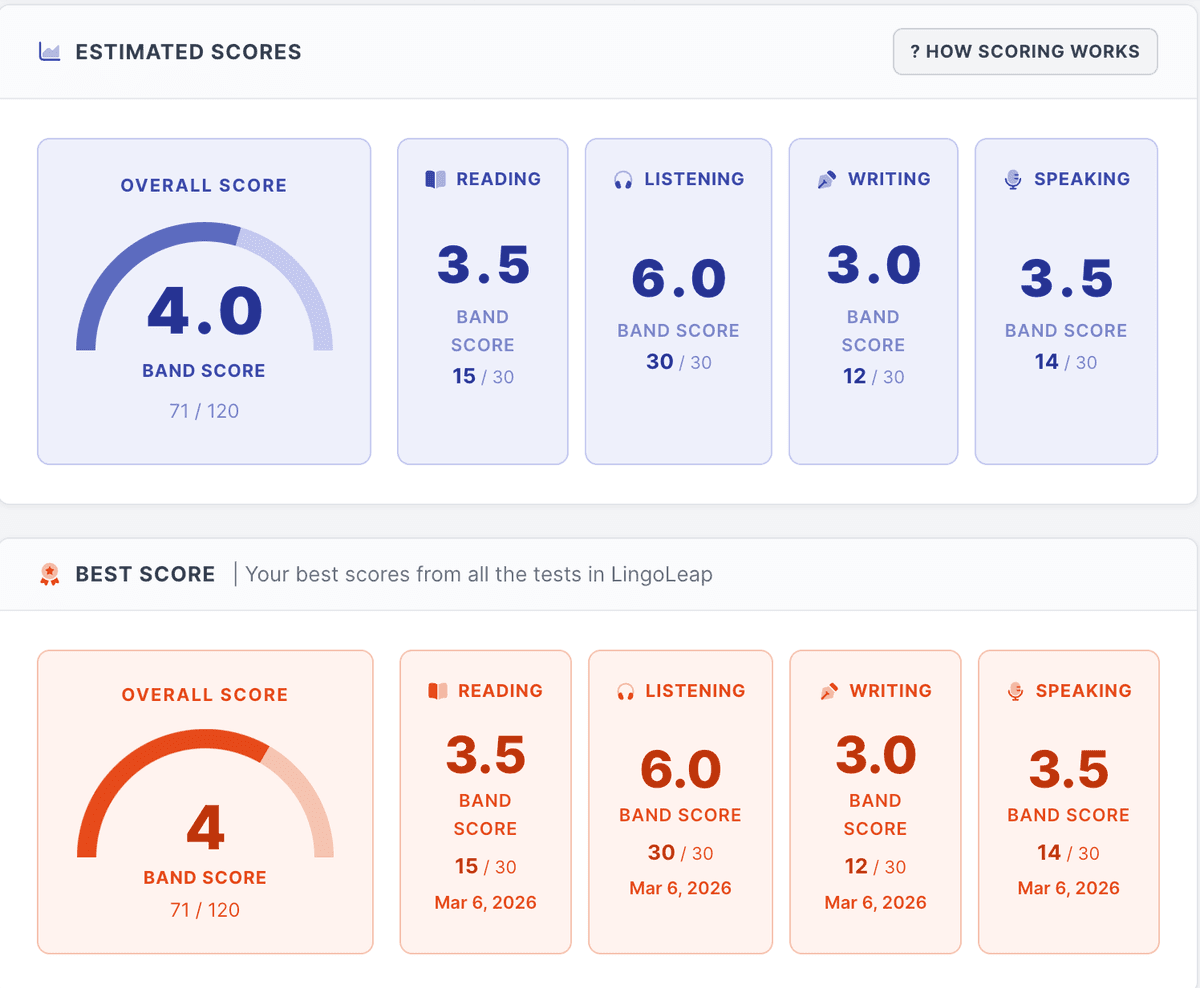 Score Report
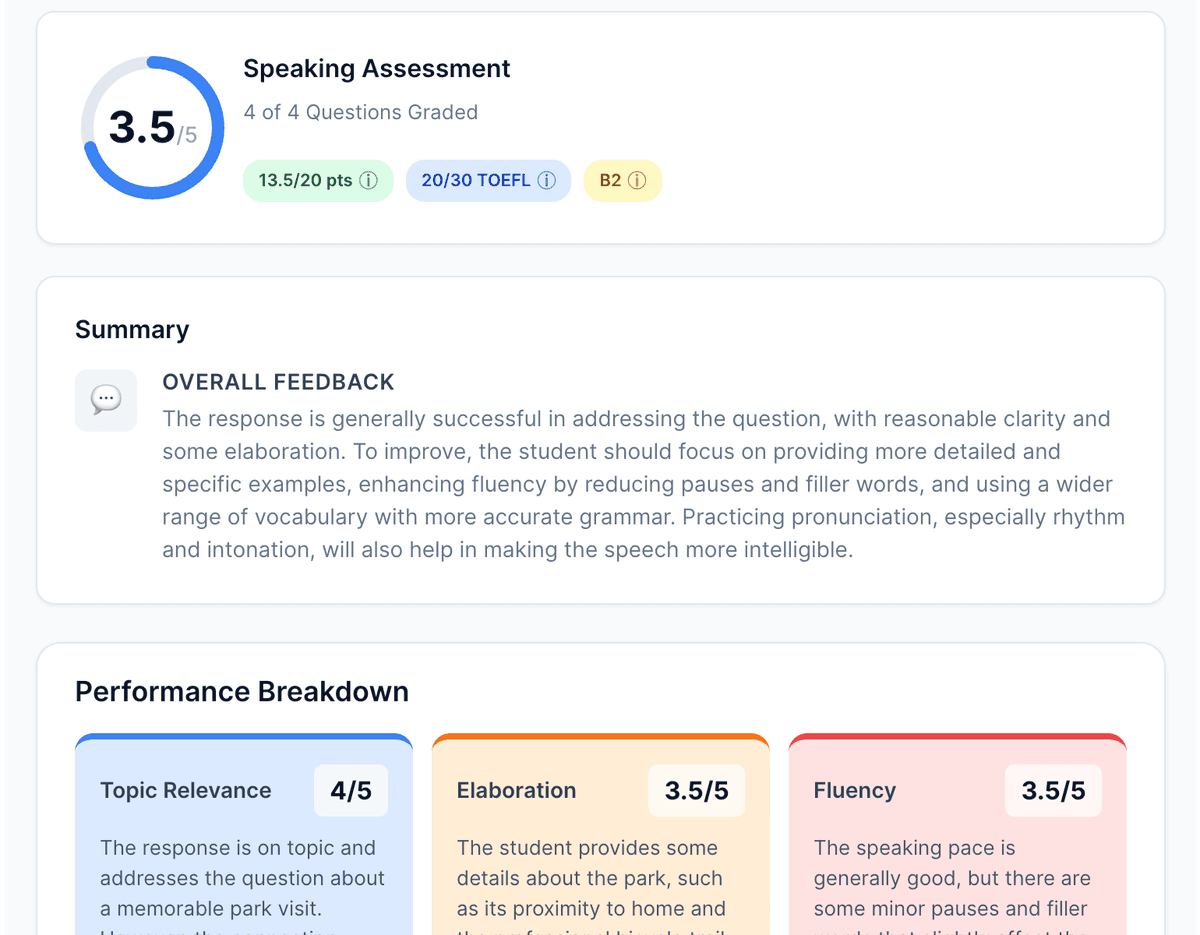 AI Speaking Score
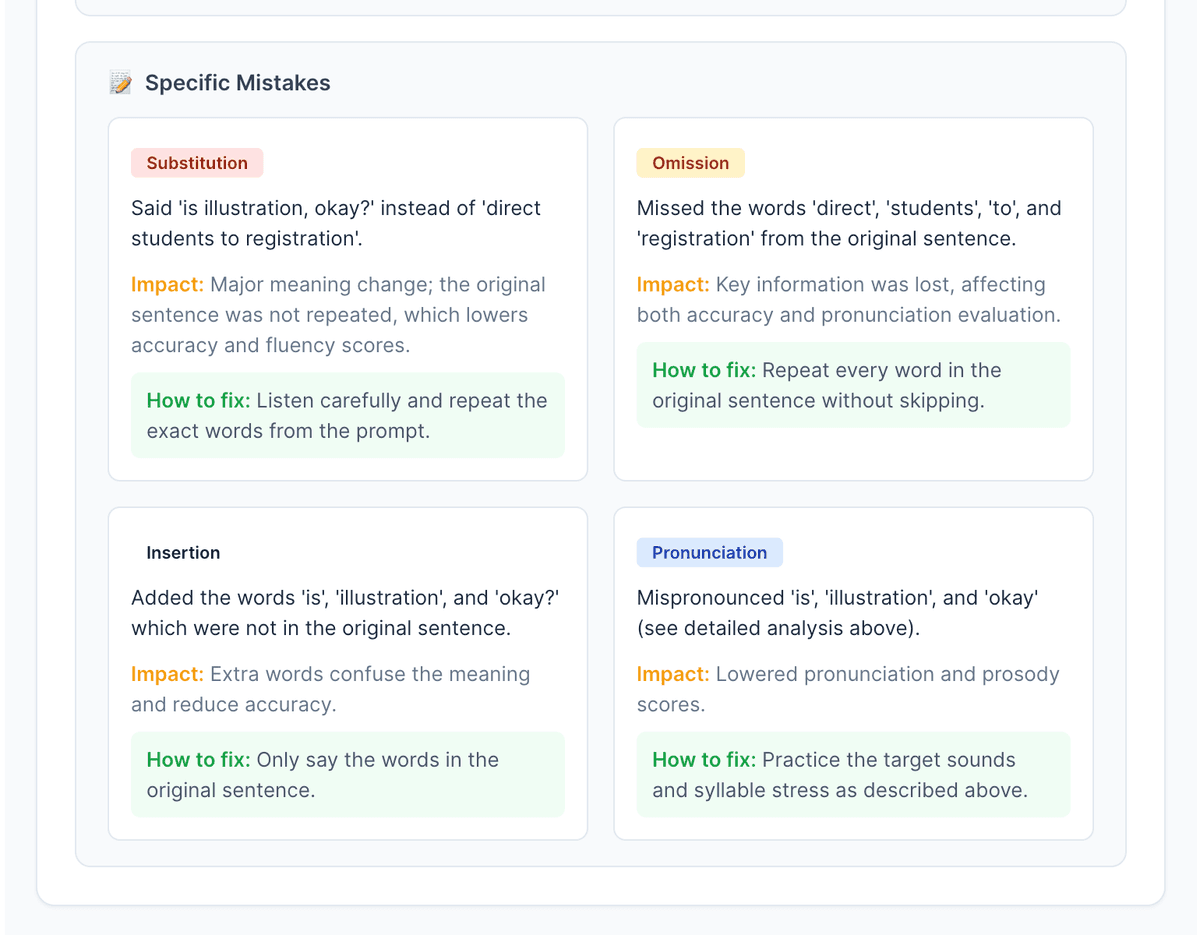 Mistake Analysis
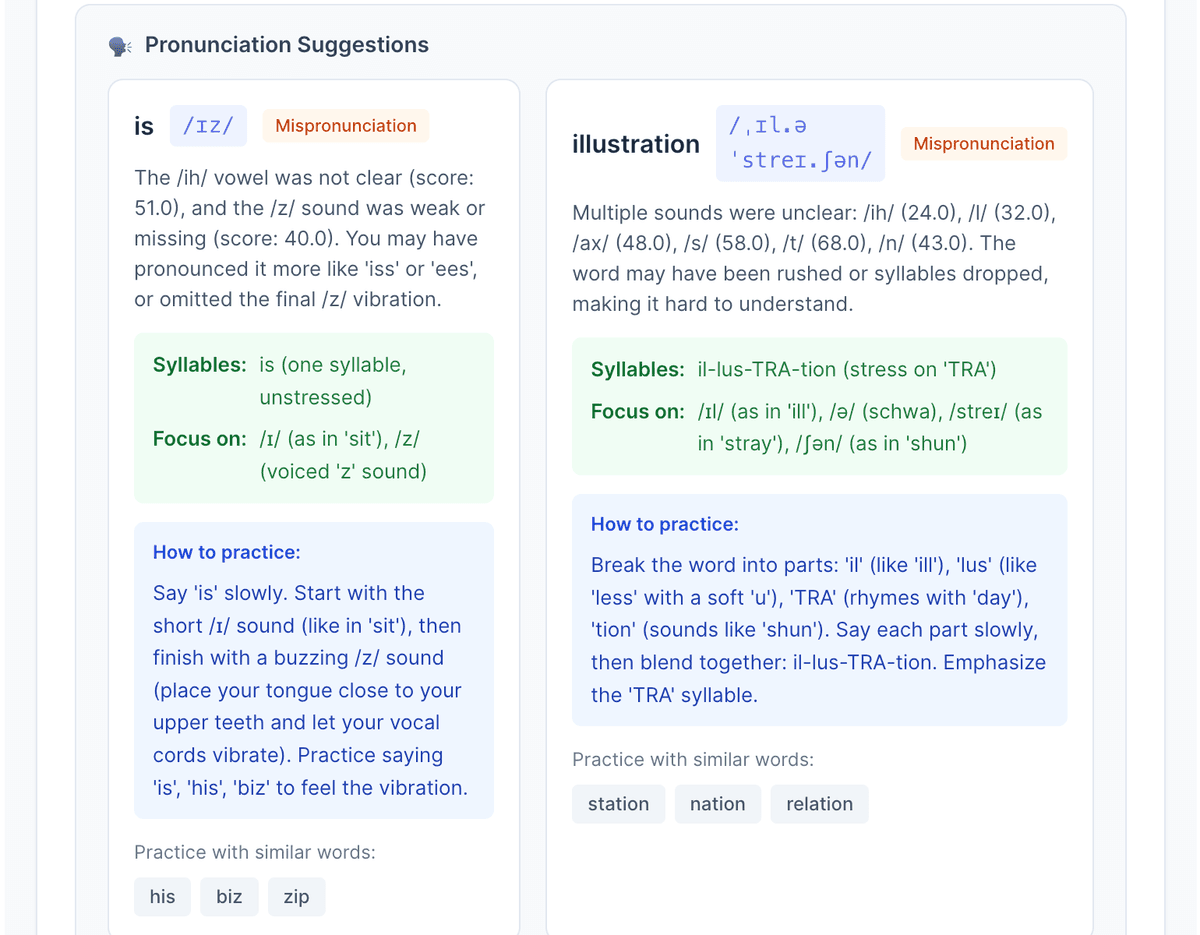 Pronunciation Feedback
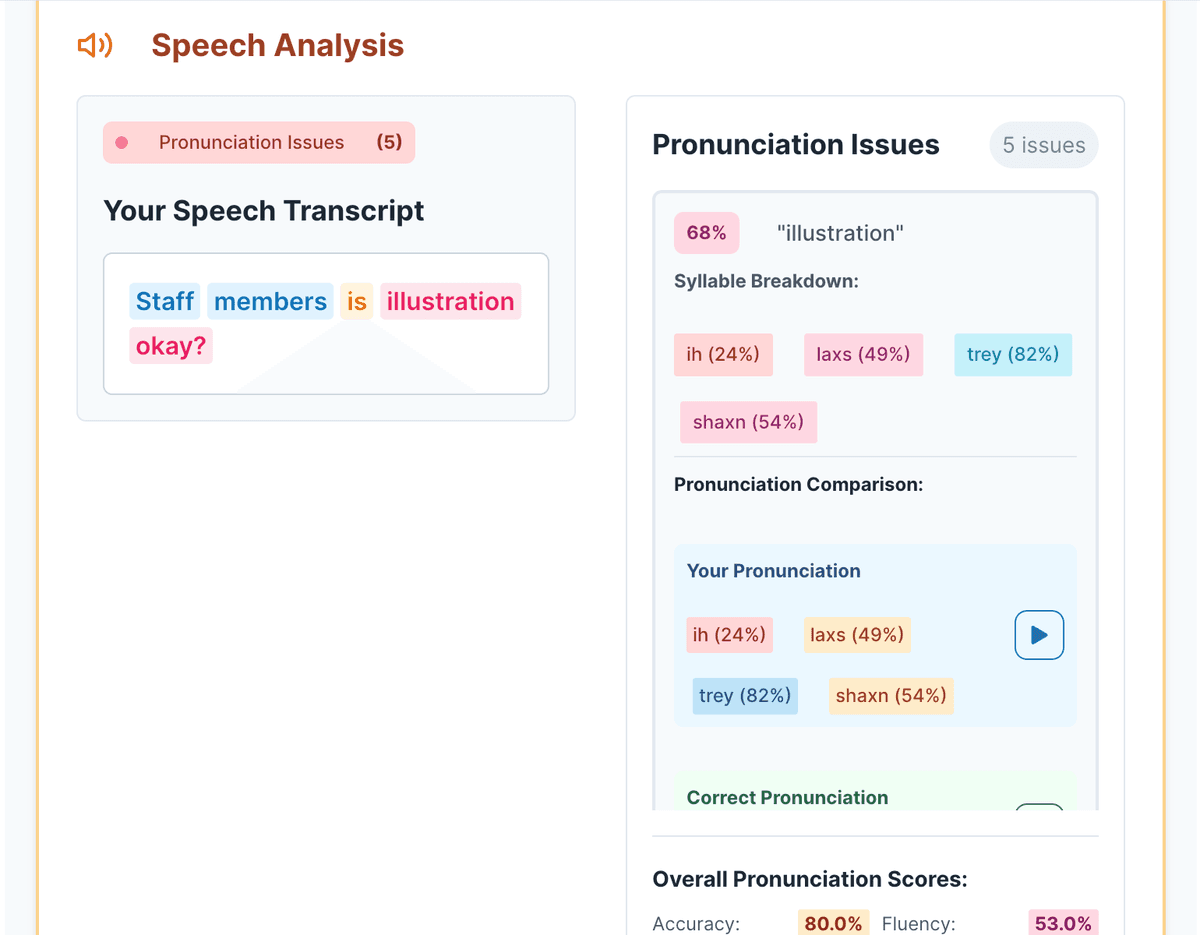 Speech Analysis
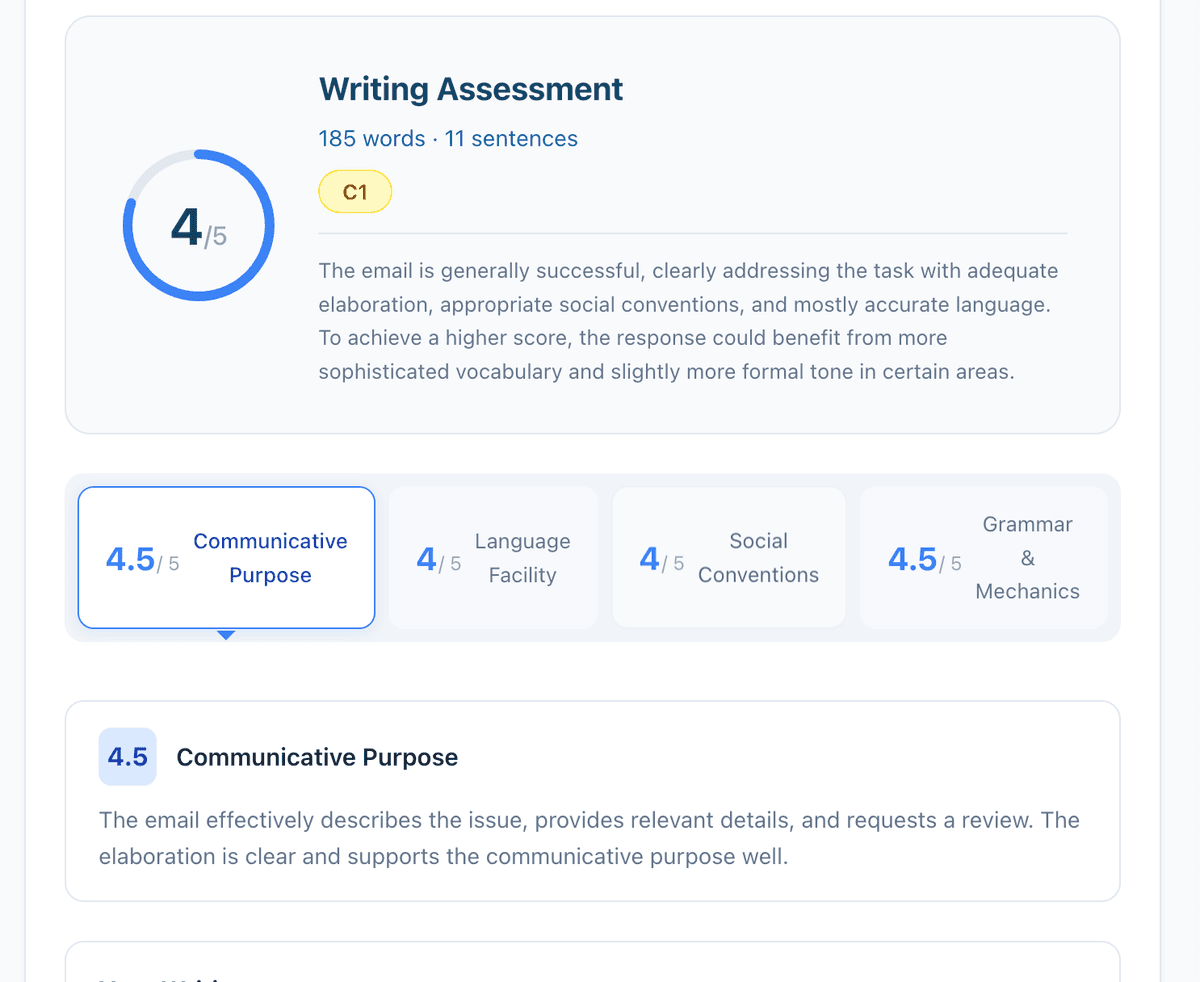 AI Writing Score
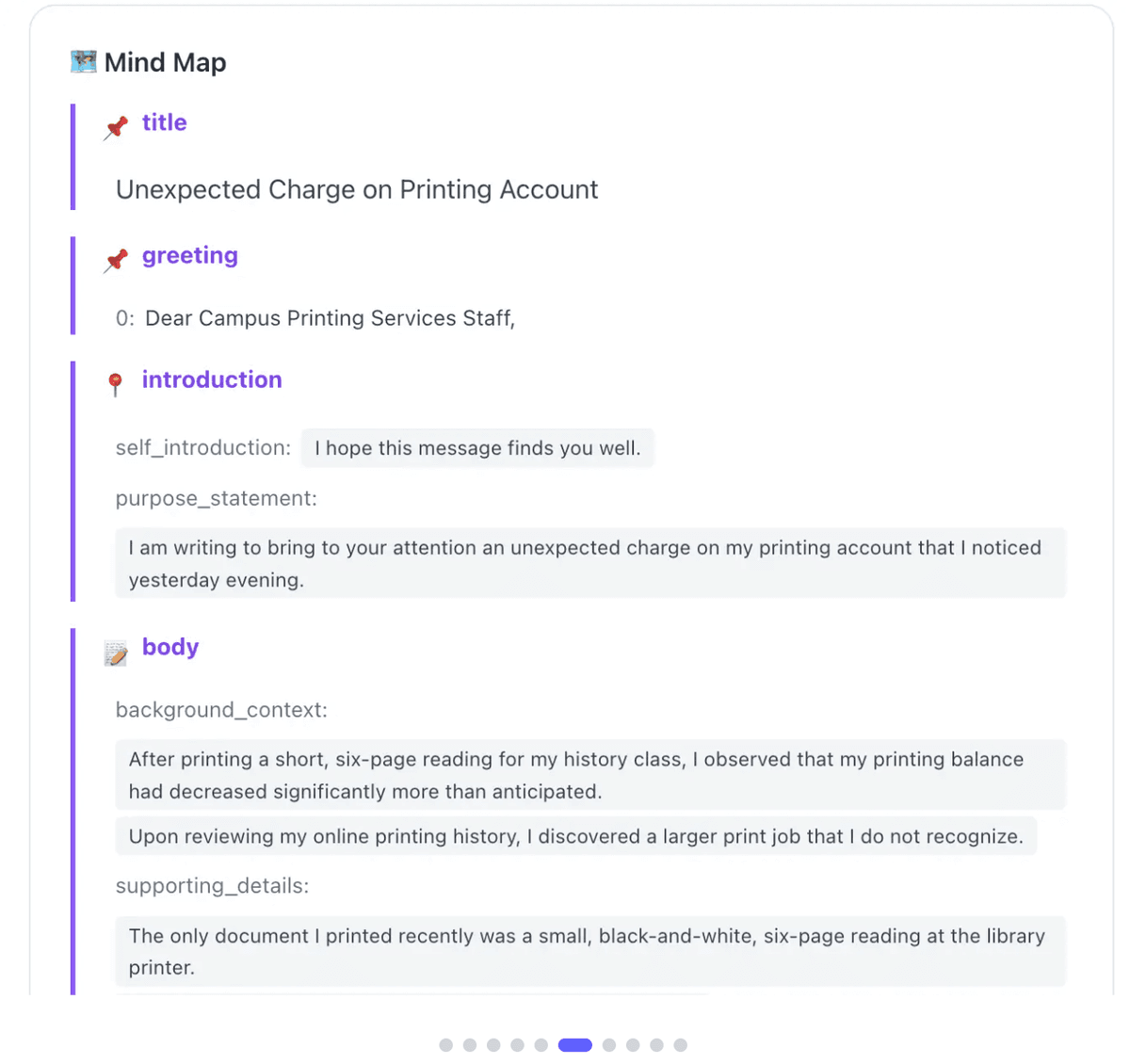 Article Structure Feedback
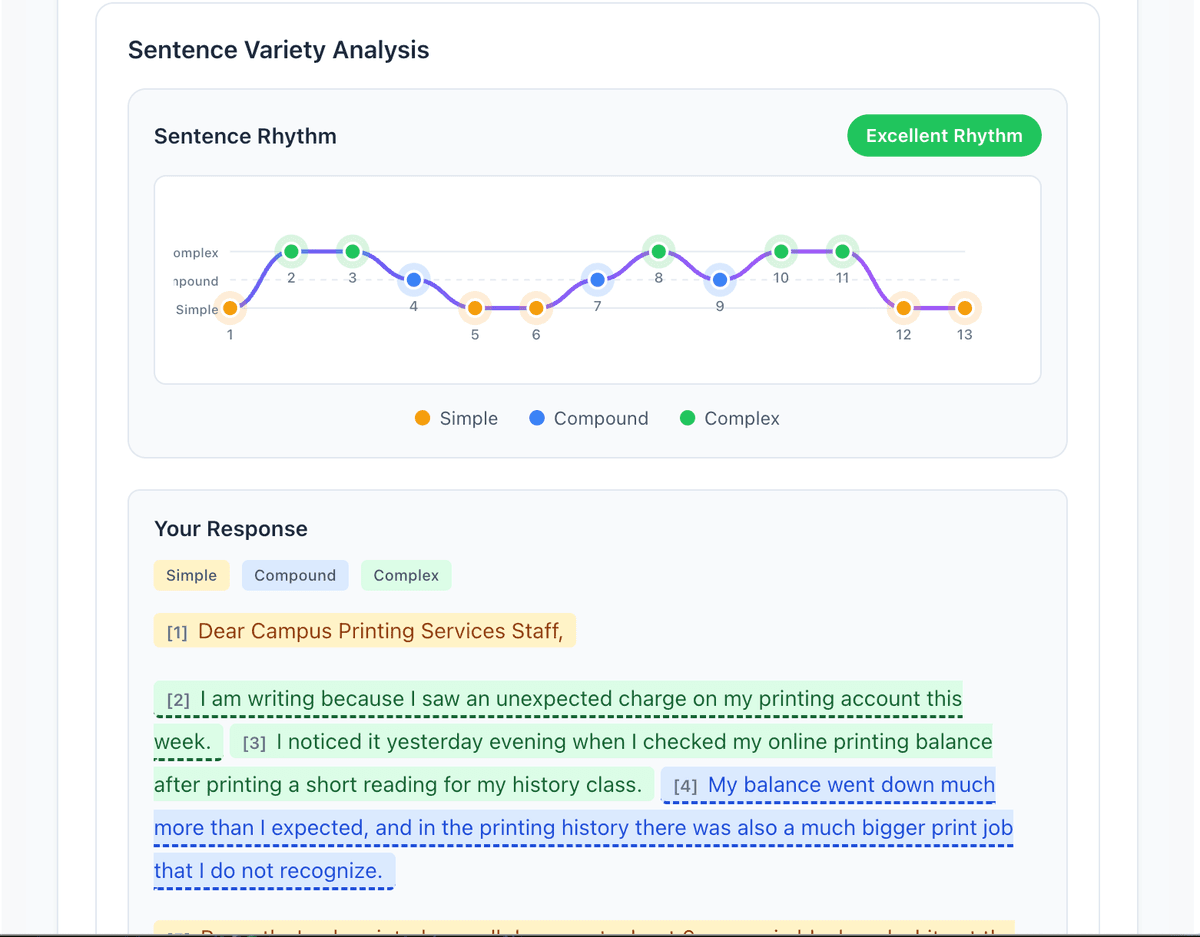 Sentence Variety
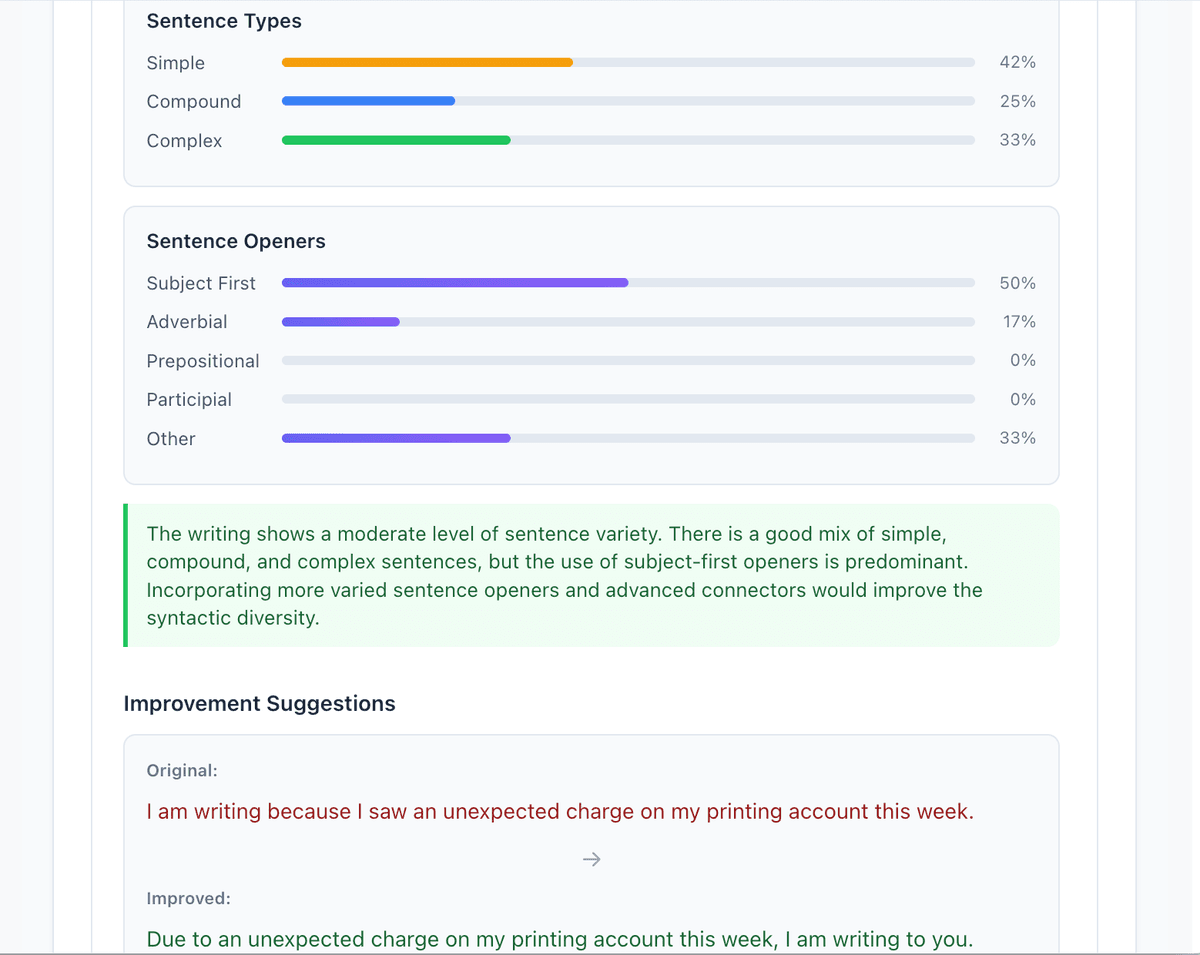 Improvement Suggestions
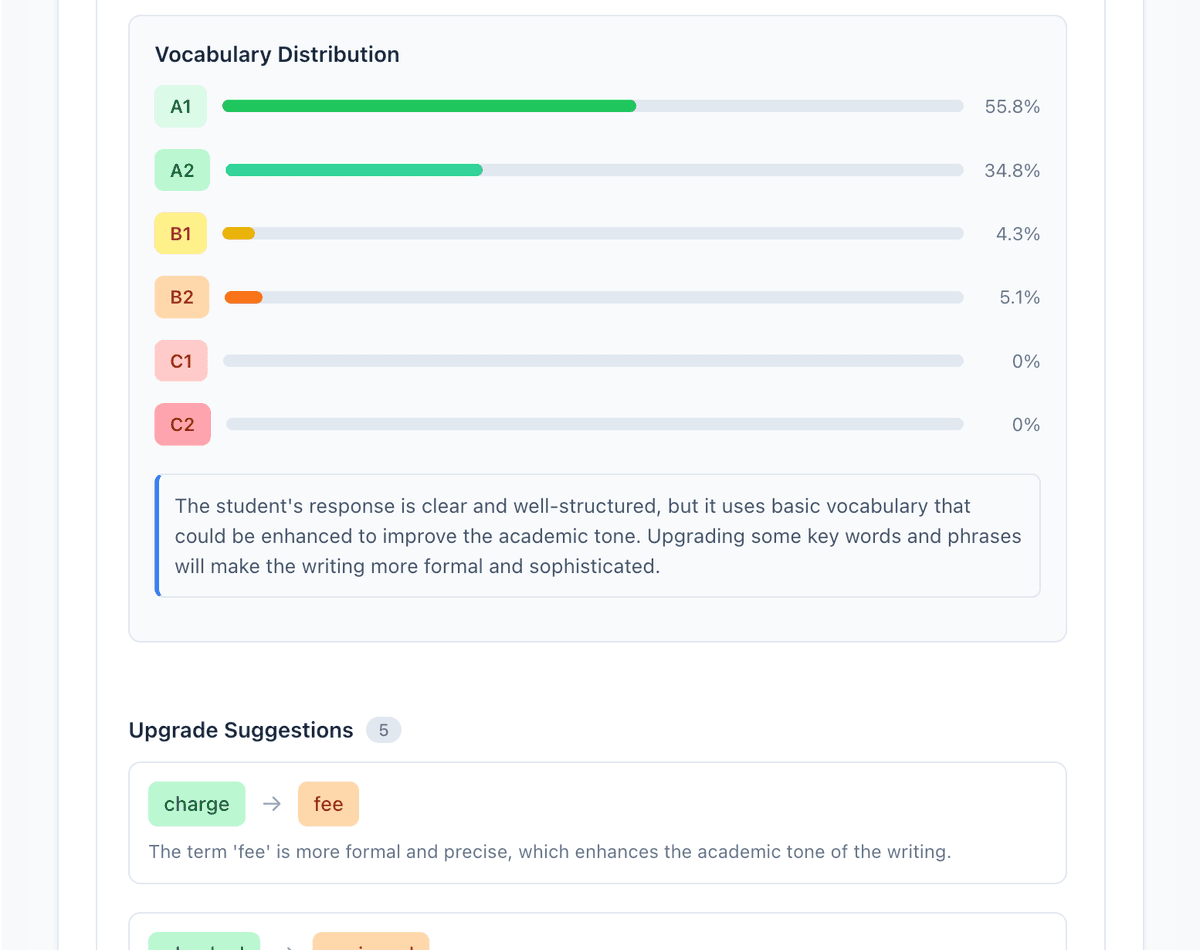 Vocabulary Feedback
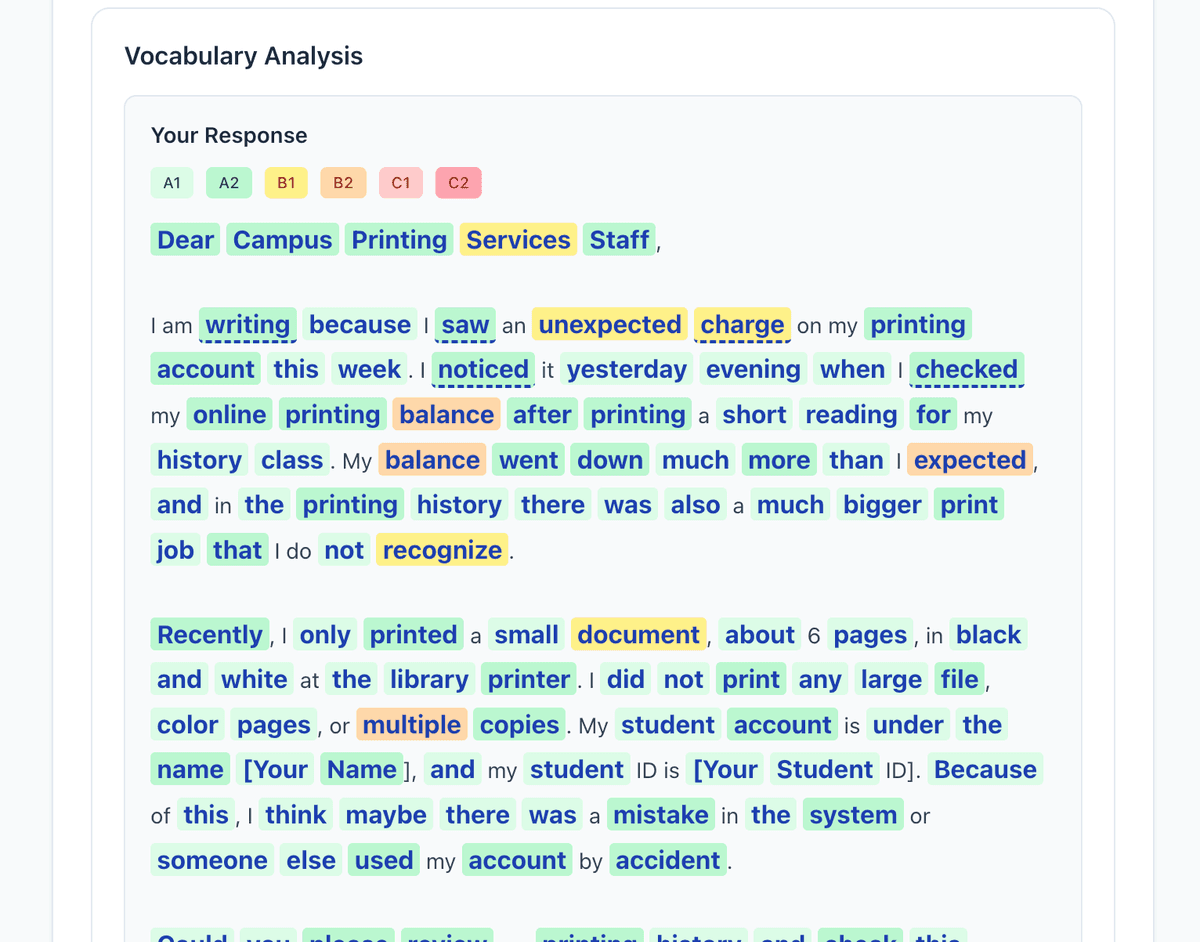 Vocabulary Analysis
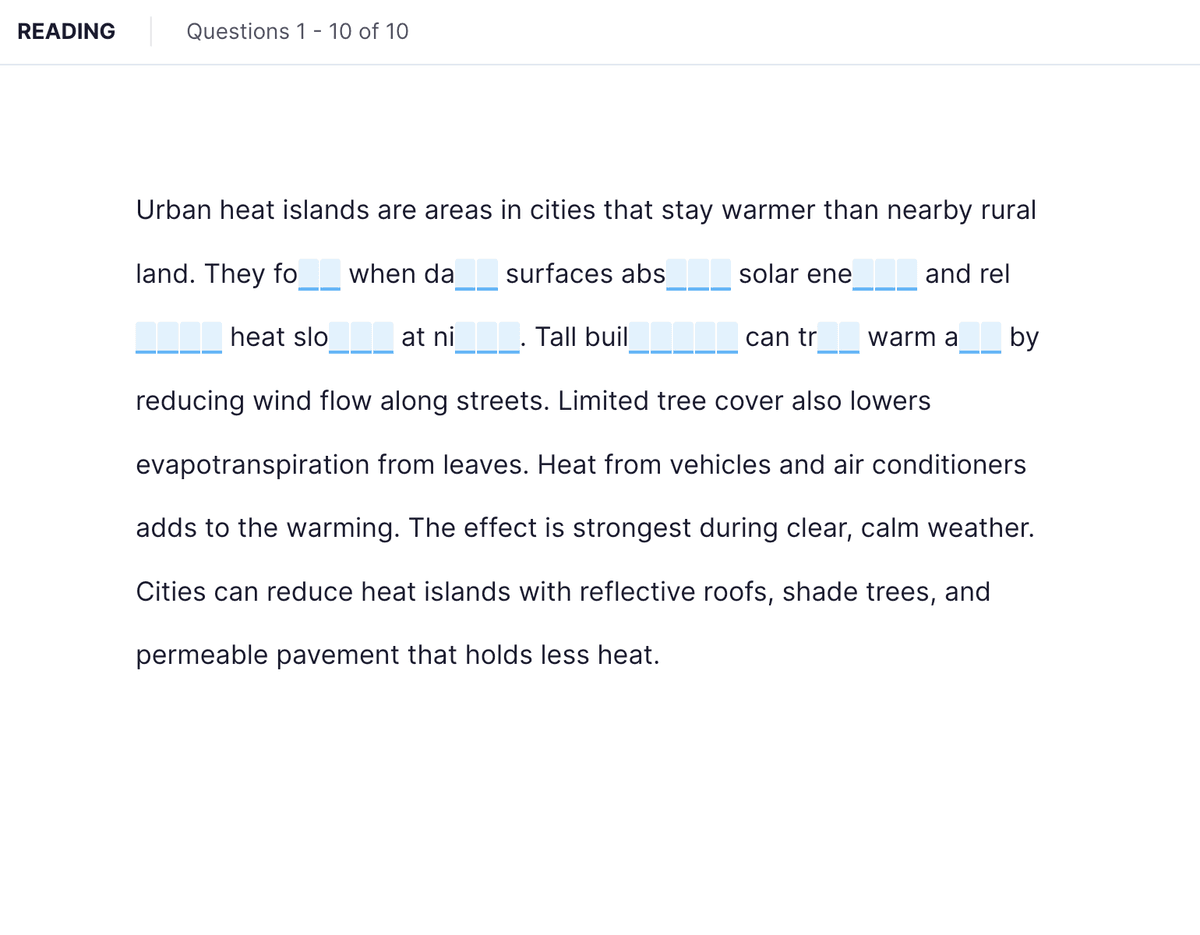 TOEFL 26 New: Reading
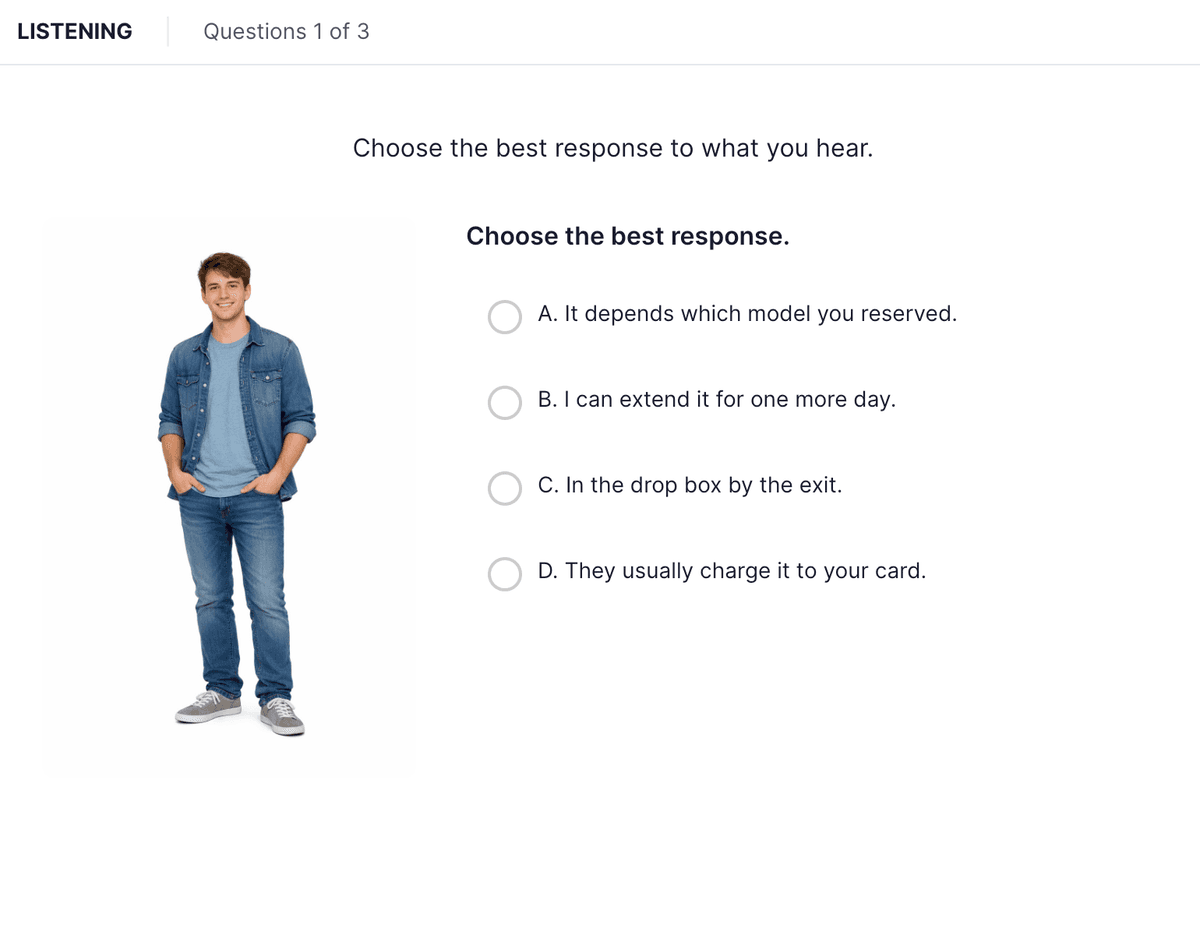 TOEFL 26 New: Listening
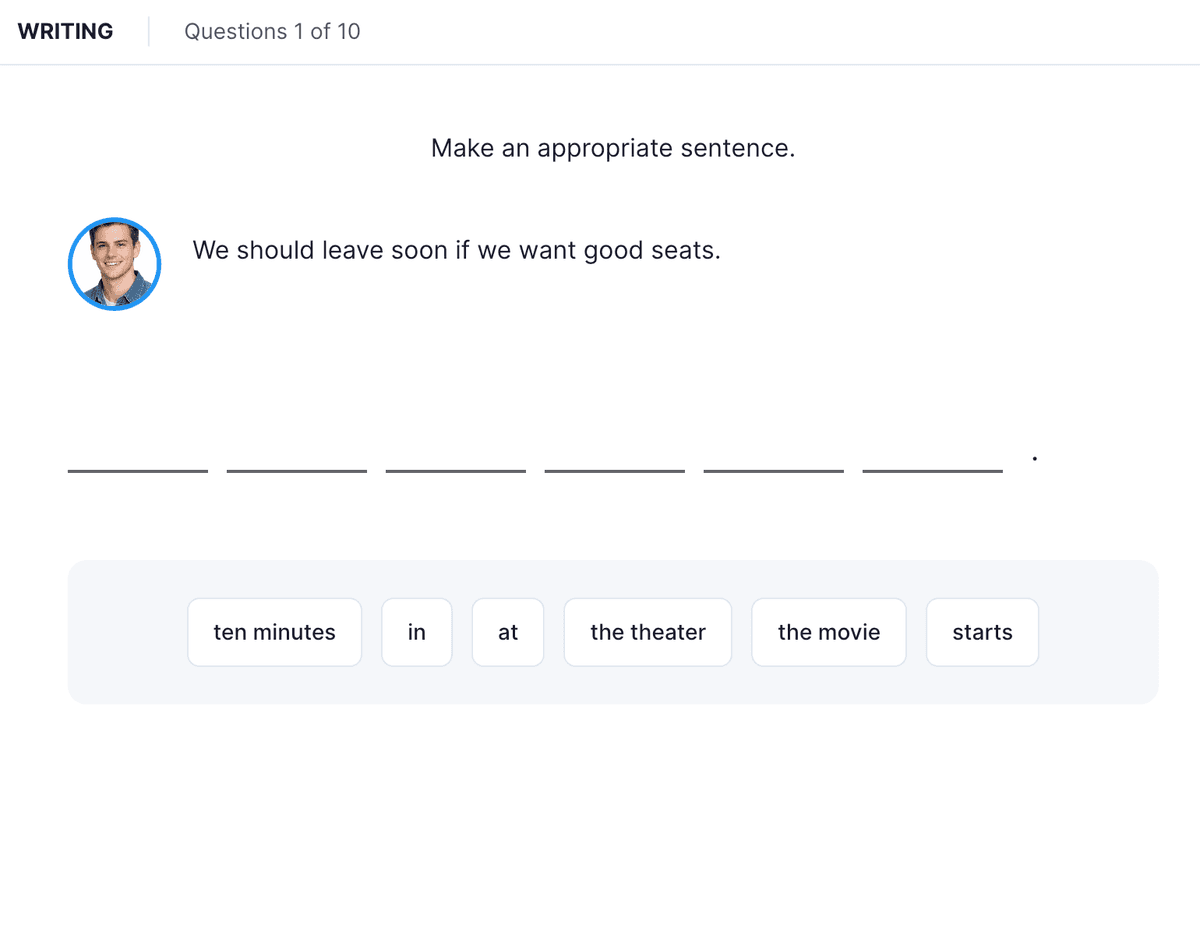 TOEFL 26 New: Writing
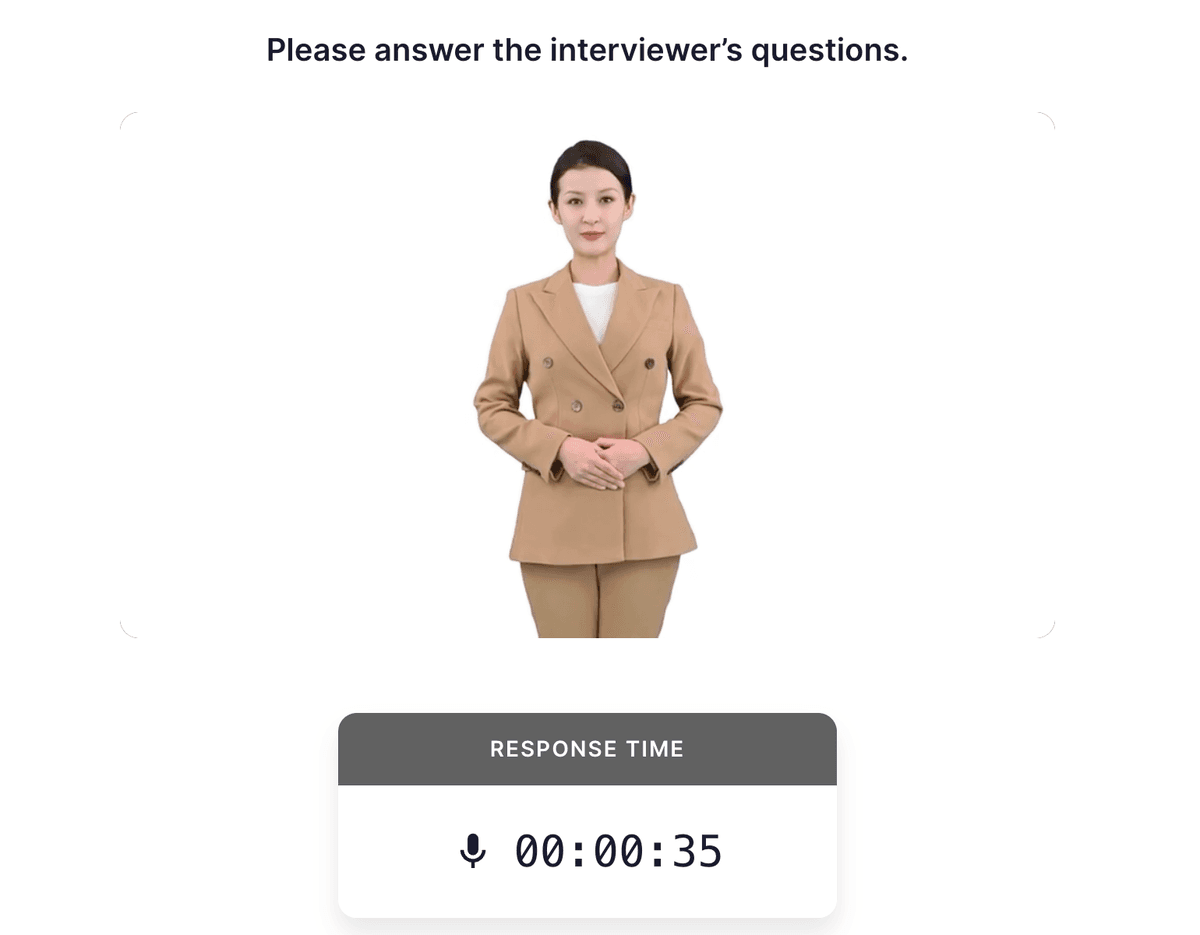 TOEFL 26 New: Speaking
Every TOEFL 2026 mock test in Lingoleap
These are the full-length mock tests the Lingoleap practice app publishes today, listed exactly as they appear inside it. Each one runs all four TOEFL 2026 sections in a single timed sitting, and each name below opens that test in the app.
104 published full-length mock tests · three sets
- Free with account16 tests
- Plus or Premium15 tests
- Premium73 tests
Access states are the app's own. It marks New TPO and Latest Questions Premium, and describes PQ26-16 to PQ26-30 as included with Plus and Premium; the rest of Practice Questions opens once you create a free account.
Practice Questions (PQ26)
Mixed access31 full-length tests
PQ26-1 to PQ26-15 and PQ26-75 open with a free account. PQ26-16 to PQ26-30 are the range the app sells as part of Plus and Premium.
- PQ26-1Take test →Free with account
- PQ26-2Take test →Free with account
- PQ26-3Take test →Free with account
- PQ26-4Take test →Free with account
- PQ26-5Take test →Free with account
- PQ26-6Take test →Free with account
- PQ26-7Take test →Free with account
- PQ26-8Take test →Free with account
- PQ26-9Take test →Free with account
- PQ26-10Take test →Free with account
- PQ26-11Take test →Free with account
- PQ26-12Take test →Free with account
- PQ26-13Take test →Free with account
- PQ26-14Take test →Free with account
- PQ26-15Take test →Free with account
- PQ26-16Take test →Plus or Premium
- PQ26-17Take test →Plus or Premium
- PQ26-18Take test →Plus or Premium
- PQ26-19Take test →Plus or Premium
- PQ26-20Take test →Plus or Premium
- PQ26-21Take test →Plus or Premium
- PQ26-22Take test →Plus or Premium
- PQ26-23Take test →Plus or Premium
- PQ26-24Take test →Plus or Premium
- PQ26-25Take test →Plus or Premium
- PQ26-26Take test →Plus or Premium
- PQ26-27Take test →Plus or Premium
- PQ26-28Take test →Plus or Premium
- PQ26-29Take test →Plus or Premium
- PQ26-30Take test →Plus or Premium
- PQ26-75Take test →Free with account
New TPO (TPO26)
Premium8 full-length tests
The app describes this set as exam-grade practice built for the 2026 format.
Latest Questions (EQ26)
Premium65 full-length tests
The app describes this set as its newest question sets, updated continuously.
- EQ26-1Take test →Premium
- EQ26-2Take test →Premium
- EQ26-3Take test →Premium
- EQ26-4Take test →Premium
- EQ26-5Take test →Premium
- EQ26-6Take test →Premium
- EQ26-7Take test →Premium
- EQ26-8Take test →Premium
- EQ26-9Take test →Premium
- EQ26-10Take test →Premium
- EQ26-11Take test →Premium
- EQ26-12Take test →Premium
- EQ26-13Take test →Premium
- EQ26-14Take test →Premium
- EQ26-15Take test →Premium
- EQ26-16Take test →Premium
- EQ26-17Take test →Premium
- EQ26-18Take test →Premium
- EQ26-19Take test →Premium
- EQ26-20Take test →Premium
- EQ26-21Take test →Premium
- EQ26-22Take test →Premium
- EQ26-23Take test →Premium
- EQ26-24Take test →Premium
- EQ26-25Take test →Premium
- EQ26-26Take test →Premium
- EQ26-27Take test →Premium
- EQ26-28Take test →Premium
- EQ26-29Take test →Premium
- EQ26-30Take test →Premium
- EQ26-31Take test →Premium
- EQ26-32Take test →Premium
- EQ26-33Take test →Premium
- EQ26-34Take test →Premium
- EQ26-35Take test →Premium
- EQ26-36Take test →Premium
- EQ26-37Take test →Premium
- EQ26-38Take test →Premium
- EQ26-39Take test →Premium
- EQ26-40Take test →Premium
- EQ26-41Take test →Premium
- EQ26-42Take test →Premium
- EQ26-43Take test →Premium
- EQ26-44Take test →Premium
- EQ26-45Take test →Premium
- EQ26-46Take test →Premium
- EQ26-47Take test →Premium
- EQ26-48Take test →Premium
- EQ26-49Take test →Premium
- EQ26-50Take test →Premium
- EQ26-51Take test →Premium
- EQ26-52Take test →Premium
- EQ26-53Take test →Premium
- EQ26-54Take test →Premium
- EQ26-55Take test →Premium
- EQ26-56Take test →Premium
- EQ26-58Take test →Premium
- EQ26-59Take test →Premium
- EQ26-60Take test →Premium
- EQ26-61Take test →Premium
- EQ26-62Take test →Premium
- EQ26-63Take test →Premium
- EQ26-64Take test →Premium
- EQ26-65Take test →Premium
- EQ26-66Take test →Premium
Each link opens that exact test in the practice app. The app asks you to sign in first, and tests marked Plus or Premium need the matching plan.
What one mock test contains
The app records a task-type list for every mock test. All four sections appear in all of them:
Reading
- Complete the Words
- Read in Daily Life
- Read an Academic Passage
Listening
- Listen and Choose a Response
- Conversation
- Announcement
- Academic Talk
Speaking
- Listen and Repeat
- Take an Interview
Writing
- Build a Sentence
- Write an Email
- Write for an Academic Discussion
One exception, listed rather than rounded away: TPO26-6 carries no Build a Sentence task. The other 103 tests carry the full task-type list.
Test names, counts and access states read from the practice app's own question list, route table and gate on 18 September 2026. Nothing on this list is an estimate. Lingoleap reports a practice band, not an official ETS score.
Que es un examen simulado TOEFL 26?
Un examen simulado TOEFL 26 es una prueba de practica disenada para el formato completamente rediseñado del TOEFL iBT que se lanzo el 21 de enero de 2026.
El nuevo TOEFL introduce 12 tipos de tareas completamente nuevos en Reading, Listening, Writing y Speaking, pruebas adaptativas multietapa en Reading y Listening, y una nueva escala de puntuacion del 1 al 6 alineada con el CEFR.
Para prepararse de manera efectiva, los aspirantes necesitan examenes simulados que reflejen la nueva estructura, los 12 tipos de tareas y el sistema de puntuacion actualizado.
Lingoleap ofrece examenes simulados TOEFL 26 disenados para simular de cerca la experiencia real del examen.
Nuevo formato TOEFL 2026
El examen TOEFL 2026 consta de 4 secciones: Reading, Listening, Writing y Speaking. El tiempo estimado para completar el examen es de menos de 2 horas. El tiempo del examen no incluye las instrucciones. Como el examen es adaptativo, el tiempo y la cantidad de preguntas pueden variar.
Reading
~30 min
~50 preguntas
Adaptativo multietapa en dos modulos
Listening
~29 min
~47 preguntas
Adaptativo multietapa en dos modulos
Writing
~23 min
12 preguntas
Formato lineal: las mismas tareas para todos los examinados
Speaking
~8 min
11 preguntas
Formato lineal: las mismas tareas para todos los examinados
Todos los tipos de tareas del TOEFL 2026
Reading
- Complete the Words
- Read in Daily Life
- Read an Academic Passage
8 tipos de preguntas: Factual & Negative Factual, Vocabulary, Select the Sentence, Sentence Simplification, Reference, Inference, Rhetorical Purpose, Insert Text
Listening
- Listen and Choose a Response
- Listen to a Conversation
- Listen to an Announcement
- Listen to an Academic Talk
6 tipos de preguntas: Main Idea, Factual, Inference, Purpose, Method, Attitude
Writing
- Build a Sentence
- Write an Email
- Write for an Academic Discussion
Formato lineal: se evalua segun proposito comunicativo, sintaxis, eleccion de palabras, convenciones sociales y precision
Speaking
- Listen and Repeat
- Take an Interview
Formato lineal: se evalua segun entrega (claridad, fluidez), uso del idioma (gramatica, vocabulario) y elaboracion
Las secciones de Reading y Listening utilizan pruebas adaptativas multietapa: tu desempeno en el Modulo 1 determina el nivel de dificultad del Modulo 2. Esto crea una experiencia mas personalizada y mide tus habilidades de manera mas eficiente y precisa.
Por que elegir los examenes simulados TOEFL 26 de Lingoleap
La mayoria de los materiales de practica TOEFL todavia se enfocan en el formato anterior del examen. Lingoleap esta disenado especificamente para el formato TOEFL 2026.
 Examenes simulados completos que cubren los 12 tipos de tareas oficiales del TOEFL 2026
- Reading y Listening adaptativos multietapa que replican el examen real
- Calificacion con IA para Speaking y Writing alineada con las rubricas oficiales de ETS
- Una de las bibliotecas mas grandes de examenes simulados TOEFL 26 disponibles
La mayoria de los recursos te preparan para el TOEFL anterior. Lingoleap te prepara para el nuevo.
Cobertura completa de todos los tipos de tareas del TOEFL 2026
Cada examen simulado TOEFL 26 de Lingoleap cubre los 12 tipos de tareas oficiales en las cuatro secciones del examen, exactamente como aparecen en el examen real.
Reading
- Complete the Words
Reconstruye las partes faltantes de palabras en un parrafo academico corto
- Read in Daily Life
Lee textos practicos como correos electronicos, avisos o publicaciones en redes sociales
- Read an Academic Passage
Lee un pasaje academico corto (~200 palabras) y responde 5 preguntas
Listening
- Listen and Choose a Response
Escucha una pregunta o declaracion breve y elige la mejor respuesta entre 4 opciones
- Listen to a Conversation
Responde preguntas sobre conversaciones cortas de la vida universitaria entre 2 personas
- Listen to an Announcement
Responde preguntas sobre anuncios en el salon de clases o eventos del campus
- Listen to an Academic Talk
Responde preguntas sobre charlas academicas cortas de diversos temas
Writing
- Build a Sentence
Reorganiza palabras y frases para completar una oracion dentro de un dialogo corto
- Write an Email
Escribe un correo electronico con un proposito especifico, como recomendar, invitar o proponer una solucion
- Write for an Academic Discussion
Lee la publicacion de un profesor y las respuestas de 2 estudiantes, y luego escribe tu propia contribucion (mas de 100 palabras)
Speaking
- Listen and Repeat
Repite 7 oraciones habladas que aumentan en longitud y complejidad
- Take an Interview
Responde 4 preguntas de entrevista en una conversacion academica simulada (45 segundos cada una)
Pruebas adaptativas multietapa: igual que en el TOEFL 2026 real
Los examenes simulados de Lingoleap replican la estructura adaptativa multietapa del TOEFL real. Tu desempeno en el Modulo 1 determina la dificultad del Modulo 2, tal como en el examen oficial.
Progresion realista del examen
Experimenta el mismo flujo adaptativo del TOEFL 2026 real: el desempeno en el Modulo 1 establece la dificultad del Modulo 2
Practica en multiples niveles
Practica con modulos mas faciles y mas dificiles para ganar confianza y precision en todos los niveles
Evaluacion real de tu desempeno
Conoce tu potencial de puntuacion real basado en la logica de calificacion adaptativa y la conversion de puntaje bruto a escala
Calificacion con IA para Speaking y Writing
Recibe retroalimentacion instantanea y detallada en cada respuesta de Speaking y Writing, alineada con las rubricas oficiales de calificacion de ETS. Cada respuesta se califica de manera holistica en una escala del 0 al 5.
Evaluacion de Speaking
Listen and Repeat
- Precision en la repeticion
- Inteligibilidad
- Pronunciacion
Take an Interview
- Entrega (claridad, fluidez, pronunciacion, entonacion)
- Uso del idioma (variedad y precision gramatical y de vocabulario)
- Elaboracion (relevancia al tema, ideas bien respaldadas)
Evaluacion de Writing
Write an Email
- Elaboracion que respalda el proposito comunicativo
- Variedad sintactica y eleccion precisa e idiomatica de palabras
- Convenciones sociales apropiadas (cortesia, registro, formalidad)
- Precision lexica y gramatical
Write for an Academic Discussion
- Explicaciones y ejemplos relevantes y bien elaborados
- Variedad de estructuras sintacticas y eleccion precisa e idiomatica de palabras
- Precision lexica y gramatical
Accuracy and transparency
How Accurate Is This TOEFL Practice Test Score?
Every practice-test site says its scores are accurate. Almost none says how the number is produced or what has actually been checked. Here is the full answer for Lingoleap — including what we have not verified yet.
What we know
- Reading and Listening are scored against a fixed answer key, so those bands are as reliable as the question set is representative of the real test.
- Writing and Speaking responses are scored 0–5 by a language model against the dimensions of the published ETS scoring guides — the same criteria the Speaking and Writing evaluation section above lists.
- Every band on your report comes from one fixed rule set — the tables and formulas printed further down this page — so the same answers always produce the same band.
What we have not verified
- We have not yet published a comparison of Lingoleap bands against learners' official ETS score reports. Until that verified sample exists and is large enough, we do not quote a correlation, an accuracy percentage or a margin of error — any such number would be invented.
- ETS has not released a raw-to-band conversion for the 2026 test. Our Reading and Listening table is a Lingoleap estimate and is labelled as one below.
- The real test equates scores across forms and adaptive paths with Item Response Theory; our engine uses a simpler lookup table. The two can disagree, most likely at band boundaries.
What to do with the estimate
- Treat one mock band as a range, not a point. Read the section bands and the task-type accuracy under them — those move first and are what you can practise.
- Track direction across three to five mocks spaced two to three weeks apart, rather than certifying a single sitting.
- For admissions, only an ETS score counts. Check your target school's published minimum with the Score Calculator, and treat the last mock as a dress rehearsal, not a prediction.
The method we will use to publish calibration figures — who counts, which mock counts, what gets excluded — is already written down on the how-it-works page. The figures will appear there, with their sample size, once the verified sample exists.
See the calibration method →Wondering whose AI to trust on the 2026 test in general? The AI tutor guide explains how ETS's own SpeechRater and e-rater engines grade Speaking and Writing first, and how to rehearse against an AI scorer.
How the 2026 TOEFL is graded by AI →How Our Adaptive Practice Works
Reading and Listening in a Lingoleap mock run as a two-stage test, the structure ETS describes for the real exam. Here is exactly what our engine does — and, separately, what ETS has and has not said.
In a Lingoleap mock test
- 1
Router module
Every test-taker starts with the same router module in each section.
- 2
Routing
Your router performance sends you to a lower or an upper Stage 2 module. The two modules are built differently, which is why the number of items you see varies from mock to mock. The routing threshold is an engine setting we do not publish on this page.
- 3
One band table, defined for the upper module
Correct answers across both stages are counted, normalised to a 35-point basis, and looked up in the section's band table. The table is defined for the upper module.
- 4
Lower-module adjustment
A sitting routed to the lower module is placed one step down that table for the same normalised count. So in our engine the lower path cannot reach the top band — that is a Lingoleap simplification, not an ETS rule, and it is the one place our scoring is deliberately more conservative than the real test.
Adaptive routing: what ETS has published vs what prep sites assert
| Question | What ETS has published | What prep sites assert |
|---|---|---|
| Structure | Reading and Listening are “designed as two-stage adaptive tests”; Writing and Speaking are linear, with every test-taker on a form getting the same tasks (2026 Test Blueprint, note 5). | The same. This part is not in dispute. |
| Routing | “Based on their performance on the first module, test takers will get a second module where the difficulty of the test tasks matches their ability level.” No routing threshold is published (Teacher FAQ, Q9). | Specific thresholds — “get the first ten questions wrong and you are routed down” — none of which cites an ETS source. |
| How the score is produced | The section score “takes into consideration the total number of questions answered correctly across the two stages or modules as well as the difficulty level of questions”, converted by IRT equating so that a reported score “reflects the same level of language ability, regardless of which second stage was taken” (Teacher FAQ). | A fixed raw-to-band table applied to both paths, or a flat penalty for the easier path. |
| The “ceiling” | ETS states no maximum band for the lower module. It says “the final score is based on both stages” and that item difficulty is accounted for — which means an easier item is worth less, not that a particular band is forbidden. Whether the easier module can reach 6.0 in practice is not something ETS has published either way. | “A perfect score on the easier Stage 2 caps you at 4.0”, or “below 5.0” — the figure differs from site to site and none cites ETS. |
| Unscored items | Reading and Listening item counts “include non-scored items” used to gather data for future forms (Blueprint, note 1). | Rarely mentioned; item counts are usually quoted as if every item scored. |
ETS sources: TOEFL iBT 2026 Test Blueprint and Specifications (PDF) · Teacher FAQ for TOEFL iBT Enhancements (PDF)
Quotations are from those two ETS documents as read on 16 September 2026. Where this page says ETS has not published something, we mean we could not find it in either document or on ets.org — not that no such rule exists internally.
How the Band Is Produced, Section by Section
The whole path from your answers to the 1–6 band, with nothing hidden. These are the rules our score report runs on.
Reading
Scored by: Answer key- 1Every item is compared with the reference answer: right or wrong, no partial credit.
- 2Correct answers across the router and your Stage 2 module are summed and scaled to a 35-point basis: points = round(correct ÷ items × 35).
- 3The points are looked up in the Reading band table below. Lower-module sittings drop one step.
Listening
Scored by: Answer key- 1The same answer-key grading and 35-point scaling as Reading.
- 2The Listening table has its own boundaries: 80% accuracy is a 5.0 in Reading, but 71% is a 4.5 in Listening. That is why two sections at similar accuracy can show different bands.
Writing
Scored by: Answer key + AI- 1Build a Sentence: each item is scored right or wrong against the accepted word orderings. No model is involved.
- 2Write an Email and Write for an Academic Discussion: each response is scored 0–5 by a language model against the dimensions of the ETS scoring guide for that task.
- 3Section band = (points earned ÷ points available) × 5 + 1, rounded to the nearest 0.5.
Speaking
Scored by: AI- 1Listen and Repeat (7 items) and Take an Interview (4 items): your recording is transcribed and measured for pronunciation and fluency, then a model scores each response 0–5 against the rubric dimensions.
- 2Section band = (points earned ÷ points available) × 5 + 1, rounded to the nearest 0.5.
Overall band = the plain average of the four section bands, rounded to the nearest 0.5. The 0–120 “traditional” figure on the report is each section's accuracy scaled to 0–30 and summed; it exists only for comparing against university pages that still quote the old scale.
Raw Correct to Band: Reading and Listening
Lingoleap estimate — not an ETS tableBasis: these are the exact lookup tables our score report uses, defined on a 35-point normalised scale (points = round(correct ÷ items × 35)). ETS has published no raw-to-band conversion for the 2026 test, and real scores are IRT-equated for form and module difficulty, so treat every band here as a practice estimate. The approximate-accuracy column is the points range divided by 35.
Reading
| Band | Points (of 35) | Approx. accuracy |
|---|---|---|
| 6.0 | 34–35 | ≈ 97–100% |
| 5.5 | 32–33 | ≈ 91–94% |
| 5.0 | 28–31 | ≈ 80–89% |
| 4.5 | 25–27 | ≈ 71–77% |
| 4.0 | 18–24 | ≈ 51–69% |
| 3.5 | 12–17 | ≈ 34–49% |
| 3.0 | 8–11 | ≈ 23–31% |
| 2.5 | 7 | ≈ 20% |
| 2.0 | 6 | ≈ 17% |
| 1.0 | 0–5 | ≈ 0–14% |
Listening
| Band | Points (of 35) | Approx. accuracy |
|---|---|---|
| 6.0 | 34–35 | ≈ 97–100% |
| 5.5 | 32–33 | ≈ 91–94% |
| 5.0 | 29–31 | ≈ 83–89% |
| 4.5 | 25–28 | ≈ 71–80% |
| 4.0 | 23–24 | ≈ 66–69% |
| 3.5 | 18–22 | ≈ 51–63% |
| 3.0 | 13–17 | ≈ 37–49% |
| 2.5 | 11–12 | ≈ 31–34% |
| 2.0 | 8–10 | ≈ 23–29% |
| 1.5 | 6–7 | ≈ 17–20% |
| 1.0 | 0–5 | ≈ 0–14% |
Worked example from our sample report: 28 of 35 Reading items correct → 28 points → Band 5.0. 32 of 45 Listening items correct → 24.9, rounded to 25 points → Band 4.5.
Lower-module sittings: one step down the table for the same points.
Try TOEFL Practice Test Questions Now
Warm up with these free sample questions modeled on the 2026 TOEFL iBT — one from each section. Reveal the answer and explanation, then start a full-length practice test when you are ready.
Read the short academic passage, then answer the question.
Bioluminescence — the production of light by living organisms — is common in the deep ocean, where sunlight never reaches. Many creatures use it to attract prey, confuse predators, or signal to potential mates. The light is produced by a chemical reaction between a molecule called luciferin and the enzyme luciferase. Because the reaction gives off almost no heat, scientists describe the light as "cold light."
According to the passage, why is bioluminescent light described as "cold light"?
- AIt is only found in cold, deep water.
- BThe chemical reaction releases very little heat.
- CIt appears blue rather than red or orange.
- DIt is produced only at night.
▸Show answer & explanation
Answer: B — The chemical reaction releases very little heat.
The final sentence states the reaction "gives off almost no heat," which is why it is called cold light. Option A confuses where the organisms live with why the light is cold; C and D add details the passage never mentions. Factual questions like this reward locating the exact supporting sentence rather than relying on outside knowledge.
Type the missing letters to complete the word so the sentence makes sense.
Regular exercise can signi______ reduce the risk of heart disease.
▸Show answer & explanation
Answer: significantly
"Complete the Words" gives you the first letters and the length of a word and asks you to finish it from context. Here the sentence needs an adverb describing how much exercise reduces risk — "significantly." Read the whole sentence first, decide the part of speech, then fit a word that starts with the letters shown.
On the real test you would hear this talk once. Read the transcript excerpt, then answer.
Professor: "So when we talk about the 'urban heat island' effect, we mean that cities tend to be several degrees warmer than the countryside around them. The main reason is surface material. Asphalt and concrete absorb heat during the day and release it slowly at night — unlike soil and vegetation, which cool down much faster. That's why a city can still feel warm hours after sunset."
What is the main cause of the urban heat island effect, according to the professor?
- ACities are located in naturally warmer regions.
- BBuildings block cooling wind from reaching streets.
- CPaved surfaces absorb and slowly release heat.
- DThere are more people generating body heat.
▸Show answer & explanation
Answer: C — Paved surfaces absorb and slowly release heat.
The professor names surface material — asphalt and concrete absorbing heat and releasing it slowly — as "the main reason." The other options are plausible-sounding distractors the talk never states. In the Listening section, note the speaker's signal phrases ("the main reason is…") to catch the point being tested.
Put the words and phrases in the correct order to form a grammatical sentence.
[ the deadline / because / the library / she / was approaching / stayed late at ]
▸Show answer & explanation
Answer: She stayed late at the library because the deadline was approaching.
"Build a Sentence" tests control of English word order and clause structure. Start with the subject ("She"), add the main verb phrase ("stayed late at the library"), then attach the reason clause introduced by "because." Checking that subject, verb, and connector line up is usually enough to place every chunk.
You have 45 seconds to answer. There is no single correct response — a strong answer is clear, on-topic, and supported with a reason or example.
Some students prefer to study in the morning, while others prefer the evening. Which do you prefer, and why?
▸Show answer & explanation
Answer: Sample strong response (outline)
Take a clear position, give one reason, and support it with a specific example: "I prefer studying in the morning because my mind is freshest right after I wake up. For instance, I can read a difficult chapter in thirty minutes in the morning, but the same chapter takes me an hour at night when I'm tired." Scoring rewards delivery (clear, fluent speech), language use (accurate grammar and vocabulary), and elaboration (a developed, on-topic idea) — so commit to one answer and develop it rather than listing both options.
These are original Lingoleap practice items built to mirror the 2026 TOEFL iBT task types. They are for practice only and are not real ETS test questions; Lingoleap is independent of and not endorsed by ETS.
Practice TOEFL by Section
A full-length mock test measures readiness, but targeted section practice is how you fix specific weaknesses. Drill any of the four sections and all 12 task types below.
Reading
Adaptive passages and the three 2026 reading task types.
Listening
Conversations, announcements, and academic talks with adaptive difficulty.
Speaking
Listen and Repeat plus the academic interview, with AI delivery feedback.
Writing
Build a Sentence, Write an Email, and Write for an Academic Discussion.
Mas de 100 examenes simulados TOEFL 26 completos, actualizados mensualmente
Accede a una de las bibliotecas mas grandes de examenes simulados TOEFL 2026 disponibles. Se agregan nuevos examenes cada mes para que puedas practicar continuamente con materiales frescos y actualizados.
- Mas de 100 examenes simulados TOEFL 26 completos
- Todos los examenes alineados con el formato y tipos de tareas mas recientes del TOEFL 2026
- Nuevos examenes agregados cada mes
- Cubre las 4 secciones y los 12 tipos de tareas
- Covers all 4 sections and 12 task types
Como empezar tu examen simulado TOEFL 26
Crea tu cuenta
Registrate gratis en Lingoleap
Elige un examen simulado
Selecciona entre mas de 100 examenes simulados TOEFL 26 completos
Comienza a practicar
Realiza el examen en condiciones reales
Recibe tu puntaje y retroalimentacion
Obtén calificacion con IA y un analisis detallado de tu desempeno
Comienza tu examen simulado TOEFL 26
Practica el nuevo formato TOEFL 2026 con pruebas adaptativas multietapa, los 12 tipos de tareas y calificacion con IA.
Preguntas frecuentes
Todo lo que necesitas saber sobre los examenes simulados TOEFL 26
Que tiene de diferente el formato TOEFL 2026?
El TOEFL 2026, lanzado el 21 de enero de 2026, es un examen completamente rediseñado. Introduce pruebas adaptativas multietapa en Reading y Listening, donde el desempeno en el Modulo 1 determina la dificultad del Modulo 2. Writing y Speaking utilizan un formato lineal (las mismas tareas para todos). Cuenta con 12 tipos de tareas completamente nuevos y una nueva escala de puntuacion del 1 al 6 alineada con el CEFR. El examen dura menos de 2 horas.
Cuantos tipos de tareas tiene el nuevo TOEFL 2026?
El nuevo TOEFL 2026 tiene 12 tipos de tareas en 4 secciones: 3 en Reading (Complete the Words, Read in Daily Life, Read an Academic Passage), 4 en Listening (Listen and Choose a Response, Listen to a Conversation, Listen to an Announcement, Listen to an Academic Talk), 3 en Writing (Build a Sentence, Write an Email, Write for an Academic Discussion) y 2 en Speaking (Listen and Repeat, Take an Interview).
Cuantos examenes simulados TOEFL 26 ofrece Lingoleap?
Lingoleap ofrece actualmente mas de 100 examenes simulados TOEFL 26 completos, con nuevos examenes agregados cada mes. Cada examen cubre las cuatro secciones e incluye todos los tipos de tareas oficiales del formato TOEFL 2026.
Lingoleap simula las pruebas adaptativas multietapa?
Si. Lingoleap es una de las pocas plataformas que simula la estructura de pruebas adaptativas multietapa utilizada en las secciones de Reading y Listening del TOEFL 2026. Tu desempeno en el Modulo 1 afecta la dificultad del Modulo 2, tal como en el examen real.
Como funciona la calificacion con IA para Speaking y Writing?
La IA de Lingoleap evalua tus respuestas usando criterios alineados con las rubricas oficiales de calificacion de ETS (calificacion holistica del 0 al 5 por pregunta). Para Speaking, Listen and Repeat se evalua en precision de repeticion, inteligibilidad y pronunciacion. Take an Interview se evalua en entrega (claridad, fluidez, ritmo), uso del idioma (gramatica, vocabulario) y elaboracion (relevancia al tema, ideas de apoyo). Para Writing, Write an Email se evalua en proposito comunicativo, variedad sintactica y eleccion idiomatica de palabras, convenciones sociales (cortesia, registro) y precision lexica/gramatical. Write for an Academic Discussion se evalua en relevancia y elaboracion, estructuras sintacticas y eleccion de palabras, y precision lexica/gramatical.
Los examenes simulados de Lingoleap son iguales al TOEFL real?
Los examenes simulados de Lingoleap estan diseñados para simular de cerca la experiencia real del TOEFL 2026, incluyendo los nuevos tipos de tareas, las pruebas adaptativas multietapa y los tiempos del examen. Aunque ningun examen de practica es identico al examen oficial, Lingoleap ofrece una de las experiencias de practica TOEFL 2026 mas realistas disponibles.
Puedo practicar secciones individuales en lugar del examen completo?
Si. Ademas de los examenes simulados completos, Lingoleap te permite practicar secciones individuales: Reading, Listening, Speaking o Writing, para que puedas enfocarte en las areas donde mas necesitas mejorar.
How accurate are Lingoleap's mock test score estimates?
Reading and Listening are scored against an answer key, so their bands depend on how representative the question set is. Writing and Speaking bands come from a language model scoring each response 0–5 against the dimensions of the published ETS scoring guides. We have not yet published a comparison of Lingoleap bands with learners' official ETS score reports, so we do not quote an accuracy figure — the section “How accurate is this score?” on this page shows exactly how each band is produced and what has and has not been verified. These are practice estimates only: official TOEFL scores are issued exclusively by ETS, and Lingoleap is independent of and not endorsed by ETS.
If I am routed to the easier module, is my band capped?
In a Lingoleap mock, yes, slightly: the band table is defined for the upper module and a lower-module sitting is placed one step down it, so the lower path cannot reach the top band. That is our simplification. On the real test, ETS says the score is based on both stages and accounts for item difficulty through IRT equating; it has published no maximum band for the lower module. The specific caps quoted on prep sites (“4.0”, “below 5.0”) do not come from ETS.
How many correct answers do I need for a Band 5 in Reading or Listening?
On Lingoleap's practice table, Reading Band 5.0 needs 28–31 of 35 normalised points (roughly 80–89% correct) and Listening Band 5.0 needs 29–31 (roughly 83–89%). Points are your correct answers scaled to a 35-point basis. This is Lingoleap's estimate: ETS has published no raw-to-band table for the 2026 test and equates real scores for difficulty, so the official conversion can differ.
How much does a full mock test cost?
A full mock test costs 800 credits and includes AI scoring for Reading, Listening, Speaking, and Writing with a complete score report. New accounts start with 200 free AI-feedback credits, and Reading and Listening practice never costs credits.