TOEFL 26 模擬試験
2026年新TOEFL形式に完全対応
アダプティブリーディング&リスニング、全新タスクタイプ対応、スピーキング&ライティングAI採点付きの本格TOEFL 26模擬試験。
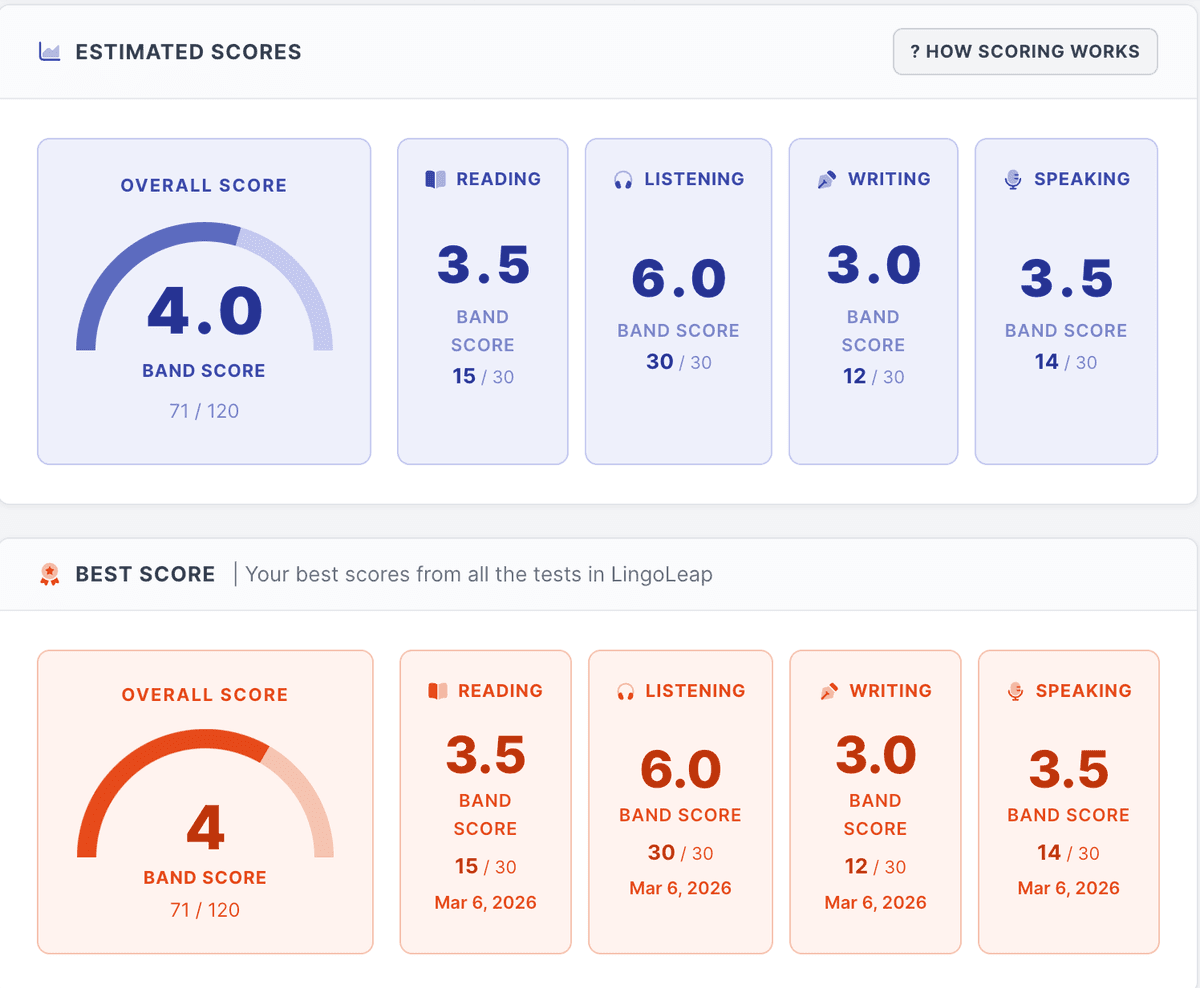 Score Report
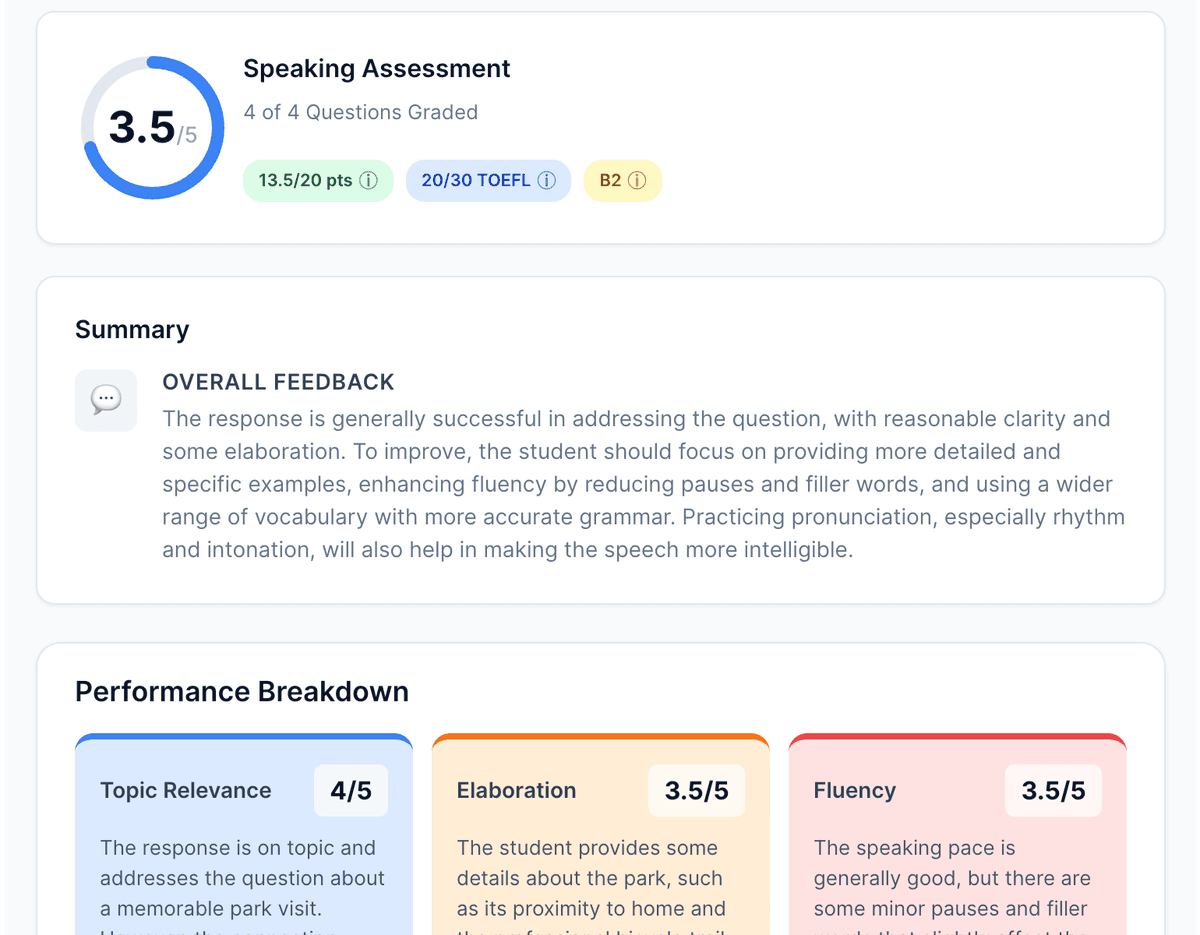 AI Speaking Score
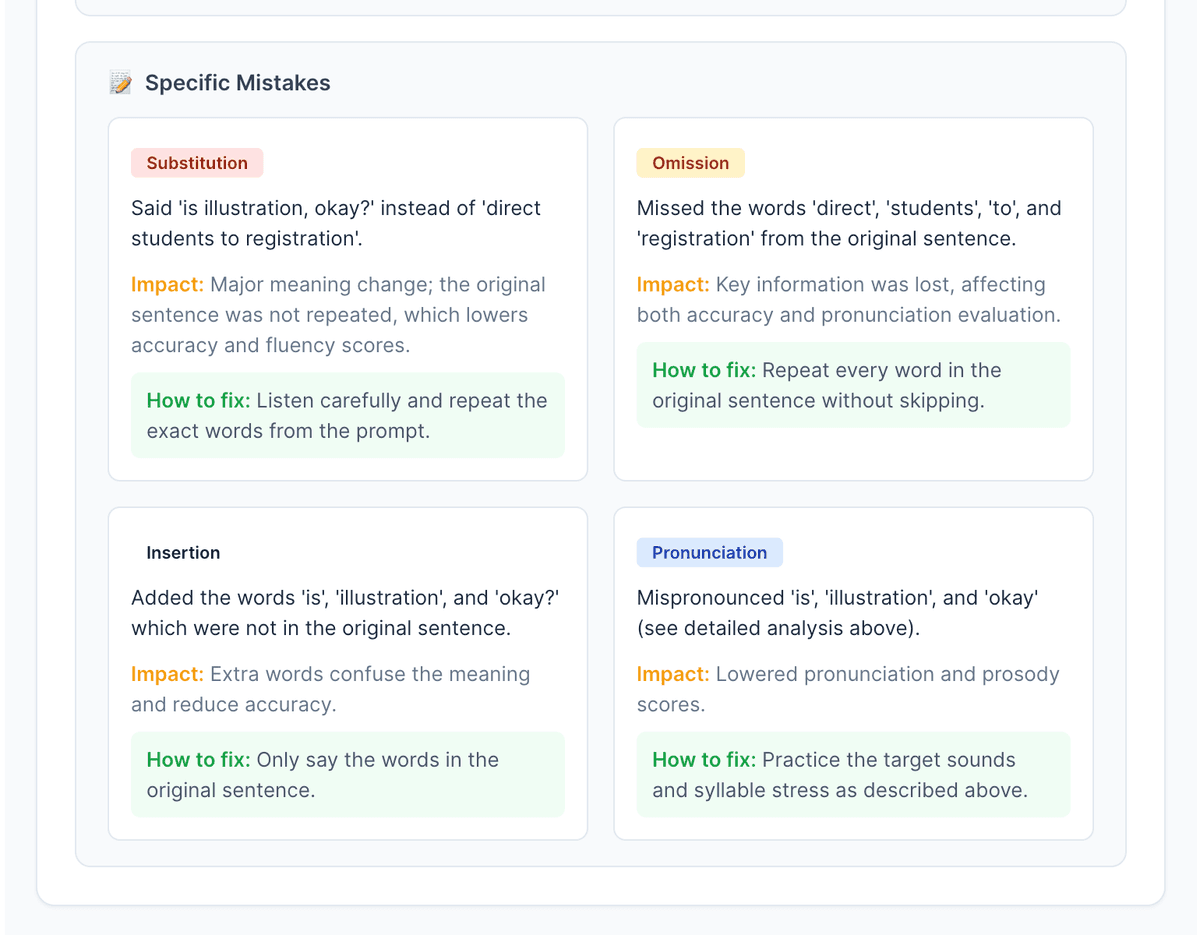 Mistake Analysis
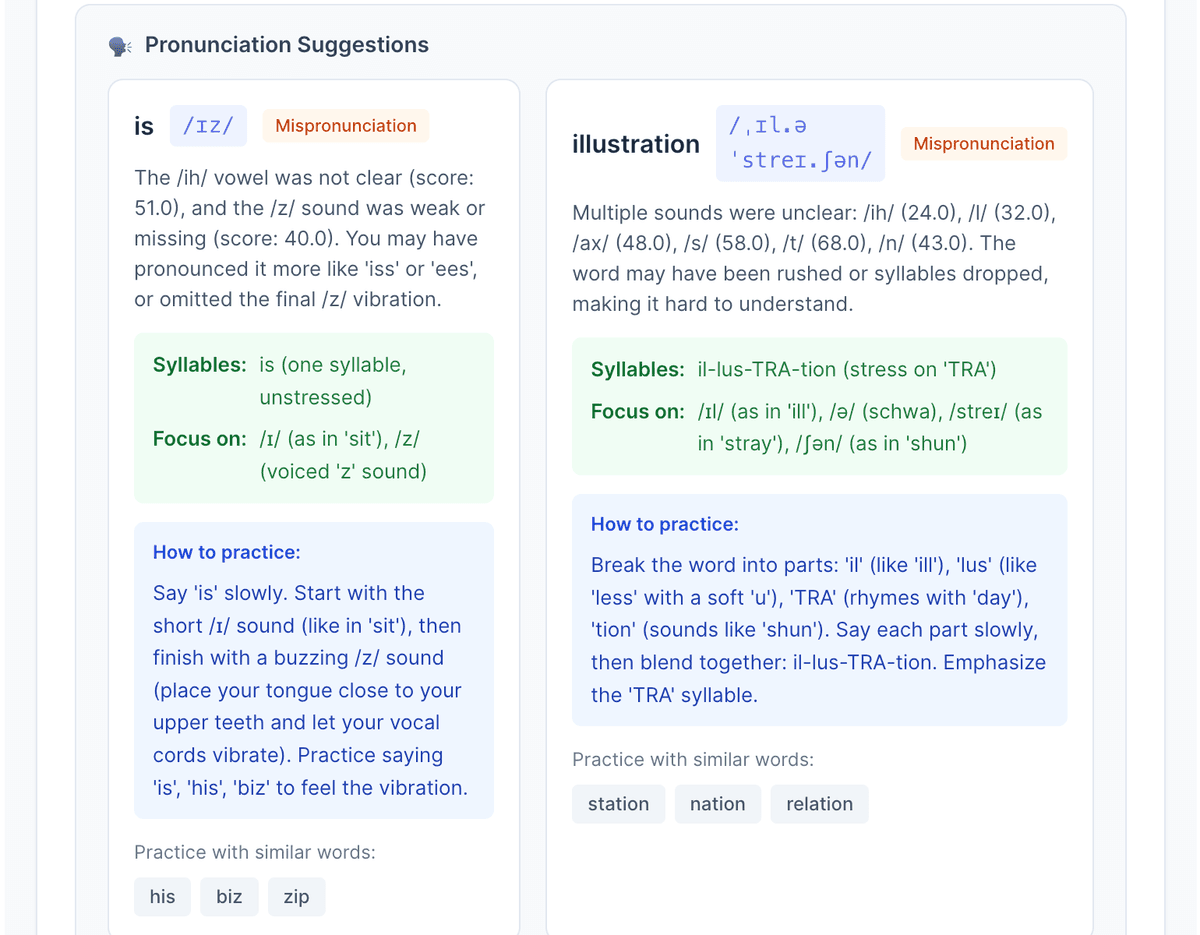 Pronunciation Feedback
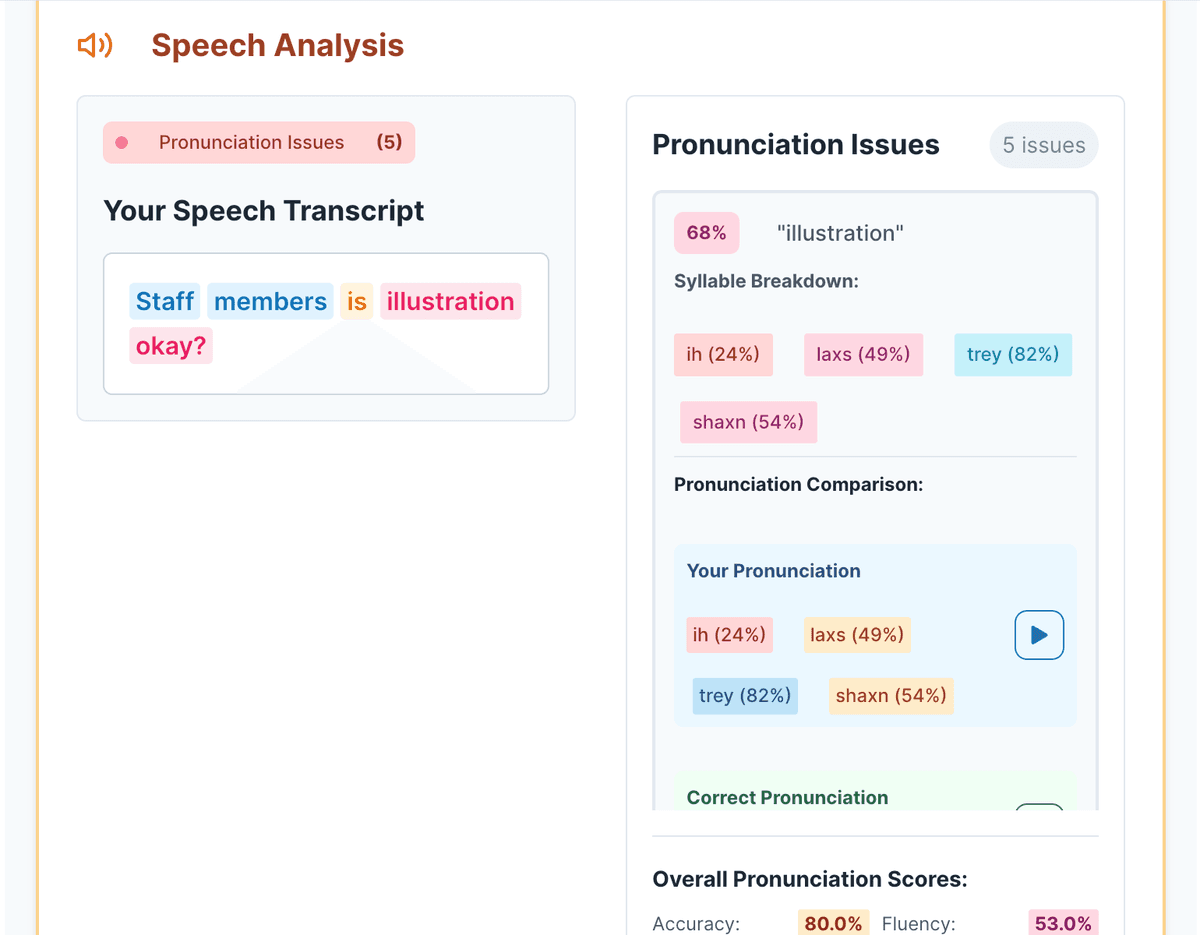 Speech Analysis
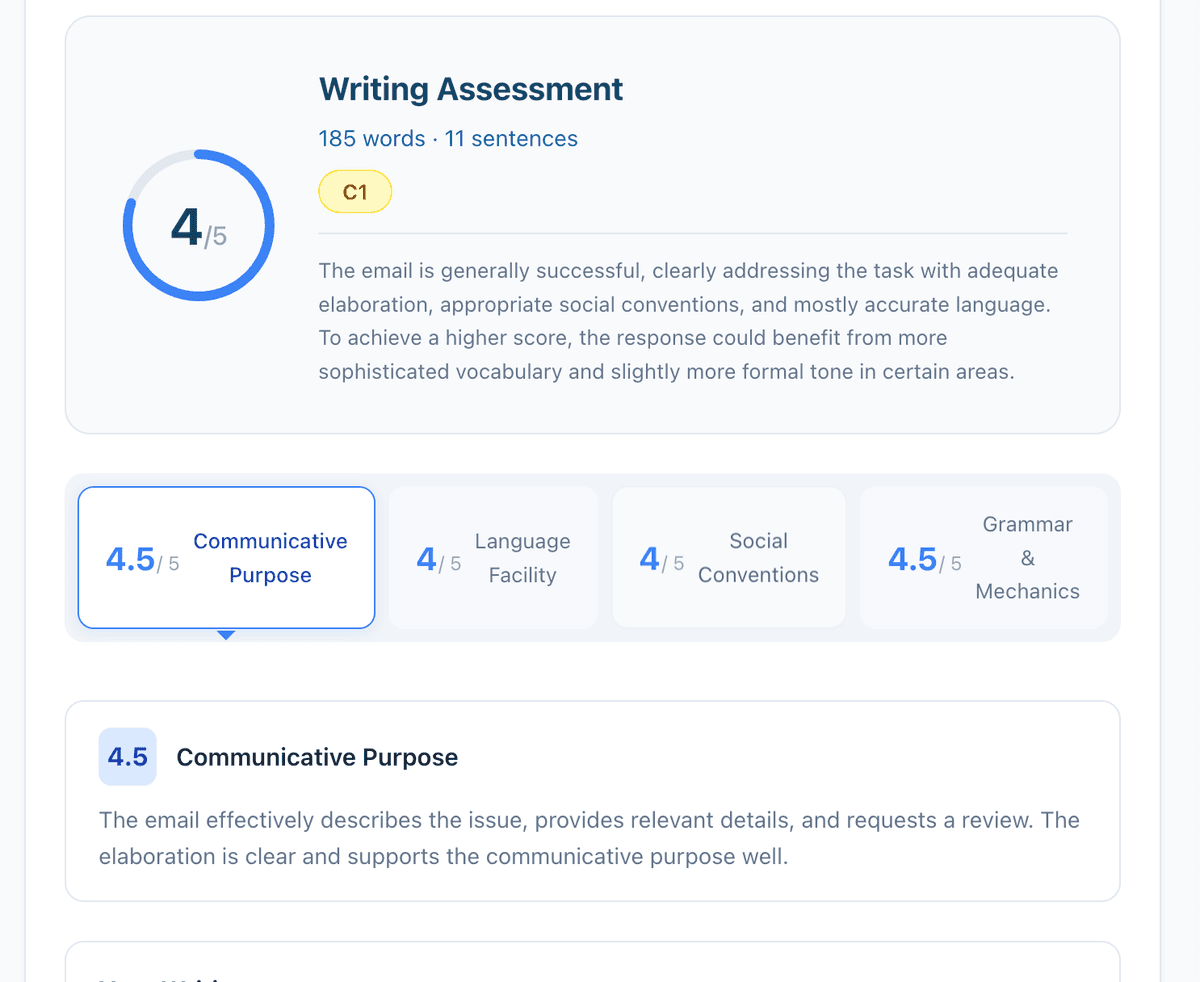 AI Writing Score
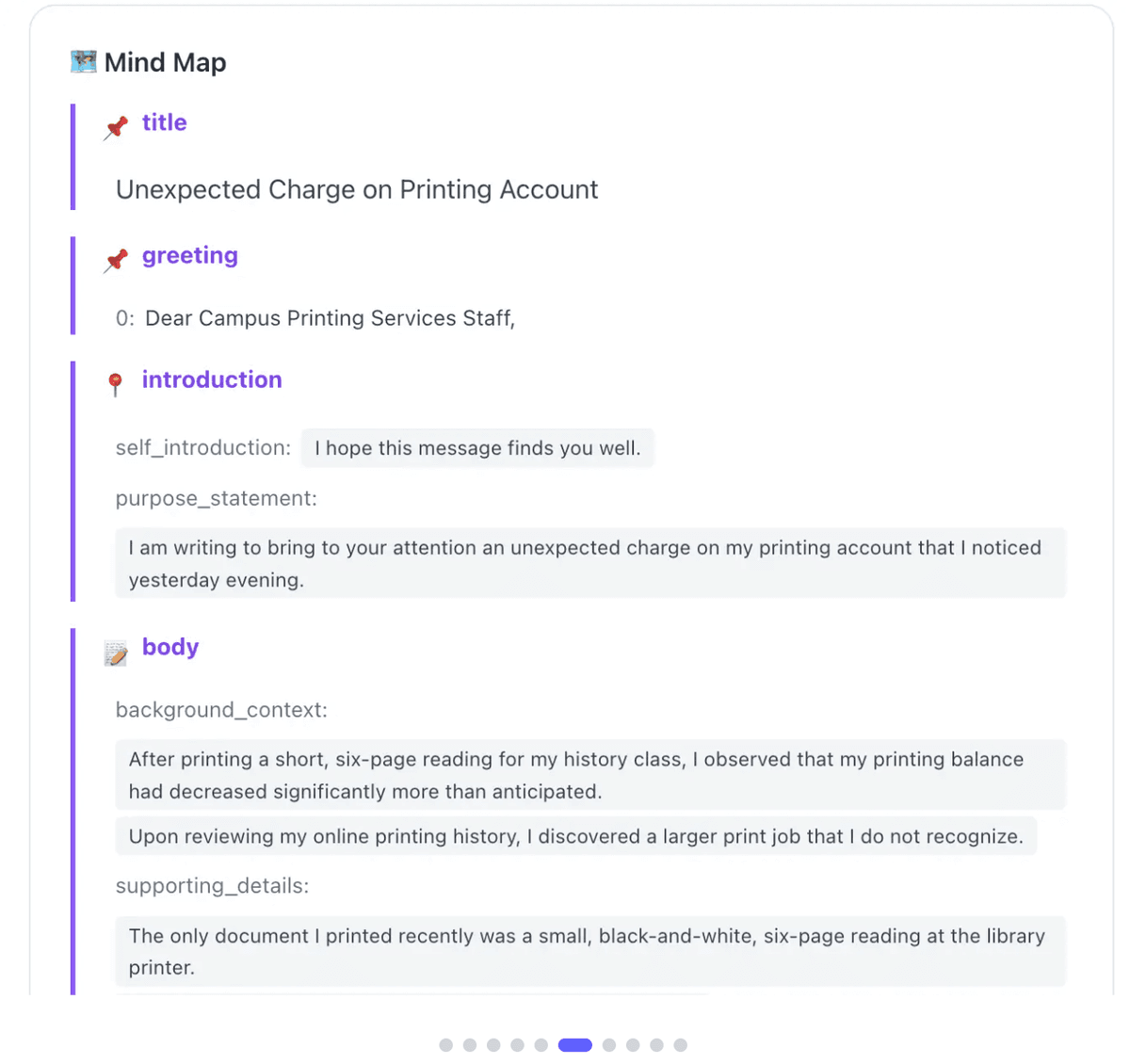 Article Structure Feedback
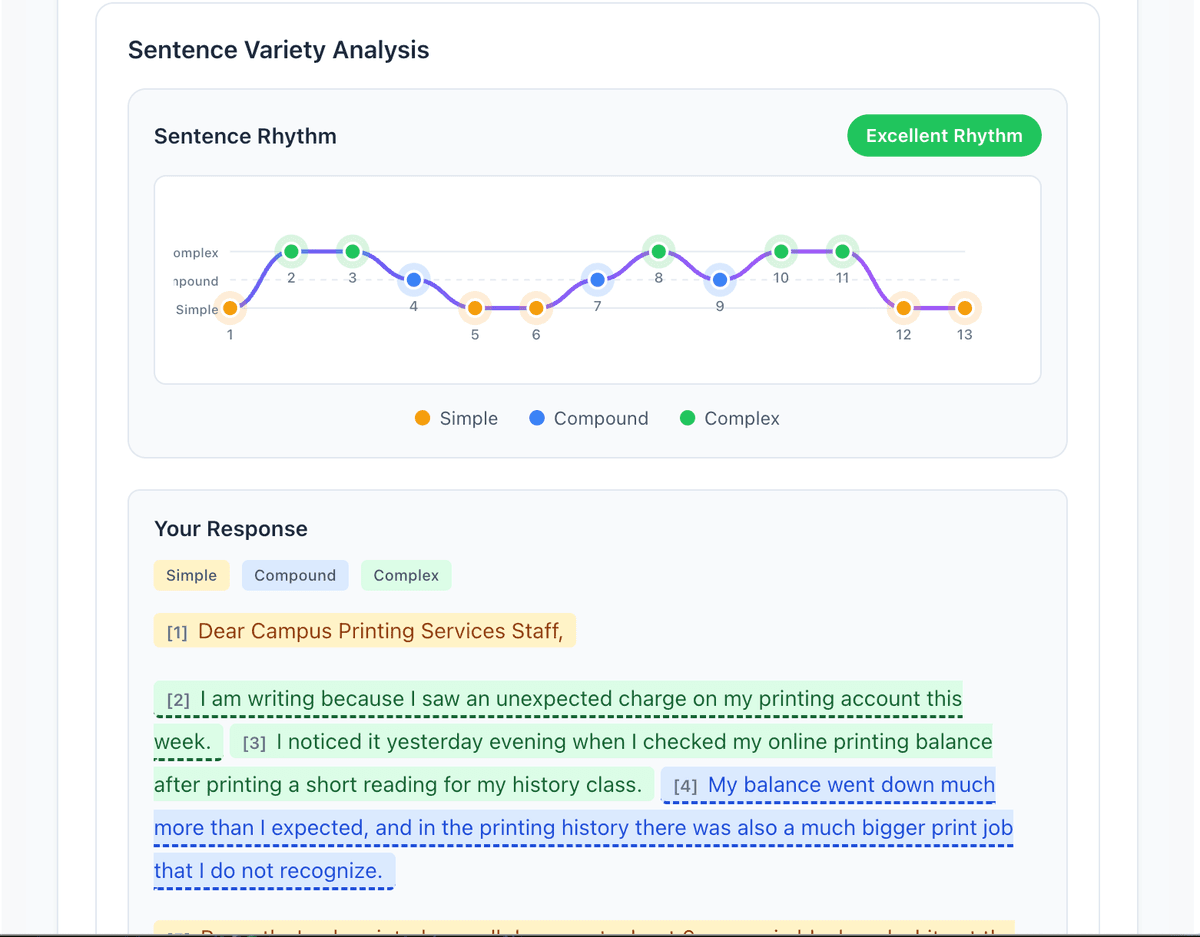 Sentence Variety
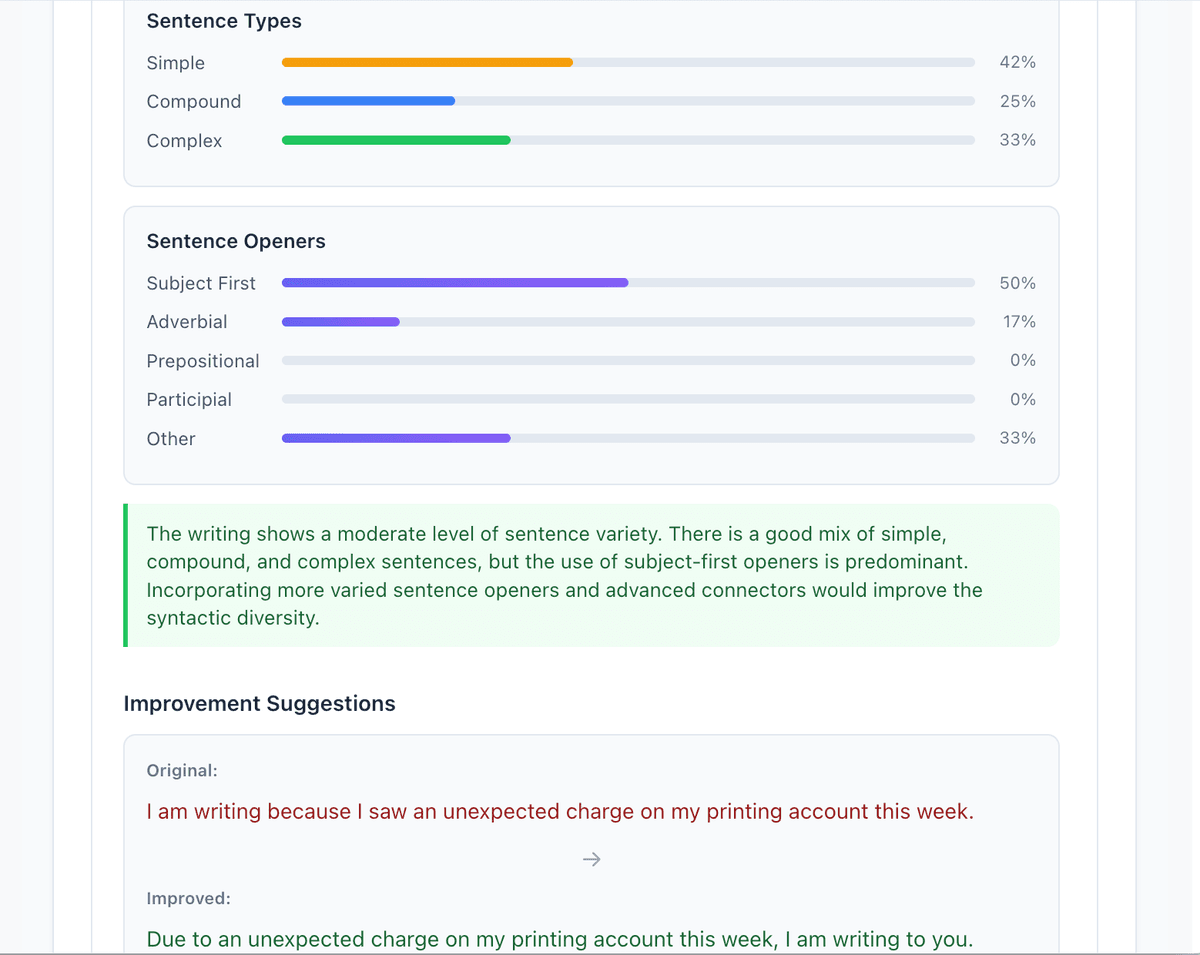 Improvement Suggestions
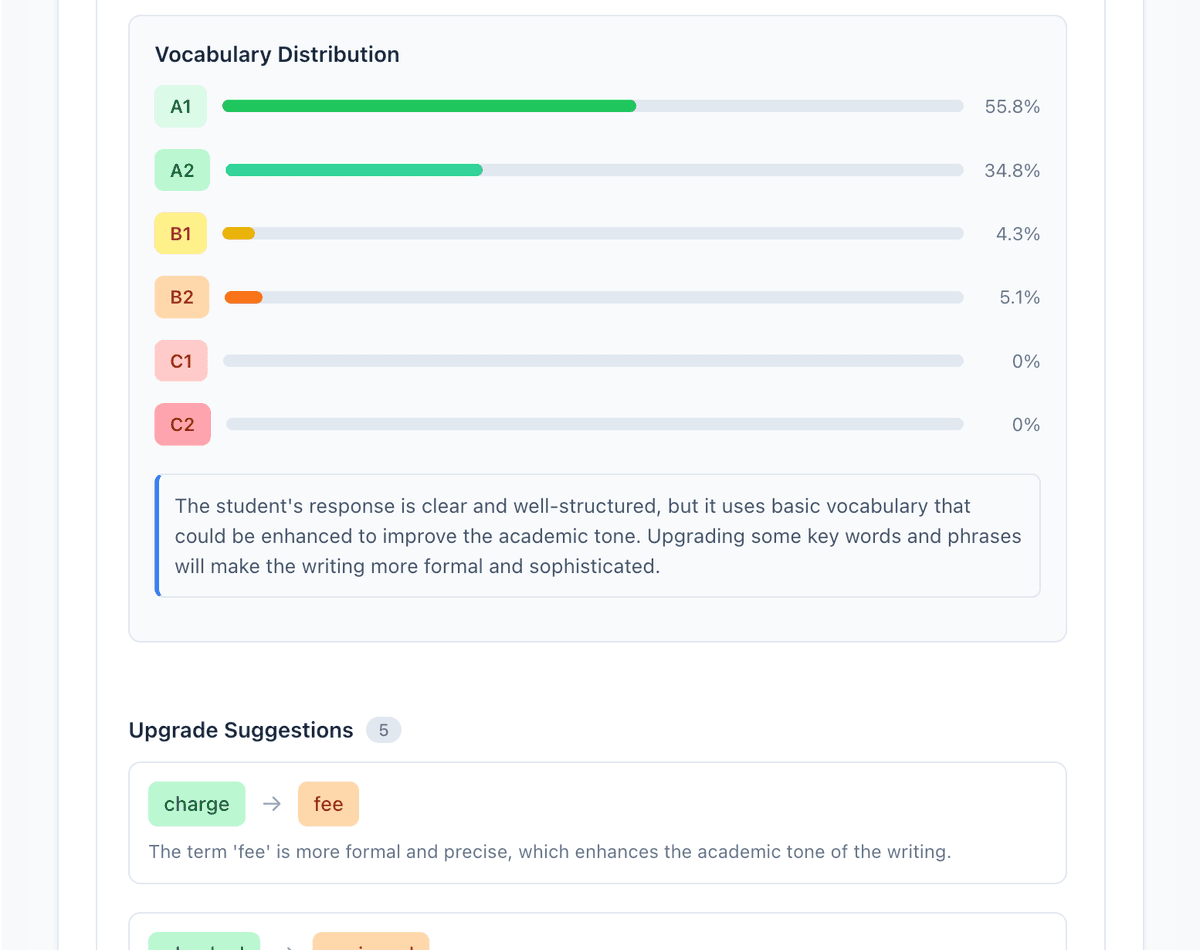 Vocabulary Feedback
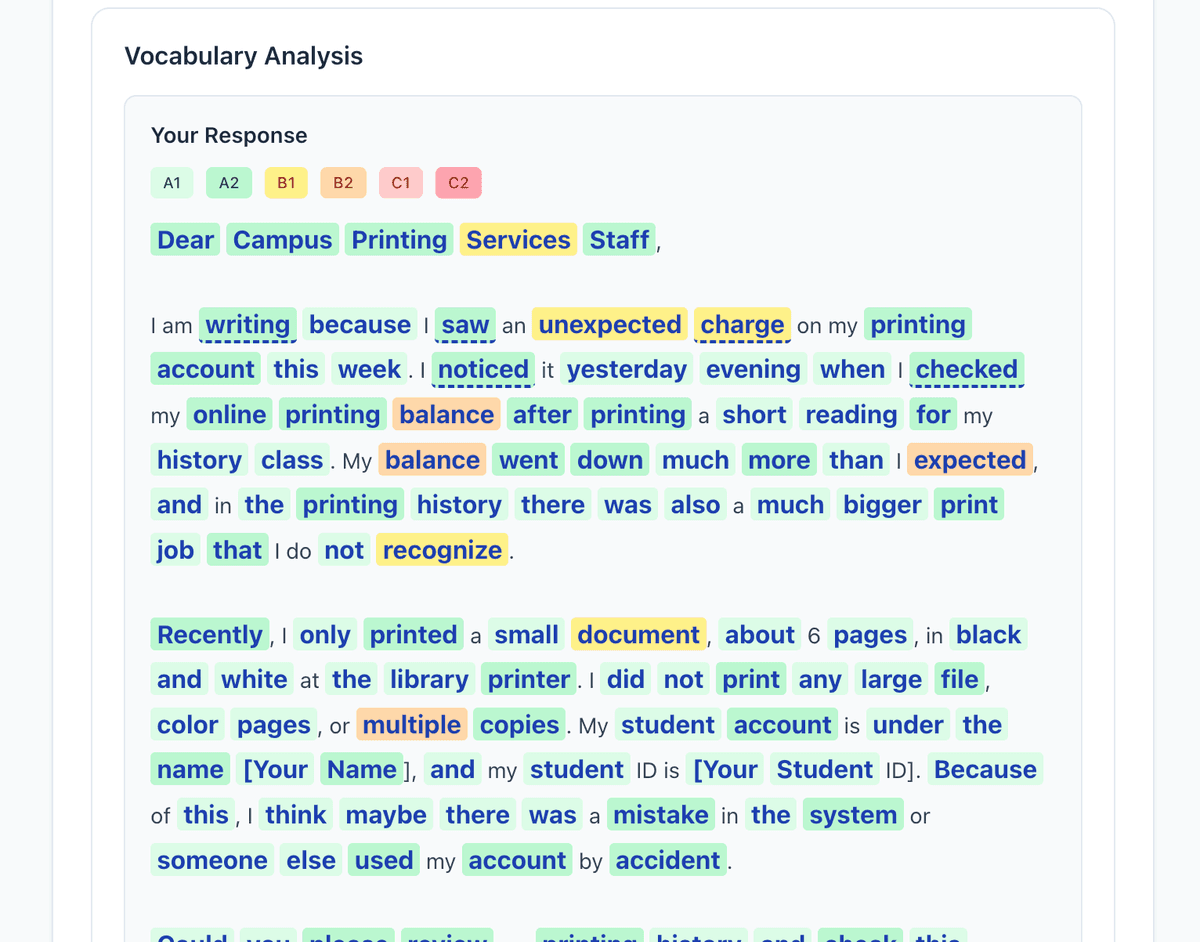 Vocabulary Analysis
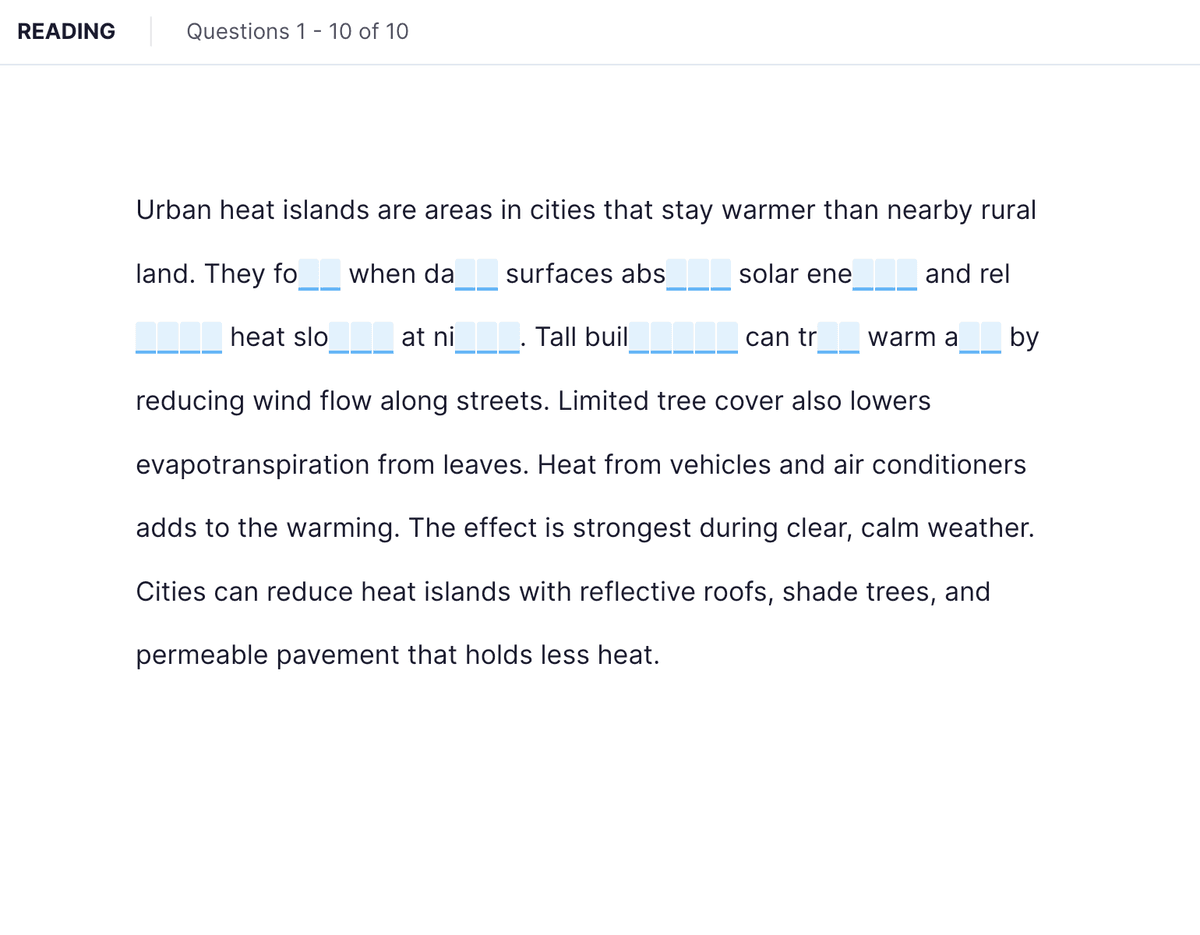 TOEFL 26 New: Reading
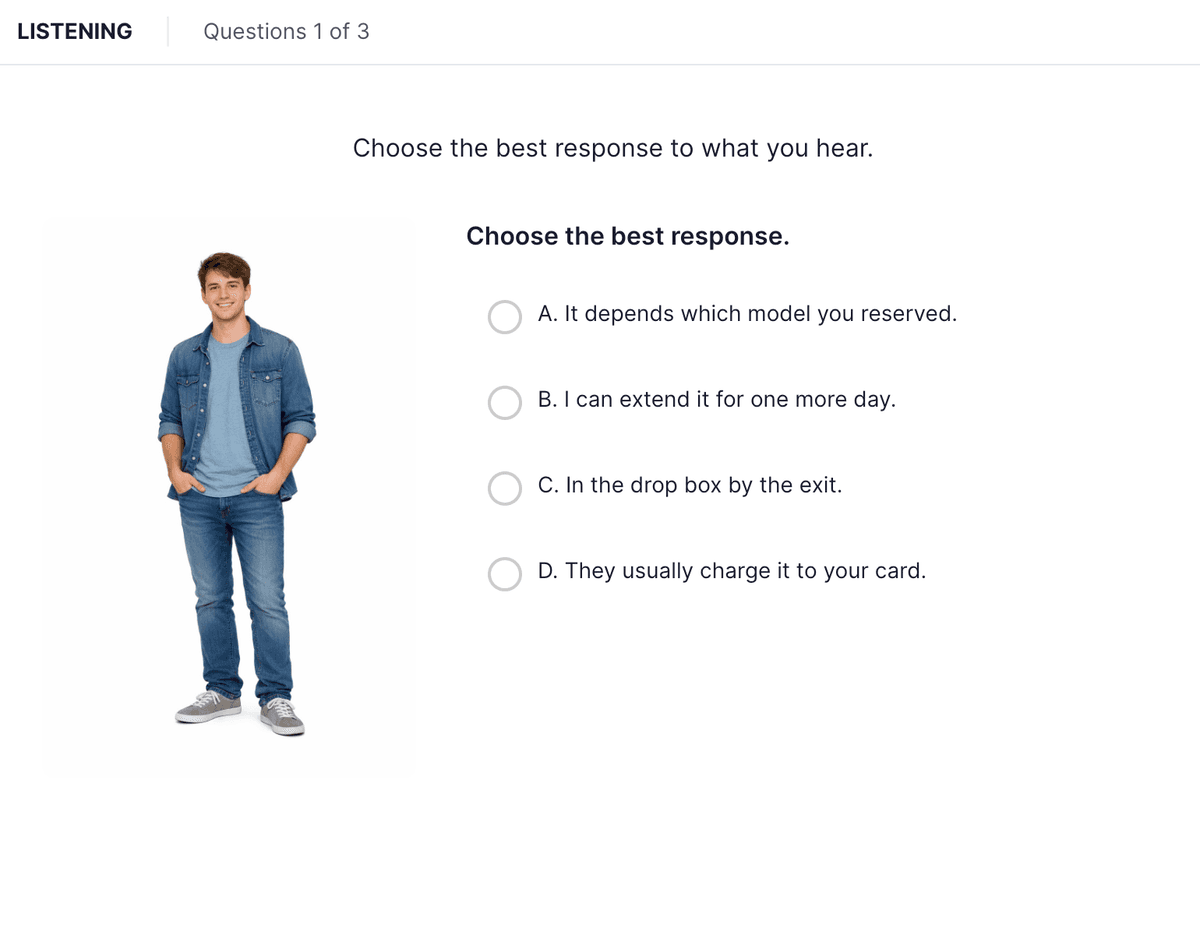 TOEFL 26 New: Listening
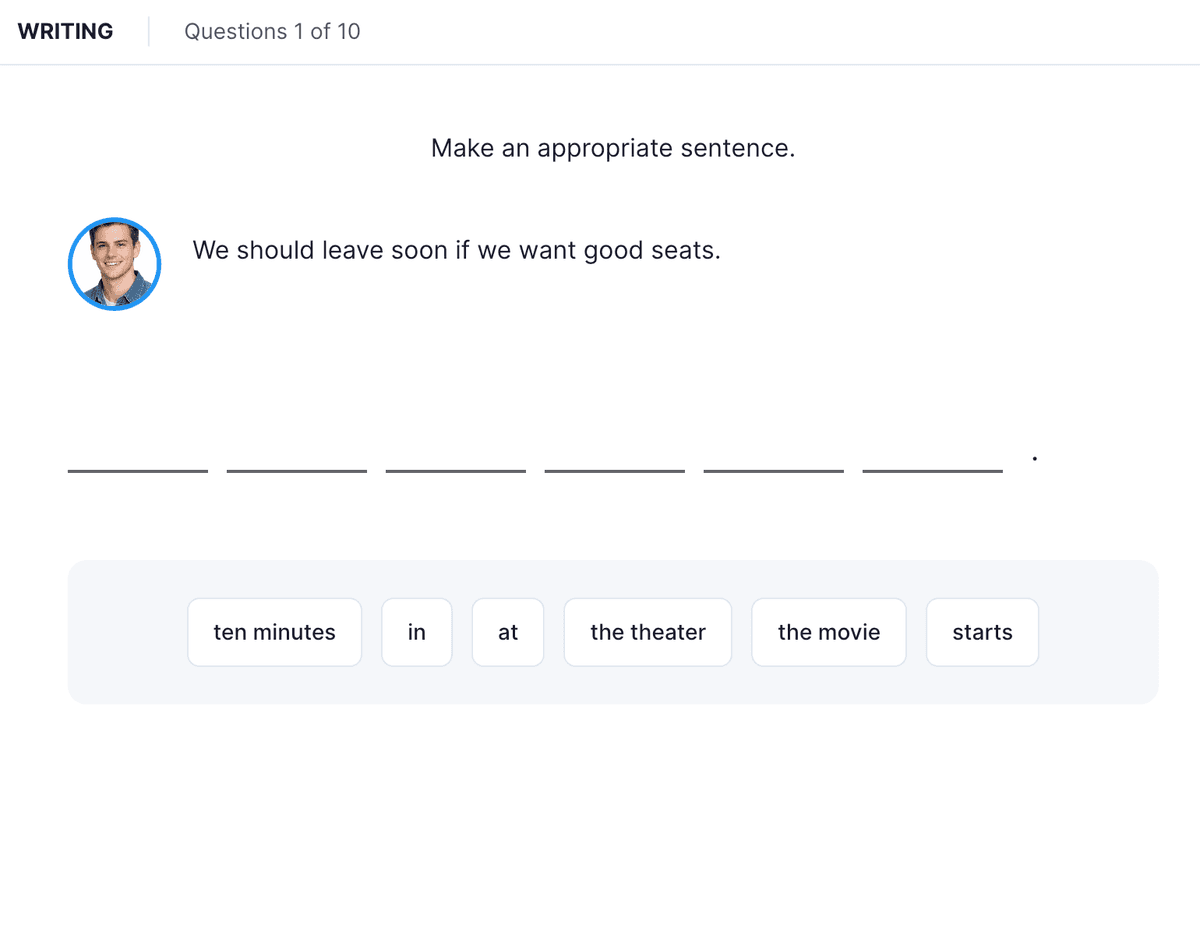 TOEFL 26 New: Writing
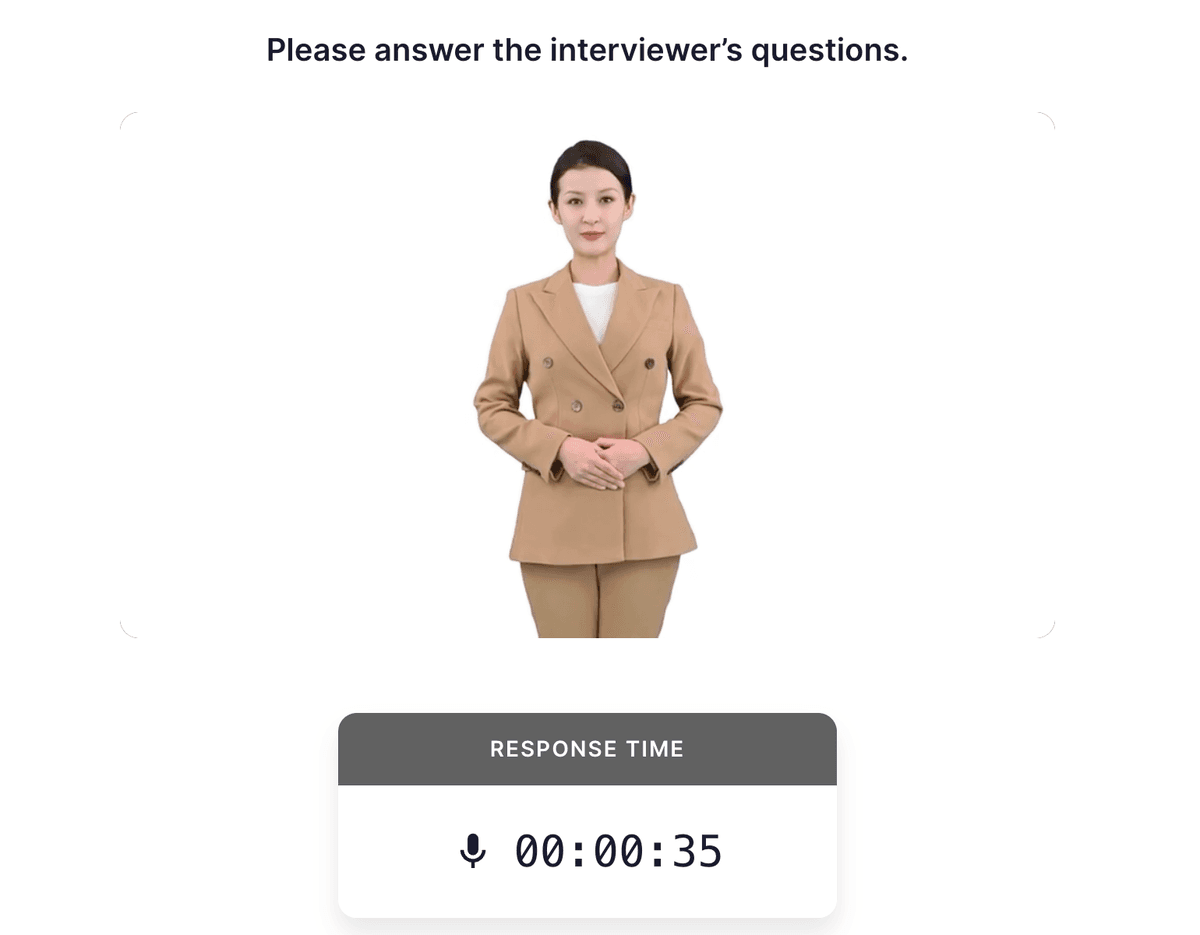 TOEFL 26 New: Speaking
TOEFL 26 模擬試験とは?
TOEFL 26 模擬試験は、2026年1月21日に開始された完全リニューアルされたTOEFL iBT形式に対応した練習テストです。
新TOEFLでは、リーディング・リスニング・ライティング・スピーキングの全4セクションにわたって10種類の新しいタスクタイプが導入され、リーディングとリスニングには多段階アダプティブテストが採用されました。さらに、CEFRに対応した新しい1〜6のスコアスケールが導入されています。
効果的な新TOEFL対策には、新しいテスト構成、全10種類のタスクタイプ、更新された採点システムを正確に反映した模擬試験が不可欠です。
LingoLeapは、本番のTOEFL 26試験体験を忠実に再現した模擬試験を提供しています。
新TOEFL 2026 テスト形式
TOEFL 2026テストは、リーディング・リスニング・ライティング・スピーキングの4セクションで構成されています。推定テスト時間は2時間以内です。テスト時間にはディレクション(説明)は含まれません。テストはアダプティブ方式のため、テスト時間や問題数は変動する場合があります。
Reading
約30分
約50問
2つのモジュールにわたる多段階アダプティブ方式
Listening
約29分
約47問
2つのモジュールにわたる多段階アダプティブ方式
Writing
約23分
12問
リニア形式 — 全受験者が同じタスクに解答
Speaking
約8分
11問
リニア形式 — 全受験者が同じタスクに解答
TOEFL 2026 全タスクタイプ一覧
Reading
- Complete the Words
- Read in Daily Life
- Read an Academic Passage
8つの設問形式:事実問題 & 否定事実問題、語彙問題、文選択問題、文の言い換え問題、参照問題、推論問題、修辞目的問題、挿入テキスト問題
Listening
- Listen and Choose a Response
- Listen to a Conversation
- Listen to an Announcement
- Listen to an Academic Talk
6つの設問形式:メインアイデア、事実問題、推論問題、目的問題、方法問題、態度問題
Writing
- Build a Sentence
- Write an Email
- Write for an Academic Discussion
リニア形式 — コミュニケーションの目的、構文、語彙の選択、社会的慣習、正確性の観点から採点
Speaking
- Listen and Repeat
- Take an Interview
リニア形式 — デリバリー(明瞭さ・流暢さ)、言語使用(文法・語彙)、内容の展開の観点から採点
リーディングとリスニングセクションでは、多段階アダプティブテストが採用されています。モジュール1での成績がモジュール2の難易度を決定します。これにより、受験者一人ひとりに最適化されたテスト体験が実現し、より効率的かつ正確に英語力を測定できます。
LingoLeap TOEFL 26 模擬試験が選ばれる理由
多くのTOEFL対策教材は、まだ旧形式に基づいています。LingoLeapはTOEFL 2026の新形式に特化して作られています。
 TOEFL 2026の公式タスクタイプ全10種類を網羅したフルレングス模擬試験
- 本番と同じ多段階アダプティブ方式のリーディング・リスニング
- ETS公式採点基準に準拠したAIスピーキング&ライティング採点
- 最大規模のTOEFL 26模擬試験ライブラリ
多くの教材は旧TOEFLの対策用です。LingoLeapは新TOEFLに完全対応しています。
TOEFL 2026 全タスクタイプ完全カバー
LingoLeapのTOEFL 26模擬試験は、4セクション全10種類の公式タスクタイプを、本番の試験と同じ形式で完全網羅しています。
Reading
- Complete the Words
短い学術パラグラフ内の欠落した語句を再構成する
- Read in Daily Life
メール、掲示、SNS投稿など日常的なテキストを読解する
- Read an Academic Passage
短い学術的文章(約200語)を読み、5問の設問に解答する
Listening
- Listen and Choose a Response
短い質問や発言を聞き、4つの選択肢から最も適切な応答を選ぶ
- Listen to a Conversation
2人の話者によるキャンパスでの短い会話を聞き、設問に解答する
- Listen to an Announcement
授業中やキャンパスイベントのアナウンスを聞き、設問に解答する
- Listen to an Academic Talk
様々な学術分野に関する短い講義を聞き、設問に解答する
Writing
- Build a Sentence
短い対話文の中で、単語やフレーズを並べ替えて文を完成させる
- Write an Email
推薦、招待、提案など特定の目的に沿ったメールを作成する
- Write for an Academic Discussion
教授の投稿と2名の学生の回答を読み、自分の意見を100語以上で記述する
Speaking
- Listen and Repeat
長さと複雑さが段階的に増す7つの文を聞き取り、正確に繰り返す
- Take an Interview
学術的な会話を模したインタビューで4つの質問に回答する(各45秒)
多段階アダプティブテスト — 本番TOEFL 2026と同じ仕組み
LingoLeapの模擬試験は、本番のTOEFLと同じ多段階アダプティブ構造を再現しています。モジュール1での成績がモジュール2の難易度を決定し、実際の試験と同じ体験ができます。
本番さながらのテスト進行
実際のTOEFL 2026と同じアダプティブフロー — モジュール1の成績がモジュール2の難易度を決定
複数レベルでの練習
易しいモジュールと難しいモジュールの両方で練習し、あらゆるレベルでの自信と正確性を向上
真のパフォーマンス分析
アダプティブ採点ロジックと素点からスケールドスコアへの変換に基づき、実際のスコアポテンシャルを把握
スピーキング&ライティング AI採点
ETS公式採点基準に準拠したAIが、スピーキング・ライティングの全回答を即座に詳細評価します。各回答は0〜5の総合スコアで採点されます。
スピーキング評価
Listen and Repeat
- リピート正確性
- 明瞭性(インテリジビリティ)
- 発音
Take an Interview
- デリバリー(明瞭さ、流暢さ、発音、イントネーション)
- 言語使用(文法・語彙の幅と正確性)
- 内容の展開(トピックに沿った論拠のある意見)
ライティング評価
Write an Email
- コミュニケーションの目的に沿った内容展開
- 構文の多様性と的確な慣用的語彙選択
- 適切な社会的慣習(丁寧さ、レジスター、フォーマリティ)
- 語彙と文法の正確性
Write for an Academic Discussion
- 関連性のある十分に展開された説明と具体例
- 多様な構文構造と的確な慣用的語彙選択
- 語彙と文法の正確性
Try TOEFL Practice Test Questions Now
Warm up with these free sample questions modeled on the 2026 TOEFL iBT — one from each section. Reveal the answer and explanation, then start a full-length practice test when you are ready.
Read the short academic passage, then answer the question.
Bioluminescence — the production of light by living organisms — is common in the deep ocean, where sunlight never reaches. Many creatures use it to attract prey, confuse predators, or signal to potential mates. The light is produced by a chemical reaction between a molecule called luciferin and the enzyme luciferase. Because the reaction gives off almost no heat, scientists describe the light as "cold light."
According to the passage, why is bioluminescent light described as "cold light"?
- AIt is only found in cold, deep water.
- BThe chemical reaction releases very little heat.
- CIt appears blue rather than red or orange.
- DIt is produced only at night.
▸Show answer & explanation
Answer: B — The chemical reaction releases very little heat.
The final sentence states the reaction "gives off almost no heat," which is why it is called cold light. Option A confuses where the organisms live with why the light is cold; C and D add details the passage never mentions. Factual questions like this reward locating the exact supporting sentence rather than relying on outside knowledge.
Type the missing letters to complete the word so the sentence makes sense.
Regular exercise can signi______ reduce the risk of heart disease.
▸Show answer & explanation
Answer: significantly
"Complete the Words" gives you the first letters and the length of a word and asks you to finish it from context. Here the sentence needs an adverb describing how much exercise reduces risk — "significantly." Read the whole sentence first, decide the part of speech, then fit a word that starts with the letters shown.
On the real test you would hear this talk once. Read the transcript excerpt, then answer.
Professor: "So when we talk about the 'urban heat island' effect, we mean that cities tend to be several degrees warmer than the countryside around them. The main reason is surface material. Asphalt and concrete absorb heat during the day and release it slowly at night — unlike soil and vegetation, which cool down much faster. That's why a city can still feel warm hours after sunset."
What is the main cause of the urban heat island effect, according to the professor?
- ACities are located in naturally warmer regions.
- BBuildings block cooling wind from reaching streets.
- CPaved surfaces absorb and slowly release heat.
- DThere are more people generating body heat.
▸Show answer & explanation
Answer: C — Paved surfaces absorb and slowly release heat.
The professor names surface material — asphalt and concrete absorbing heat and releasing it slowly — as "the main reason." The other options are plausible-sounding distractors the talk never states. In the Listening section, note the speaker's signal phrases ("the main reason is…") to catch the point being tested.
Put the words and phrases in the correct order to form a grammatical sentence.
[ the deadline / because / the library / she / was approaching / stayed late at ]
▸Show answer & explanation
Answer: She stayed late at the library because the deadline was approaching.
"Build a Sentence" tests control of English word order and clause structure. Start with the subject ("She"), add the main verb phrase ("stayed late at the library"), then attach the reason clause introduced by "because." Checking that subject, verb, and connector line up is usually enough to place every chunk.
You have 45 seconds to answer. There is no single correct response — a strong answer is clear, on-topic, and supported with a reason or example.
Some students prefer to study in the morning, while others prefer the evening. Which do you prefer, and why?
▸Show answer & explanation
Answer: Sample strong response (outline)
Take a clear position, give one reason, and support it with a specific example: "I prefer studying in the morning because my mind is freshest right after I wake up. For instance, I can read a difficult chapter in thirty minutes in the morning, but the same chapter takes me an hour at night when I'm tired." Scoring rewards delivery (clear, fluent speech), language use (accurate grammar and vocabulary), and elaboration (a developed, on-topic idea) — so commit to one answer and develop it rather than listing both options.
These are original Lingoleap practice items built to mirror the 2026 TOEFL iBT task types. They are for practice only and are not real ETS test questions; Lingoleap is independent of and not endorsed by ETS.
Practice TOEFL by Section
A full-length mock test measures readiness, but targeted section practice is how you fix specific weaknesses. Drill any of the four sections and all 10 task types below.
Reading
Adaptive passages and the three 2026 reading task types.
Listening
Conversations, announcements, and academic talks with adaptive difficulty.
Speaking
Listen and Repeat plus the academic interview, with AI delivery feedback.
Writing
Build a Sentence, Write an Email, and Write for an Academic Discussion.
100+セットのTOEFL 26 模擬試験 — 毎月更新
最大規模のTOEFL 2026模擬試験ライブラリにアクセスできます。毎月新しいテストが追加され、常に最新の教材で継続的に練習が可能です。
- 100+セットのフルレングスTOEFL 26模擬試験
- すべてのテストが最新のTOEFL 2026形式・タスクタイプに完全対応
- 毎月新しいテストを追加
- 4セクション・全10タスクタイプを完全カバー
- Covers all 4 sections and 10 task types
TOEFL 26 模擬試験の始め方
アカウントを作成
LingoLeapに無料登録
模擬試験を選択
100+セットのフルレングスTOEFL 26模擬試験から選択
練習を開始
本番と同じ試験条件でテストを受験
スコアとフィードバックを確認
AI採点による即座のスコアと詳細なパフォーマンス分析を受け取る
よくある質問
TOEFL 26 模擬試験に関するよくある質問と回答
TOEFL 2026形式はこれまでと何が違いますか?
TOEFL 2026は2026年1月21日に開始された完全リニューアル版テストです。リーディングとリスニングにはモジュール1の成績がモジュール2の難易度を決定する多段階アダプティブテストが導入されました。ライティングとスピーキングはリニア形式(全受験者が同じタスク)です。全10種類の新しいタスクタイプが採用され、CEFRに対応した新しい1〜6のスコアスケールが導入されています。テスト時間は2時間以内です。
新TOEFL 2026にはいくつのタスクタイプがありますか?
新TOEFL 2026には4セクションにわたって10種類のタスクタイプがあります。リーディング3種類(Complete the Words、Read in Daily Life、Read an Academic Passage)、リスニング4種類(Listen and Choose a Response、Listen to a Conversation、Listen to an Announcement、Listen to an Academic Talk)、ライティング3種類(Build a Sentence、Write an Email、Write for an Academic Discussion)、スピーキング2種類(Listen and Repeat、Take an Interview)です。
LingoLeapのTOEFL 26模擬試験は何セットありますか?
LingoLeapでは現在100+セットのフルレングスTOEFL 26模擬試験を提供しており、毎月新しいテストが追加されます。各テストは4セクションすべてをカバーし、TOEFL 2026形式の公式タスクタイプをすべて含んでいます。
LingoLeapは多段階アダプティブテストに対応していますか?
はい。LingoLeapは、TOEFL 2026のリーディング・リスニングセクションで採用されている多段階アダプティブテスト構造を再現する数少ないプラットフォームのひとつです。モジュール1での成績がモジュール2の難易度に反映され、本番と同じ体験で練習できます。
スピーキングとライティングのAI採点はどのように機能しますか?
LingoLeapのAIは、ETS公式採点基準に準拠した評価基準で回答を採点します(各問0〜5の総合スコア)。スピーキングでは、Listen and Repeatはリピート正確性・明瞭性・発音で評価されます。Take an Interviewはデリバリー(明瞭さ・流暢さ・ペース)、言語使用(文法・語彙)、内容の展開(トピックとの関連性・論拠)で評価されます。ライティングでは、Write an Emailはコミュニケーションの目的・構文の多様性と慣用的語彙選択・社会的慣習(丁寧さ・レジスター)・語彙と文法の正確性で評価されます。Write for an Academic Discussionは関連性と内容展開・構文構造と語彙選択・語彙と文法の正確性で評価されます。
LingoLeapの模擬試験は本番のTOEFLと同じですか?
LingoLeapの模擬試験は、新しいタスクタイプ、多段階アダプティブテスト、試験時間を含め、本番のTOEFL 2026体験を忠実に再現するように設計されています。公式試験と全く同じではありませんが、LingoLeapは現在利用可能なTOEFL 2026練習体験の中で最もリアルなもののひとつです。
フルテストではなく、個別セクションだけを練習できますか?
はい。フルレングスの模擬試験に加えて、LingoLeapではリーディング・リスニング・スピーキング・ライティングの個別セクションを単独で練習できます。苦手なセクションに集中して取り組むことが可能です。
How accurate are Lingoleap's mock test score estimates?
Across 5,000+ paired records comparing a Lingoleap mock-test score estimate with the same learner's official TOEFL score, the mean absolute score difference is within 0.5 points on the TOEFL 1–6 scale. Score estimates are typically available within 1–2 minutes after submission. These are practice score estimates only — official TOEFL scores are issued exclusively by ETS, and Lingoleap is independent of and not endorsed by ETS. See verified student score-improvement stories at lingoleap.ai/toefl/success-stories.
How much does a full mock test cost?
A full mock test costs 800 credits and includes AI scoring for Reading, Listening, Speaking, and Writing with a complete score report. New accounts start with 200 free AI-feedback credits, and Reading and Listening practice never costs credits.