Tes Simulasi TOEFL 26
Latihan Format Baru TOEFL 2026
Tes simulasi TOEFL 26 lengkap dengan Reading & Listening adaptif, semua tipe soal terbaru, serta penilaian AI untuk Speaking dan Writing.
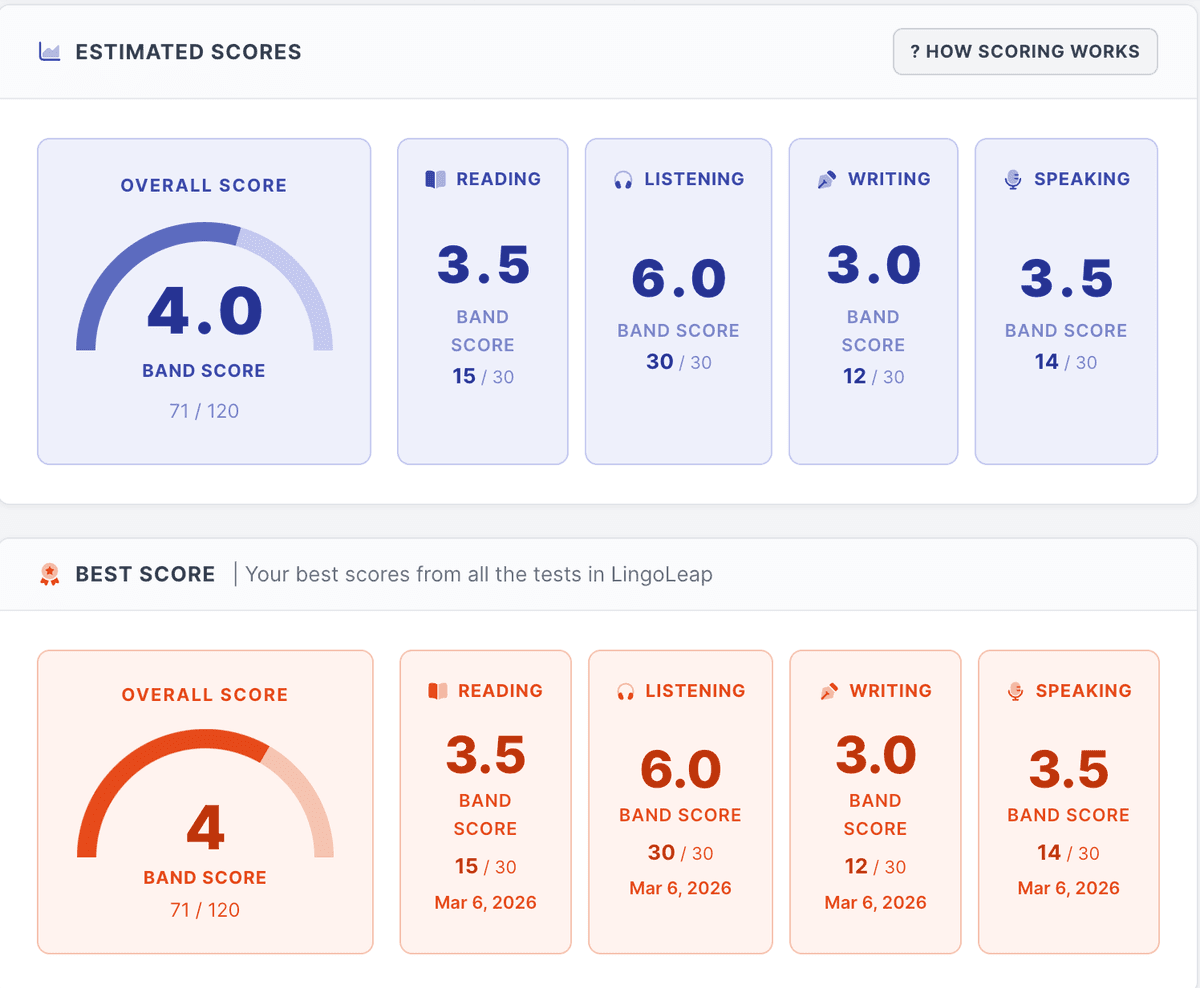 Score Report
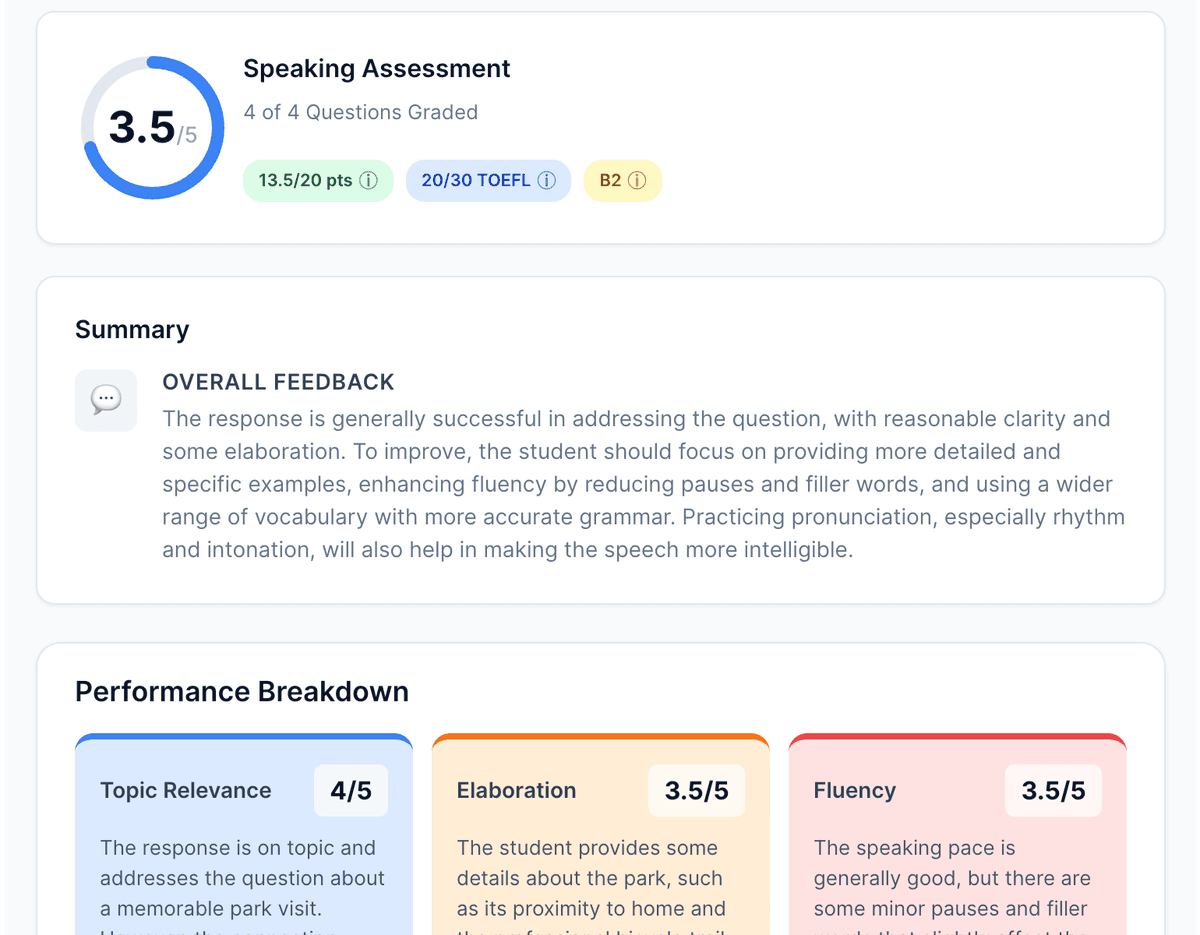 AI Speaking Score
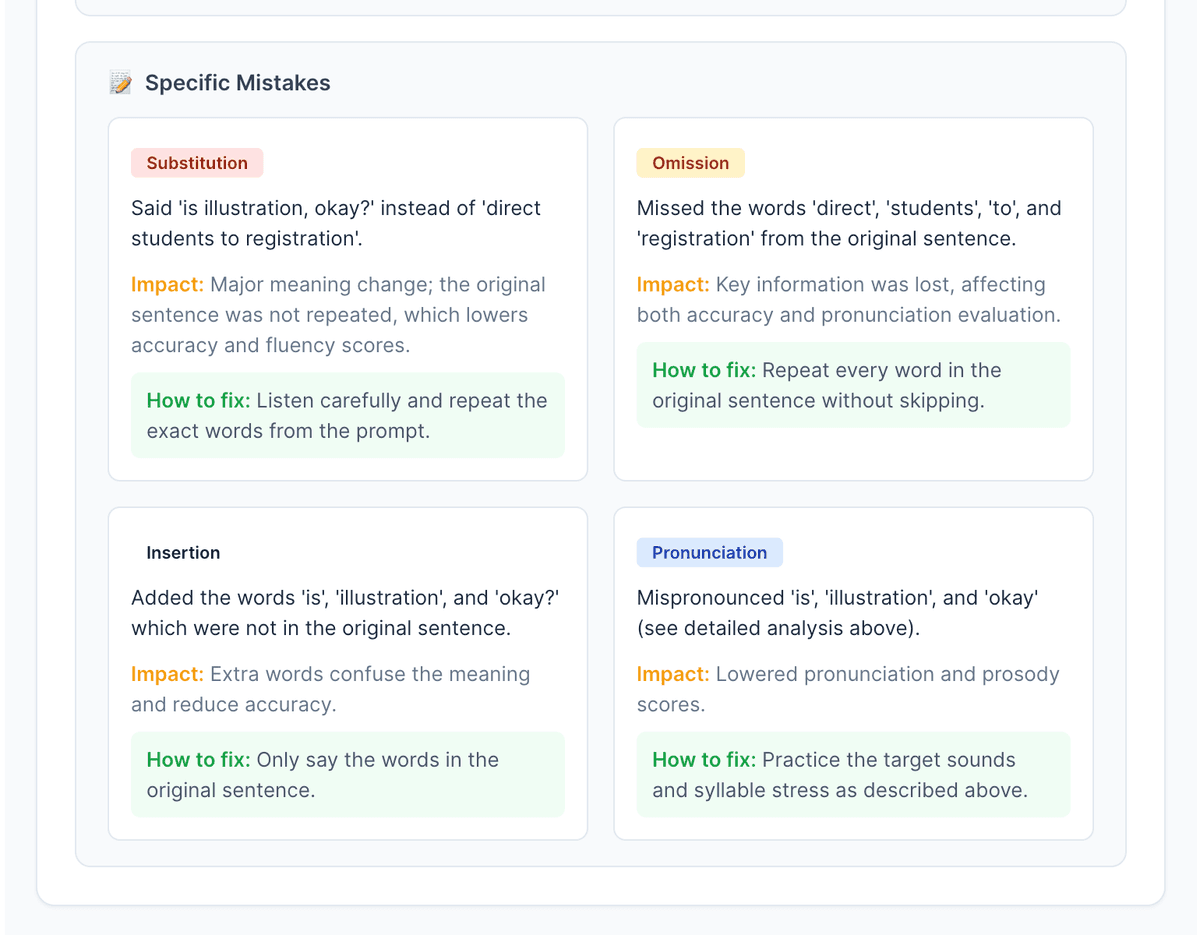 Mistake Analysis
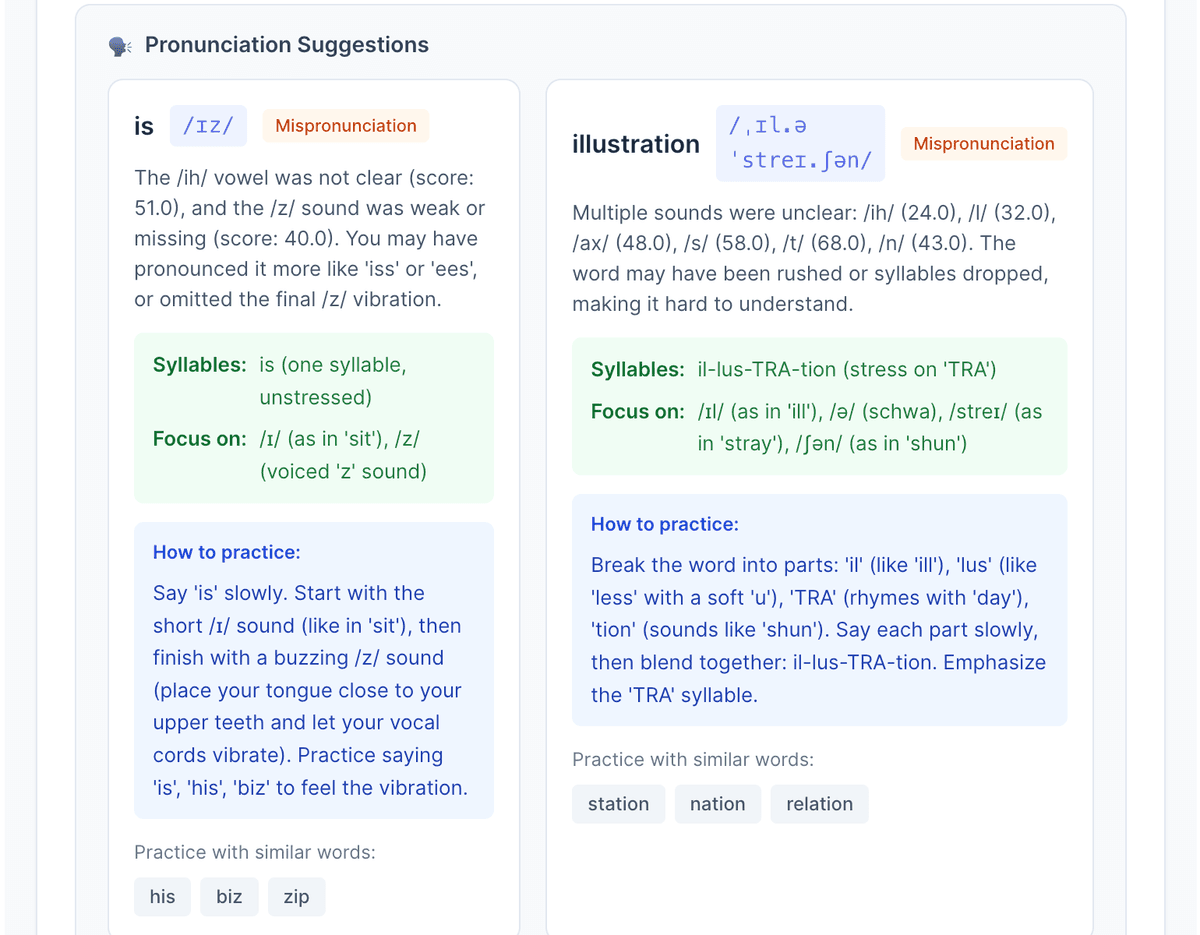 Pronunciation Feedback
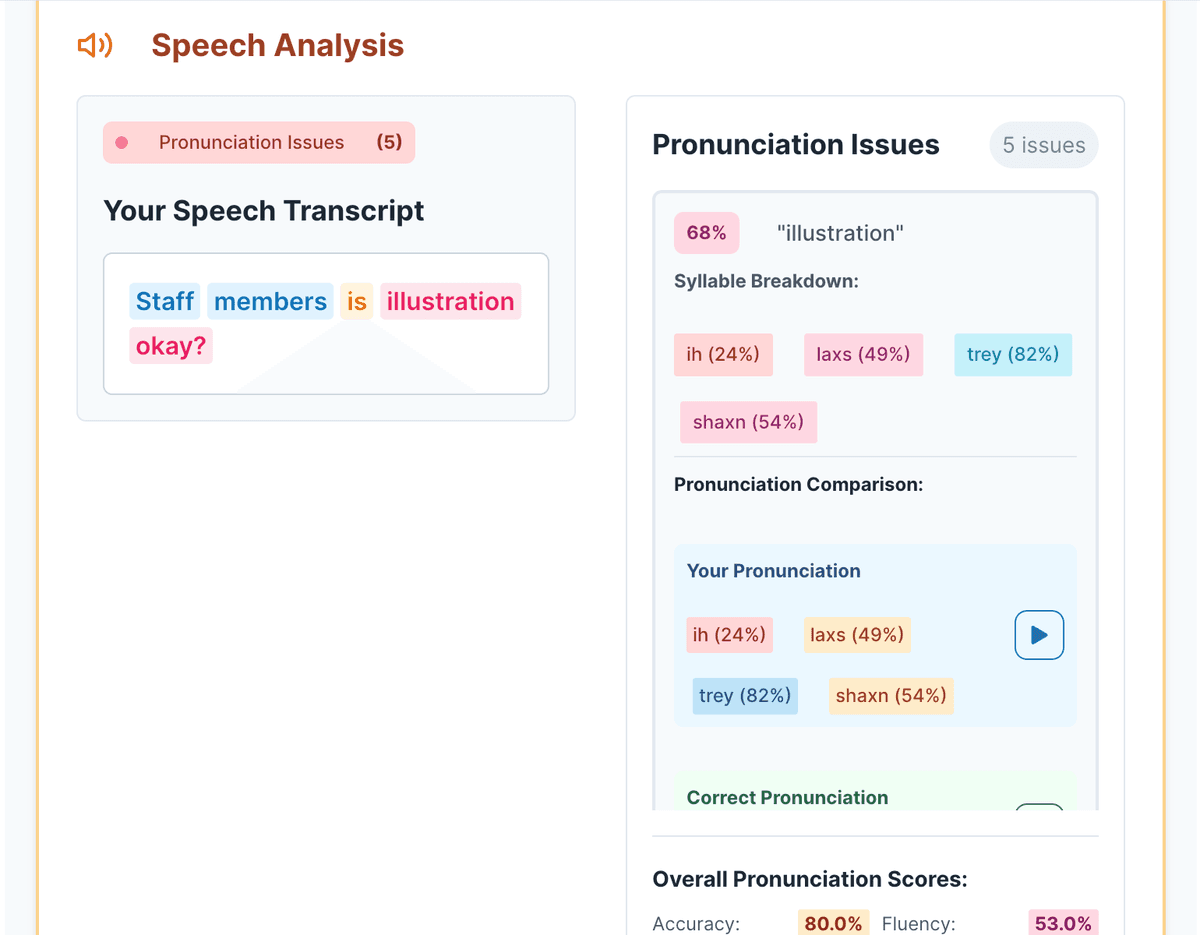 Speech Analysis
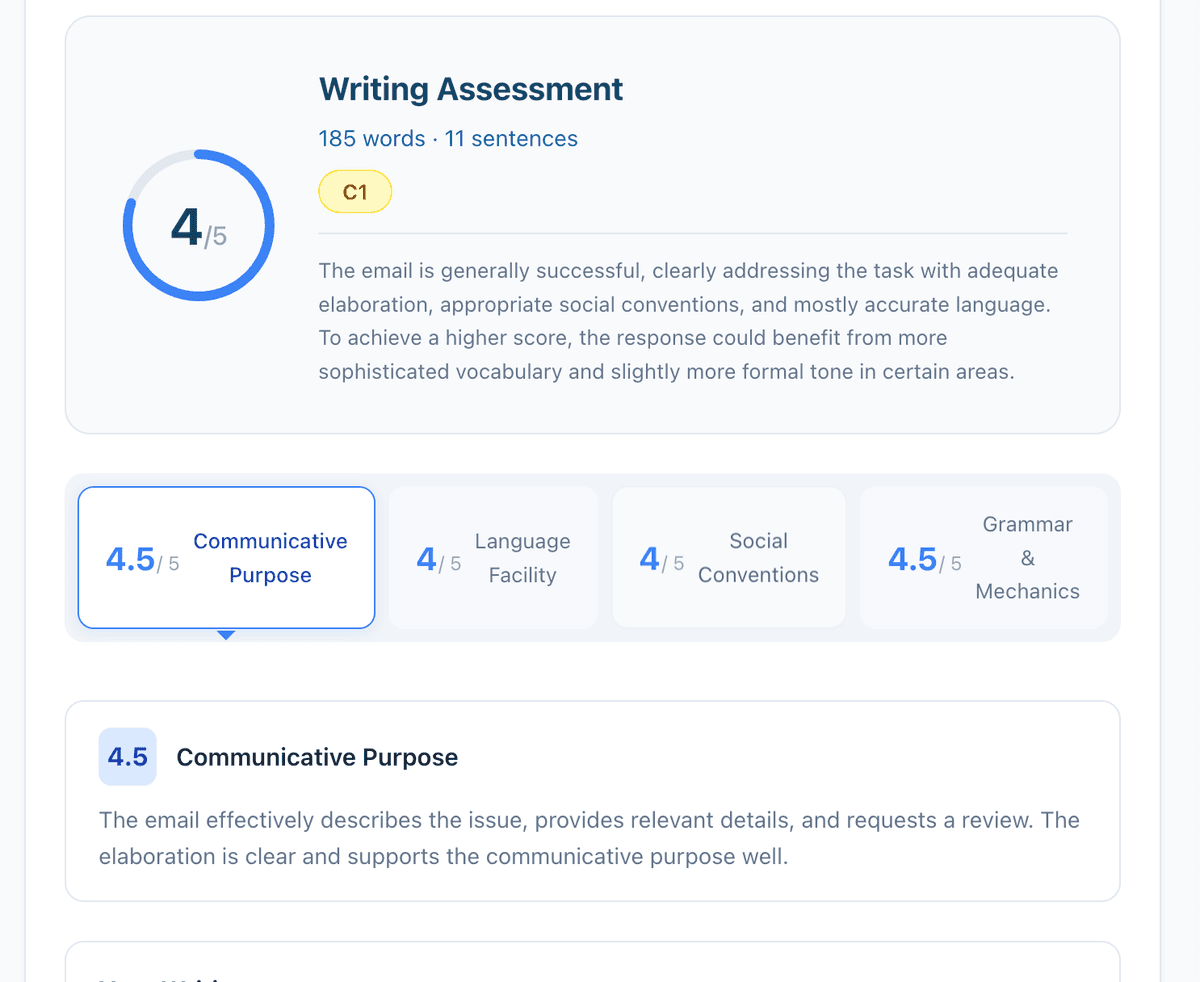 AI Writing Score
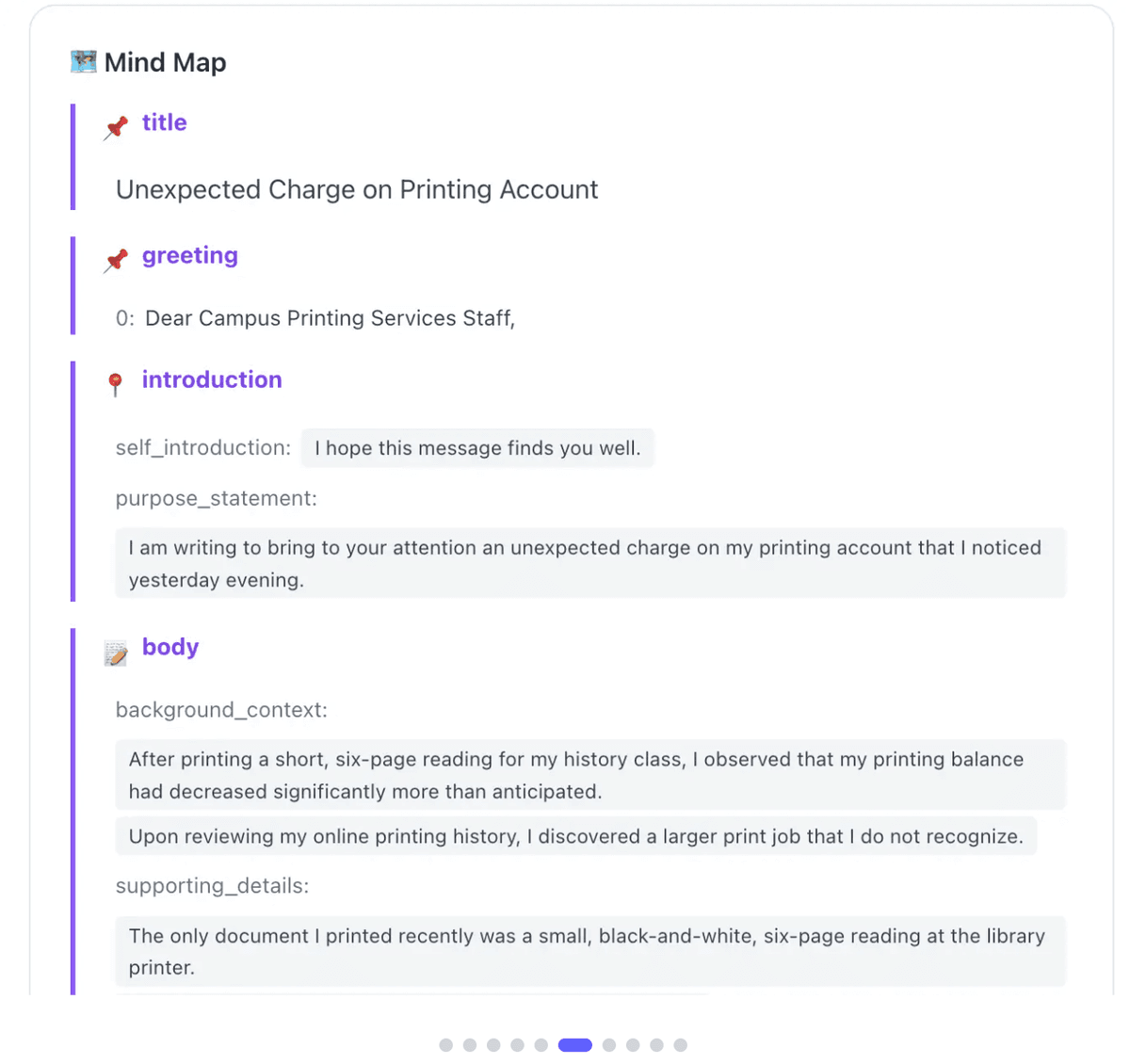 Article Structure Feedback
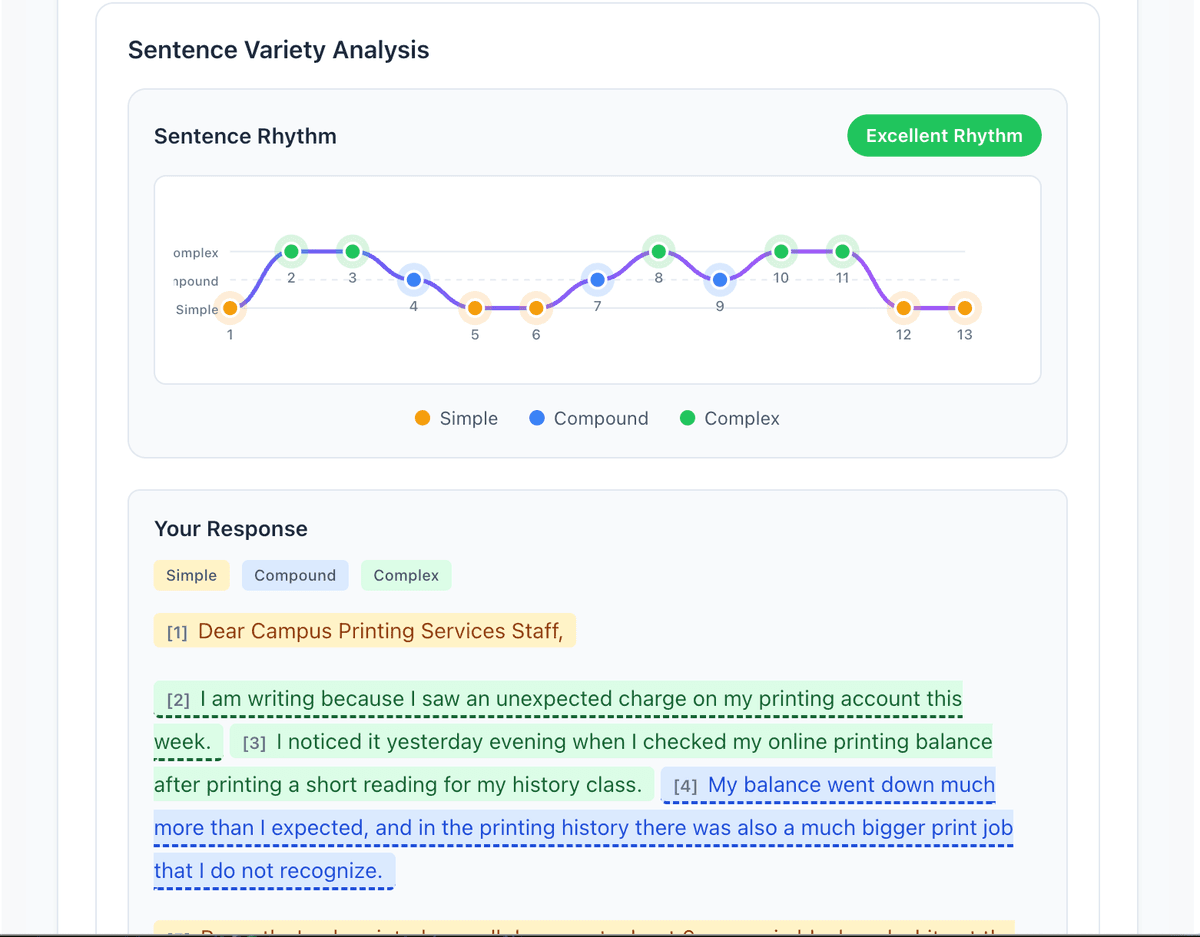 Sentence Variety
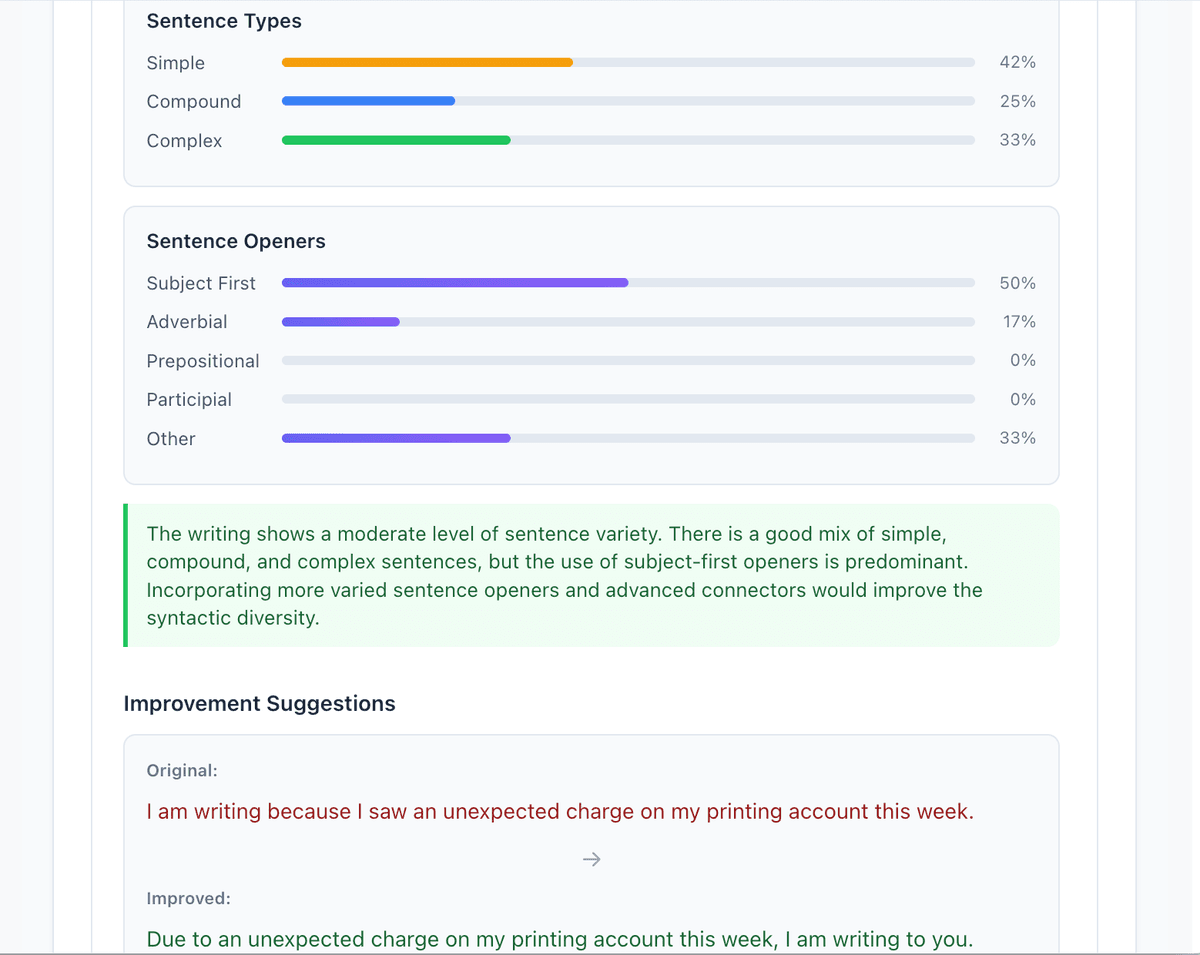 Improvement Suggestions
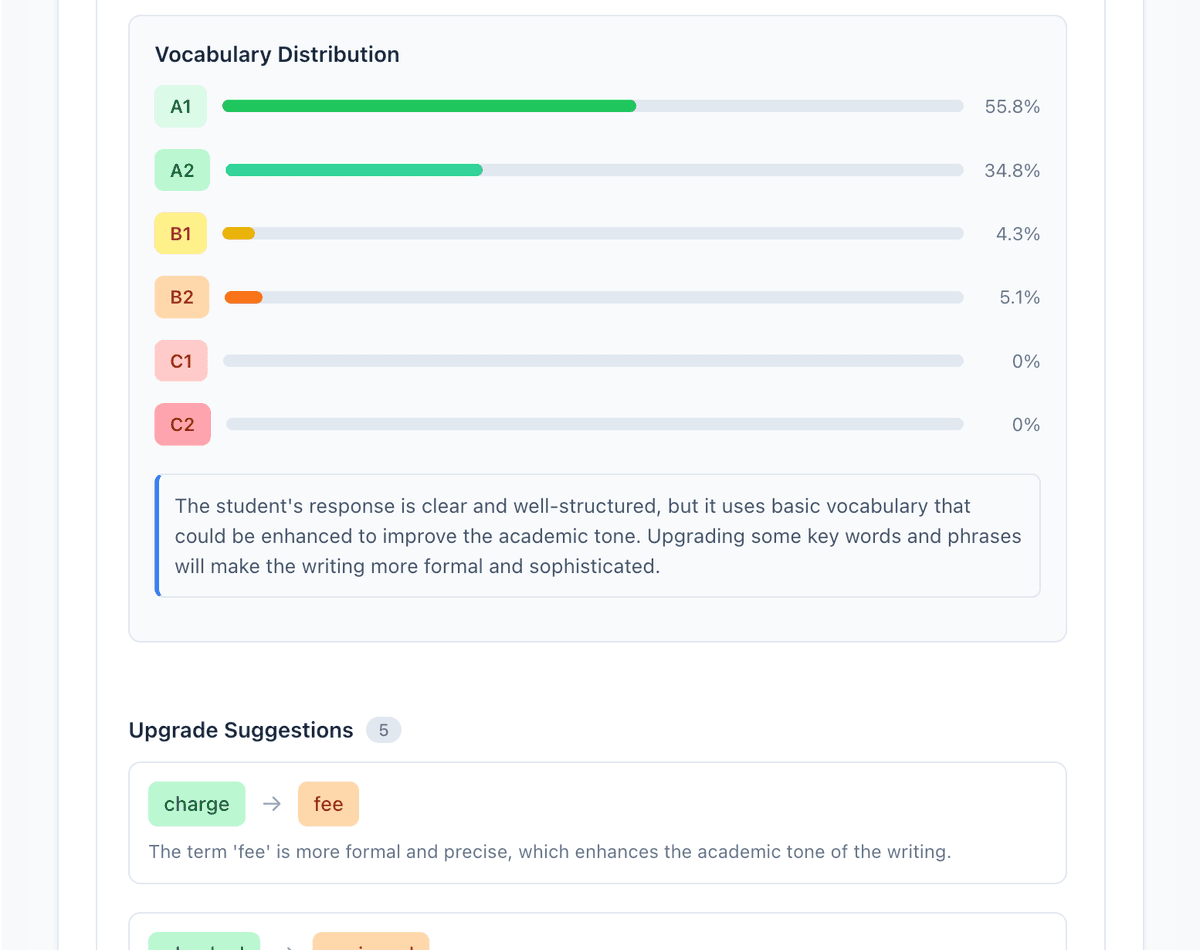 Vocabulary Feedback
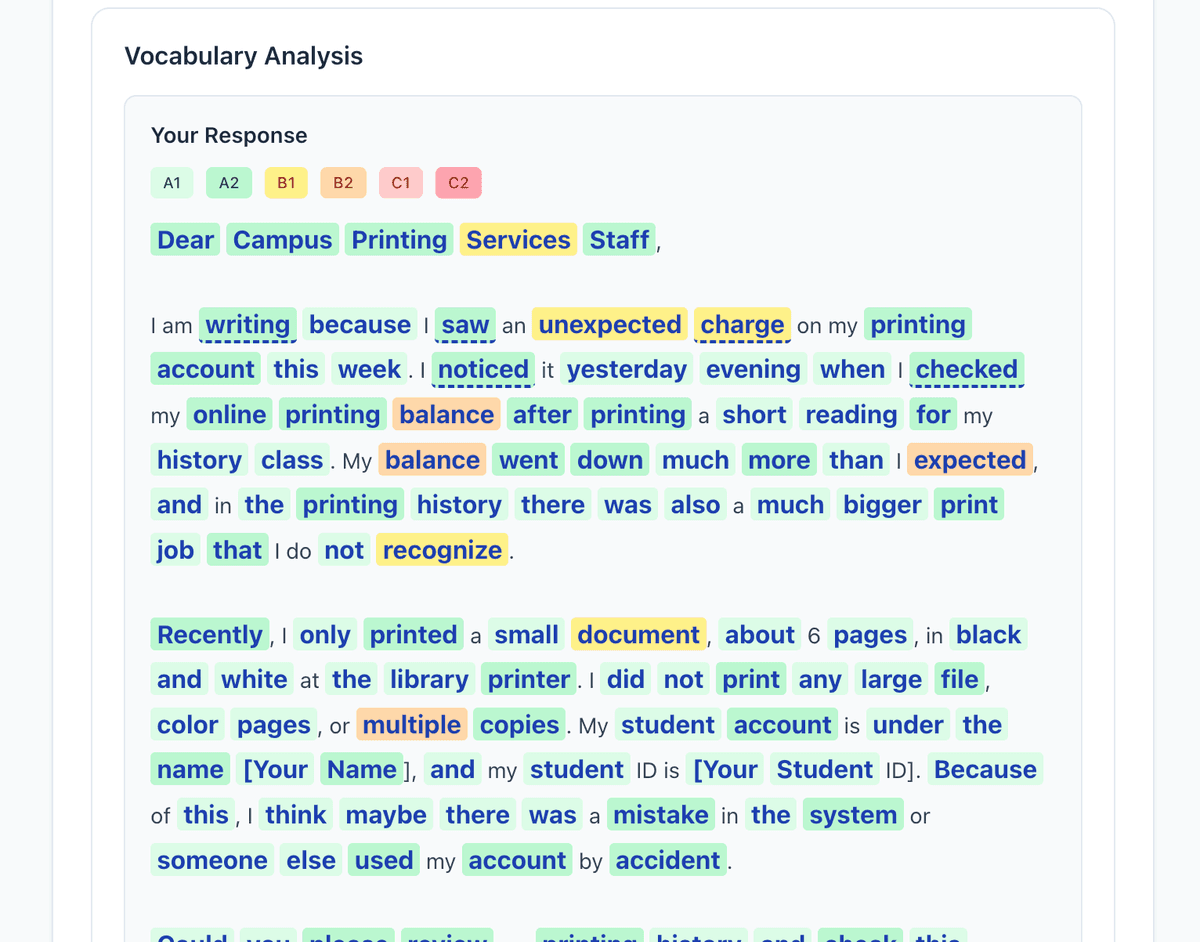 Vocabulary Analysis
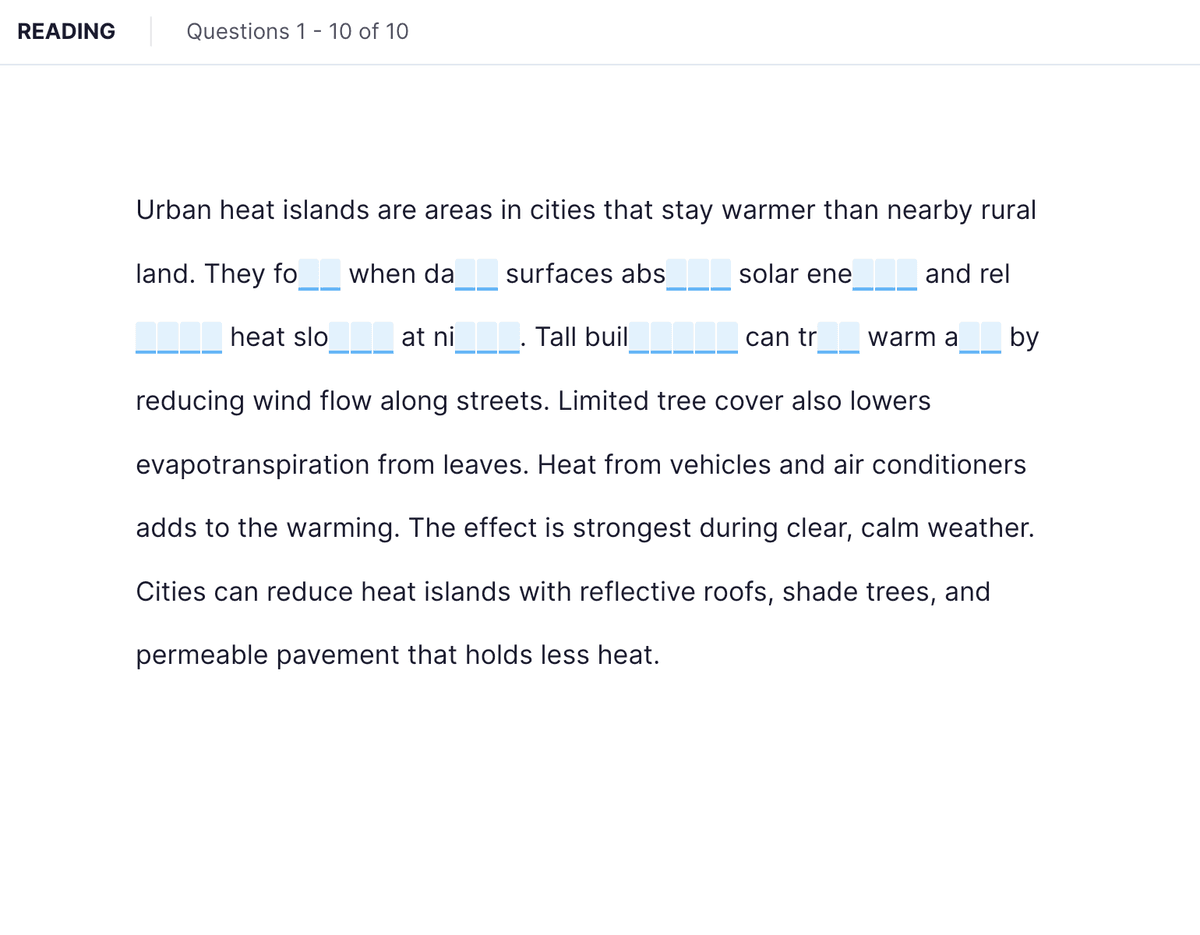 TOEFL 26 New: Reading
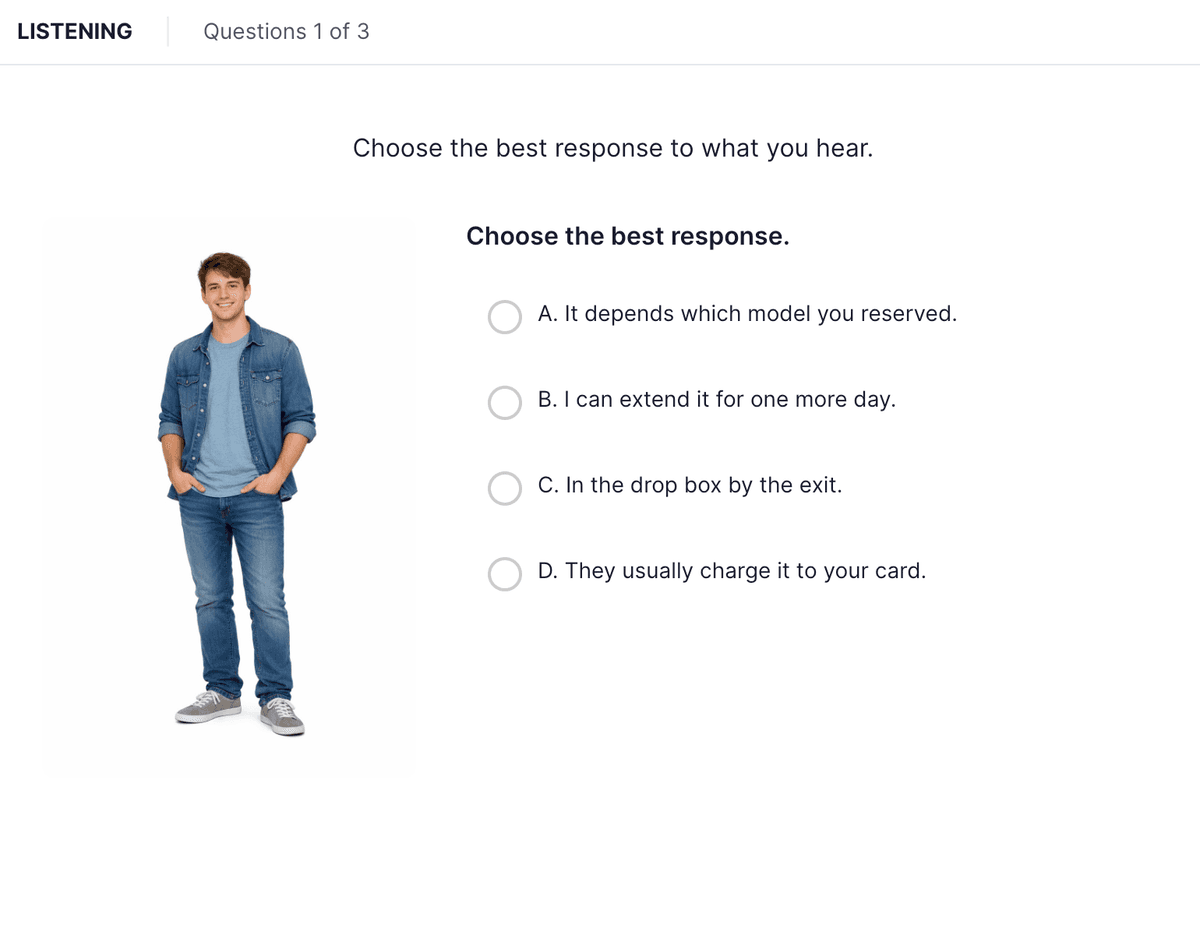 TOEFL 26 New: Listening
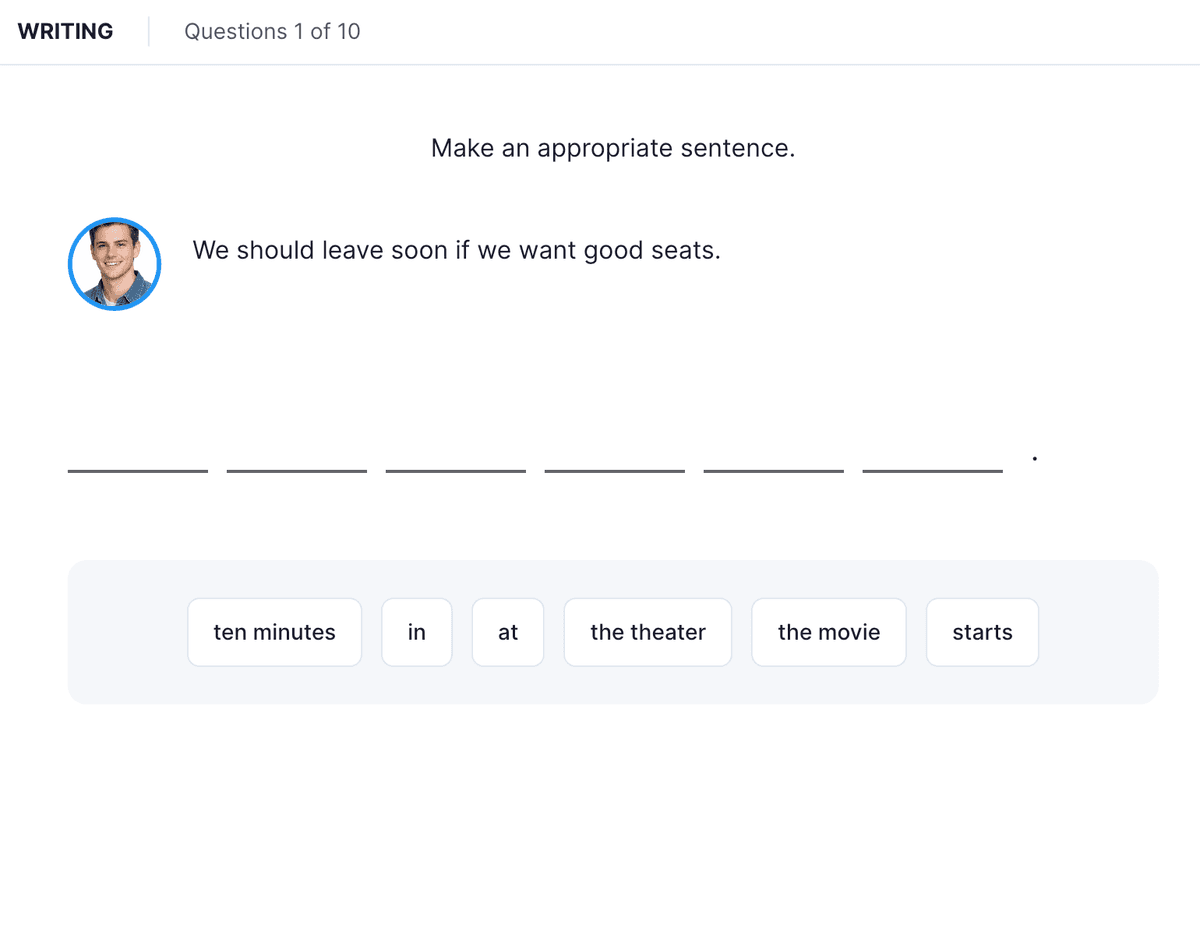 TOEFL 26 New: Writing
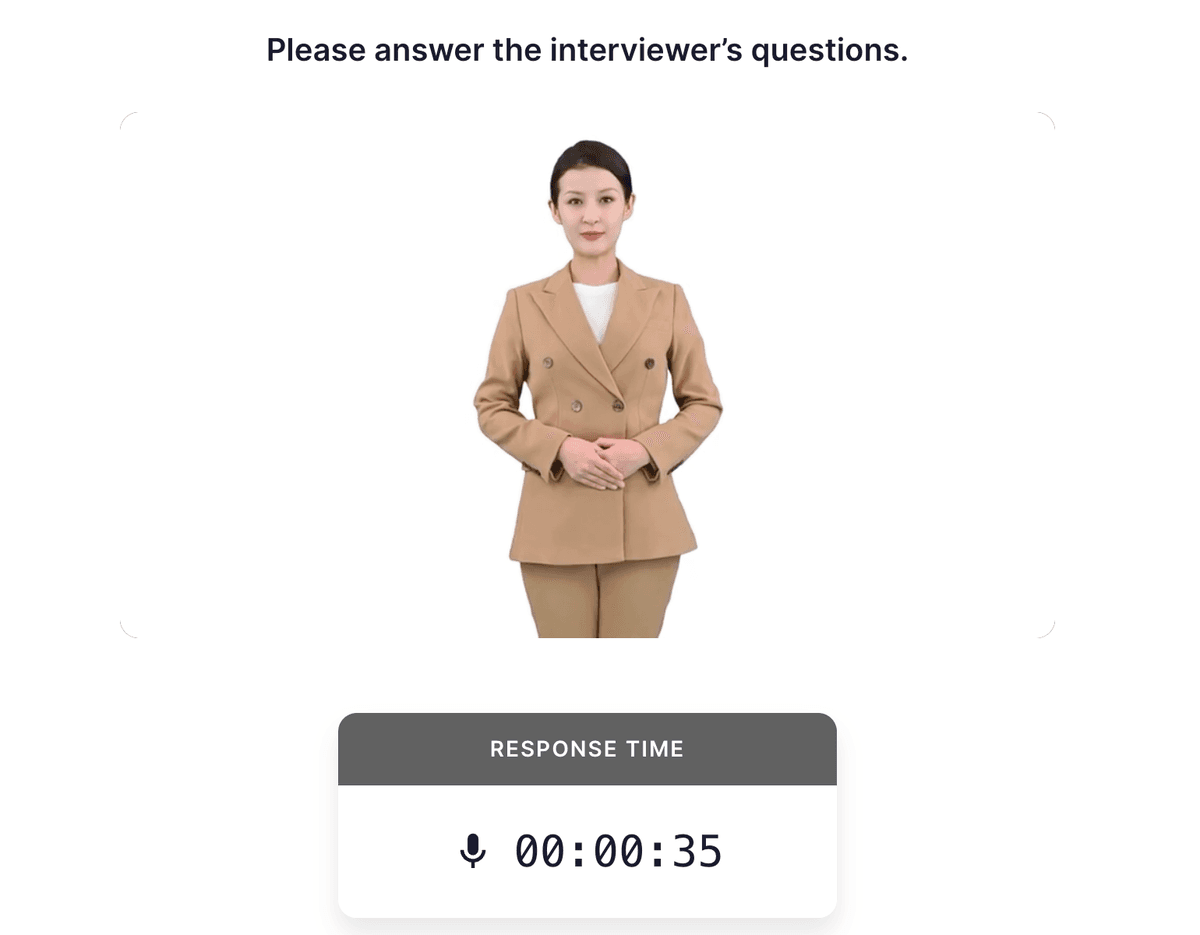 TOEFL 26 New: Speaking
Apa Itu Tes Simulasi TOEFL 26?
Tes simulasi TOEFL 26 adalah latihan soal yang dirancang khusus untuk format TOEFL iBT terbaru yang diluncurkan pada 21 Januari 2026.
TOEFL versi baru memperkenalkan 12 tipe soal yang sepenuhnya baru di seluruh bagian Reading, Listening, Writing, dan Speaking, pengujian adaptif multitahap di Reading dan Listening, serta skala penilaian baru 1–6 yang disesuaikan dengan CEFR.
Untuk persiapan yang efektif, peserta tes membutuhkan simulasi yang mencerminkan struktur baru, seluruh 12 tipe soal, dan sistem penilaian terbaru.
Lingoleap menyediakan tes simulasi TOEFL 26 yang dibuat untuk menyimulasikan pengalaman ujian sesungguhnya secara akurat.
Format Baru TOEFL 2026
Tes TOEFL 2026 terdiri dari 4 bagian: Reading, Listening, Writing, dan Speaking. Estimasi waktu pengerjaan tes di bawah 2 jam. Waktu tes tidak termasuk petunjuk soal. Karena tes bersifat adaptif, waktu pengerjaan dan jumlah soal dapat bervariasi.
Reading
~30 menit
~50 soal
Adaptif multitahap dalam dua modul
Listening
~29 menit
~47 soal
Adaptif multitahap dalam dua modul
Writing
~23 menit
12 soal
Format linear — soal yang sama untuk semua peserta
Speaking
~8 menit
11 soal
Format linear — soal yang sama untuk semua peserta
Semua Tipe Soal TOEFL 2026
Reading
- Complete the Words
- Read in Daily Life
- Read an Academic Passage
8 jenis pertanyaan: Factual & Negative Factual, Vocabulary, Select the Sentence, Sentence Simplification, Reference, Inference, Rhetorical Purpose, Insert Text
Listening
- Listen and Choose a Response
- Listen to a Conversation
- Listen to an Announcement
- Listen to an Academic Talk
6 jenis pertanyaan: Main Idea, Factual, Inference, Purpose, Method, Attitude
Writing
- Build a Sentence
- Write an Email
- Write for an Academic Discussion
Format linear — dinilai berdasarkan tujuan komunikasi, sintaksis, pemilihan kata, konvensi sosial, dan akurasi
Speaking
- Listen and Repeat
- Take an Interview
Format linear — dinilai berdasarkan penyampaian (kejelasan, kelancaran), penggunaan bahasa (tata bahasa, kosakata), dan elaborasi
Bagian Reading dan Listening menggunakan pengujian adaptif multitahap — performa Anda di Modul 1 menentukan tingkat kesulitan Modul 2. Hal ini menciptakan pengalaman yang lebih personal dan mengukur kemampuan Anda secara lebih efisien dan akurat.
Mengapa Memilih Tes Simulasi TOEFL 26 dari Lingoleap
Sebagian besar materi latihan TOEFL masih mengacu pada format tes lama. Lingoleap dirancang khusus untuk format TOEFL 2026.
 Tes simulasi lengkap yang mencakup seluruh 12 tipe soal resmi TOEFL 2026
- Reading dan Listening adaptif multitahap yang menyerupai tes sesungguhnya
- Penilaian AI untuk Speaking dan Writing yang sesuai dengan rubrik resmi ETS
- Salah satu koleksi tes simulasi TOEFL 26 terbesar yang tersedia
Kebanyakan sumber belajar mempersiapkan Anda untuk TOEFL lama. Lingoleap mempersiapkan Anda untuk TOEFL yang baru.
Cakupan Lengkap Tipe Soal TOEFL 2026
Setiap tes simulasi TOEFL 26 dari Lingoleap mencakup seluruh 12 tipe soal resmi di keempat bagian tes — persis seperti yang muncul di ujian sesungguhnya.
Reading
- Complete the Words
Melengkapi bagian kata yang hilang dalam paragraf akademik pendek
- Read in Daily Life
Membaca teks praktis seperti email, pengumuman, atau postingan media sosial
- Read an Academic Passage
Membaca teks akademik pendek (~200 kata) dan menjawab 5 pertanyaan
Listening
- Listen and Choose a Response
Mendengarkan pertanyaan atau pernyataan singkat, lalu memilih respons terbaik dari 4 pilihan
- Listen to a Conversation
Menjawab pertanyaan tentang percakapan singkat kehidupan kampus antara 2 pembicara
- Listen to an Announcement
Menjawab pertanyaan tentang pengumuman kelas atau acara kampus
- Listen to an Academic Talk
Menjawab pertanyaan tentang ceramah akademik singkat berbagai topik
Writing
- Build a Sentence
Menyusun ulang kata dan frasa untuk melengkapi kalimat dalam dialog pendek
- Write an Email
Menulis email untuk tujuan tertentu seperti merekomendasikan, mengundang, atau mengusulkan solusi
- Write for an Academic Discussion
Membaca postingan profesor dan 2 respons mahasiswa, lalu menulis kontribusi Anda sendiri (100+ kata)
Speaking
- Listen and Repeat
Mengulangi 7 kalimat lisan yang semakin panjang dan kompleks
- Take an Interview
Menjawab 4 pertanyaan wawancara dalam simulasi percakapan akademik (masing-masing 45 detik)
Pengujian Adaptif Multitahap — Seperti TOEFL 2026 Sesungguhnya
Tes simulasi Lingoleap menyimulasikan struktur adaptif multitahap dari TOEFL sesungguhnya. Performa Anda di Modul 1 menentukan tingkat kesulitan Modul 2, persis seperti ujian aslinya.
Perkembangan Tes yang Realistis
Rasakan alur adaptif yang sama seperti TOEFL 2026 sesungguhnya — performa di Modul 1 menentukan kesulitan Modul 2
Latihan Multi-Level
Berlatih di modul yang lebih mudah maupun lebih sulit untuk membangun kepercayaan diri dan akurasi di setiap level
Gambaran Performa Sesungguhnya
Pahami potensi skor Anda berdasarkan logika penilaian adaptif dan konversi skor mentah ke skor skala
Penilaian AI untuk Speaking & Writing
Dapatkan umpan balik instan dan terperinci untuk setiap respons Speaking dan Writing — sesuai dengan rubrik penilaian resmi ETS. Setiap respons dinilai secara holistik pada skala 0–5.
Evaluasi Speaking
Listen and Repeat
- Akurasi Pengulangan
- Kejelasan Ucapan
- Pelafalan
Take an Interview
- Penyampaian (kejelasan, kelancaran, pelafalan, intonasi)
- Penggunaan Bahasa (keragaman dan akurasi tata bahasa & kosakata)
- Elaborasi (relevansi topik, ide yang didukung dengan baik)
Evaluasi Writing
Write an Email
- Elaborasi yang mendukung tujuan komunikasi
- Variasi sintaksis & pemilihan kata yang tepat dan idiomatis
- Konvensi sosial yang sesuai (kesopanan, register, formalitas)
- Akurasi leksikal & gramatikal
Write for an Academic Discussion
- Penjelasan dan contoh yang relevan dan dielaborasi dengan baik
- Variasi struktur sintaksis & pemilihan kata yang tepat dan idiomatis
- Akurasi leksikal & gramatikal
Accuracy and transparency
How Accurate Is This TOEFL Practice Test Score?
Every practice-test site says its scores are accurate. Almost none says how the number is produced or what has actually been checked. Here is the full answer for Lingoleap — including what we have not verified yet.
What we know
- Reading and Listening are scored against a fixed answer key, so those bands are as reliable as the question set is representative of the real test.
- Writing and Speaking responses are scored 0–5 by a language model against the dimensions of the published ETS scoring guides — the same criteria the Speaking and Writing evaluation section above lists.
- Every band on your report comes from one fixed rule set — the tables and formulas printed further down this page — so the same answers always produce the same band.
What we have not verified
- We have not yet published a comparison of Lingoleap bands against learners' official ETS score reports. Until that verified sample exists and is large enough, we do not quote a correlation, an accuracy percentage or a margin of error — any such number would be invented.
- ETS has not released a raw-to-band conversion for the 2026 test. Our Reading and Listening table is a Lingoleap estimate and is labelled as one below.
- The real test equates scores across forms and adaptive paths with Item Response Theory; our engine uses a simpler lookup table. The two can disagree, most likely at band boundaries.
What to do with the estimate
- Treat one mock band as a range, not a point. Read the section bands and the task-type accuracy under them — those move first and are what you can practise.
- Track direction across three to five mocks spaced two to three weeks apart, rather than certifying a single sitting.
- For admissions, only an ETS score counts. Check your target school's published minimum with the Score Calculator, and treat the last mock as a dress rehearsal, not a prediction.
The method we will use to publish calibration figures — who counts, which mock counts, what gets excluded — is already written down on the how-it-works page. The figures will appear there, with their sample size, once the verified sample exists.
See the calibration method →Wondering whose AI to trust on the 2026 test in general? The AI tutor guide explains how ETS's own SpeechRater and e-rater engines grade Speaking and Writing first, and how to rehearse against an AI scorer.
How the 2026 TOEFL is graded by AI →How Our Adaptive Practice Works
Reading and Listening in a Lingoleap mock run as a two-stage test, the structure ETS describes for the real exam. Here is exactly what our engine does — and, separately, what ETS has and has not said.
In a Lingoleap mock test
- 1
Router module
Every test-taker starts with the same router module in each section.
- 2
Routing
Your router performance sends you to a lower or an upper Stage 2 module. The two modules are built differently, which is why the number of items you see varies from mock to mock. The routing threshold is an engine setting we do not publish on this page.
- 3
One band table, defined for the upper module
Correct answers across both stages are counted, normalised to a 35-point basis, and looked up in the section's band table. The table is defined for the upper module.
- 4
Lower-module adjustment
A sitting routed to the lower module is placed one step down that table for the same normalised count. So in our engine the lower path cannot reach the top band — that is a Lingoleap simplification, not an ETS rule, and it is the one place our scoring is deliberately more conservative than the real test.
Adaptive routing: what ETS has published vs what prep sites assert
| Question | What ETS has published | What prep sites assert |
|---|---|---|
| Structure | Reading and Listening are “designed as two-stage adaptive tests”; Writing and Speaking are linear, with every test-taker on a form getting the same tasks (2026 Test Blueprint, note 5). | The same. This part is not in dispute. |
| Routing | “Based on their performance on the first module, test takers will get a second module where the difficulty of the test tasks matches their ability level.” No routing threshold is published (Teacher FAQ, Q9). | Specific thresholds — “get the first ten questions wrong and you are routed down” — none of which cites an ETS source. |
| How the score is produced | The section score “takes into consideration the total number of questions answered correctly across the two stages or modules as well as the difficulty level of questions”, converted by IRT equating so that a reported score “reflects the same level of language ability, regardless of which second stage was taken” (Teacher FAQ). | A fixed raw-to-band table applied to both paths, or a flat penalty for the easier path. |
| The “ceiling” | ETS states no maximum band for the lower module. It says “the final score is based on both stages” and that item difficulty is accounted for — which means an easier item is worth less, not that a particular band is forbidden. Whether the easier module can reach 6.0 in practice is not something ETS has published either way. | “A perfect score on the easier Stage 2 caps you at 4.0”, or “below 5.0” — the figure differs from site to site and none cites ETS. |
| Unscored items | Reading and Listening item counts “include non-scored items” used to gather data for future forms (Blueprint, note 1). | Rarely mentioned; item counts are usually quoted as if every item scored. |
ETS sources: TOEFL iBT 2026 Test Blueprint and Specifications (PDF) · Teacher FAQ for TOEFL iBT Enhancements (PDF)
Quotations are from those two ETS documents as read on 16 September 2026. Where this page says ETS has not published something, we mean we could not find it in either document or on ets.org — not that no such rule exists internally.
How the Band Is Produced, Section by Section
The whole path from your answers to the 1–6 band, with nothing hidden. These are the rules our score report runs on.
Reading
Scored by: Answer key- 1Every item is compared with the reference answer: right or wrong, no partial credit.
- 2Correct answers across the router and your Stage 2 module are summed and scaled to a 35-point basis: points = round(correct ÷ items × 35).
- 3The points are looked up in the Reading band table below. Lower-module sittings drop one step.
Listening
Scored by: Answer key- 1The same answer-key grading and 35-point scaling as Reading.
- 2The Listening table has its own boundaries: 80% accuracy is a 5.0 in Reading, but 71% is a 4.5 in Listening. That is why two sections at similar accuracy can show different bands.
Writing
Scored by: Answer key + AI- 1Build a Sentence: each item is scored right or wrong against the accepted word orderings. No model is involved.
- 2Write an Email and Write for an Academic Discussion: each response is scored 0–5 by a language model against the dimensions of the ETS scoring guide for that task.
- 3Section band = (points earned ÷ points available) × 5 + 1, rounded to the nearest 0.5.
Speaking
Scored by: AI- 1Listen and Repeat (7 items) and Take an Interview (4 items): your recording is transcribed and measured for pronunciation and fluency, then a model scores each response 0–5 against the rubric dimensions.
- 2Section band = (points earned ÷ points available) × 5 + 1, rounded to the nearest 0.5.
Overall band = the plain average of the four section bands, rounded to the nearest 0.5. The 0–120 “traditional” figure on the report is each section's accuracy scaled to 0–30 and summed; it exists only for comparing against university pages that still quote the old scale.
Raw Correct to Band: Reading and Listening
Lingoleap estimate — not an ETS tableBasis: these are the exact lookup tables our score report uses, defined on a 35-point normalised scale (points = round(correct ÷ items × 35)). ETS has published no raw-to-band conversion for the 2026 test, and real scores are IRT-equated for form and module difficulty, so treat every band here as a practice estimate. The approximate-accuracy column is the points range divided by 35.
Reading
| Band | Points (of 35) | Approx. accuracy |
|---|---|---|
| 6.0 | 34–35 | ≈ 97–100% |
| 5.5 | 32–33 | ≈ 91–94% |
| 5.0 | 28–31 | ≈ 80–89% |
| 4.5 | 25–27 | ≈ 71–77% |
| 4.0 | 18–24 | ≈ 51–69% |
| 3.5 | 12–17 | ≈ 34–49% |
| 3.0 | 8–11 | ≈ 23–31% |
| 2.5 | 7 | ≈ 20% |
| 2.0 | 6 | ≈ 17% |
| 1.0 | 0–5 | ≈ 0–14% |
Listening
| Band | Points (of 35) | Approx. accuracy |
|---|---|---|
| 6.0 | 34–35 | ≈ 97–100% |
| 5.5 | 32–33 | ≈ 91–94% |
| 5.0 | 29–31 | ≈ 83–89% |
| 4.5 | 25–28 | ≈ 71–80% |
| 4.0 | 23–24 | ≈ 66–69% |
| 3.5 | 18–22 | ≈ 51–63% |
| 3.0 | 13–17 | ≈ 37–49% |
| 2.5 | 11–12 | ≈ 31–34% |
| 2.0 | 8–10 | ≈ 23–29% |
| 1.5 | 6–7 | ≈ 17–20% |
| 1.0 | 0–5 | ≈ 0–14% |
Worked example from our sample report: 28 of 35 Reading items correct → 28 points → Band 5.0. 32 of 45 Listening items correct → 24.9, rounded to 25 points → Band 4.5.
Lower-module sittings: one step down the table for the same points.
Try TOEFL Practice Test Questions Now
Warm up with these free sample questions modeled on the 2026 TOEFL iBT — one from each section. Reveal the answer and explanation, then start a full-length practice test when you are ready.
Read the short academic passage, then answer the question.
Bioluminescence — the production of light by living organisms — is common in the deep ocean, where sunlight never reaches. Many creatures use it to attract prey, confuse predators, or signal to potential mates. The light is produced by a chemical reaction between a molecule called luciferin and the enzyme luciferase. Because the reaction gives off almost no heat, scientists describe the light as "cold light."
According to the passage, why is bioluminescent light described as "cold light"?
- AIt is only found in cold, deep water.
- BThe chemical reaction releases very little heat.
- CIt appears blue rather than red or orange.
- DIt is produced only at night.
▸Show answer & explanation
Answer: B — The chemical reaction releases very little heat.
The final sentence states the reaction "gives off almost no heat," which is why it is called cold light. Option A confuses where the organisms live with why the light is cold; C and D add details the passage never mentions. Factual questions like this reward locating the exact supporting sentence rather than relying on outside knowledge.
Type the missing letters to complete the word so the sentence makes sense.
Regular exercise can signi______ reduce the risk of heart disease.
▸Show answer & explanation
Answer: significantly
"Complete the Words" gives you the first letters and the length of a word and asks you to finish it from context. Here the sentence needs an adverb describing how much exercise reduces risk — "significantly." Read the whole sentence first, decide the part of speech, then fit a word that starts with the letters shown.
On the real test you would hear this talk once. Read the transcript excerpt, then answer.
Professor: "So when we talk about the 'urban heat island' effect, we mean that cities tend to be several degrees warmer than the countryside around them. The main reason is surface material. Asphalt and concrete absorb heat during the day and release it slowly at night — unlike soil and vegetation, which cool down much faster. That's why a city can still feel warm hours after sunset."
What is the main cause of the urban heat island effect, according to the professor?
- ACities are located in naturally warmer regions.
- BBuildings block cooling wind from reaching streets.
- CPaved surfaces absorb and slowly release heat.
- DThere are more people generating body heat.
▸Show answer & explanation
Answer: C — Paved surfaces absorb and slowly release heat.
The professor names surface material — asphalt and concrete absorbing heat and releasing it slowly — as "the main reason." The other options are plausible-sounding distractors the talk never states. In the Listening section, note the speaker's signal phrases ("the main reason is…") to catch the point being tested.
Put the words and phrases in the correct order to form a grammatical sentence.
[ the deadline / because / the library / she / was approaching / stayed late at ]
▸Show answer & explanation
Answer: She stayed late at the library because the deadline was approaching.
"Build a Sentence" tests control of English word order and clause structure. Start with the subject ("She"), add the main verb phrase ("stayed late at the library"), then attach the reason clause introduced by "because." Checking that subject, verb, and connector line up is usually enough to place every chunk.
You have 45 seconds to answer. There is no single correct response — a strong answer is clear, on-topic, and supported with a reason or example.
Some students prefer to study in the morning, while others prefer the evening. Which do you prefer, and why?
▸Show answer & explanation
Answer: Sample strong response (outline)
Take a clear position, give one reason, and support it with a specific example: "I prefer studying in the morning because my mind is freshest right after I wake up. For instance, I can read a difficult chapter in thirty minutes in the morning, but the same chapter takes me an hour at night when I'm tired." Scoring rewards delivery (clear, fluent speech), language use (accurate grammar and vocabulary), and elaboration (a developed, on-topic idea) — so commit to one answer and develop it rather than listing both options.
These are original Lingoleap practice items built to mirror the 2026 TOEFL iBT task types. They are for practice only and are not real ETS test questions; Lingoleap is independent of and not endorsed by ETS.
Practice TOEFL by Section
A full-length mock test measures readiness, but targeted section practice is how you fix specific weaknesses. Drill any of the four sections and all 12 task types below.
Reading
Adaptive passages and the three 2026 reading task types.
Listening
Conversations, announcements, and academic talks with adaptive difficulty.
Speaking
Listen and Repeat plus the academic interview, with AI delivery feedback.
Writing
Build a Sentence, Write an Email, and Write for an Academic Discussion.
100+ Tes Simulasi TOEFL 26 Lengkap — Diperbarui Setiap Bulan
Akses salah satu koleksi tes simulasi TOEFL 2026 terbesar yang tersedia. Tes baru ditambahkan setiap bulan, membantu Anda terus berlatih dengan materi yang segar dan terkini.
- 100+ tes simulasi TOEFL 26 full-length
- Semua tes sesuai dengan format dan tipe soal TOEFL 2026 terbaru
- Tes baru ditambahkan setiap bulan
- Mencakup seluruh 4 bagian dan 12 tipe soal
- Covers all 4 sections and 12 task types
Cara Memulai Tes Simulasi TOEFL 26 Anda
Buat Akun Anda
Daftar gratis di Lingoleap
Pilih Tes Simulasi
Pilih dari 100+ tes simulasi TOEFL 26 full-length
Mulai Berlatih
Kerjakan tes dengan kondisi ujian sesungguhnya
Dapatkan Skor & Umpan Balik
Terima penilaian berbasis AI dan analisis performa terperinci
Mulai Tes Simulasi TOEFL 26 Anda
Latihan format baru TOEFL 2026 dengan pengujian adaptif multitahap, seluruh 12 tipe soal, dan penilaian AI.
Pertanyaan yang Sering Diajukan
Semua yang perlu Anda ketahui tentang tes simulasi TOEFL 26
Apa yang berbeda dari format TOEFL 2026?
TOEFL 2026, diluncurkan pada 21 Januari 2026, merupakan tes yang didesain ulang secara menyeluruh. Tes ini memperkenalkan pengujian adaptif multitahap di Reading dan Listening, di mana performa di Modul 1 menentukan tingkat kesulitan Modul 2. Writing dan Speaking menggunakan format linear (soal yang sama untuk semua peserta). Tes ini menampilkan 12 tipe soal yang sepenuhnya baru dan skala penilaian baru 1–6 yang disesuaikan dengan CEFR. Durasi tes di bawah 2 jam.
Berapa banyak tipe soal di TOEFL 2026 yang baru?
TOEFL 2026 yang baru memiliki 12 tipe soal di 4 bagian: 3 di Reading (Complete the Words, Read in Daily Life, Read an Academic Passage), 4 di Listening (Listen and Choose a Response, Listen to a Conversation, Listen to an Announcement, Listen to an Academic Talk), 3 di Writing (Build a Sentence, Write an Email, Write for an Academic Discussion), dan 2 di Speaking (Listen and Repeat, Take an Interview).
Berapa banyak tes simulasi TOEFL 26 yang ditawarkan Lingoleap?
Lingoleap saat ini menyediakan 100+ tes simulasi TOEFL 26 full-length, dengan tes baru ditambahkan setiap bulan. Setiap tes mencakup keempat bagian dan menyertakan setiap tipe soal resmi dalam format TOEFL 2026.
Apakah Lingoleap menyimulasikan pengujian adaptif multitahap?
Ya. Lingoleap adalah salah satu platform yang menyimulasikan struktur pengujian adaptif multitahap yang digunakan di bagian Reading dan Listening TOEFL 2026. Performa Anda di Modul 1 mempengaruhi tingkat kesulitan Modul 2, persis seperti ujian sesungguhnya.
Bagaimana cara kerja penilaian AI untuk Speaking dan Writing?
AI Lingoleap mengevaluasi respons Anda menggunakan kriteria yang sesuai dengan rubrik penilaian resmi ETS (dinilai secara holistik 0–5 per soal). Untuk Speaking, Listen and Repeat dinilai berdasarkan akurasi pengulangan, kejelasan ucapan, dan pelafalan. Take an Interview dinilai berdasarkan penyampaian (kejelasan, kelancaran, tempo), penggunaan bahasa (tata bahasa, kosakata), dan elaborasi (relevansi topik, ide pendukung). Untuk Writing, Write an Email dinilai berdasarkan tujuan komunikasi, variasi sintaksis & pemilihan kata idiomatis, konvensi sosial (kesopanan, register), dan akurasi leksikal/gramatikal. Write for an Academic Discussion dinilai berdasarkan relevansi & elaborasi, struktur sintaksis & pemilihan kata, dan akurasi leksikal/gramatikal.
Apakah tes simulasi Lingoleap sama dengan TOEFL sesungguhnya?
Tes simulasi Lingoleap dirancang untuk menyimulasikan pengalaman TOEFL 2026 sesungguhnya secara akurat, termasuk tipe soal baru, pengujian adaptif multitahap, dan waktu ujian. Meskipun tidak ada tes latihan yang identik dengan ujian resmi, Lingoleap menyediakan salah satu pengalaman latihan TOEFL 2026 paling realistis yang tersedia.
Bisakah saya berlatih per bagian saja tanpa mengerjakan tes lengkap?
Ya. Selain tes simulasi full-length, Lingoleap memungkinkan Anda berlatih per bagian — Reading, Listening, Speaking, atau Writing — sehingga Anda bisa fokus pada area yang paling perlu ditingkatkan.
How accurate are Lingoleap's mock test score estimates?
Reading and Listening are scored against an answer key, so their bands depend on how representative the question set is. Writing and Speaking bands come from a language model scoring each response 0–5 against the dimensions of the published ETS scoring guides. We have not yet published a comparison of Lingoleap bands with learners' official ETS score reports, so we do not quote an accuracy figure — the section “How accurate is this score?” on this page shows exactly how each band is produced and what has and has not been verified. These are practice estimates only: official TOEFL scores are issued exclusively by ETS, and Lingoleap is independent of and not endorsed by ETS.
If I am routed to the easier module, is my band capped?
In a Lingoleap mock, yes, slightly: the band table is defined for the upper module and a lower-module sitting is placed one step down it, so the lower path cannot reach the top band. That is our simplification. On the real test, ETS says the score is based on both stages and accounts for item difficulty through IRT equating; it has published no maximum band for the lower module. The specific caps quoted on prep sites (“4.0”, “below 5.0”) do not come from ETS.
How many correct answers do I need for a Band 5 in Reading or Listening?
On Lingoleap's practice table, Reading Band 5.0 needs 28–31 of 35 normalised points (roughly 80–89% correct) and Listening Band 5.0 needs 29–31 (roughly 83–89%). Points are your correct answers scaled to a 35-point basis. This is Lingoleap's estimate: ETS has published no raw-to-band table for the 2026 test and equates real scores for difficulty, so the official conversion can differ.
How much does a full mock test cost?
A full mock test costs 800 credits and includes AI scoring for Reading, Listening, Speaking, and Writing with a complete score report. New accounts start with 200 free AI-feedback credits, and Reading and Listening practice never costs credits.