Now Released: Official Guide to the TOEFL iBT Test (2026) – What Test Takers Need to Know
YutingFebruary 11, 2026
Recently, ETS has officially released the Official Guide to the TOEFL iBT Test (2026 Edition) in a limited digital pocket format. This marks the first comprehensive, authoritative explanation of how the redesigned TOEFL works starting January 2026.
For many test takers, the exam changes themselves are not new news. But what is new is how clearly the Official Guide explains the logic behind the redesign: what TOEFL now measures, how tasks are structured, and what high-level performance actually looks like under the new 1-6 band scoring system.
This article walks you through what the new Official Guide tells us, what really matters for preparation, and how to align your study strategy with ETS’s updated evaluation standards. To see a clearer difference between the new OG and the old OG, read our TOEFL Official Guide comparison article about what changed from the previous edition.
Why the 2026 Official Guide Matters
The 2026 TOEFL Official Guide is not just a collection of sample questions. It is ETS’s official statement on how English proficiency is defined and assessed in the new TOEFL era.
Throughout the guide, ETS repeatedly emphasizes three core ideas:
- TOEFL now measures how well you use English, not how well you perform test tricks
- Tasks are designed around real academic and campus-life communication
- Scoring focuses on clarity, accuracy, coherence, and task fulfillment, rather than sophistication or length
In other words, TOEFL 2026 is no longer about sounding impressive. It is about being understandable, effective, and appropriate in real situations. This philosophy underpins every section of the new exam.
What the New Official Guide Reveals About Each Section
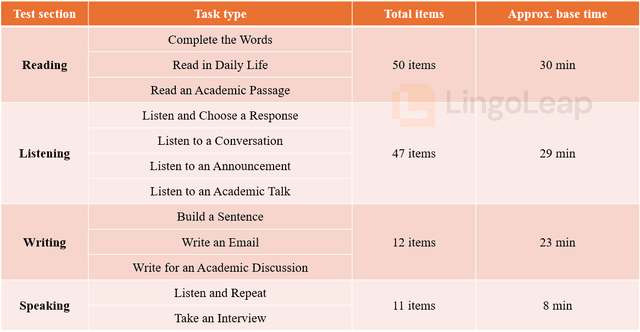
Reading and Listening: Understanding Real Language Input
According to the Official Guide, Reading and Listening are designed to reflect how language appears in real academic and everyday contexts, not in artificially polished test passages.Key takeaways include:
- A mix of academic and daily-life sources
- Natural spoken features in Listening, such as hesitations, restarts, and conversational pacing
- Adaptive multistage testing that adjusts difficulty based on performance
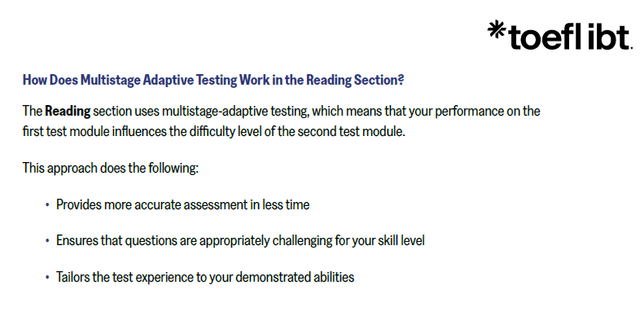
The guide makes it clear that success depends on comprehension, not speed. Over-reliance on note-taking or test-taking tricks is not encouraged. Instead, ETS prioritizes whether you can follow meaning as it naturally unfolds.
Writing: Structural Control Over Length
The Writing section shows the clearest shift in ETS’s thinking.Rather than evaluating grammar indirectly through long essays, TOEFL 2026 tests writing ability through three targeted tasks:
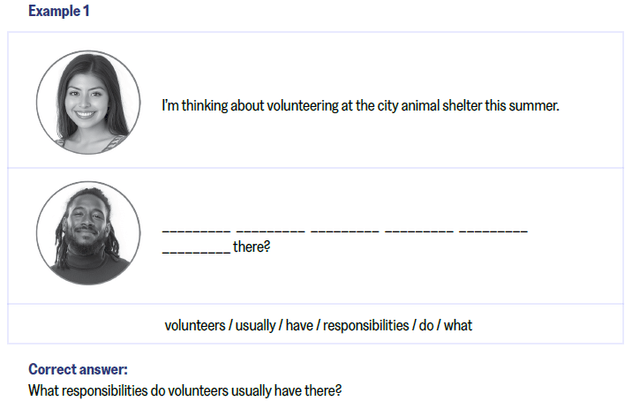
- Build a Sentence tests sentence structure, word order, and grammatical accuracy
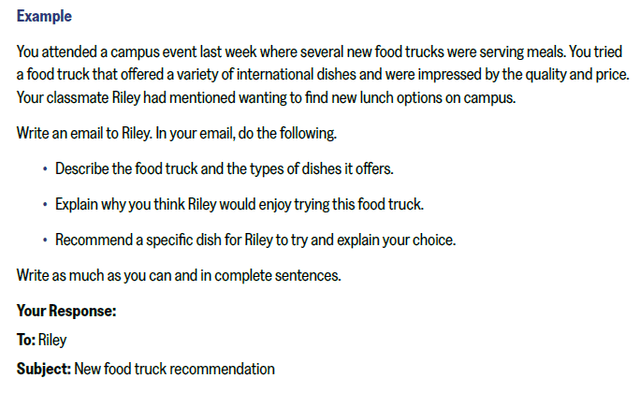
- Write an Email evaluates goal-oriented communication and appropriate tone
- Write for an Academic Discussion measures contribution quality, coherence, and support
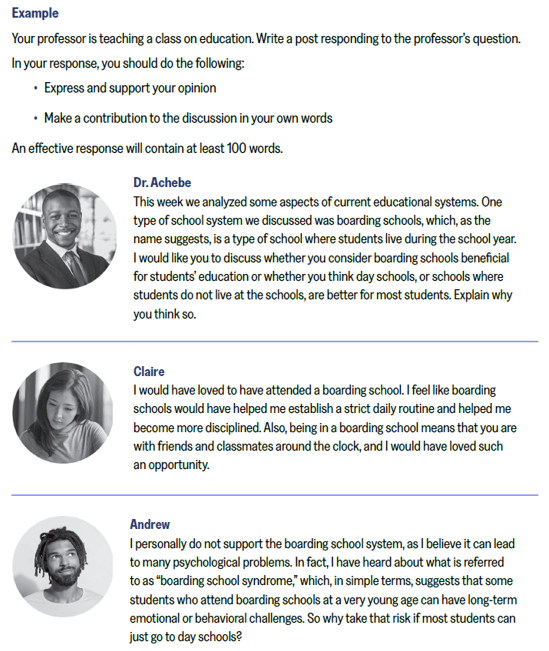
The Official Guide explicitly confirms that writing is judged by task completion and language control, not by how advanced or complex your sentences appear. According to the 2026 TOEFL Writing rubric, minor errors are tolerated as long as meaning remains clear. This explains why sentence-level accuracy now plays a foundational role across all writing tasks.
Speaking: Communicative Effectiveness Over Performance
The new Speaking section replaces integrated tasks with two communicative formats:
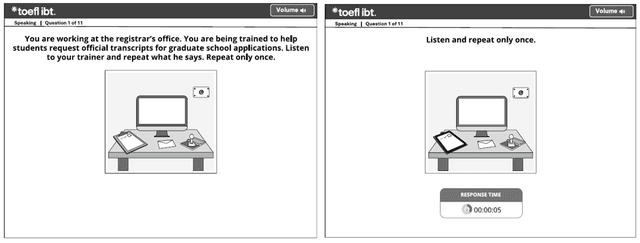
- Listen and Repeat, which tests accurate repetition and intelligibility
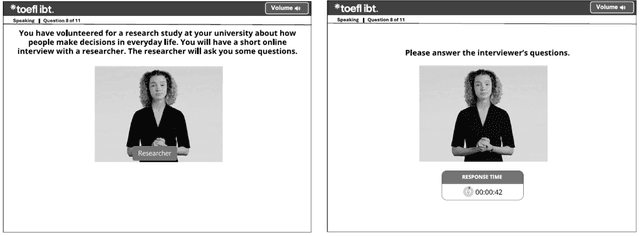
- Take an Interview, which simulates a real interview with four back-to-back questions
The Official Guide repeatedly highlights that speaking scores are based on:
- Intelligibility and clarity
- Stable pacing and pronunciation
- Logical development under time pressure
- Task fulfillment rather than creativity
Importantly, the guide makes no demand for native-like accents or complex structures. The 2026 TOEFL Speaking rubric also suggested that strong responses are listener-friendly, structured, and complete. This confirms why simple but well-organized speech often scores higher than ambitious but unstable responses.
What a High Score Really Means Under the New 1-6 Band System
One of the biggest sources of confusion for test takers is the shift to a 1–6 band scale.The Official Guide makes it clear that a top-band score does not mean perfection. Instead, it reflects:
- Consistent task completion
- Clear and intelligible language
- Logical organization
- Minor errors that never interfere with meaning
Across Writing and Speaking, ETS is evaluating whether your English would function effectively in a real academic environment. Understanding this reframes preparation entirely. The goal is not to impress the scorer. The goal is to communicate successfully.
What the Official Guide Suggests About Preparation
ETS is careful not to prescribe specific study methods, but its recommendations are clear in spirit.
The Official Guide encourages test takers to:
- Understand task purposes before focusing on answers
- Practice with formats that match real test conditions
- Evaluate performance based on official scoring criteria, not intuition
In short, the guide shows you what the test looks like. Real improvement comes from practicing how the test works.
Preparing for TOEFL 2026 the Right Way
As the Official Guide outlines the redesigned exam, preparation tools must evolve alongside it.
LingoLeap has fully upgraded its TOEFL platform to align with the 2026 Official Guide and scoring logic. Instead of generic practice or surface-level grammar correction, LingoLeap focuses on task-specific training that reflects how ETS actually evaluates responses.
With LingoLeap, you can:
- Practice all new TOEFL 2026 task types in realistic formats
- Train sentence structure, email writing, academic discussion, and interview speaking
- Receive AI-driven feedback aligned with official rubrics
- Identify which scoring dimension is limiting your performance
If you are preparing for the new TOEFL, the most effective strategy is simple: follow the Official Guide, and practice in a way that reflects it.
Start a free trial today and experience TOEFL 2026 preparation built around ETS’s updated exam logic, not outdated habits.