How AI is transforming TOEFL Preparation
LingoleapFebruary 1, 2025
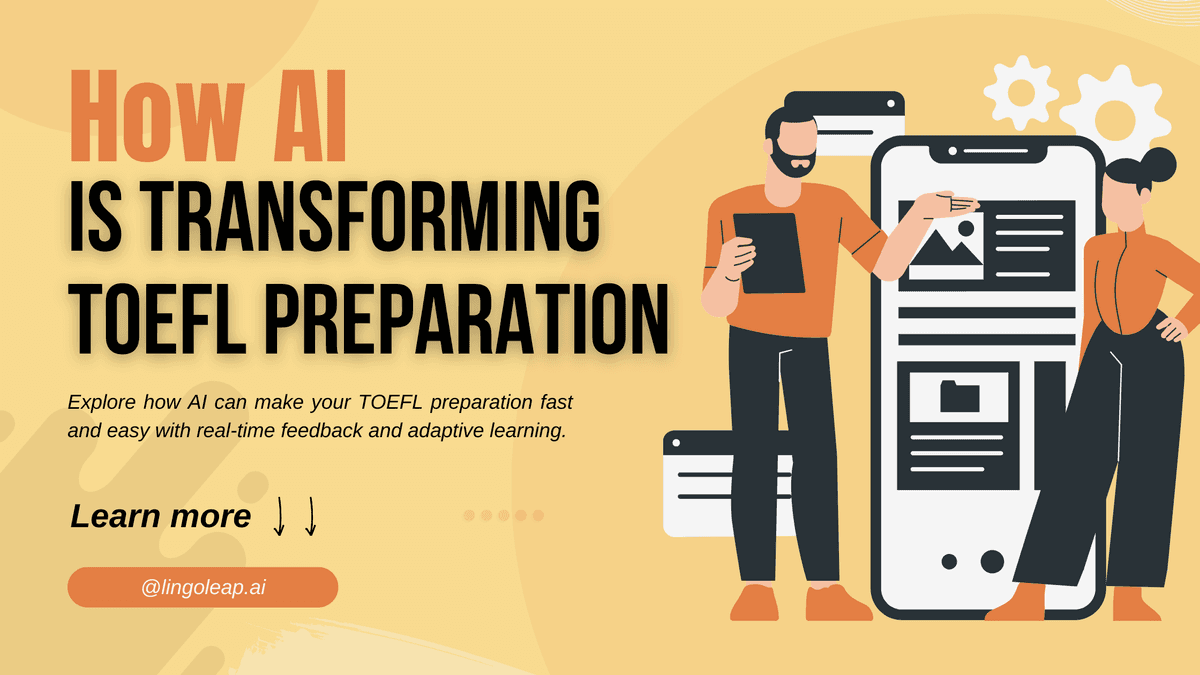
Artificial intelligence is reshaping every aspect of our lives, and language learning is no different. Language learning has always been a gateway to opportunity, connection, and cultural understanding. For those aspiring to study or work in English-speaking environments, standardized tests like the TOEFL are crucial in seeking these opportunities and building connections. However, learning a new language is complex and influenced by cognitive, social, and geographical factors. AI is taking language learning beyond traditional methods, which offer value can be overwhelming and time-consuming.
The Challenges of Traditional TOEFL Preparation
The traditional methods of textbooks, flashcards, and language classes offer value. Still, they often fail to meet the specific needs of individual learners. Common issues with conventional preparation methods include:
- Lack of Personalization: Traditional study material often uses a one-size-fits-all approach, making it difficult for students to focus on areas where they need the most improvement.
- Limited Feedback: Test takers usually receive generic feedback, leaving them unsure about specific aspects they must refine.
- Time and Cost Constraints: Tutoring centers and traditional mock tests often require significant time and financial investment.
AI addresses these issues and offers TOEFL test-takers a more dynamic solution. From personalized vocabulary builders to spelling and grammar checks, conversational practice, and real-time feedback, AI revolutionizes how students approach TOEFL preparation. Its unique ability to learn, understand, and contextualize human intent makes the TOEFL preparation process more efficient and effective.

How AI can help with TOEFL Preparation
As artificial intelligence rapidly evolves, it is crucial to enable personalized and adaptive TOEFL preparation. Some of the AI technologies driving the change in language learning at large include:
Natural Language Processing (NLP): NLP allows computers to understand, analyze, and generate human language. It powers tools like chatbots, virtual language tutors, and real-time feedback systems that help improve pronunciation, grammar, and vocabulary usage. Think of AI chatbots as your personal language tutor—available 24/7, highly adaptive, and infinitely patient. Research by Cambridge University Press highlights that AI-powered chatbots act as conversation partners, providing learners with a low-pressure environment to practice speaking, thus enhancing fluency and confidence.
NLP can help enhance TOEFL preparation for writing and speaking tasks by offering real-time grammar, vocabulary, and sentence structure feedback. For instance, an AI-powered tool could suggest more sophisticated word choices or sentence constructions, mimicking the input a human tutor might provide. Achieving a high score in the TOEFL requires clear structure and coherent ideas. AI tools simplify this process by offering features like grammar correction and sentence restructuring (e.g., converting passive voice to active voice). For instance, LingoLeap provides detailed writing feedback, suggesting better vocabulary and overall structure to craft strong essays.
Read more on how to elevate your TOEFL preparation for the Writing Section.
Machine Learning enables language learning platforms to improve continuously by analyzing user data and refining content to adapt the difficulty of practice questions accordingly. It could identify areas where a student struggles (e.g., listening comprehension or essay writing). This targeted approach ensures that TOEFL preparation is efficient and focuses on areas for improvement.
Speech Recognition evaluates spoken language, offering instant feedback and suggestions to improve pronunciation for TOEFL test takers. Students can refine their performance by practicing repeatedly with AI-driven tips.
Find tips on how to improve your TOEFL speaking score.
Adaptive Learning Algorithms assess learners' skill levels and customize lessons, creating unique and personalized learning pathways for each user. For example, if a student excels in the TOEFL Reading section but struggles with the Listening section, the system can adjust to focus more on listening practice.
For TOEFL preparation, AI offers a strategic advantage:
- Adaptive learning paths tailored to individual strengths and weaknesses
- Immediate, detailed feedback to refine performance
- Access to diverse question banks for skill improvement
With these technologies at their core, AI-driven chatbots make TOEFL preparation more immersive and engaging, addressing pain points such as time management and inadequate feedback.

Key takeaways
AI-powered TOEFL preparation tools enhance efficiency and accuracy by addressing common learning challenges. Here's how AI solutions improve the study process:
Real-Time Insights
AI tools simulate real TOEFL exam scenarios, providing instant results and allowing learners to adjust strategies sooner rather than later. AI-driven tools analyze your responses and deliver instantaneous feedback, including detailed scoring. LingoLeap uses natural language processing (NLP) to identify weak spots and provide actionable recommendations such as:
- Enhancing coherence and flow in essays
- Offering high-scoring model answers for comparison
Efficient Time Management
An AI chatbot identifies trends in an individual's study habits and optimizes time allocation for better results.
Accessibility and Convenience
With AI-based platforms, TOEFL test-takers can practice anytime, anywhere on their mobile devices, seamlessly integrating learning into their daily lives. This accessibility empowers learners, giving them control over their learning process.
Cost-Effective Solutions
AI chatbots and learning platforms are more affordable than private coaching. Yet, they deliver personalized attention through continuous learning, tracking progress, and instant feedback.
Future Trends in AI and TOEFL Preparation
As AI technologies advance, TOEFL preparation and language learning will become more immersive and accessible. It is worth noting that these areas will benefit from innovations—
- Voice Recognition: Improved accuracy in analyzing accents and pronunciations.
- Predictive Analytics: Enhanced ability to predict accurate test scores based on mock test performance.
- Conversational AI Tutors: Facilitate real-time discussions, offer explanations, and provide answers, mimicking a human tutor.
- Gamification: Offers more engagingstudy methods through interactive challenges and goals.
Start a Free Practice Test