5 Must-Know Tips to Enhance TOEFL Speaking
For many students, the TOEFL speaking section is the most daunting part of the exam. Even if you have a strong vocabulary and solid reading and listening skills, turning that knowledge into fluent spoken responses can feel like an uphill battle.
So, how do you actually get better at TOEFL speaking? The secret sauce is pretty simple—prep smart and practice consistently. You don’t need to memorize a million fancy words or stress over complicated grammar. Instead, focus on using TOEFL speaking templates, practicing real TOEFL speaking questions, and fine-tuning your delivery. Once you get the hang of it, you’ll sound way more confident and natural in no time!
1. Transform Learning into Speaking: Active Practice is Key!
Watching TOEFL speaking tips videos and learning techniques are valuable—but they must be followed by active practice.
Think of it like learning to ride a bike: watching tutorials helps, but you won’t master it until you start pedaling yourself!
- Watch a speaking tutorial → Practice immediately
- Learn a new response structure → Use it in a real answer
- Study a TOEFL speaking template → Apply it to practice questions
The best way to solidify your learning is through active practice—speaking out loud, recording responses, and refining your delivery based on real-time feedback.
2. Record Your Speaking Practice for Self-Assessment
Recording your responses to TOEFL speaking questions helps you analyze pronunciation, intonation, fluency, and coherence. Listen to your recordings, identify weak areas, and make improvements.
✨Tip: If you’re a beginner, start with shadowing practice—repeat after native speakers to refine your pronunciation before jumping into self-recording.
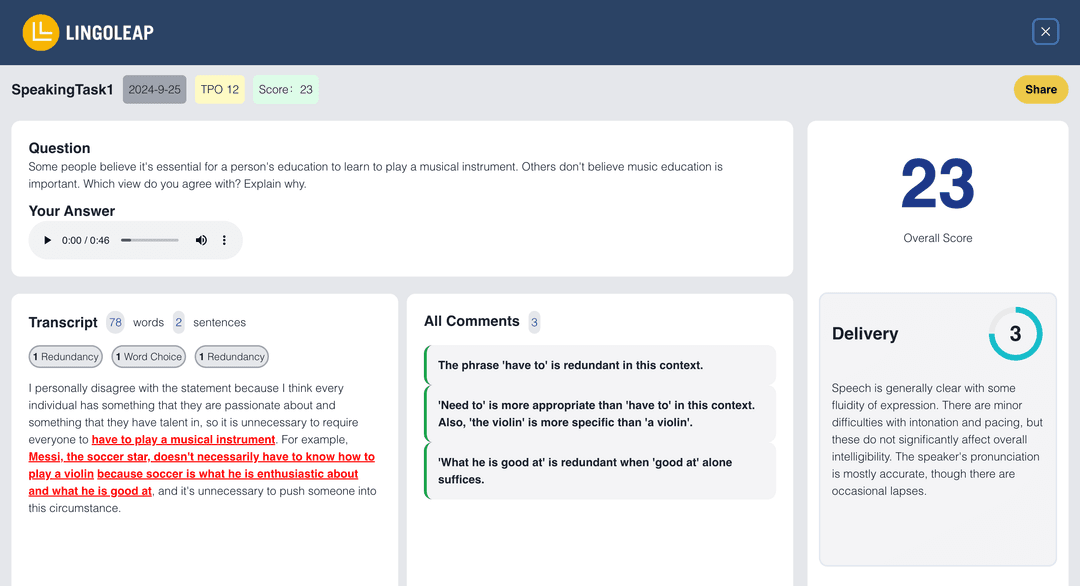
3. Evaluate Your Responses Using TOEFL Speaking Scoring Criteria
To improve your TOEFL speaking performance, you need to think like an examiner. Familiarize yourself with the official TOEFL speaking scoring criteria, which focus on:
- Delivery (fluency and pronunciation)
- Language Use (grammar and vocabulary)
- Topic Development (clarity, structure, and relevance)
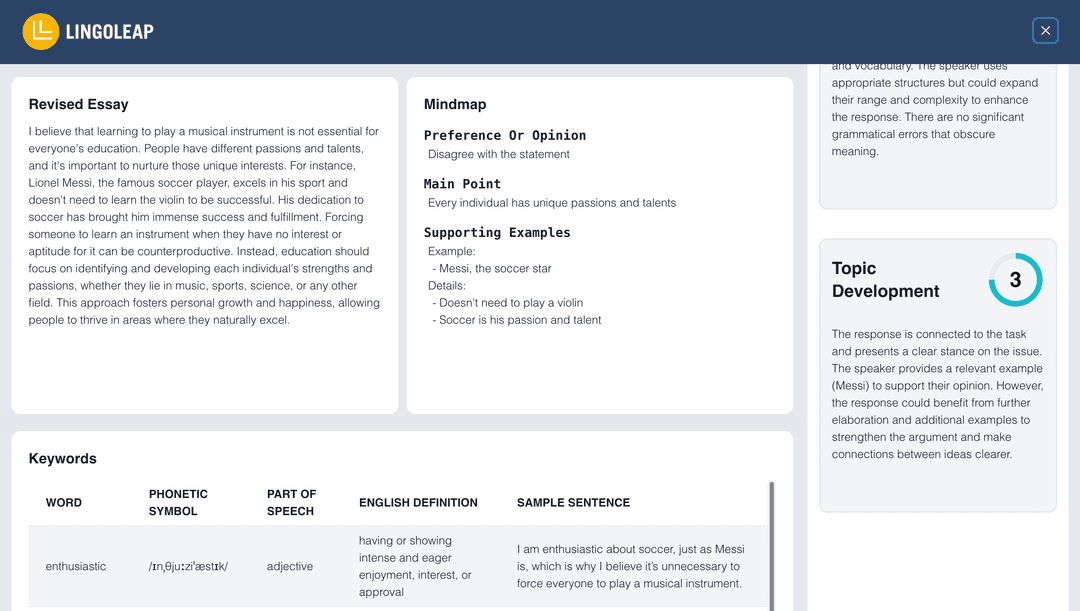
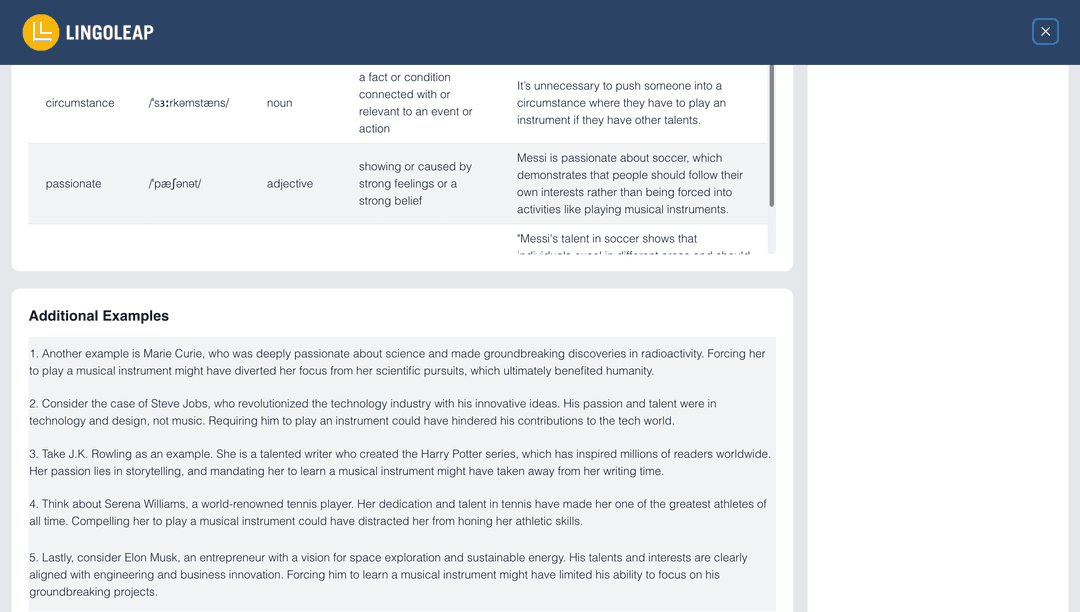
Practice grading your own responses or use AI-based tools like LingoLeap’s evaluation system for instant feedback.
4. Use TOEFL Speaking Templates for a Structured Response
A strong TOEFL speaking template helps you structure your answer logically and saves time during the test.
Here’s a simple TOEFL speaking template for Task 1 (Independent Speaking):
- Intro: “I personally believe that...” / “In my opinion, the best option is...”
- Reason 1: “Firstly, this is because...” (Give an example)
- Reason 2: “Additionally, I think that...” (Support with another example)
- Conclusion: “For these reasons, I strongly prefer...”
Using fixed opening phrases for different TOEFL speaking questions will help you stay calm and organized under pressure. For more insights on how to structure your TOEFL speaking response, click to read this blog.

5. Practice with a Timer to Improve Time Management
The TOEFL speaking test has strict time limits. If you speak too slowly or pause too often, you may run out of time before completing your response.
✅ Solution: Use a timer while practicing to train yourself to think and respond within the time constraints.
Here’s the TOEFL speaking timing breakdown:
- Task 1 (Independent Speaking): 15 sec prep | 45 sec response
- Task 2 (Integrated Speaking - Campus Situation): 30 sec prep | 60 sec response
- Task 3 (Integrated Speaking - Academic Talk): 30 sec prep | 60 sec response
- Task 4 (Integrated Speaking - Lecture): 20 sec prep | 60 sec response
Simulating the test environment will help you develop a natural speaking pace and avoid rushing or pausing excessively.
Can’t Self-Evaluate? Let AI Help!
If you're struggling to assess your responses or need expert feedback, LingoLeap can help.
✨ LingoLeap’s AI-powered TOEFL speaking tool provides:
✅ Instant pronunciation & intonation analysis
✅ Real-time feedback on logic & clarity
✅ Customized TOEFL speaking templates for all tasks
✅ A built-in mock test feature to simulate the real exam
With LingoLeap, you can track progress, refine responses, and get TOEFL-ready faster—just like having a personal tutor!
Final Thoughts: Speak More, Score Higher!
Mastering TOEFL speaking isn’t about memorizing fancy strategies—it’s about consistent, targeted practice. By implementing structured TOEFL speaking templates, answering real TOEFL speaking questions, and training under test-like conditions, you’ll gain confidence and fluency.
Ready to elevate your TOEFL speaking score? Start practicing with LingoLeap’s AI-powered tools today!