Maximize Your TOEFL Practice Test Results with LingoLeap
TomMay 4, 2025
When it comes to preparing for the TOEFL (Test of English as a Foreign Language), one of the best ways to gauge your progress and identify areas that need improvement is by taking practice tests. However, simply taking these practice tests isn’t enough. To truly maximize your TOEFL practice test results, you need to know how to analyze them effectively, understand your weaknesses, and implement strategies that will help you improve before the big day. In this post, we will dive into how you can get the most out of your TOEFL practice test results, with insights from LingoLeap’s AI-driven feedback tools.
Why Practice Tests Are Essential for TOEFL Preparation
Practice tests are one of the most effective ways to prepare for the TOEFL exam. By simulating the real test environment, practice tests provide you with a real sense of what to expect on test day. Additionally, they allow you to assess your performance and pinpoint areas of weakness that you can focus on in your study sessions.
But more than just taking a test, it’s important to analyze your results in detail. Doing so gives you a clearer picture of where you stand and enables you to improve over time. With platforms like LingoLeap, students can receive AI-driven insights that break down their performance across different sections of the TOEFL, such as the Reading, Listening, Speaking, and Writing sections.
How to Analyze Your TOEFL Practice Test Results
Understanding your practice test results is key to improving your performance. Here are some steps to help you analyze your results effectively:
- Break Down the Sections
The TOEFL exam consists of four main sections: Reading, Listening, Speaking, and Writing. After taking a practice test, review each section carefully to understand where you performed well and where you need improvement.- Reading Section: If you struggled with certain question types (e.g., detail questions, inference questions), spend more time practicing those. If you didn’t complete all the questions, time management may be an issue.
- Listening Section: If you missed a lot of answers, it may mean you need to focus on listening for main ideas, details, or understanding specific accents and intonations.
- Speaking Section: If you were unable to express your thoughts clearly or found that you ran out of time, it might help to practice speaking in a more structured manner, focusing on time management.
- Writing Section: If your writing lacked clarity or coherence, practice structuring your essays better, focusing on clear thesis statements, topic sentences, and logical progression of ideas.
- Identify Patterns
Review your test results over time and look for patterns in your performance. Are you consistently scoring low in one section, or do your weaknesses vary from test to test? Identifying these patterns will help you adjust your study plan. - Use AI Feedback Tools for In-Depth Insights
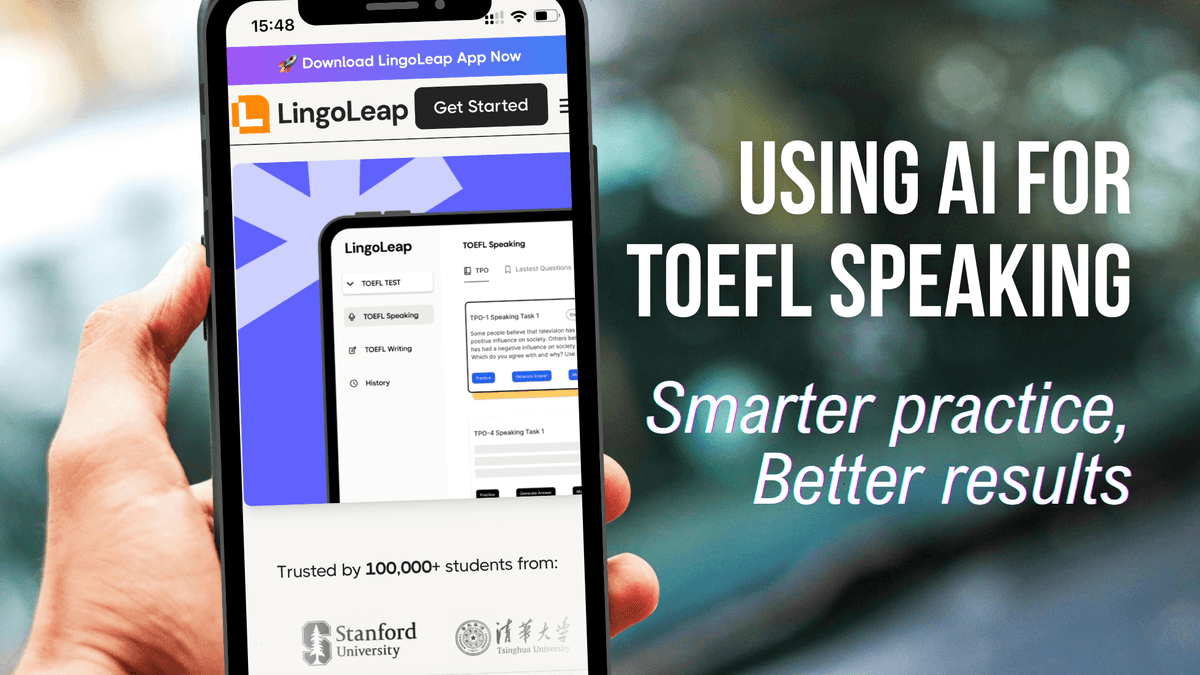
Platforms like LingoLeap offer advanced AI-driven feedback that gives you detailed insights into your practice test results. For example, the platform can identify whether your problem is due to grammar, vocabulary, or timing. This detailed analysis helps you focus on areas that need the most attention.
Test Strategies & Preparation Tips
Maximizing your practice test results doesn’t just mean analyzing your mistakes—it also involves implementing effective test strategies. Here are some strategies to improve your score across each section:
1. Reading Section Strategies
The Reading section tests your ability to understand and analyze written English. To improve your reading score:
- Practice Skimming and Scanning: Focus on getting the main idea of the passage first, then scan for key details.
- Time Management: Each passage has a set amount of time, so practice pacing yourself to ensure that you don’t spend too much time on any one question.
- Improve Vocabulary: Work on expanding your vocabulary to understand more complex texts. LingoLeap’s vocabulary-building features can help you with this.
2. Listening Section Strategies
The Listening section tests your ability to understand spoken English in an academic setting. Here's how to improve:
- Listen to Diverse Accents: Practice listening to various English accents. This can help you improve your comprehension when encountering speakers with different ways of pronouncing words.
- Take Notes: During the listening test, write down key points while listening. This can help you remember important details for answering questions later.
- Practice Active Listening: Engage with podcasts, news programs, or lectures in English to train your ear to pick up on nuances in the language.
3. Speaking Section Strategies
For the Speaking section, where you need to respond to prompts within a set amount of time:
- Practice Timing: Use a stopwatch to time your responses and ensure that you can express your ideas within the time limit.
- Structure Your Responses: Use a clear structure, such as stating your main idea first, followed by supporting details.
- Record and Review: Record your responses and listen to them. Focus on pronunciation, grammar, and fluency.
4. Writing Section Strategies
The Writing section tests your ability to write academic essays. Here’s how to improve:
- Plan Before You Write: Take a few minutes to plan your response, outlining the main points and supporting details.
- Use Clear and Simple Language: Avoid overly complex sentences that can confuse your reader. Clear and concise writing is often more effective.
- Revise Your Writing: Always leave time to review your work. Check for grammar mistakes, spelling errors, and unclear sentences.
Real-Life Case Study: How LingoLeap Helped Improve TOEFL Scores
Meet Emily, a student who used LingoLeap to prepare for the TOEFL. Emily had been struggling with the Speaking section of the exam. She had difficulty organizing her thoughts and often ran out of time before completing her responses. After taking a series of practice tests, she used LingoLeap’s AI-driven feedback to identify the areas that needed improvement.
Through the platform, Emily learned that she was spending too much time on her introduction and didn’t have enough time for her conclusion. Armed with this knowledge, Emily restructured her responses and focused on speaking more concisely. By practicing with LingoLeap’s tailored exercises and taking regular practice tests, Emily was able to improve her speaking score by 4 points in just a few weeks.
Student Stories: How Other Learners Improved Their Scores
Here are some success stories from students who made significant improvements using LingoLeap’s TOEFL preparation tools:
- John from Brazil: John improved his Reading score by 5 points after using LingoLeap’s targeted reading exercises, which focused on improving his speed and comprehension.
- Sarah from Japan: Sarah struggled with the Writing section but improved her score by 3 points after receiving detailed feedback from LingoLeap’s writing tool, which helped her work on her essay structure.
Incorporating LingoLeap into Your Study Routine
LingoLeap’s platform is designed to provide detailed feedback and personalized study suggestions for each student. By using it in your TOEFL preparation, you can ensure that you are practicing the right skills in the right areas.
- AI-Powered Feedback: Get personalized insights and recommendations based on your performance.
- Comprehensive Study Materials: Access practice tests, vocabulary exercises, speaking prompts, and more.
- Real-Time Performance Tracking: Track your progress with detailed analytics to see where you’re improving and where you still need work.
By incorporating these strategies into your study plan and using LingoLeap’s feedback tools, you’ll be well on your way to maximizing your TOEFL practice test results.
Conclusion
Maximizing your TOEFL practice test results requires more than just taking practice exams. You need to carefully analyze your results, identify areas of improvement, and implement targeted strategies for each section. By using AI-driven tools like LingoLeap, you can gain valuable insights into your strengths and weaknesses, ensuring that your preparation is both effective and efficient. With the right approach, you’ll be prepared to ace the TOEFL and achieve your desired score.