TOEFL 2026 Read in Daily Life: Task Format and Common Text Types
YutingMarch 17, 2026
The TOEFL 2026 Reading section no longer focuses only on academic passages. In the updated format, test takers also need to read short nonacademic texts that reflect real-life English use. One of the new task types is Read in Daily Life, which asks you to read a short everyday text and answer questions about meaning, purpose, or specific details. According to ETS materials, these texts are usually about 15 to 150 words, and each task includes up to three questions.
If you are still getting familiar with the overall structure of the new TOEFL Reading section, you may want to start with 2026 New TOEFL Reading Section Explained: Task Types, Question Formats, and MST Strategies before focusing on this specific task type.
What Is the TOEFL Read in Daily Life Task?
ETS describes Read in Daily Life as a task based on everyday reading material rather than long academic prose. Official lesson materials say the passage may be a sign, social media post, advertisement, or another kind of text you might encounter in daily life. Official practice materials also show examples such as a notice and a social media post.
That means this task is not mainly about dense theory or subject knowledge. Instead, it focuses on whether you can understand practical English in realistic situations. In third-party strategy materials, the question focus is commonly described as things like main idea, detail, vocabulary in context, inference, and rhetorical purpose.
What Kinds of Texts Commonly Appear?
Because this task is built around everyday reading, the format of the text matters almost as much as the content. You are not always reading a normal paragraph. Sometimes you are reading something visual, short, or structured around purpose more than explanation.
Here are the most likely text categories.
1. Notices and Announcements
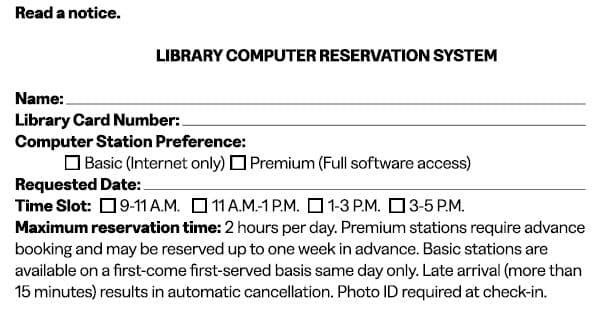
These passages often test purpose, who the message is for, and specific action details. Typical notice topics may include:
- billing or payment reminders
- service updates
- policy changes
- event information
- instructions for users or customers
2. Social Media/Webpage Posts
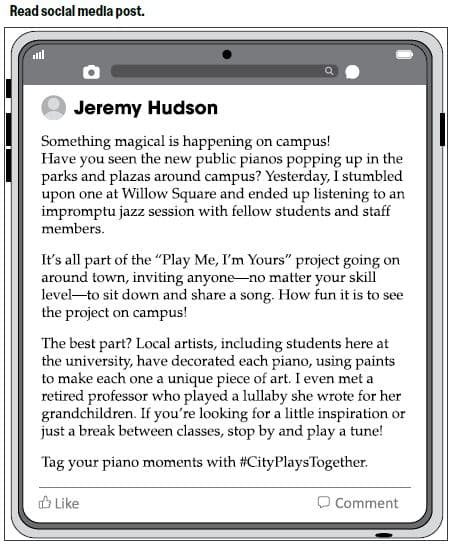
These passages may test whether you can separate the overall message from attractive but secondary descriptive details. Typical topics may include:
- promoting an event
- recommending a place
- describing products or services
- encouraging community participation
- sharing personal experience with a practical purpose
3. Advertisements and Promotional Texts
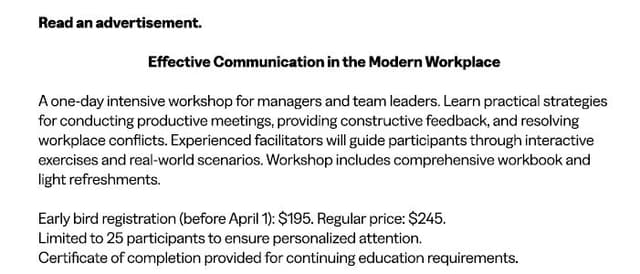
Ads are often short, selective, and persuasive. They may not directly state every fact, so you often need to identify what the text is trying to make the reader do. In these passages, common question angles include:
- What is the main purpose of the ad?
- Who is the intended audience?
- What feature or benefit is emphasized?
- Why is a specific phrase included?
4. Signs, Labels, and Short Public Information Texts
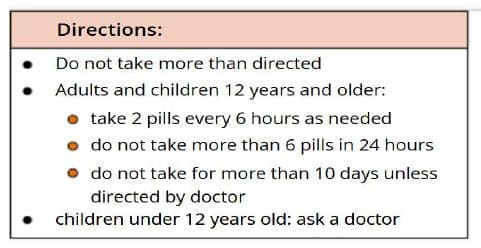
ETS also names signs as a possible format. These texts are usually very short, but they can still be tricky because every word matters. A sign may communicate restrictions, directions, warnings, or procedures, and the test may ask you to infer what action is required or what situation the sign belongs to. These passages may include:
- facility rules
- directions
- warnings
- office or campus instructions
- service hours or access conditions
5. Messages, Emails, or Other Everyday Written Communication
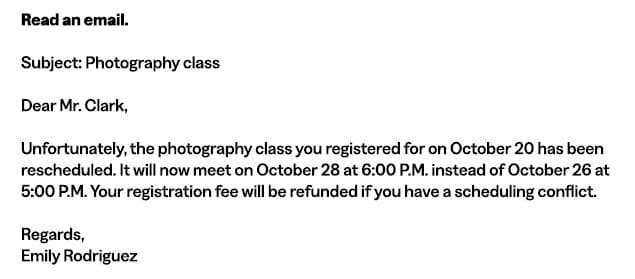
These are reasonable passage models because they reflect the same daily-life reading logic: short, purposeful, and detail-focused. They are especially useful for practicing audience, purpose, and requested action.
What Do These Text Types Have in Common?
Even though the formats look different, most Read in Daily Life passages share several features.
1. They are short but information-dense
You are not reading for deep academic analysis. You are reading for function. That means every sentence usually has a job: to inform, request, promote, warn, or instruct. ETS sample materials reflect this by using compact texts with immediately testable information.
2. They are purpose-driven
In many cases, the first question is not “What does this text say?” but “Why does this text exist?” Social posts promote, notices instruct, and ads persuade. Recognizing purpose quickly helps you answer later questions faster. This matches both official Reading-skill guidance and common third-party strategy explanations.
3. They often require scanning
ETS explicitly highlights scanning texts for specific information as one of the essential skills for success in the updated Reading section. That is especially true here because these texts are short enough that the correct answer is usually tied to one phrase, one line, or one directly implied point.
What Question Types Should You Expect?
While ETS does not publish a single official fixed list for this task, official skill guidance and widely used strategy materials point to a consistent group of question types:
- main idea or purpose
- specific detail
- vocabulary in context
- inference
- rhetorical purpose
That means strong performance depends less on advanced academic vocabulary and more on quickly recognizing:
- what kind of text you are reading
- what the writer wants the reader to know or do
- which details are central
- what a word means in that exact context
Start Practicing Read in Daily Life Tasks with LingoLeap
The best way to prepare is to become familiar with the logic behind each type of text. Once you can quickly recognize whether a passage is informing, promoting, requesting, or instructing, the questions become much easier to manage.
In the next article, we will look at how to prepare for Read in Daily Life effectively, including both long-term daily practice habits and test-day answering strategies.

Ready to apply what you have learned? Practice Read in Daily Life questions on LingoLeap and start building the speed, accuracy, and confidence you need for the TOEFL 2026 Reading section.