Mastering the New TOEFL Academic Discussion: A Complete Guide to Success
LingoleapAugust 23, 2023
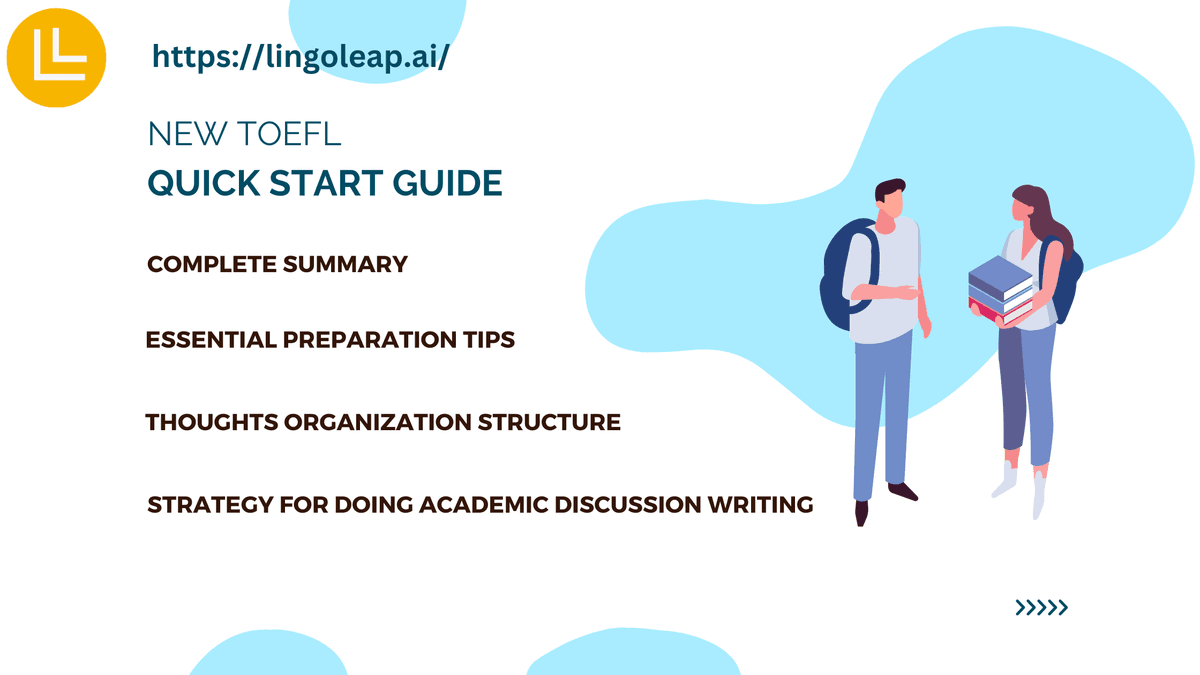
The TOEFL exam can be a daunting challenge, especially with the introduction of the new Academic Discussion writing section. Many students have been voicing their concerns about this new aspect of the exam, primarily focusing on issues like time management and the organization of ideas.
Don't worry! We've got your back. We've gathered these concerns and crafted a comprehensive guide to help you excel in the exam. Here's everything you need to know:
Short on Time? How to Complete the Writing Challenge in 10 Minutes
Time management is a common concern, but we've broken down a five-step process to help you tackle the Academic Discussion in just 10 minutes.
- Understanding the Question (40s): Summarize the professor's question and students' responses.
- Define Your Viewpoint (10s): Agree with one student or provide a new argument.
- Outline Arguments (1min): Establish your viewpoint and build a clear thought process.
- Support Reasons (7-8min): Use examples to support your viewpoint, ensuring logical clarity.
- Check and Correct (30s): Review and edit your essay for accurate language.
Organizing Your Thoughts
Ten minutes might seem like a tight deadline, but it's doable!
- Grasp the theme of the question.
- Construct a methodical thought process.
- Practice mind mapping in English during preparation to make your thoughts clearer.
Structuring Your Response
TOEFL Academic Discussion writing has two main response methods:
- A. Agree with a Student's Viewpoint: First, identify the student's name and opinion, then offer another reason or perspective for further argumentation, ensuring clear logic and strong evidence.
- B. Propose a New Theory: In response, acknowledge the reasonableness of both students' viewpoints, but then point out that you have a better solution, and then progressively unfold your argument, explaining the rationality and advantages of your new theory.
Preparation Essentials: Key Tips and Tricks
Here are some essentials to guide your preparation:
- Practice Classic Topics: Work, education, media, technology, and environmental protection are common areas to focus on.
- Utilize Mind Maps: Organize content for efficiency.
- Summaries in English: Preparing summaries and details in English will streamline your preparation.
Preparation Essentials: Key Tips and Tricks
Here are some essentials to guide your preparation:
- Practice Classic Topics: Work, education, media, technology, and environmental protection are common areas to focus on.
- Utilize Mind Maps: Organize content for efficiency.
- Summaries in English: Preparing summaries and details in English will streamline your preparation.
What's Next?
Stay tuned! We'll be sharing academic writing sample essays and guiding you step by step on how to form your templates.
Mastering the new TOEFL Academic Discussion doesn't have to be an uphill battle. With focused preparation and the right strategies, success is within your grasp. Join Lingoleap.ai today and take the leap towards your dream score!