음식 주제 - 아이엘츠 스피킹 파트 2 & 3: 샘플 큐카드, 모범 답변, 꿀팁
음식 관련 아이엘츠 스피킹 Part 2와 Part 3에서 자주 나오는 큐카드와 토론 질문을 알아보세요. 유창하고 자연스러운 어휘로 답변하는 방법을 배워보세요.
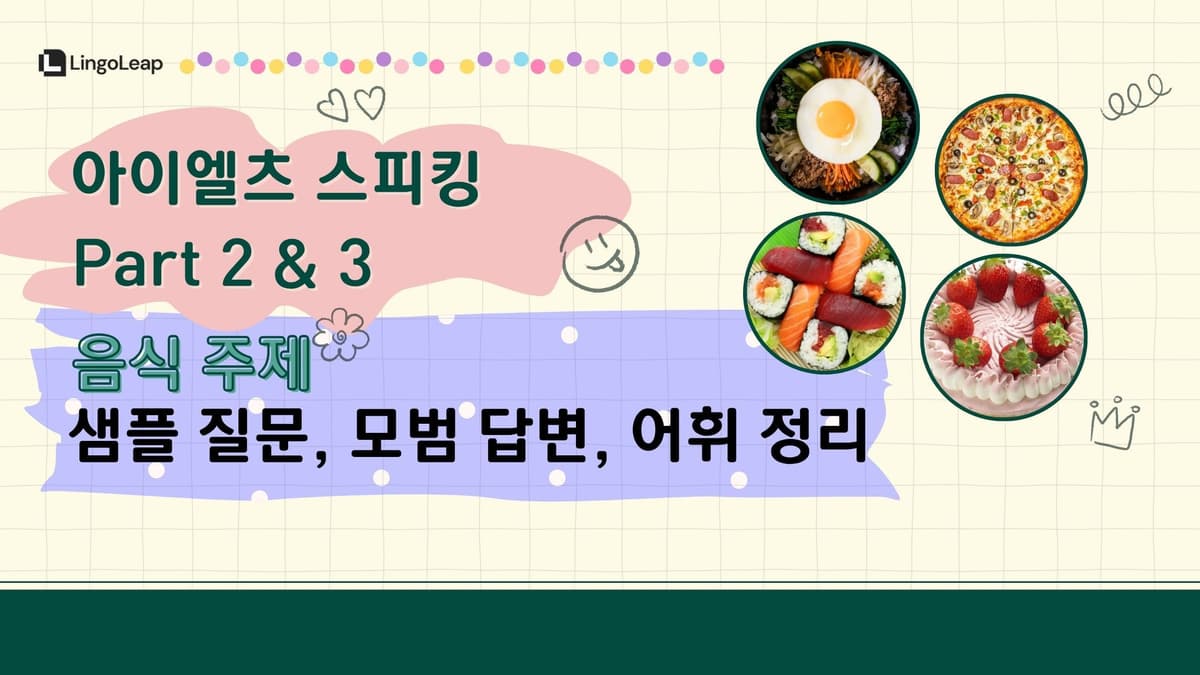
아이엘츠 스피킹 Part 2와 Part 3에서는 기억에 남는 음식 경험을 설명하거나, 음식 트렌드, 건강 습관, 문화적 차이 등에 대해 더 깊이 있는 답변을 요구하는 경우가 많습니다. Part 1이 짧고 개인적인 답변 중심이라면 Part 2는 1~2분간의 연설을 요구하고 Part 3에서는 비교와 의견이 포함된 분석적인 질문이 주어집니다.
아이엘츠 스피킹 Part 2: 음식 관련 큐카드
다음은 시험에 출제될 수 있는 음식 관련 아이엘츠 스피킹 Part 2 주제들이에요.
자주 나오는 큐카드 주제
- Describe a memorable meal you had
- Describe your favorite food or dish
- Describe a traditional food from your country
- Describe a time you ate something new or unusual
- Describe a restaurant you enjoy going to
- Describe a meal you cooked yourself
모범 답변: Describe a Traditional Food from Your Country
“One traditional food from my country that I really love is banh chung, a sticky rice cake that’s especially popular during Tet, the Lunar New Year in Vietnam. It’s made with sticky rice, mung beans, and pork, all wrapped in banana leaves and boiled for several hours. What makes it special isn’t just the taste, which is hearty and flavorful, but also the cultural meaning behind it.In my family, we often make banh chung together the night before Tet. Everyone helps, from wrapping the cakes to watching the pots boil overnight. I remember staying up late with my cousins, chatting and waiting for the cakes to finish. Eating it the next morning, after all the effort, made it even more delicious. It’s not just food—it’s tradition, family, and celebration all in one bite.”
음식 주제에 대한 아이엘츠 스피킹 Part 2 팁
- 상황 설명을 포함하기 – 언제, 어디서, 누구와 함께였는지 말해보세요.
- 냄새, 질감, 감정 등을 묘사하기 – 오감을 활용해 생생한 이야기로 만드세요.
- 문화나 전통과 연결짓기 – 답변에 깊이를 더할 수 있습니다.
- 재료만 나열하지 않기 – 하나의 이야기로 풀어보세요.
아이엘츠 스피킹 Part 2의 다른 주제들도 연습하고 싶으신가요? 기술 주제가이드를 확인해보세요.
아이엘츠 스피킹 Part 3: 음식 관련 심화 토론
Part 3에서는 보다 진지한 주제로 넘어갑니다. 사회 속 음식과 관련된 이슈들을 건강, 문화, 경제와 연결지어 논의하는 질문들이 주어지죠. 다음은 자주 등장하는 아이엘츠 스피킹 Part 3 질문 유형이에요.
아이엘츠 스피킹 Part 3에서 자주 나오는 질문
- How has food culture changed in your country in recent years?
- Why do some people prefer fast food over home-cooked meals?
- Do you think traditional food will disappear in the future?
- Should governments do more to promote healthy eating?
- What are the differences between eating habits in younger and older generations?
음식 관련 아이엘츠 스피킹 Part 3 질문에 대한 모범 답변
Q: How has food culture changed in your country in recent years?A: “In the past, most people ate home-cooked meals every day, often with their families. But now, especially in big cities, there’s a growing trend toward eating out or ordering food online. Fast food chains and international restaurants have also become more popular. I think this shift is largely due to busy lifestyles and the influence of global media.”Q: Why do some people prefer fast food over home-cooked meals?A: “Fast food is quick, cheap, and convenient. For people who work long hours or don’t know how to cook, it’s often the easiest choice. However, many don’t realize how unhealthy it can be in the long run. Home-cooked meals take more effort, but they’re usually more nutritious and allow for better portion control.”Q: Do you think traditional food will disappear in the future?A: “I hope not, but there’s a risk. With the rise of modern diets and international chains, many young people are more familiar with burgers and pizza than with local dishes. That said, I think cultural pride and food festivals help keep traditional recipes alive. In fact, some chefs are finding creative ways to modernize old dishes and make them popular again.”Q: Should governments do more to promote healthy eating?A: “Yes, definitely. Public health is a serious concern, especially with the rise of obesity and related diseases. Governments could organize awareness campaigns, improve food labeling, or offer subsidies for fruits and vegetables. Schools can also play a big role by educating children about balanced diets from an early age.”Q: What are the differences between eating habits in younger and older generations?A: “Older generations often prefer traditional meals and stick to three meals a day, while younger people tend to snack more or eat on the go. Young people are also more likely to try international cuisines or follow diet trends like veganism or keto. Technology has also influenced their choices—they often use food delivery apps or follow online recipes.”
아이엘츠 스피킹 Part 2 & 3: 음식 주제에 유용한 어휘와 표현
- Traditional cuisine / Local delicacies
- Balanced diet / Healthy eating habits
- Processed food / Fast food / Junk food
- Nutrient-rich / Home-cooked / Organic food
- Eating out / Dining in / Food delivery services
- Culinary traditions / Food culture / Family recipes
- Savor a meal / Try new flavors / Explore local dishes
- Portion control / Overeating / Nutritional value
- Obesity / Lifestyle diseases / Diet-related health issues
똑똑한 아이엘츠 스피킹 전략
- 연결어를 사용하세요: “반면에(On the other hand),” “그렇긴 하지만(That being said),” “그 결과로(As a result),” “예를 들어(For instance)”
- 양측을 모두 말하세요: 패스트푸드를 좋아하더라도 그 부정적인 영향도 함께 언급하세요.
- 실생활 맥락을 추가하세요: “우리 도시에서는(In my city),” “우리 학교에서는(In my school),” “우리 가족은(In my family)…”
- 암기하지 마세요: 기계처럼 들리지 않도록 자연스럽고 대화하듯 말하는 것이 중요합니다.
요약: 아이엘츠 스피킹 Part 1외 음식 주제
아이엘츠 스피킹의 음식 주제는 단순히 좋아하는 음식에 그치지 않아요. Part 2에서는 스토리텔링, 파트 3에서는 비판적 사고가 중요하죠. 어휘, 개인적인 예시, 깊이 있는 의견을 잘 조합하면 시험관에게 강한 인상을 줄 수 있습니다.실시간 피드백, AI 기반 첨삭, 무제한 아이엘츠 연습 문제를 원하시나요?
👉지금 바로 LingoLeap을 무료로 체험하고, 더 스마트하게 준비하세요!