IELTS Writing AI Evaluation Tool Comparison: LingoLeap vs ChatGPT
Compare LingoLeap vs ChatGPT for IELTS Writing prep. Discover which AI tool offers exam-aligned scoring, detailed feedback, and better guidance.
If you’re preparing for the IELTS exam, you’ve probably wondered: Is there an IELTS Writing evaluation tool that can not only correct my essay but also give me reliable guidance to reach a higher band score? Popular AI tools like ChatGPT can be useful for quick grammar checks or generating sample essays, but they often fall short of the detailed feedback needed to meet official IELTS examiner standards. That’s where LingoLeap comes in.
In this article, we’ll compare LingoLeap, a platform designed specifically for IELTS writing improvement, with ChatGPT, a general-purpose AI tool. You’ll see how LingoLeap helps students understand how to write IELTS essays effectively, track and improve weak areas over time, and practice under exam-like conditions—making it a more practical choice for anyone aiming for a high band score in IELTS writing.
LingoLeap vs ChatGPT: A Quick Comparison
AI can help you revise essays, but whether it truly improves your writing skills depends on the tool’s specialization and focus. For students preparing efficiently for IELTS, choosing the right tool is crucial.
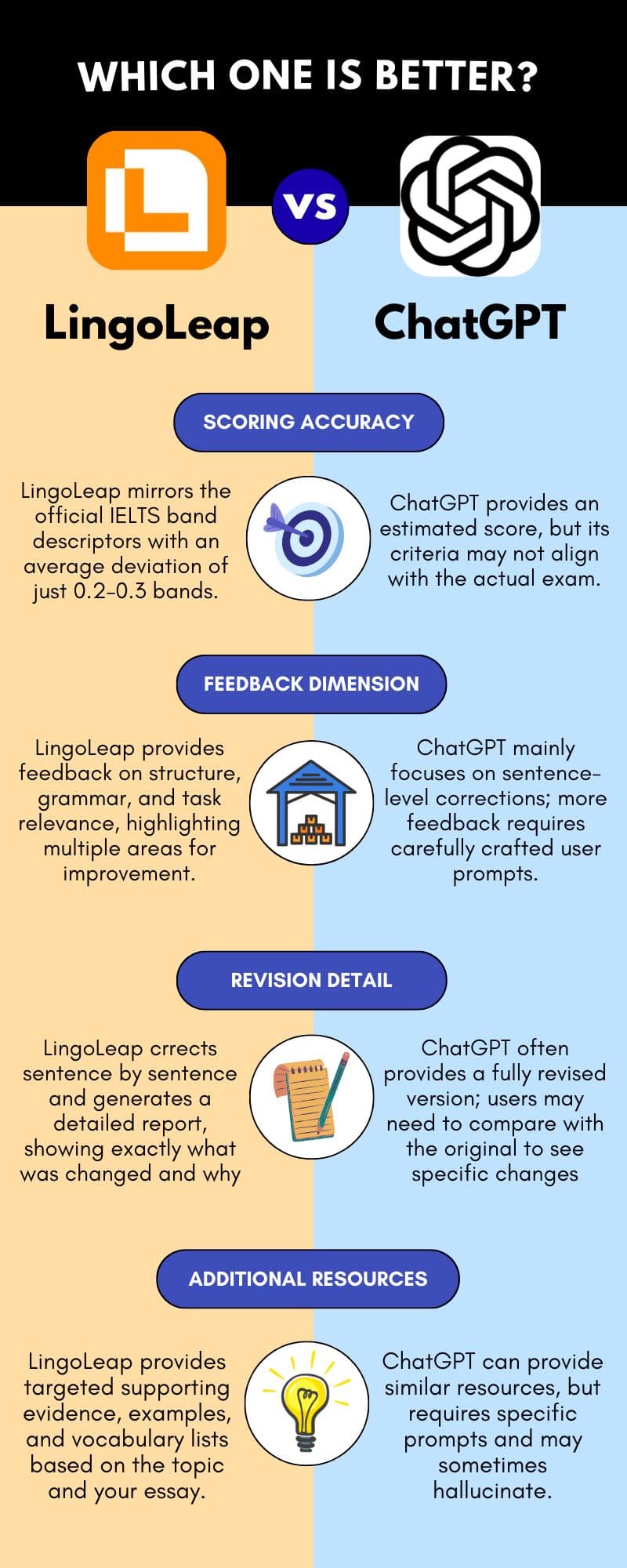
Here’s a quick overview comparing LingoLeap and ChatGPT:
LingoLeap Highlights 💡
In this comparison, LingoLeap demonstrates several distinct strengths that make it particularly effective for IELTS writing preparation:
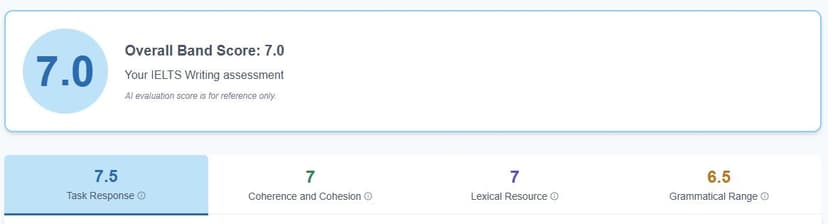
1. Test-aligned Scoring
LingoLeap’s scoring system closely mirrors official IELTS band descriptors, with an average deviation of just 0.2–0.3 bands. This means students receive evaluations that are highly consistent with what actual IELTS examiners would assign, giving them a realistic understanding of their current level.
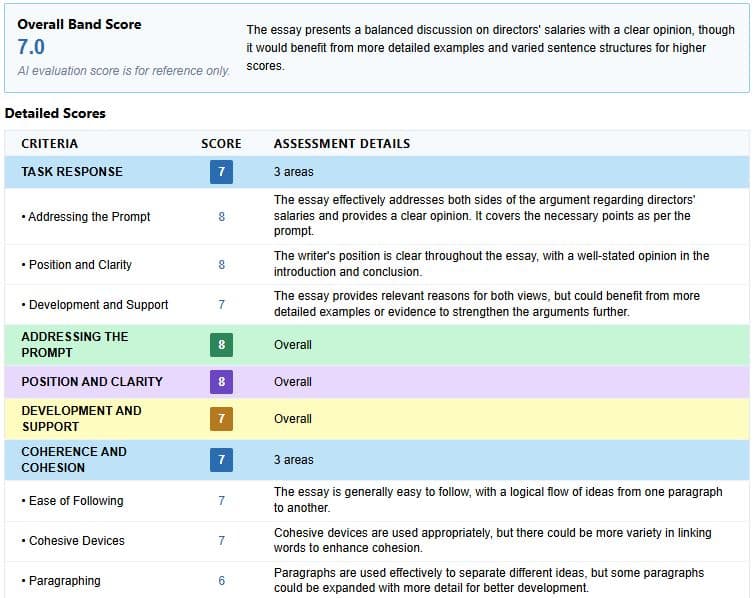
2. Comprehensive Feedback
The platform provides in-depth feedback across multiple dimensions—including essay structure, grammar, vocabulary usage, and task relevance. This allows students to clearly identify specific weaknesses in their writing and understand how to improve each aspect systematically.
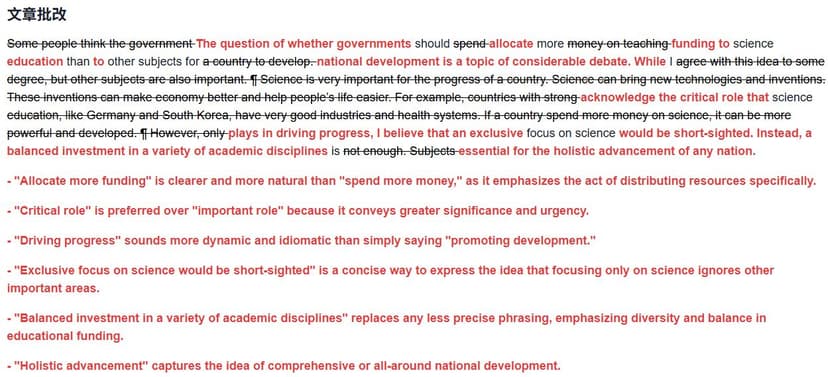
3. Sentence-level Revision Reports
LingoLeap reviews essays sentence by sentence, generating detailed reports that not only show what changes were made but also explain why these edits improve clarity, coherence, or correctness. This helps students learn from their mistakes rather than just seeing a corrected version.
4. Targeted Learning Resources
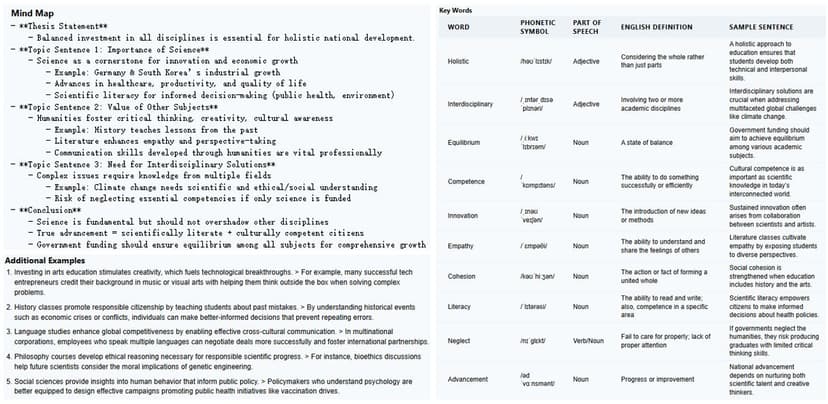
Based on the topic and the student’s essay, LingoLeap offers curated supporting materials such as example sentences, relevant evidence, and tailored vocabulary lists. These resources help learners enrich their writing and develop more precise, topic-appropriate language.
5. Practical and Structured Guidance
While general-purpose AI tools like ChatGPT can provide grammar or stylistic suggestions, they typically focus on sentence-level corrections. Achieving nuanced, exam-oriented guidance often requires carefully crafted prompts, making the learning process less systematic. LingoLeap, by contrast, integrates all aspects of writing improvement into a structured workflow that supports both practice and long-term skill development.
Wrapping Up: Make the Smart Choice for IELTS Success
In conclusion, AI tools like ChatGPT can be helpful for basic writing corrections, but achieving significant improvement in IELTS writing often requires a tool tailored to the exam.
LingoLeap provides exam-aligned scoring, detailed feedback, sentence-level revision reports, and topic-specific learning resources, offering a structured approach to developing writing skills. For students aiming to improve efficiently and build confidence in their writing, using a specialized tool can complement practice and make preparation more focused and effective.