Is CELPIP Easier than IELTS? A Complete Comparison
Discover whether CELPIP or IELTS is easier. Compare format, scoring, cost, and global recognition, plus expert IELTS prep tips from Lingoleap.ai.
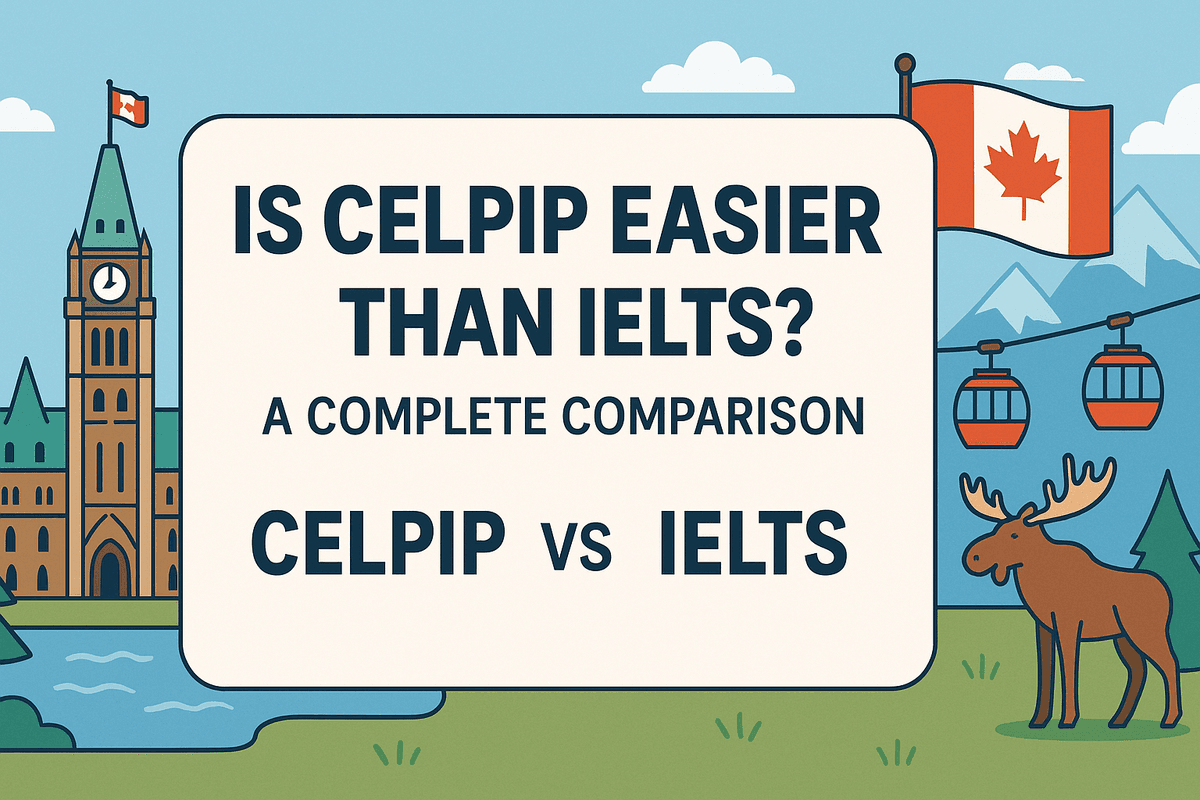
Choosing between the CELPIP (Canadian English Language Proficiency Index Program) and IELTS (International English Language Testing System) tests can be confusing. Many ask, “Is CELPIP easier than IELTS?” The answer depends on your goals and preferences. Both tests assess Listening, Reading, Writing, and Speaking, but have different formats and scoring. For Canadian immigration purposes, the government accepts CELPIP–General or IELTS General Training. However, IELTS is recognized in over 140 countries and by thousands of institutions worldwide, whereas CELPIP is tailored mainly for Canadian contexts. In the end, neither exam is inherently “easier” – success comes from choosing the right test for your situation and preparing thoroughly.
1. Global vs Canadian Acceptance and Why It Matters
For international opportunities (study, work, visa), IELTS has a clear edge. It is accepted globally by employers, universities, and immigration authorities – over 11,500 organizations in 140+ countries accept IELTS scores. CELPIP’s acceptance is mostly Canada-centric. Immigration, Refugees and Citizenship Canada (IRCC) specifies that applicants must take CELPIP-General or IELTS General for Express Entry and other immigration streams. Outside Canada, CELPIP is rarely used.
Why does this matter? If you plan to immigrate to Canada, either test satisfies language requirements. Both link their results to the Canadian Language Benchmarks (CLB) system, so an applicant can meet Express Entry criteria with either. But if you might study or work outside Canada later, IELTS keeps more doors open. In summary, for Canadian-focused goals CELPIP is a fine choice, but for global acceptance, IELTS is often preferred.
👉 CTA: If global recognition matters to you, explore our IELTS overview to understand how IELTS can open doors in more than 140 countries.
2. Format and Delivery: Paper, Computer, and Online Options
Both tests assess the same four skills, but their delivery methods differ:
- Test Mode: CELPIP is fully computer-based (including Speaking and Writing). IELTS offers a choice: paper-based or computer-based at test centers, and recently an online-at-home option for Academic IELTS.
- Speaking Test: For CELPIP, you speak into a microphone with recorded prompts. IELTS uses a live face-to-face interview with an examiner (or video call for online versions). Many candidates find the IELTS format more conversational, whereas CELPIP’s recorded format feels like “talking to a computer.”
- Duration: The CELPIP-General test runs about 3 hours straight. IELTS (Academic or General) takes about 2h45m, and the speaking test may be scheduled on a different day.
- Practice & Results: Computer-based tests often yield faster results (IELTS computer: ~3–5 days, CELPIP: 3–5 days). Paper IELTS takes longer (~13 days).
👉 CTA: Not sure which delivery mode suits you? Check our IELTS computer vs paper guide to choose the best fit.
3. Section-by-Section Difficulty Ratings
Each skill has unique differences:

Listening
CELPIP listening lasts about 1 hour with Canadian-accent recordings and no option to go back to previous questions. IELTS listening is about 30 minutes and uses diverse accents (British, Australian, American, etc.). CELPIP’s longer duration can feel intense, while IELTS demands quick comprehension of varied accents.
Writing
Both tests have two tasks. CELPIP offers 27 minutes for Task 1 (formal email) and 26 minutes for Task 2 (opinion essay), typed on screen with spell-check. IELTS General gives 20 minutes (letter) and 40 minutes (250-word essay) with no spell-check. IELTS tasks are longer and more academic; CELPIP tasks are shorter but require quick thinking.
Speaking
CELPIP speaking is 8 recorded tasks spoken into a computer. IELTS speaking is a live interview with three parts. Many students feel more comfortable with IELTS because of natural interaction, while others prefer CELPIP to avoid face-to-face pressure.
👉 CTA: Practice sample IELTS speaking questions to see which format feels easier for you.
4. Scoring Transparency and Grade Conversion
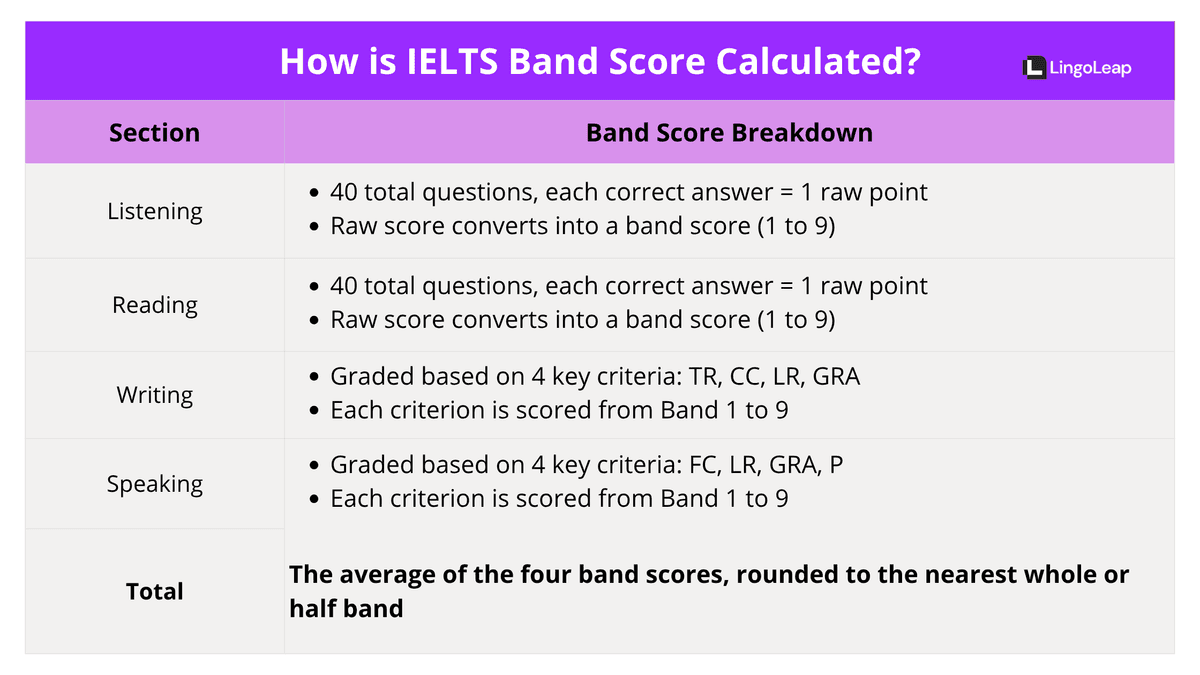
- Score Scales: IELTS uses a 0–9 band scale (averaged to the nearest 0.5). CELPIP uses a 1–12 level scale.
- Descriptors: IELTS publishes band descriptors (e.g., Band 7 = “Good User”), while CELPIP provides level descriptions.
- Conversion: Both map to the Canadian Language Benchmarks. For example, IELTS 7.0 ≈ CELPIP 8, IELTS 8.0 ≈ CELPIP 10, IELTS 9.0 ≈ CELPIP 12.
👉 CTA: Use our IELTS band conversion tool to estimate CLB levels and plan your target score.
5. Real Test Taker Experiences and Data
Test-taker feedback reveals valuable patterns:
- CELPIP Candidates highlight the convenience of computer typing and spell-check, but note the pressure of no breaks and recorded speaking.
- IELTS Candidates appreciate the interactive speaking interview and the option for paper-based writing, but mention the challenge of varied accents and strict spelling rules in Listening.
Students consistently agree that preparation and familiarity matter more than the test itself. Those who practice with full-length mock exams and review feedback—like the tools on Lingoleap IELTS Practice—achieve the highest scores.
6. Cost, Availability, and Retake Policies
- Fees: IELTS typically costs around CAD $320–350 in Canada; CELPIP is roughly CAD $290.
- Availability: IELTS is offered worldwide in thousands of centers, while CELPIP is concentrated in Canada with limited overseas locations.
- Retakes: IELTS allows unlimited retakes with no waiting period. CELPIP requires a minimum five-day gap between attempts.
👉 CTA: Compare upcoming IELTS test dates to plan your schedule.
7. Steps to Achieve a High IELTS Band Regardless of Choice
Whether you pick IELTS or CELPIP, reaching a high score (e.g., Band 7+) requires smart preparation:
- Understand Requirements: Know the band/CLB you need.
- Use Official Materials: Practice with real test questions and our IELTS Writing Task 2 strategies.
- Build Language Skills: Expand vocabulary, grammar, and listening comprehension using Lingoleap’s IELTS Reading & Listening tips.
- Simulate the Exam: Take full-length practice tests on Lingoleap IELTS Practice to improve timing and stamina.
- Focus on Weaknesses: Get AI feedback on writing or speaking through our IELTS AI Scoring tool.
- Review & Get Help: Consider Lingoleap’s IELTS courses for structured learning and personalized feedback.
Final Takeaway
So, is CELPIP easier than IELTS? There’s no universal answer. CELPIP’s single-session, Canadian context may feel simpler for some, while IELTS’s global recognition and flexible formats suit others. The best choice depends on your goals and your comfort with the test style.
👉 Call to Action: Ready to aim for a high IELTS band and keep global opportunities open? Start practicing today on Lingoleap IELTS for free sample tests, AI scoring, and step-by-step preparation plans.
This updated version keeps every key fact, removes all external URLs, and provides multiple internal Lingoleap links and a clear invitation to use Lingoleap IELTS resources to maximize both SEO performance and reader value.