IELTS Speaking Topics 2024-2025 with Sample Answers
Explore IELTS Speaking Topics 2024 - 2025 with sample answers. Includes Part 1 themes, real questions, and speaking tips to help you speak confidently and fluently.
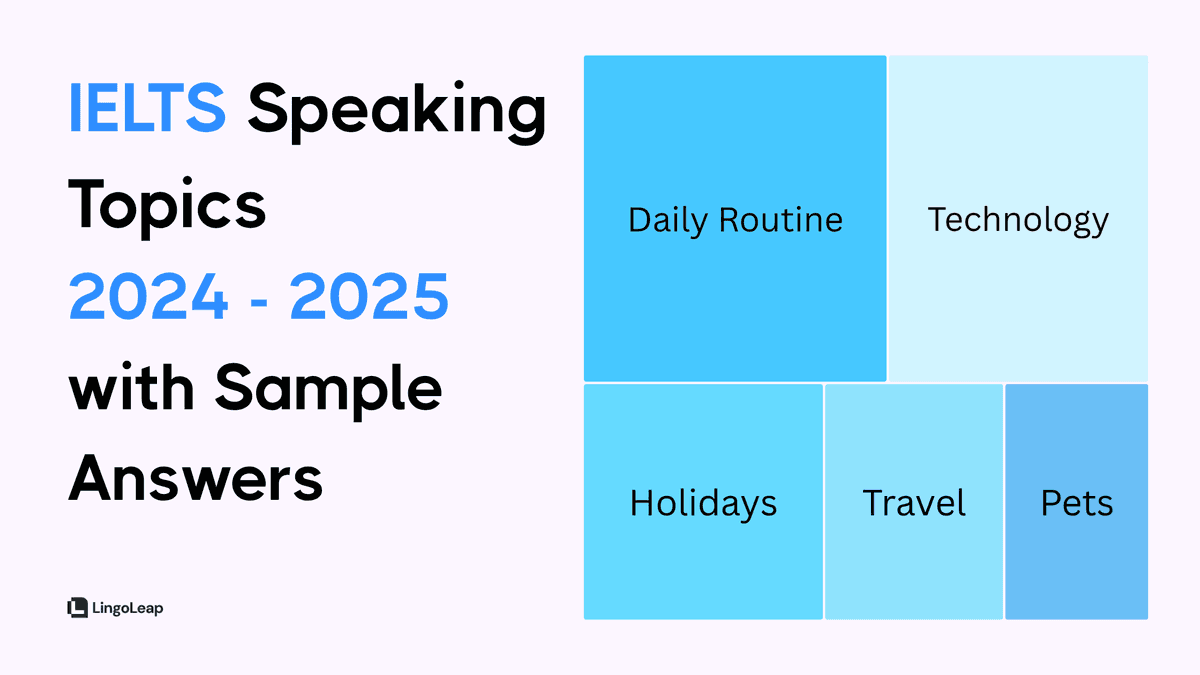
If you're preparing for your IELTS Speaking test, you're in the right place! We've compiled a complete list of IELTS Speaking Topics 2024 ~ 2025 based on reports from test takers and reputable IELTS resources. This blog focuses on Part 1 speaking questions, aka the warm-up section where the examiner asks you about familiar topics like your hometown, hobbies, or daily routine.
Part 1: IELTS Speaking Topics 2024 ~ 2025
These questions are personal and easy to talk about, but they still test your fluency, grammar, vocabulary, and pronunciation. You’ll typically answer 10–12 short questions in 4–5 minutes.
Theme: Work and Studies
- Do you work or are you a student?
- What do you like about your work/study?
- What subjects are you studying?
- Is there anything you dislike about your job/school?
Tips:
- Use specific academic/work terms: “I’m majoring in computer science with a focus on machine learning.”
- Explain your routine at work or school to show a range of verbs.
- Compare past and present experiences: “In high school, I didn’t enjoy group work, but now I find it useful.”
Theme: Hometown
- Where is your hometown?
- What do people do there in their free time?
- Do you think your hometown has changed over the years?
- Would you like to live there in the future?
Tips:
- Use descriptive phrases: “It’s a quiet town surrounded by rice fields.”
- Use comparison: “It used to be very rural, but now it’s become more urbanized.”
- Mention local culture or food—it adds personality.
Theme: Daily Routine
- What’s your typical daily routine?
- Do you usually follow the same schedule every day?
- What part of the day do you enjoy most?
- Has your daily routine changed recently?
Tips:
- Use time-related linking phrases: “After breakfast… In the evening… Around midnight…”
- Use a mix of present and present perfect: “I’ve been doing yoga every morning.”
- Express emotions with routine: “I feel recharged after my evening walk.”
Theme: Hobbies and Free Time
- What do you do in your free time?
- Do you prefer indoor or outdoor activities?
- Have your hobbies changed since childhood?
- What hobby would you like to try in the future?
Tips:
- Don’t just name hobbies—describe the process: “I like sketching landscapes with charcoal.”
- Talk about frequency: “I play badminton twice a week.”
- Mention community or social aspects if relevant.
Theme: Shopping
- Do you enjoy shopping?
- What kind of things do you often buy?
- Do you prefer shopping online or in stores?
- Have your shopping habits changed recently?
Tips:
- Use phrasal verbs: “I like checking out new tech gadgets.”
- Mention budget or habits: “I try to avoid impulse buying.”
- Use contrast: “Online shopping is faster, but I miss trying things on.”
Theme: Weather
- What kind of weather do you like?
- Does the weather affect your mood?
- What is the weather like in your country?
- Have you ever experienced extreme weather?
Tips:
- Use descriptive adjectives: “I love crisp autumn mornings.”
- Mention seasonal activities: “I go skiing in winter.”
- Use similes/metaphors if comfortable: “The heat was like an oven.”
Theme: Technology
- What technology do you use every day?
- How has technology changed your daily life?
- Do you find it difficult to keep up with technology?
- What device do you use the most?
Tips:
- Mention specific apps or tools: “I rely on Google Calendar to manage my day.”
- Talk about pros and cons of tech.
- Use modal verbs: “Technology could make life easier, but it also creates distractions.”
Theme: Social Media
- Do you use social media often?
- What do you usually post or look at?
- Do you think social media is addictive?
- How has social media changed the way you communicate?
Tips:
- Mention trends: “Reels are popular right now.”
- Be honest if you’re not a fan: “I deleted most apps because they waste time.”
- Talk about platforms by name.
Theme: Food and Cooking
- Do you like cooking?
- What kind of food do you enjoy?
- Who usually does the cooking in your home?
- Have your eating habits changed recently?
Tips:
- Use sensory language: “The smell of garlic and onions is comforting.”
- Mention family traditions or cultural food.
- Talk about trying new dishes.
Theme: Reading and Books
- Do you enjoy reading?
- What kinds of books do you like?
- Do you prefer paper books or e-books?
- Did you read a lot as a child?
Tips:
- Mention your favorite author or genre.
- Describe the last book you read.
- Compare formats: “I like e-books because they’re portable.”
Theme: Sports
- Do you enjoy playing or watching sports?
- What sports are popular in your country?
- Did you play any sports as a child?
- What is your favorite sport to watch on TV?
Tips:
- Mention specific teams or athletes to make answers more engaging.
- Use action verbs: “I compete,” “I train,” “I cheer for...”
- Describe feelings during sports (e.g., excitement, tension).
Theme: Travel
- Do you enjoy traveling?
- What kind of places do you like to visit?
- Have you ever travelled abroad?
- What’s your dream travel destination?
Tips:
- Use adjectives to describe locations: “breathtaking,” “remote,” “crowded.”
- Talk about cultural experiences.
- Use present perfect tense to talk about travel experiences.
Theme: Pets and Animals
- Do you like animals?
- Do you have a pet?
- What animal do you like the most?
- Are there any animals you’re afraid of?
Tips:
- Talk about pets as family members to personalize your answer.
- Describe animal behavior or appearance.
- Use conditional: “If I had a dog, I’d name it Lucky.”
Theme: Holidays and Celebrations
- What’s your favorite holiday?
- How do you usually celebrate holidays?
- Do you prefer spending holidays with friends or family?
- Do you get time off from work or school during festivals?
Tips:
- Talk about traditional foods, clothes, or events.
- Share childhood holiday memories.
- Use storytelling techniques.
Theme: Clothes and Fashion
- What kind of clothes do you usually wear?
- Do you like shopping for clothes?
- Have your clothing preferences changed over time?
- Do people in your country care about fashion?
Tips:
- Use fashion vocabulary: “casual,” “trendy,” “vintage.”
- Describe favorite outfit and why you like it.
- Mention weather and culture as reasons for clothing choices.
Theme: Music
- Do you enjoy listening to music?
- What kind of music do you like?
- Do you play any instruments?
- When do you usually listen to music?
Tips:
- Name artists or songs to support your answer.
- Use music-related adjectives: “upbeat,” “melancholic.”
- Share how music affects your emotions.
Theme: Art and Creativity
- Are you interested in art?
- Have you ever visited an art gallery?
- Do you enjoy drawing or painting?
- What kind of art do you like?
Tips:
- Use descriptive words: “abstract,” “realistic,” “minimalist.”
- Talk about school or childhood experiences with art.
- Mention famous artists or local artwork.
Theme: Transportation
- What type of transportation do you use most?
- How do people commute in your city?
- Do you like public transport?
- Have you ever experienced a travel delay?
Tips:
- Mention environmental impacts.
- Use time expressions: “It takes me 30 minutes to get to school.”
- Discuss pros and cons of different transport modes.
Theme: Public Places
- Do you often go to public parks?
- Where do people in your area go to relax?
- Are public places clean and safe in your city?
- Do you prefer quiet or crowded places?
Tips:
- Describe the atmosphere: “peaceful,” “bustling.”
- Talk about activities you do in these places.
- Mention improvements you'd like to see.
Theme: Friends and Social Life
- Do you have a lot of friends?
- What do you usually do with your friends?
- How often do you meet your friends?
- Do you prefer a few close friends or a big group?
Tips:
- Use friendship-related expressions: “We get along well.”
- Include stories or inside jokes if appropriate.
- Express values like trust and support.
Theme: Sleep
- How many hours do you sleep each night?
- Do you take naps during the day?
- What helps you fall asleep?
- Have you ever had trouble sleeping?
Tips:
- Talk about sleep habits and routines.
- Mention effects of good/bad sleep.
- Use cause-effect language.
Theme: Exercise and Fitness
- Do you exercise regularly?
- What form of exercise do you enjoy?
- How important is fitness to you?
- Do people in your country like working out?
Tips:
- Describe physical and mental benefits.
- Share your workout schedule.
- Use fitness vocabulary: “cardio,” “strength training.”
Theme: Festivals
- What is your favorite festival?
- How do people celebrate festivals in your country?
- Have you ever participated in a festival?
- Are festivals important in your culture?
Tips:
- Talk about food, clothes, and traditions.
- Use vivid imagery.
- Compare modern vs. traditional festivals.
Theme: Environment
- Is environmental protection important in your country?
- Do you do anything to help the environment?
- Are there any environmental problems in your city?
- How can we protect the environment?
Tips:
- Use environmental terms: “pollution,” “sustainability.”
- Share personal actions: “I bring my own bag.”
- Express opinion using modals: “We should recycle more.”
Theme: Language Learning
- What languages do you speak?
- Why are you learning English?
- What do you find most difficult about English?
- How do you practice speaking?
Tips:
- Mention methods: “I use flashcards and language apps.”
- Discuss challenges and goals.
- Use learning verbs: “improve,” “practice,” “memorize.”
IELTS Speaking Sample Answer (Part 1: Daily Routine)
Q: What is your typical daily routine?
A: "On weekdays, I usually wake up around 7 a.m. and start my day with a short stretch and a cup of black coffee. I take a quick shower, get dressed, and walk to the bus stop. My classes at university begin at 9 and usually run until 3 or 4 in the afternoon. During breaks, I sometimes grab lunch with friends or study in the library. After class, I either go to the gym or do a bit of grocery shopping depending on the day. In the evening, I cook dinner with my roommate—we try new recipes every week. After dinner, I usually spend time reviewing notes, watching YouTube, or video calling my family. I try to be in bed by 11, but sometimes I stay up late reading. Overall, I keep things pretty structured so I can balance study and relaxation."
Final Tips for Mastering IELTS Speaking Part 1 Topics
- Think in English: Try describing your day, thoughts, or experiences in English even outside practice time.
- Use a variety of sentence types: Mix simple, compound, and complex sentences.
- Avoid memorized answers: They sound unnatural. Speak as if you're having a real conversation.
- Paraphrase questions: This shows understanding. “Yes, I do like to cook” → “Absolutely, cooking is one of my favorite hobbies.”
- Practice with themes: Group your prep by topic. Start with a list of IELTS Speaking Themes and Sample Answers.
- Don’t panic if you make a mistake: Just keep speaking naturally and correct yourself if needed.
- Use examples and reasons: Always support your answers with a little story or explanation.
- Record yourself: Then listen to your tone, pace, and clarity. You’ll improve quickly with this habit.
- Use LingoLeap: Practice with real AI feedback on fluency, vocabulary, and grammar.
Ready to Practice Smarter?
Sign up for a free trial at LingoLeap! With our AI tutor, you can:
- Practice with the latest IELTS speaking topics
- Get instant, personalized feedback on IELTS speaking and writing
- Track your progress over time
- Use model answers to boost your fluency